Maa Modheshwari is venerated across Gujarat with numerous temples, yet the shrine at Modhera is widely regarded as the most ancient because local tradition associates it with the divine manifestationpragatyaof the Goddess on this very soil. Revered as the kuldevi of Modh Brahmin, Vaishya (Modh Vanik), and Kshatriya lineages, Maa Modheshwari embodies the protective and benevolent Shakti that sustains household, community, and region. Variant spellings such as Modheshwari, Modheswari, or Modheshvari appear in community records and devotional literature, but the living focus of devotion converges on Modhera’s sacred geography.
Modhera lies in north Gujarat and is globally known for the 11th-century Sun Temple, a masterpiece of the Chaulukya (Solanki) era. Within this cultural landscape, the Modheshwari tradition forms a complementary thread, anchoring Shakti worship in a settlement also celebrated for its solar symbolism. The co-presence of these sacred idiomsSurya and Shaktidemonstrates the region’s layered religio-cultural history and the plural character of Gujarati temple traditions.
In the vocabulary of bhakti and regional sacred history, pragatya denotes a divine arising or self-manifestation at a specific locus, conferring sanctity that persists through ritual and memory. Community oral histories describe Modhera as the place where Maa Modheshwari made Her presence known, a claim that guides pilgrimage, seasonal observances, and rites of passage. While such narratives are not framed as modern historiography, they powerfully shape sacred geography and the lived religiosity of devotees.
The kuldevi institution links families to a guardian deity across generations, with annual vows, thanksgiving, and life-cycle samskaras offered to renew this bond. Among Modh Brahmin, Modh Vaishya, and Modh Kshatriya communities, Maa Modheshwari is invoked for protection, ethical prosperity, discernment, and couragevirtues prized in scholarship, trade, and kshatra alike. Many families integrate kuldevi worship with broader temple circuits in Gujarat, fostering cohesion between local identity and regional pilgrimage networks.
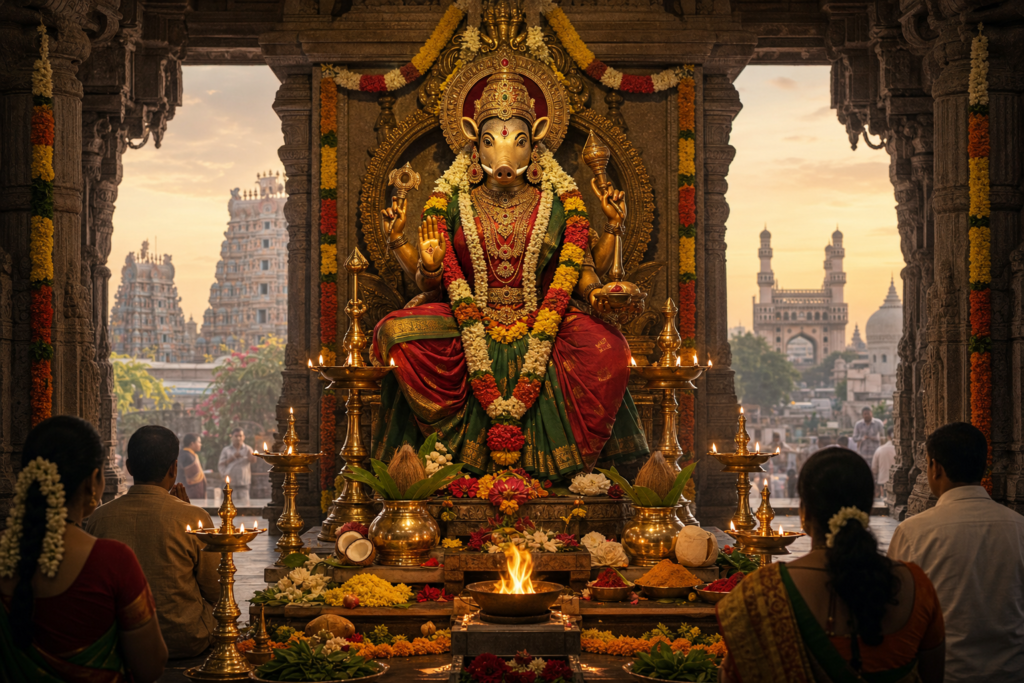
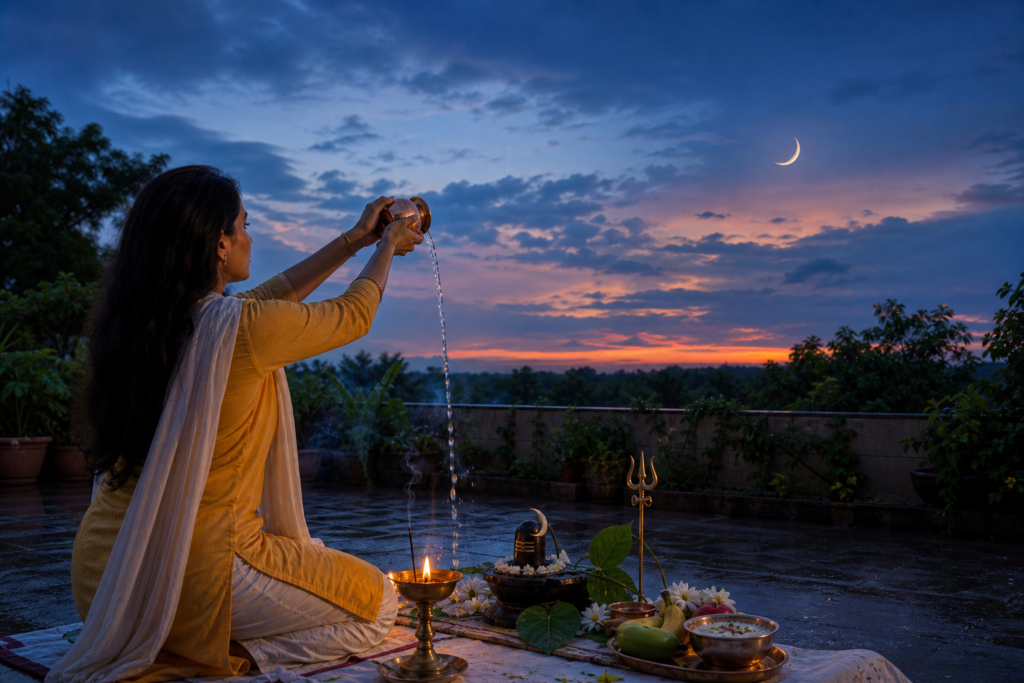
In practice, devotion centers on darshan and the performance of upacharas that may include lighting lamps, offering flowers, and reciting hymns from the Devi Mahatmya (Durga Saptashati). Navratri in Ashwin and Chaitra often becomes a focal period for collective worship, sankalpa, and community feasting, with Garba and devotional music animating the social fabric around the temple. Weddings, thread ceremonies, housewarmings, and business commencements commonly begin with a visit to the kuldevi for blessings.
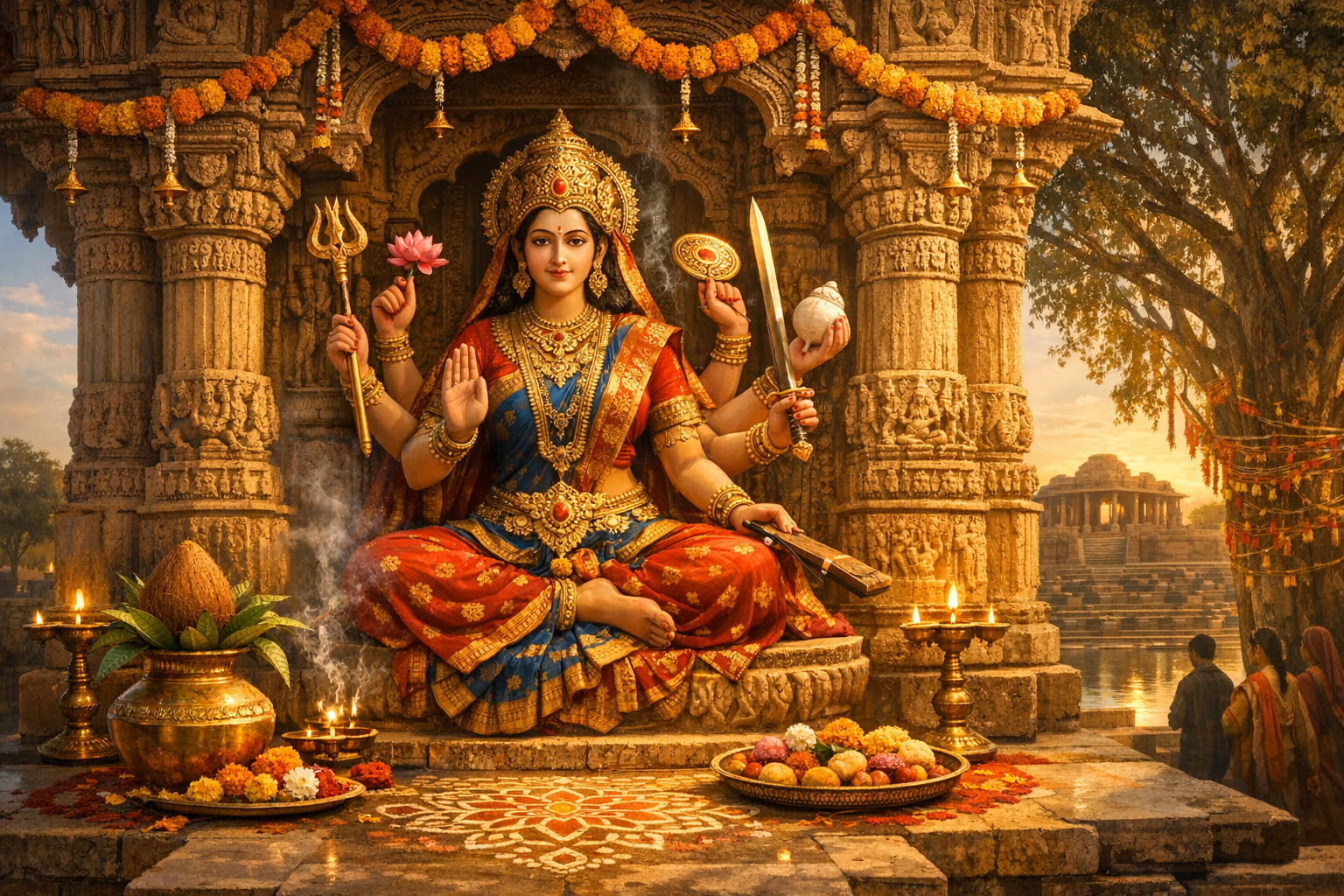
Iconographically, regional Shakti murtis typically present multiple arms bearing attributes of protection and victory; these signify the Goddess’s capacity to remove obstacles and defend devotees. Local depictions may emphasize maternal compassion alongside fierce guardianship, underscoring a theological vision in which auspiciousness (mangala) and power (shakti) are inseparable. The shrine’s ritual life thus balances inward contemplation with outward acts of service and solidarity.
Pilgrims frequently describe an atmosphere of quiet assurance upon entering the sanctum, a sentiment reinforced by the continuity of worship maintained by temple custodians and devotees. Offerings of prasad reinforce the ethos of shared sustenance, and the temple courtyard often serves as a civic commons where elders transmit stories of the Goddess to younger generations. Such intangible heritagesongs, vows, and oral narrativessustains the sanctity of the site as surely as stone and inscription.
In architectural context, north Gujarat’s medieval idiom is best exemplified by the Sun Temple’s Maru-Gurjara artistryintricate carvings, articulate mandapas, and luminous stone craft. While the Modheshwari shrine is a distinct sacred space with its own history and scale, it participates in this broader aesthetic ecology in which sculpted form, open courts, and ritual pathways structure devotional movement. This regional vocabulary aids orientation for visitors who wish to situate the shrine within Gujarat’s larger temple landscape.
The Chaulukya period fostered remarkable temple-building energy across Gujarat, integrating patronage, artisan guilds, and pilgrimage infrastructure. Although dedicated inscriptions for the Modheshwari temple are not widely published in mainstream surveys, its association with early medieval Shakti veneration aligns with the documented plurality of the era. As with many kuldevi shrines, historical memory is preserved primarily through community practice, genealogies, and festivals rather than royal epigraphy alone.
The protective Motherrevered here as Maa Modheshwariexpresses a civilizational motif of compassion fused with strength that resonates across dharmic traditions. Jain communities venerate Ambika and Padmavati as guardians; Buddhist traditions honor compassionate protectors such as Tara; Sikh teachings extol fearlessness and righteous strength in hymns that inspire ethical action. These convergences affirm a shared commitment to dignity, non-harm, and service, even as modes of worship and theology vary, embodying unity in spiritual diversity.
As with many Gujarati temples, stewardship often blends community trusts, hereditary roles, and volunteer networks, ensuring the continuity of daily puja and festival economies. The proximity of the Modhera Sun Temple, protected by the Archaeological Survey of India, creates a heritage corridor in which visitors can experience both solar and Shakti traditions within a single itinerary. Seasonal melas and Navratri observances further anchor the shrine within local livelihoods, artisanship, and devotional arts.
Responsible visitation emphasizes modest attire, mindful photography in accordance with temple norms, and respect for queue systems during high footfall periods such as Navratri. Many travelers combine darshan at Maa Modheshwari with exploration of the Sun Temple complex, nearby stepwells, and other historic sites in north Gujarat, gaining a holistic view of the region’s Cultural Heritage. Early mornings and evenings are generally conducive to contemplative worship and to appreciating the temple ambience.
For devotees and heritage seekers alike, Modhera’s Maa Modheshwari represents an enduring nexus of faith, identity, and place. The tradition of pragatya, the continuity of kuldevi worship among Modh Brahmin, Vaishya, and Kshatriya communities, and the region’s renowned temple arts together illuminate how living Shakti heritage animates Gujarat’s past and present. Sustained by ritual, story, and community, the Goddess’s presence at Modhera continues to offer protection, inspiration, and a shared moral horizon.
Inspired by this post on Hindu Blog.