-
Jyeshta Maas 2026 (Jeth Mahino) in Gujarati Panchang: Precise Dates, Festivals, and Significance

Jyeshta Maas 2026 (Jeth Mahino) in the Gujarati Panchang begins on 15 June 2026 and ends around 14 July 2026, with dates assigned by the tithi at local sunrise. Many Panchangs indicate an Adhik Jyeshta (Adhik Jeth) preceding this span, roughly mid-May to 14 June 2026, inserted because no solar sankranti occurs within that lunar…
-
Modhera’s Maa Modheshwari: Origins, Kuldevi Traditions, and the Living Shakti Heritage of Gujarat

Maa Modheshwari’s shrine at Modhera, Gujarat, is widely regarded as the most ancient seat of Her pragatya and as the kuldevi for Modh Brahmin, Vaishya, and Kshatriya lineages. Set within the celebrated cultural landscape of the Modhera Sun Temple, the tradition balances Surya and Shakti symbolism in a single heritage corridor. The article clarifies how…
-
Inside Patotsav: The Sacred Annual Re‑Consecration Powering Gujarati and Rajasthani Mandirs

Patotsav is the annual re-consecration that refreshes the sanctity of Hindu mandirs, especially in Gujarat and Rajasthan, by commemorating the original Prana Pratishtha with precise Vedic and Agamic rites. This long-form guide explains the complete sequence—from punyahavachana and kalasha-sthapana to Panchamrita abhisheka, homa, alankara, and maha-arati—so readers understand both practice and meaning. It clarifies how…
-
Vaishakh Maas 2026 in the Gujarati Panchang: Sacred Timelines, Festivals, and Ritual Guide

Vaishakh Maas 2026 in the Gujarati Panchang runs from 18 April to 16 May (IST) and is the seventh month of the Gujarati calendar year, counted from Kartik. The guide explains Amanta month reckoning, Udaya tithi rules, and why festival dates may vary by Panchang and location. It maps Vaishakh Sud and Vad sequences, notes…
-
Vaishakh Maas 2026 in the Gujarati Panchang: Sacred Timelines, Festivals, and Ritual Guide

Vaishakh Maas 2026 in the Gujarati Panchang runs from 18 April to 16 May (IST) and is the seventh month of the Gujarati calendar year, counted from Kartik. The guide explains Amanta month reckoning, Udaya tithi rules, and why festival dates may vary by Panchang and location. It maps Vaishakh Sud and Vad sequences, notes…
-
Gujarat video on Ahmedabad vendor expulsions: law, rights, and paths to communal harmony

A viral clip from Ahmedabad allegedly showing Muslim vendors being told “Only Hindus Can Work Here” has ignited debate about law, livelihood, and communal harmony in Gujarat. This analysis clarifies what the Constitution and the Street Vendors Act, 2014, actually permit—and what they prohibit—regarding vending in public spaces. It outlines relevant Supreme Court jurisprudence, highlights…
-
Prabhasa Patan’s Timeless Confluence: Where Krishna Departed and Somnath Inspires Unity

Set on Gujarat’s Saurashtra coast, Prabhasa (Prabhasa Patan/Prabhasa Kshetra) is the Triveni Sangam of the Hiran, Kapila, and subterranean Sarasvati, long revered as a threshold of purification and insight. Scripture situates epochal events here: the Mahabharata’s Mausala Parva narrates the Yadavas’ final conflict, while the Bhagavata Purana memorializes Sri Krishna’s departure at Bhalka and Dehotsarg…
-
Chaitra Navratri Colours 2026: Definitive Day-Wise Guide to Auspicious Saree and Dress Shades

This authoritative, day-wise guide to Chaitra Navratri Colours 2026 explains how the nine auspicious shades are determined and presents the complete sequence most widely followed in Maharashtra and Gujarat. Drawing on the Friday start for Śukla Pratipadā on 20 March 2026 for many locations, it lists each day’s colour along with the corresponding Navadurga, dates,…
-
Gujarat’s Uniform Civil Code Push: A Rights-First, Gender-Just Blueprint After Uttarakhand

Gujarat is moving toward a state-level Uniform Civil Code (UCC) after Uttarakhand, with a reported draft that mandates registration of marriages and live-in relationships, uniformly prohibits polygamy, and restricts practices described as halala. Anchored in Article 44 of the Directive Principles, the reform leverages state competence over family law while preserving freedom of religion by…
-
Chaitra Navratri Colours 2026: 9‑Day Auspicious Palette, Meanings, and Dress Guide

Chaitra Navratri Colours 2026 offers a clear, day-by-day palette widely followed in Maharashtra and Gujarat—beginning with Yellow on a Thursday Ghatasthapana—along with the symbolism and attire ideas behind each hue. The guide explains why colours matter, how the rotation works, and how to adapt respectfully across regional traditions and dress codes. It highlights practical tips…
-
Chaitra Maas 2026 in Gujarati Panchang: Auspicious Dates, Sacred Rhythms, and Festival Guide

Chaitra maas 2026 in the Gujarati Panchang runs from 19 March to 17 April, aligning closely with Marathi, Kannada, and Telugu Amanta calendars while remaining the sixth month in Gujarat’s Kartak-to-Aso year cycle. The period hosts Chaitra Navratri, Ram Navami, Mahavir Jayanti, and (in several regions) Hanuman Jayanti, with tithi-based observances that may shift by…
-
Ahmedabad Protests Over ‘Kerala Story 2’: Safeguarding Interfaith Harmony, Law, and Rights in Gujarat

Protests in Ahmedabad over The Kerala Story 2 and an interfaith relationship have brought constitutional rights, community anxieties, and public order into sharp focus. This analysis explains how Gujarat can protect free expression for certified films while ensuring peaceful, lawful protests and rapid action against intimidation. It outlines the legal landscape—from the Cinematograph Act to…
-
Uniting Farms and Temples: ISKCON’s 3rd National Goshalas & Farms Conference—Day 1, Ahmedabad 2026

Day 1 of the 3rd National Conference (ISKCON GBC Ministry of Cow Protection & Agriculture), held on February 22, 2026 at Gopal Krishna Gaushala in Ahmedabad, set a practical blueprint for unifying farms and temples through “Krishi Go-Raksha Vanijyam.” The sessions translated dharmic ethics and Vedic Traditions into actionable plans for Sustainable agriculture, integrating cow-centered…
-
Hatkeshwar Jayanti 2026: Auspicious Date, Powerful Rituals, and Kuladevata Heritage

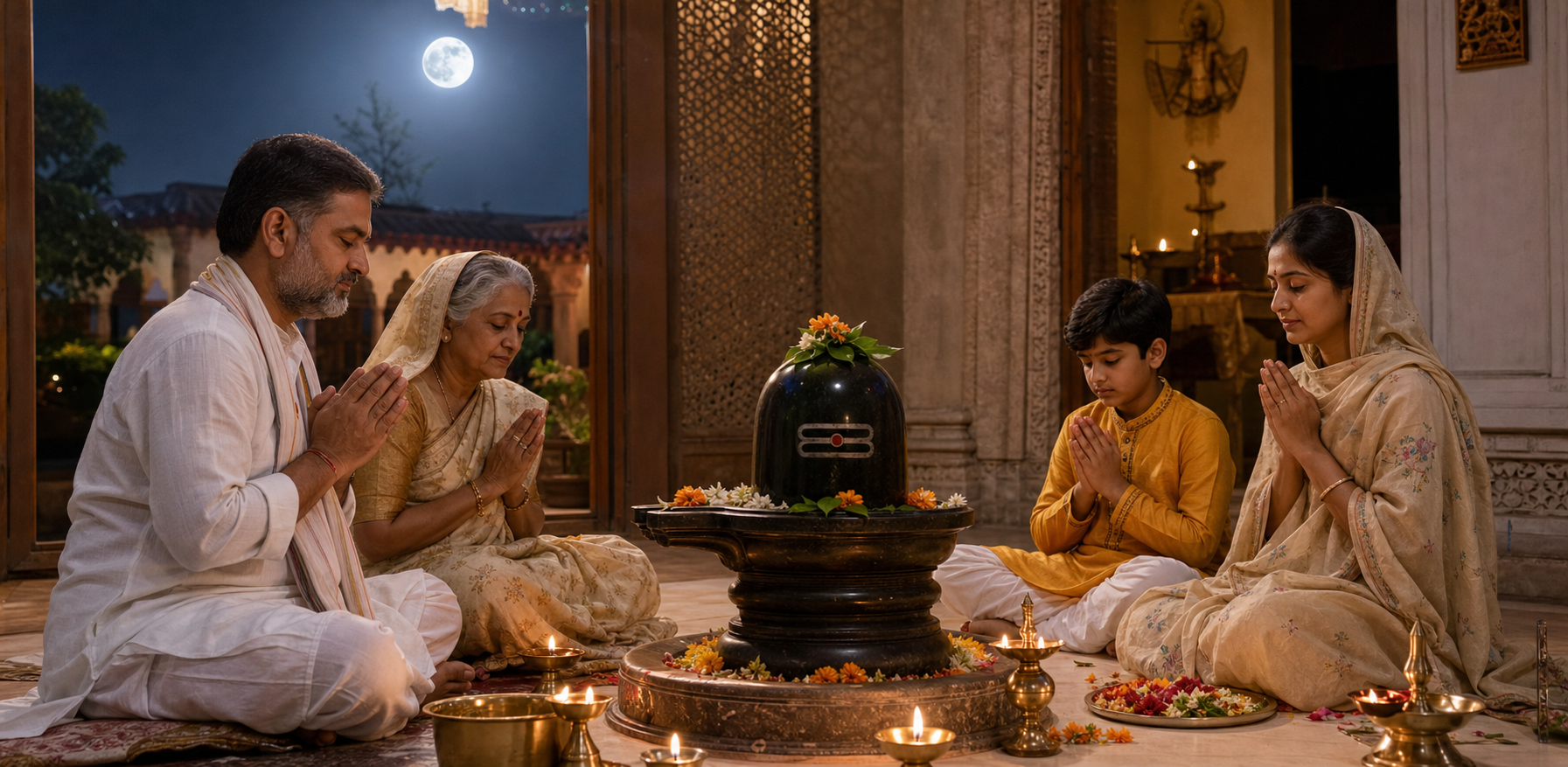
Hatkeshwar Jayanti (Hatkeshwar Mahadev Jayanti) in 2026 falls on April 1, observed on Chaitra Chaudasana, the 14th lunar day (Chaturdashi) of Chaitra. The day venerates Lord Hatkeshwar, a form of Shiva, with special emphasis on Kula Devata remembrance among families, especially in Gujarat and adjoining regions. Devotees prioritize pradosha-kala for Shivalinga abhisheka, mantra-japa (Om Namah…
-
Unveiling Shakti’s Living Power: Gujarat’s Folk Goddesses and Regional Identity

Gujarat’s folk goddesses reveal how Shakti localizes as protective village deities and lineage-honored kuladevis, shaping a resilient regional identity. The essay maps major sites—Ambaji, Pavagadh, Becharaji, coastal Harsiddhi—as anchors of sacred geography linked to trade, kinship, and ecology. It explains how Navratri Garba turns metaphysics into lived pedagogy, uniting communities around Amba’s lamp in Gujarat…
-
Gujarat BJP MLA Halts ₹32-Cr Slaughterhouse: Shankaracharya Hails ‘Asli Hindu’ Stand

A ₹32-crore slaughterhouse project in Gujarat was rolled back after public representations and the intervention of a BJP MLA, drawing praise from Shankaracharya Swami Avimukteshwarananda as an “Asli Hindu” stand. The event spotlights how ahimsa, Cow Protection, and constitutional directives can inform humane and lawful governance. Readers gain context on the policy process, stakeholder engagement,…
-
Harsiddhi Mata, Sacred Shakti: Kula Devata Uniting Gujarat, Madhya Pradesh and Maharashtra

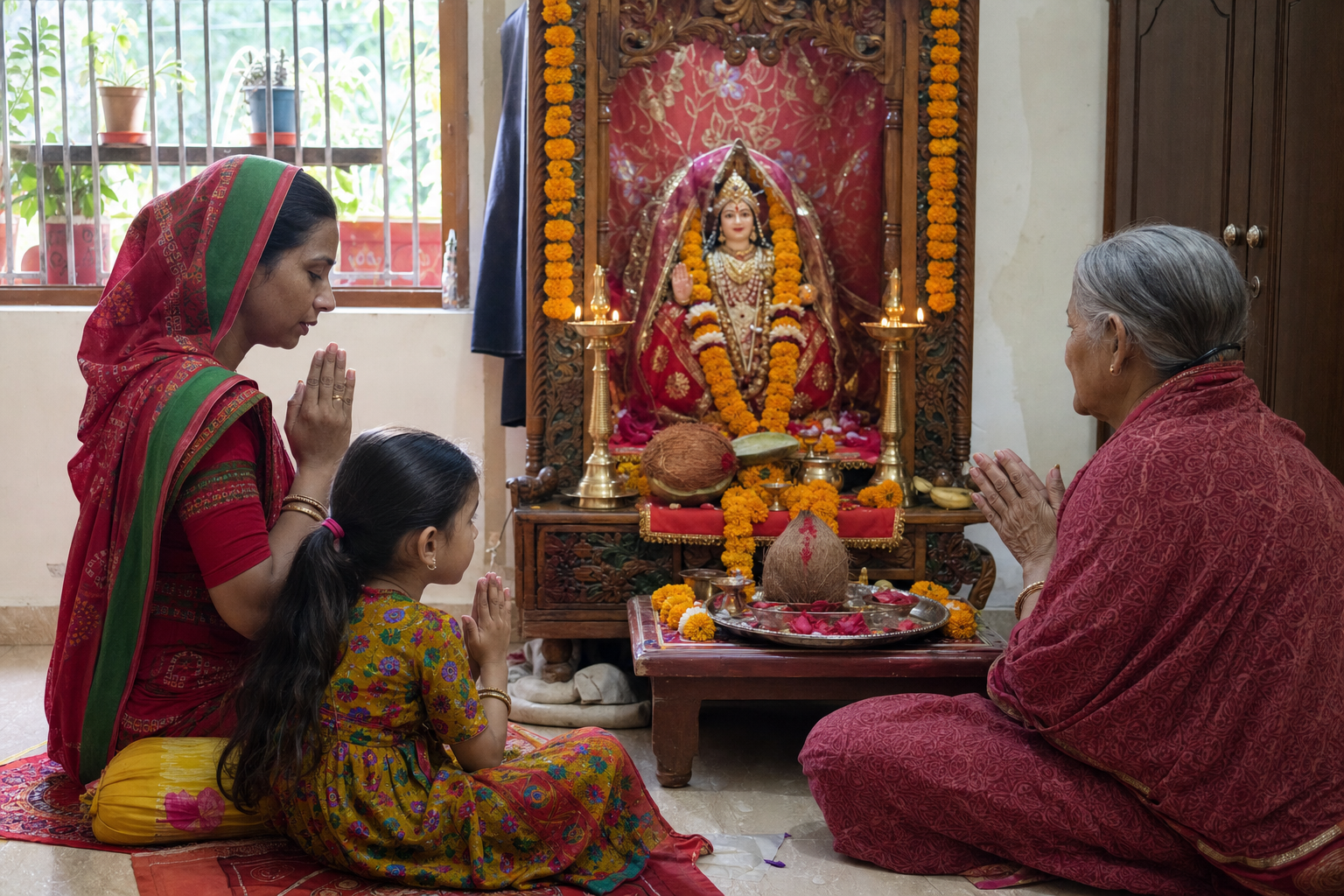
Harsiddhi Mata—also known as Harsiddhi Bhavani Devi—is venerated across Gujarat, Madhya Pradesh, and Maharashtra as a compassionate manifestation of Mata Parvati. Revered as a Kula Devata by Brahmin, Jain, and other communities, she anchors family rites, intergenerational continuity, and social cohesion. Coastal devotees and fishing communities especially uphold heartfelt worship, seeking blessings for safety and…
-
Khodiyar Mata Vrat Katha and Jayanti 2026: Timeless Legend, Rituals, and Devotional Unity

Khodiyar Mata Jayanti (Khodiyar Maa Pragatya Din) in 2026 falls on January 26, guiding devotees toward a day of reflective worship and community solidarity. The Khodiyar Maa Katha, rooted in 8th-century Gujarati and Rajasthani traditions, emphasizes protection, courage, and ethical living. The Vrat Katha’s core themes remain consistent across regional versions, reinforcing dharma and compassionate…
-
Khodiyar Mata Jayanti 2026: Timeless 8th‑Century Katha, Vrat Significance, and Dharmic Unity

Khodiyar Mata Jayanti (Khodiyar Maa Pragatya Din) falls on January 26, 2026, inviting focused observance through the Khodiyar Mata Vrat Katha. Rooted in 8th‑century Gujarati and Rajasthani scriptures, the Katha sustains living traditions of devotion, ethical reflection, and community solidarity. The festival draws diverse communities across Gujarat and Rajasthan into shared worship, exemplifying unity within…
-
Saraswati Puja 2026: Dates, Traditions, and the Joy of Learning in Sharad Navratri

Saraswati Puja (Saraswati Triratra Vrata) during Sharad Navratri will be observed in 2026 from October 16 to October 19 across Andhra Pradesh, Telangana, Kerala, Karnataka, Tamil Nadu, Maharashtra, and Gujarat. The final three days focus on Goddess Saraswati, celebrating wisdom, learning, music, and the arts. Families honor books, instruments, and tools of learning, while communities…