Questions about the plurality of deities in Hinduism often arise in public forums and satsangs: Why do Hindus follow many gods? Is there one God behind them all? What happens if one venerates multiple deities? In a Maha Satsang in Indore, Madhya Pradesh, Sri Sri Ravishankar addressed these concerns with a perspective that aligns with foundational Hindu scriptures and the lived reality of Sanatan Dharma in India and across the diaspora.
At the heart of Hindu philosophy lies a simple axiom: the ultimate reality is one, expressed through countless names, forms, and approaches. The Rig Veda succinctly states, Ekam sat vipra bahudhā vadanti—Truth is one; sages call it by many names (RV 1.164.46). This is not a mere poetic flourish; it is a theological grammar that allows devotion to Vishnu, Shiva, Devi, Ganesha, Skanda, Surya, and innumerable other forms without contradiction, because each form is a window to the same infinite Brahman.
The Sanskrit term deva derives from the verbal root div, meaning to shine. In Vedic and post-Vedic usage, deva connotes both a luminous cosmic principle (such as wind, fire, sun) and a personal form accessible to devotional consciousness. Thus, deities in Hinduism can be read simultaneously as metaphysical principles (tattvas) and as personal divinities (Ishvaras) who respond to bhakti, ritual, and contemplation.
The widely circulated phrase “33 crores (330 million) gods” in Hinduism stems from a philological and historical tangle around the Sanskrit word koti. In early Vedic texts, koti commonly means class, category, or type, not ten million. Classical sources speak of 33 devas, a structured sacred taxonomy rather than a census of millions.
Several texts list these 33 as 12 Ādityas (solar/seasonal deities), 11 Rudras (embodied powers related to life-breath and transformation), 8 Vasus (elemental principles), along with Indra and Prajāpati. This schema appears in Brāhmaṇa literature (e.g., Śatapatha Brāhmaṇa) and is echoed, with variations, in other śāstric sources. The point is both ontological and pedagogical: the cosmos is intelligible as a harmonious set of interlocking powers that are worthy of reverence.
Bṛhadāraṇyaka Upaniṣad (3.9) presents a layered dialogue that enumerates deities as many, then 33, then fewer, and finally one, illustrating a methodological descent from multiplicity to unity. The teaching strategy is clear: begin where the mind perceives diversity and guide it toward non-contradictory oneness.
How then did “33 crores” take hold? Over time, as vernacular usage normalized koti as ten million, the older semantic field receded. Devotional discourse also embraced vast numbers to signal the Divine’s inexhaustibility. The notion of “330 million” survives as a poetic shorthand for innumerability, not as a strict scriptural headcount.
Another interpretive strand, often taught in contemporary satsangs, holds that if the Divine dwells in all beings (sarvam khalvidam brahma), then the “count” of divinities mirrors the living world’s abundance. While not a canonical enumeration, this view captures a central Vedic impulse: sanctity pervades existence. Read this way, the number becomes a contemplative upāya, inviting reverence for life rather than an arithmetic of gods.
Central to practice is the Ishta-devata principle—the chosen form of the Divine. Ishta acknowledges adhikāra-bheda, the diversity of seekers’ qualifications, temperaments (guna-prakriti), and samskaras. By allowing each practitioner to approach the One through a personally resonant form, Ishta-devata promotes ekāgratā (one-pointedness), emotional intimacy in worship, and sustained sādhanā. Crucially, Ishta does not negate other forms; it simply grants depth in one path while honoring breadth across many.
Scriptural sanction for this plurality is explicit. The Bhagavad Gita states, ye yathā māṁ prapadyante tāṁs tathaiva bhajāmy aham (4.11)—in whatever way beings approach Me, I bless them in that way; and yo yo yām yām tanum bhaktaḥ śraddhayārcitum icchati, tasya tasyācalāṁ śraddhāṁ tām eva vidadhāmy aham (7.21)—whichever form a devotee chooses with faith, that very faith is made steady by Me. These verses articulate not relativism, but a sophisticated inclusivism: a single Divine Reality answers through many authorized forms.
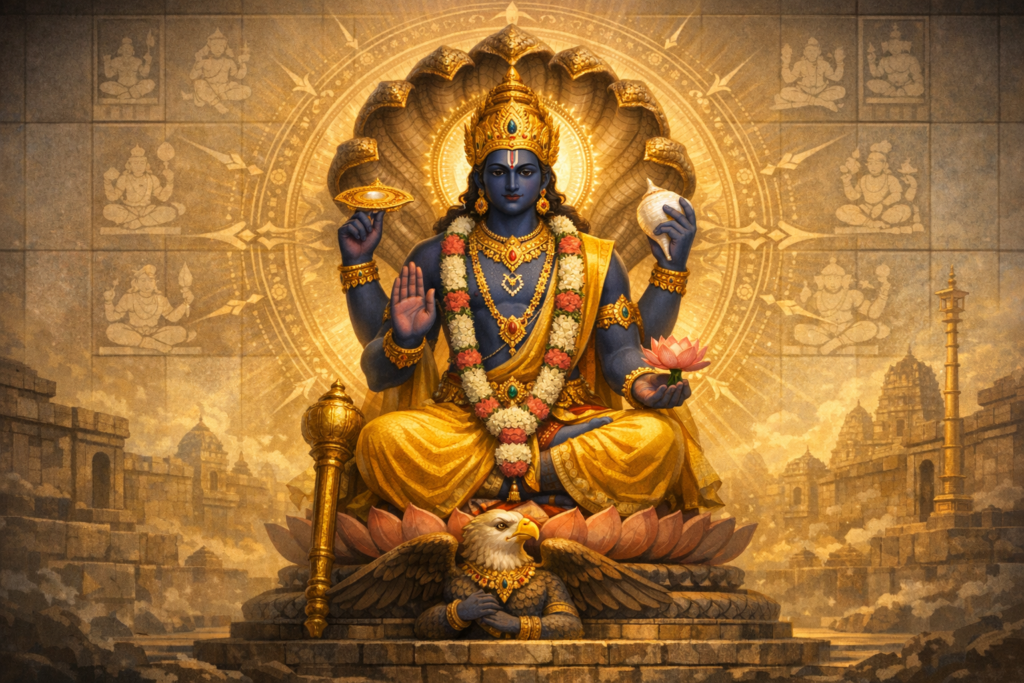
Vedānta’s schools enrich this picture. Advaita distinguishes nirguṇa Brahman (without attributes) as the highest truth and saguṇa Ishvara (with attributes) as a valid meditative focus; Viśiṣṭādvaita interprets the many deities as real modes and auspicious qualities of the one Nārāyaṇa; Dvaita emphasizes a personal Supreme distinct from finite selves while affirming devotion to his forms. Different darśanas thus converge on a shared ethic of honoring many deities without sacrificing coherence.
Academic discourse has described Hindu devotion as henotheistic or kathenotheistic—where a devotee may regard a chosen deity as supreme for the purpose of worship, without denying the legitimacy or divinity of others. Many practitioners prefer the expressions monism with polymorphic devotion or panentheism, to reflect lived bhakti and Vedic philosophy more precisely.
In everyday life, households embody this pluralism effortlessly. A family may revere a Kula Devata, keep a village Grāma Devatā festival, offer daily ārati to Ganesha, and celebrate Navaratri for Devi. Smārta traditions institutionalize such breadth through pañcāyatana-pūjā, arranging Shiva, Vishnu, Devi, Ganesha, and Surya on a single altar to signify unity-in-diversity.
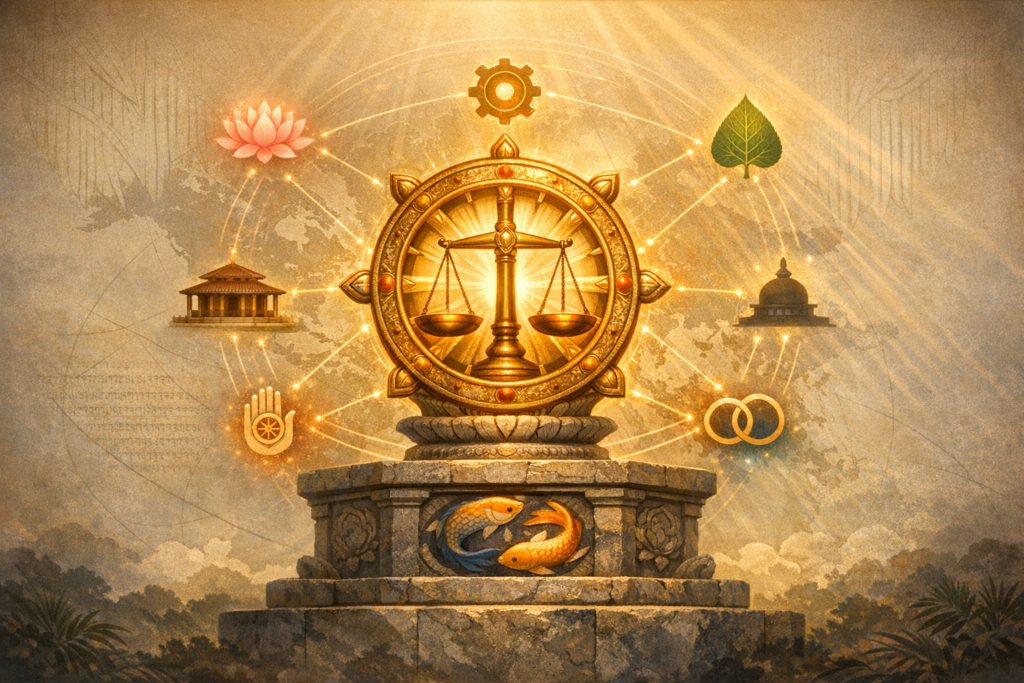
This ethos resonates across the broader Dharmic family. Buddhism reveres multiple Buddhas and Bodhisattvas as skillful means (upāya) guiding beings to nirvana; Jainism honors the 24 Tirthankaras as perfected exemplars; Sikhism proclaims Ik Onkar—One Reality—while embracing many Divine Names (Nāms). These parallels highlight a civilizational commitment to religious pluralism in India that deepens, rather than dilutes, spiritual seriousness.
Against this backdrop, Sri Sri Ravishankar has often clarified that different deities function like many doors to the same sanctum. Just as one sun is reflected in many pots of water, one Divine Light appears through many forms. Choosing one form focuses the mind; respecting all forms preserves harmony. Nothing is lost by honoring many; much is gained—notably, humility, empathy, and communal cohesion.
What then happens if someone follows many gods? Without philosophical clarity, devotion can feel scattered. With clarity, however, multiplicity becomes a disciplined curriculum. Practically, seekers are encouraged to choose an Ishta for daily japa, meditation, and vrata, while celebrating other deities in community festivals and family rites. This approach deepens inner stability (ekāgratā) and expands outer solidarity—an elegant balance of depth and breadth.
Understanding the historical nuance of “33 koti,” the scriptural basis for many forms, and the Ishta framework dissolves the false dilemma of “one versus many.” Theologically, Hinduism acknowledges a single, supreme, and universal reality; devotionally, it offers many authentic paths in response to the mind’s varied dispositions. Socially and ethically, this plurality sustains unity in religious diversity and fosters compassionate coexistence within and beyond Hindu traditions.
Ultimately, the famous phrase about “330 million gods” is best read as a cultural reminder that the Divine surpasses the limits of any single image or concept. Properly understood, it invites seekers to practice with conviction, regard other paths with reverence, and contribute to a shared Dharmic harmony that includes Hinduism, Buddhism, Jainism, and Sikhism—an embodiment of Vasudhaiva Kutumbakam in thought and action.
Inspired by this post on Hindu Pad.