Tag: Unity in religious diversity

  • Alarming reports of organised conversions in Mumbai trains; HJS urges urgent, lawful probe

    Alarming reports of organised conversions in Mumbai trains; HJS urges urgent, lawful probe

    Reports indicate an organised religious conversion push inside Mumbai’s local trains, with HJS urging swift but lawful scrutiny. This analysis clarifies the constitutional balance under Article 25protecting the right to propagate religion while prohibiting force, fraud, or inducement as affirmed by Supreme Court jurisprudence. It outlines how railway norms, GRP/RPF roles, and general criminal provisions…

  • Five Urgent Challenges Facing the Sikh Communityand a Practical, Hopeful Roadmap

    Five Urgent Challenges Facing the Sikh Communityand a Practical, Hopeful Roadmap

    This long‑form analysis maps five interlocking challenges facing the Sikh communityeconomic and environmental stress in Punjab, youth well‑being, institutional governance, identity transmission, and polarization. It explains why each pressure point matters, how it affects families in Punjab and the diaspora, and which indicators to track for accountability. Readers gain a practical, evidence‑informed roadmap that aligns…

  • Decoding Srila Prabhupada’s Genius: Bhakti, Parenting, and Dharmic Unity for the Global Diaspora

    Decoding Srila Prabhupada’s Genius: Bhakti, Parenting, and Dharmic Unity for the Global Diaspora

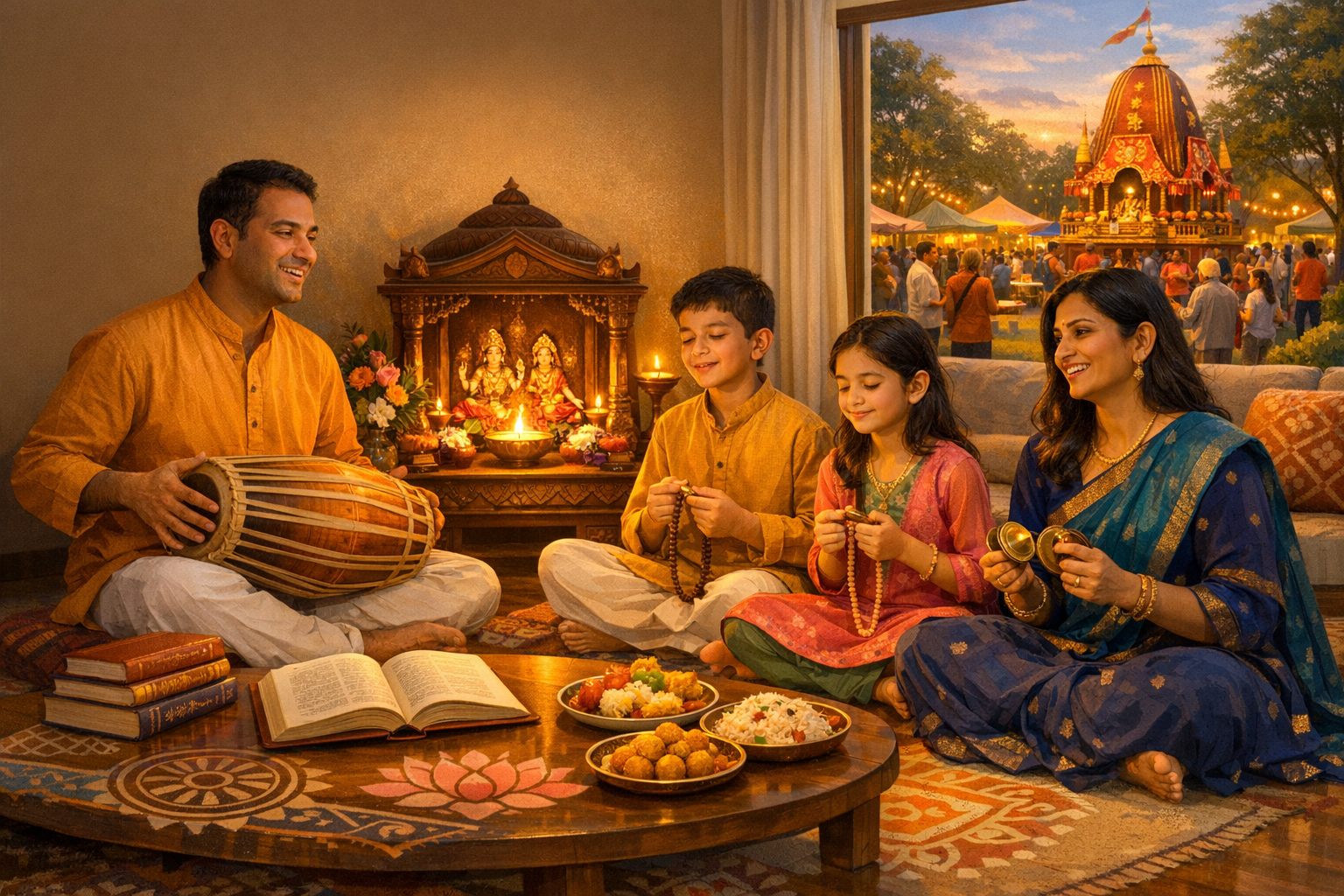
    Indian-origin families in North America and beyond often grapple with preserving dharmic values while integrating into modern, materialist environments. This article decodes Srila Prabhupada’s enduring genius as a complete systemscholarship, daily practice, joyous festivals, and resilient institutionsthat can be adapted by Hindu, Buddhist, Jain, and Sikh households. It explains how standardized sadhana, kirtan, and prasadam…

  • Anuttama Dasa’s Alachua Sunday Feast: Profound Bhakti-Yoga Insights and Dharmic Unity

    Anuttama Dasa’s Alachua Sunday Feast: Profound Bhakti-Yoga Insights and Dharmic Unity

    On 31 May 2026, Anuttama Dasa spoke at the Hare Krishna Temple in Alachua, Florida, offering a clear, textually grounded presentation of bhakti-yoga. The Sunday Feast formatkirtan, śāstra-kathā, and prasadamwas shown as an integrated pedagogy that turns learning into lived practice. The lecture’s approach reflected classical Indian epistemology and hermeneutics, connecting scriptural authority with reason,…

  • Mastering the Mind with Vedanta: Discern Uplifting vs Harmful Thoughts for Inner Freedom

    Mastering the Mind with Vedanta: Discern Uplifting vs Harmful Thoughts for Inner Freedom

    Hindu philosophy provides a precise, time-tested method for discerning between wholesome and unwholesome thoughts using tools from Vedanta, the Bhagavad Gita, and the Yoga Sutra. The framework integrates nitya–anitya–viveka, guna diagnostics, and pratipaksha–bhavana to remodel mental habits at the root. Case studies from the Ramayana illustrate how sattva stabilizes action under pressure while rajas and…

  • Historic Opening: Berlin’s Grand Sri Ganesha Temple, One of Europe’s Largest Hindu Shrines

    Historic Opening: Berlin’s Grand Sri Ganesha Temple, One of Europe’s Largest Hindu Shrines

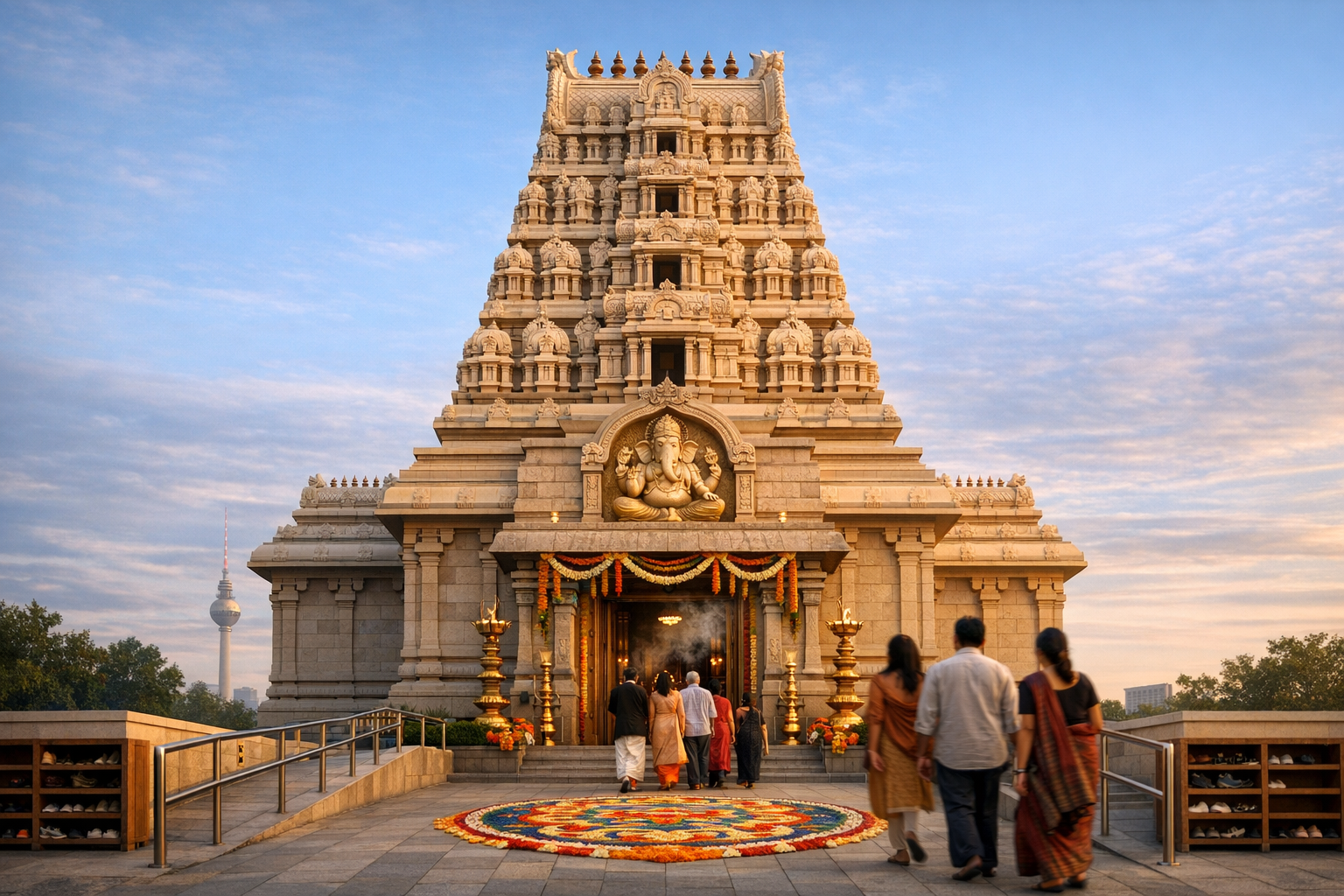
    Berlin’s Sri Ganesha Temple has opened as one of Europe’s largest Hindu shrines, establishing a landmark for spiritual practice, cultural heritage, and community service. The temple advances unity in religious diversity by welcoming dialogue among Hindu, Buddhist, Jain, and Sikh communities while respecting each tradition’s distinct liturgy. Designed to harmonize classical sacred architecture with modern…

  • Hemkund Sahib: Faith, Sacrifice, and a High‑Altitude Pilgrimage of Unity in the Himalaya

    Hemkund Sahib: Faith, Sacrifice, and a High‑Altitude Pilgrimage of Unity in the Himalaya

    Gurdwara Hemkund Sahib, a star-like sanctuary beside a glacial lake at 4,329 meters in Uttarakhand, unites Faith, History, Sacrifice, Pilgrimage, and Unity in a single high-altitude experience. Rooted in Guru Gobind Singh’s Bachitra Natak and shaped by 20th‑century exploration and sewa, the yatra blends disciplined devotion with rigorous mountain travel. The route via Govindghat and…

  • London’s Festival of Chariots 2026: 57 Years of Devotion, Culture, and Community Spirit

    London’s Festival of Chariots 2026: 57 Years of Devotion, Culture, and Community Spirit

    The 2026 London Rathayatra gathered more than 10,000 participants along Park Lane to accompany three 40-foot chariots in a joyful display of devotion and cultural heritage. Marking 57 years on London’s streets since 1969, the Festival of Chariots demonstrated how an ancient Indian tradition thrives in a modern, multicultural city. The procession honoured Lord Jagannath,…

  • Introducing Jainism to a Non‑Jain Partner: Research‑Backed, Ahimsa‑Centered Guide to Harmony

    Introducing Jainism to a Non‑Jain Partner: Research‑Backed, Ahimsa‑Centered Guide to Harmony

    This research-backed guide shows how to introduce Jainism to a non-Jain partner through ethics-first dialogue, practical routines, and emotionally intelligent communication. It explains core doctrinesahimsa, anekantavada, aparigraha, karma theory, and the nine tattvaswithout jargon, then translates them into workable household practices. Readers learn how to approach Samayik and Pratikraman together, navigate Jain diet and kitchen…

  • Dashabhujeshwara Decoded: Five-Faced, Ten-Armed ShivaIconography, Mantras, Ritual Power

    Dashabhujeshwara Decoded: Five-Faced, Ten-Armed ShivaIconography, Mantras, Ritual Power

    Shiva’s Dashabhujeshwara formfive-faced and ten-armedembodies the Pañcabrahma theology in which one Absolute performs five cosmic acts: creation, sustenance, dissolution, concealment, and grace. Drawing on the Śiva Purāṇa, Āgamas, and Śilpa-Śāstras, this explainer clarifies how each face (Tatpuruṣa, Aghora, Vāmadeva, Sadyojāta, Īśāna) aligns with directions, mantras, and meditative practice. It decodes the ten arms as sovereignty…

  • UK Unveils Anti-Hindu Hate Monitor: Data-Driven Protection and Dharmic Solidarity Amid Rising Crimes

    UK Unveils Anti-Hindu Hate Monitor: Data-Driven Protection and Dharmic Solidarity Amid Rising Crimes

    The UK’s new Anti-Hindu Hate Monitor introduces a community-led, data-driven response to Hinduphobia and faith-based hate crimes while aligning closely with UK law. It complements police reporting through standardized taxonomies, secure referrals via True Vision, and independent quality assurance. Victim safety is paramount: trauma-informed casework, culturally competent support, and place-based security reviews for temples and…

  • Panjurli Daiva of Tulunadu: Sacred Boar, Agrarian Covenant, and the Living Bhuta Kola

    Panjurli Daiva of Tulunadu: Sacred Boar, Agrarian Covenant, and the Living Bhuta Kola

    Tulunadu’s Panjurli Daiva, the sacred boar guardian of coastal Karnataka and northern Kerala, embodies a living covenant between forest and farmland. This in-depth overview situates Panjurli within Bhuta Kola/Nema traditions, tracing historical continuities, ritual roles, costume language, and oracular justice. Readers gain an integrated view of how daivasthanas function as both sacred spaces and civic…

  • All Faiths Share Core Values – So Why Convert? A Deep, Dharmic, Evidence-Based Guide

    All Faiths Share Core Values – So Why Convert? A Deep, Dharmic, Evidence-Based Guide

    This long-form, evidence-based guide explains why religious conversion persists even when core valuescompassion, truth, service, and self-disciplineare widely shared. It distinguishes ethical convergence from deeper differences in metaphysics, salvation, and institutional identity that often drive conversion debates. Drawing on Hinduism, Buddhism, Jainism, and Sikhism, it highlights Dharmic pluralism through ideas like Ishta and anekantavada, showing…

  • Matak Hulāre Unveiled (Part 2): Swaying Rhythms, Folk Aesthetics, and Punjabi Dance Science

    Matak Hulāre Unveiled (Part 2): Swaying Rhythms, Folk Aesthetics, and Punjabi Dance Science

    Matak Hulāre captures the essence of Punjabi folk movement as a disciplined sway animated by joy, community, and musical pulse. This in-depth second installment analyzes its cultural history across Giddha and Bhangra, explains rhythmic foundations such as keherva cycles, and details the roles of dhol, algoza, chimta, and tumbi. It explores boliyan as living oral…

  • The War They Could Not Win: Dharmic Unity vs. Empire’s Cultural Offensive (Part 1)

    The War They Could Not Win: Dharmic Unity vs. Empire’s Cultural Offensive (Part 1)

    This long-form analysis reframes the nineteenth century as a hybrid strugglemilitary, legal, economic, educational, and narrativebetween an expanding empire and a resilient, plural civilization. It situates the 1857 War of Independence within deeper structural transformations led by the British East India Company and subsequent Crown rule. The discussion explains how revenue settlements, legal codification, and…

  • Is Life Easy or Difficult? Dharmic wisdom unites dukkha and ananda with practical tools

    Is Life Easy or Difficult? Dharmic wisdom unites dukkha and ananda with practical tools

    The longstanding paradoxBuddhism’s dukkha versus the claim that life is joyresolves when viewed through dharmic frameworks that distinguish conventional from ultimate truth. Buddhism names the instability of conditioned life, while Vedanta points to ananda as the intrinsic nature of consciousness; Jain Anekantavada and Sikh Chardi Kala further harmonize these insights. This synthesis is practical, not…

  • Inspiring Buckingham Palace Recognition: Bhaktivedanta Manor Volunteers Advance Seva and Unity

    Inspiring Buckingham Palace Recognition: Bhaktivedanta Manor Volunteers Advance Seva and Unity

    Volunteers from Bhaktivedanta Manor were invited to the King’s Garden Party at Buckingham Palace, affirming the role of dharmic service (seva) in the UK’s civic life. The recognition of Ketan Patel and Ashok Parmar highlights how faith-rooted initiatives can deliver measurable public benefit while nurturing cultural heritage. Readers gain a clear frameworkinputs, activities, outputs, outcomes,…

  • How Sharing Food Heals Enmity: Timeless Dharmic Practices from Hindu, Buddhist, Jain, Sikh Traditions

    How Sharing Food Heals Enmity: Timeless Dharmic Practices from Hindu, Buddhist, Jain, Sikh Traditions

    Hinduism and its sister dharmic traditions treat shared food as a deliberate instrument of reconciliation. Philosophical axioms such as Annam Brahma, Atithi Devo Bhava, and Vasudhaiva Kutumbakam elevate feeding from charity to peacecraft. Ramayana narratives, temple prasada, Sikh langar, Jain anna-kshetras, and Buddhist dana converge on a single ethic: dignified, vegetarian commensality dissolves social distance…

  • Shyamasundar Das and the First Western Rathayatra: A Daring, Transformative Legacy of Dharmic Unity

    Shyamasundar Das and the First Western Rathayatra: A Daring, Transformative Legacy of Dharmic Unity

    This article examines how Shyamasundar Das (Sam Speerstra) helped carry Gaudiya Vaishnavism into the global public square by introducing Lord Jagannath, carving the first Western Deities, and coordinating the first Rathayatra outside India in 1967–1968. It situates these achievements within ISKCON’s early expansion in San Francisco and London and explains how the ethos of ‘Chase…

  • Unlock the Ocean Within: Dharmic Pathways to Atman, Timeless Wisdom, and Resilient Strength

    Unlock the Ocean Within: Dharmic Pathways to Atman, Timeless Wisdom, and Resilient Strength

    This essay examines the statement “You know little of that which is within you. Within you is the ocean of infinite power” through the shared frameworks of Hinduism, Buddhism, Jainism, and Sikhism. It explains the Upanishadic vision of ātman and Brahman, the yogic map of prāṇa and kundalinī, and the ethical preconditions that make inner…