In the precisely codified visual language of Hindu iconography, every object in a deity’s, guardian’s, or attendant’s hand is intentional. Within this grammar, the whipknown in Sanskrit as Kasha or Pratodaappears as a secondary ayudha: an instrument of regulation and impetus rather than a primary weapon. Its presence signals authority, self-discipline, and the maintenance of dharma, embodying how cosmic order translates into human ethics and temple space.
Terminologically, Pratoda denotes a whip or goad; it belongs to the same semantic family as implements of guidance and restraint, including the aṅkuśa (elephant goad), pāśa (noose), and daṇḍa (rod or staff). While these tools differ in formhook, cord, lash, or stafftheir semiotic field overlaps: each represents governance of motion, direction of energy, and the ethical control of power. Kasha/Pratoda is therefore read not as an emblem of cruelty, but as a visual metaphor for directing forcesanimal, social, or psychologicaltoward right action.
Shilpa-śāstra literature across regionssuch as the Manasara, Mayamata, and Aparājitapṛcchācatalogs ayudhas and prescribes the compositional logic by which they are displayed. These treatises agree that attributes must be legible, proportionate, and semantically consistent with the deity’s tattva. In several traditions, the Pratoda appears among accessory implements associated with attendants, charioteers, guardians (pratīhāras), and select śākta or śaiva figures where the theme of control and discipline is foregrounded.
As a secondary ayudha, Kasha is typically scaled modestly, angled to avoid occluding the face and primary mudrās, and coordinated with the figure’s stance. Sculptors balance the whip’s dynamic diagonal against the verticals of staff or trident, or the circulars of discus and halo, so that the visual field signals both motion and restrainttwo poles held in aesthetic and doctrinal equilibrium.
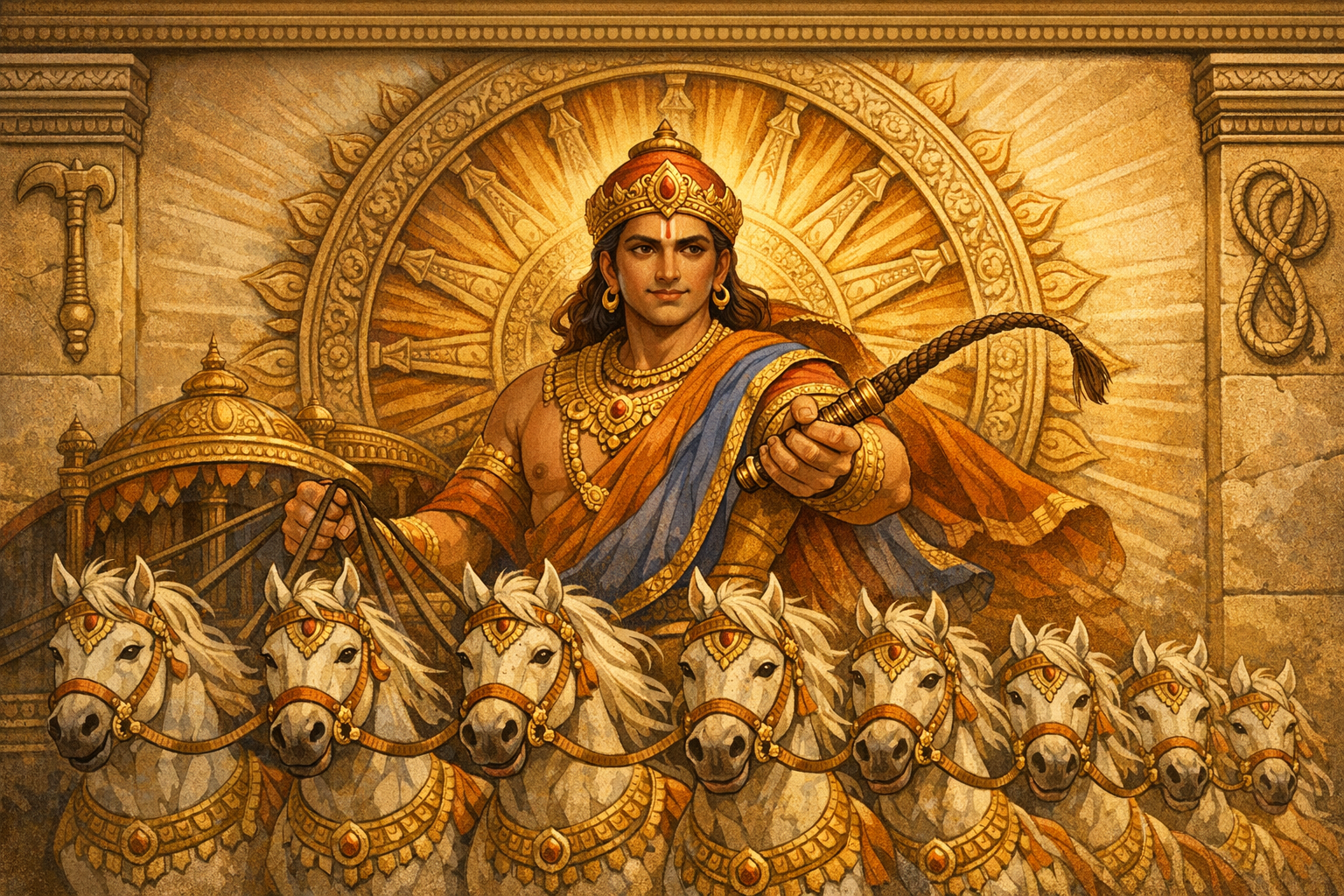
An especially clear context is solar iconography. Surya is often shown with lotuses; the charioteer Aruṇa stands or kneels before him holding reins and a Pratoda to direct the seven horses. In temple reliefs and freestanding panelsparticularly in eastern Indiathe slender handle and tapering lash announce not aggression but kinetic governance: the harnessing of light, time, and the cyclical motion of the solar chariot. At the Konark Sun Temple, processional and chariot panels make this visual logic unmistakable.
Guardians at thresholds (dvārapālas/pratīhāras) and ganas within mandapas sometimes carry a coiled or unfurled whip. At doors and liminal pointsarchitectural sites where order must be establishedthe Kasha functions as a sign of vigilance and corrective presence. Its position near entryways aligns with the temple’s ritual ecology: purity, protocol, and right conduct begin at the threshold and are safeguarded throughout the sacred precinct.
In śaiva and śākta repertoires, the Pratoda occasionally appears among the many attributes arrayed around fierce or guardian manifestationscomplementing pāśa, aṅkuśa, and ḍamaru. The semantic field is consistent: the whip is a cue to restraint and directional power, necessary companions to energy (śakti). In certain yoginī ensembles, a thong-like lash or goad may be depicted to stress mastery over instinct and motion, themes central to tantrika visualization and praxis.
Vaishnava narrative panels can likewise embed the whip in scenes of movement and caregopas directing cattle or attendants managing mounts and procession. While not a primary Viṣṇu attribute, Kasha is at home in Vaishnava temple friezes that celebrate lila with pastoral and courtly detail. The iconographic point remains the same: direction without excess, order without brutality, and the ethical guidance of life-energies.
Yamathe regulator of law among beingsis predominantly shown with pāśa and daṇḍa. In ancillary figures that accompany him, a whip can occur as part of a visual program that underscores discipline (daṇḍa-nīti) and accountability. The whip’s semantics here rhyme with artha-śāstra and dharma-śāstra notions of just governance: the goal is correction and order, not indiscriminate harm.
Read together, pāśa (binding compassion and relationship), aṅkuśa (precise stimulus and steering), and Pratoda (rhythmic impetus) form a triad of control instruments that recur across South Asian sacred art. Each indexes a distinct mode of guiding life: the noose gathers, the goad points, and the whip propels. This triad also mirrors inner disciplines in yogayama, niyama, pratyāhāra, and damawhere ethical restraint is cultivated as gentle bind, attentive nudge, and steady momentum.
The symbolic resonance of Kasha extends across dhārmic traditions. In Buddhist contexts, guardians and charioteers in narrative reliefs can be shown with reins and whips to indicate directional agency and the taming of unwholesome momentum; in Jaina sculpture, attendants in processional or vehicular scenes occasionally bear reins and lash for similar narrative clarity. Across Hinduism, Buddhism, and Jainism, the implement’s shared meaning converges on self-mastery, compassionate regulation, and the safeguarding of orderan interlinked dhārmic vocabulary of discipline rather than domination.
Materially and morphologically, sculptors render the Pratoda in distinct, readable parts: a short to mid-length grip (often faceted or ringed), a guard or subtle knob, and a thong that may be braided, coiled, or flared at the tip. In metal icons, the lash may take a firm, ribbon-like shape for durability, while in stone it is commonly shown as a shallow-relief line or a gently raised cord to preserve legibility and prevent chipping.
Regional idioms refine these traits. In Odisha, the lash can be deeply undercut in chloritic schist to dramatize motion; in Hoysala soapstone, minute beading and ribbing articulate the handle with jewel-like precision; in Chola bronzes, the implement is pared to elegant essentials, integrated with sweeping curves that echo the icon’s prabhāmaṇḍala. These craft choices communicate a consistent message across styles: motion that submits to measure.
Chronologically, Kasha’s visibility tracks the intensification of narrative and processional detail from the early-medieval through late-medieval periods. Where primary deities grow more standardized in their attribute sets, ancillary figures, friezes, and guardians increasingly carry instruments like the Pratoda to signal functionherding, guarding, guidingintegral to the temple’s sacred dramaturgy.
Compositional theory places the whip on diagonals that activate the relief without crowding the core icon. To the viewer, a descending lash draws the eye along an intentional pathfrom face to hand to attribute to vehicleteaching how to read the sculpture. In this way, the Pratoda is part of an iconographic pedagogy: a tool that helps the image “speak” order through line and rhythm.
Doctrinally, the whip is closely tied to ṛta and dharmacosmic and social order. It marks the sovereign responsibility to sustain proportion in the world: harnessing vitality without stifling it. As such, Kasha visually links temple art to śāstra: the measured exercise of power is an ethical obligation, not a license.
Within yogic psychology, the Pratoda can be read as a metaphor for the mind’s deliberate redirection. Where pāśa symbolizes holding and belonging, and aṅkuśa signifies a pointed cue, the whip encodes cadence: the steady, reiterated impetus that tames restlessness (rajas) and lethargy (tamas), allowing sattva to predominate. The instrument thus images discipline as compassionate rhythm rather than force.
In statecraft, texts on daṇḍa-nīti treat punishment as a calibrated measure that protects the many from the few who disrupt order. Iconography echoes this nuance: the whip in sacred art is rarely large, seldom central, and almost never triumphant. It appears instead as a modest but unmistakable reminder that power flows rightly only when yoked to duty.
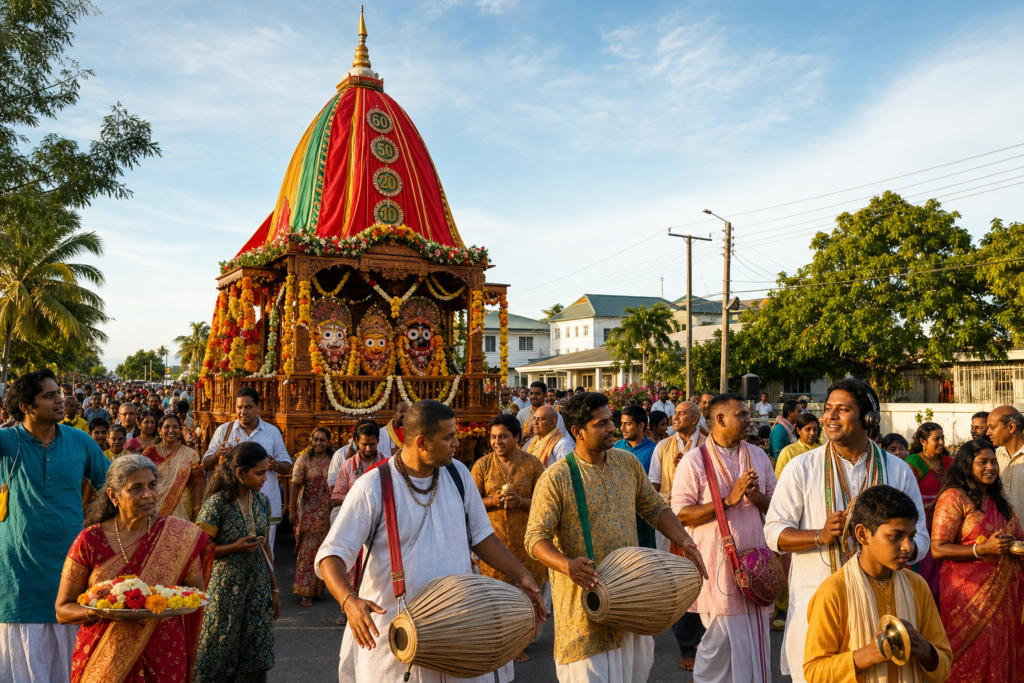
Ritually, Kasha is not a focus of independent worship, yet it remains essential to the figure’s narrative roleespecially in festivals featuring chariots and processions where reins and whips are part of the liturgical mise-en-scène. In these living traditions, the instrument’s meaning is performative: devotion moves in rhythm, and rhythm requires guidance.
For connoisseurship, several cues help identify a Pratoda. Look for a compact handle distinct from a staff, a flexible thong rather than a hook (aṅkuśa) or cord (pāśa), and a placement that aligns with directing a mount, crowd, or energy flow. In many panels, the whip’s tip points toward the vector of motionhorses, cattle, or the architectural navequietly instructing how the scene should be read.
Among case studies, Konark (13th century) is paradigmatic: charioteers with reins and whips animate the solar wheels, transforming architecture into a narrative of measured speed. Hoysala temples at Belur and Halebidu intricately carve attendants and guardians whose small lashes complement their roles within bustling courtly and martial tableaux. In eastern India’s narrative reliefs, pastoral scenes employ whips to signal care and direction rather than coercion.
In certain yoginī and śākta ensembleswith their emphasis on mastering the senses and channeling śaktithe occasional lash-like attribute harmonizes with pāśa and aṅkuśa to articulate nuanced control. Here the sculptural message converges with sādhana: energies are not suppressed but steered, a theme shared across dhārmic streams.
Seen through an inter-traditional lens that embraces Hindu, Buddhist, Jaina, and Sikh heritages as a civilizational continuum, Kasha/Pratoda stands for disciplined compassion. Where Sikh martial arts and equestrian traditions cherish reins and the rider’s light hand, and Buddhist and Jaina arts depict guardians and attendants guiding movement without excess, the shared ethic is unmistakable: strength is perfected by restraint, and restraint is a form of care.
Ultimately, the sacred whip in Hindu sculpture invites a refined way of seeing. It encourages recognition of authority as service, discipline as freedom, and order as the condition for joy. Read this way, Kasha/Pratoda is not a marginal accessory but a key to the temple’s larger teaching: motion made beautiful by measure, energy made ethical by guidance.
Inspired by this post on Hindu Blog.