The question “Who is the real father?” emerges most poignantly at the threshold of life and death. When a loved one passes, the spontaneous lament is not “the body is gone,” but “he has gone.” This natural phrasing signals an intuitive distinction between the visible body and the living principle that once animated it. Within the Hare Krishna Movement (ISKCON) and the broader stream of Sanatan Dharma, this distinction becomes the doorway to a deeper inquiry into personhood, kinship, and ultimate origin.
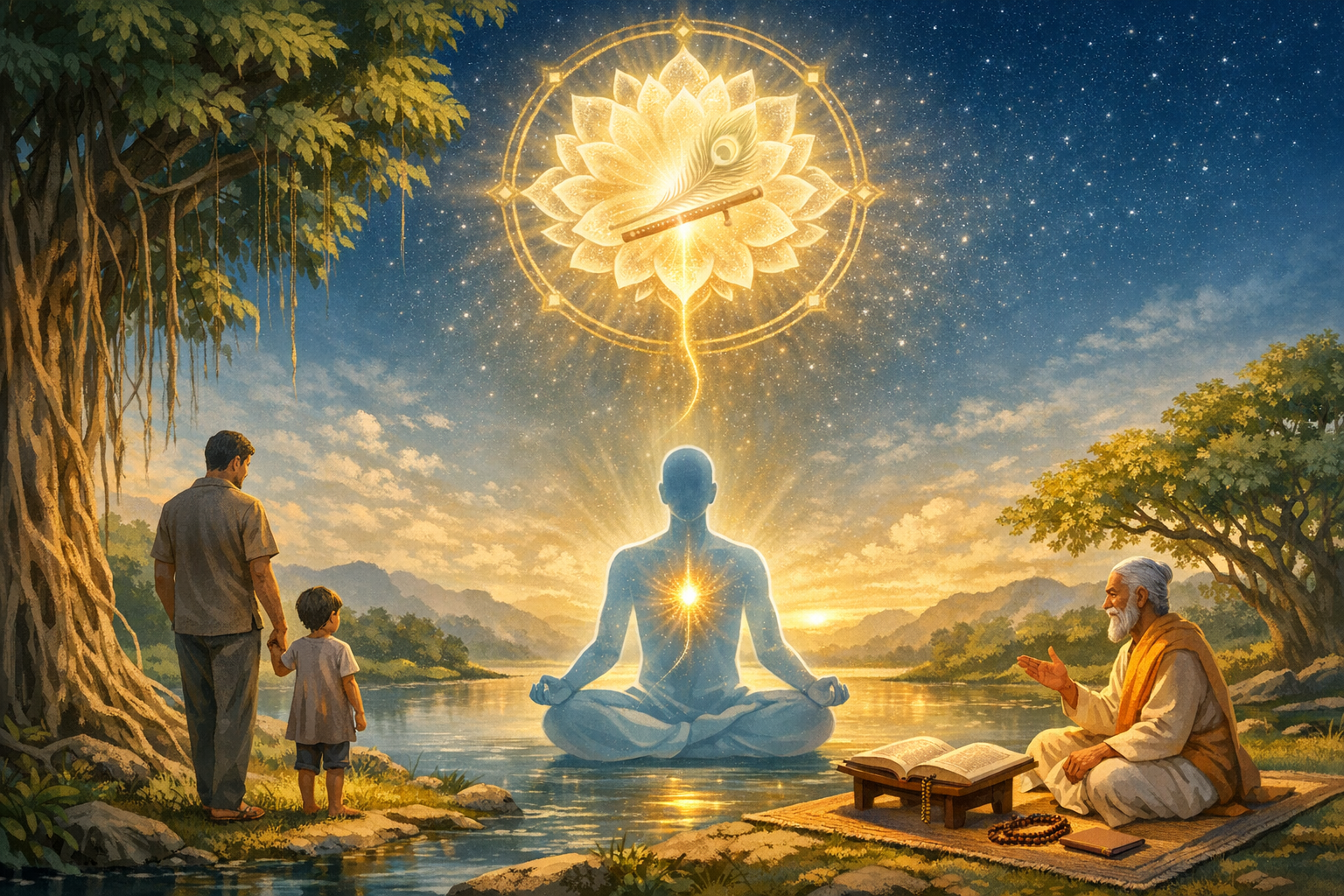
Classical Vedic philosophy describes human existence in layered terms: a gross body (sthūla-śarīra) composed of matter; a subtle body (sūkṣma-śarīra) comprising mind, intellect, and ego; and the causal sheath (kāraṇa-śarīra) that seeds experience across lives. The living presencethe conscious self (ātman, or jīva)is distinct from matter. This self is the knower of the body (kṣetrajña), while the body is the field (kṣetra) in which experience unfolds (Bhagavad Gita 13). Recognizing this difference explains why, even in grief, the language of loss points to the departure of the conscious person rather than a change in the material form.
In the Gaudiya Vaishnava perspective cherished by ISKCON, two primordial parents are acknowledged at the highest level: material nature (prakṛti) functions as the universal mother, supplying bodies and environments, while the Supreme Consciousnessaddressed as Krishnaacts as the seed-giving father (Bhagavad Gita 14.4). In this framework, the biological father begets a body; the real person is the ātman, a timeless spark of consciousness whose ultimate source is the Supreme. This is not a denial of familial bonds but a reorientation: love and duty toward one’s parents are embraced within a wider understanding of life’s spiritual origin and purpose.
A practical way to navigate this vision is to distinguish three complementary senses of “fatherhood” in Vedic thought. First, the biological father (deha-pitā) gives the body and social identity, warranting reverence and care. Second, the spiritual mentor (guru) is a dharma-pitā, the “father” who gives knowledge, character, and the discipline that lifts a person beyond mere biological existence. Third, the param-pitāSupreme Realityis the fountainhead of consciousness itself. Together, these three lenses enrich, rather than diminish, the meaning of filial duty.
Scriptural ethics in Hindu traditions stress that loving gratitude toward parents remains a sacred obligation. Classical injunctions to honor one’s mother and father, to care for elders, and to uphold lineage duties, sit comfortably alongside devotion to the ultimate source. Far from creating conflict, this layered view of parenthood elevates everyday responsibilities by placing them within a larger field of meaning: serving parents becomes an act of dharma and a step in one’s spiritual evolution.
Different schools within Hindu philosophy nuance this hierarchy in distinct but harmonious ways. Advaita Vedanta emphasizes that the ultimate Self (Brahman) is the ground of all beings; therefore, concepts like parent and child are provisional designations within empirical reality. Vishishtadvaita and Dvaita highlight a personal Supreme who stands as the loving origin and maintainer of all selveshence, “the real father” in a relational sense. Gaudiya Vaishnavism concurs with this personal emphasis, focusing devotion on Krishna as the ultimate progenitor and well-wisher of every jīva.
A dharmic, pan-Indian lens embraces related insights across sister traditions. In Buddhism, the analysis of existence proceeds without invoking a creator, yet it retains the crucial distinction between the conditioned body-mind stream and the liberating wisdom that ends suffering. The spiritual guide (kalyāṇa-mitra) assumes a compassionate, parent-like roleoffering the “nourishment” of the Dhamma toward awakening. Jain philosophy, while also non-theistic, similarly differentiates the conscious jīva from matter (ajīva) and points to the Tirthankaras as exemplary guidesfunctional “fathers” of the path who reveal how to shed karmic accretions. Sikh teachings address the Divine personally as Father, Mother, and Friend, affirming an intimate relationship with Ik Onkar that encompasses all creation. Across these traditions, the central intuition remains: what truly “goes” at death is not the body, but the conscious principle; and what sustains, guides, and ultimately frees that principle is an authority and source higher than material processes alone.
The lived implications of this insight are profound. First, it clarifies grief. Recognizing that life is not extinguished by bodily death allows space for love and lament without despair. Second, it grounds ethics. Gratitude to one’s parents, kindness to family, and responsibility to community all become expressions of dharma rather than merely social convention. Third, it harmonizes devotion and reason. The distinction between ātman and body speaks to perennial philosophical questions about consciousness, while the acknowledgment of a highest source (personal or impersonal, depending on the school) offers an orienting center for spiritual practice.
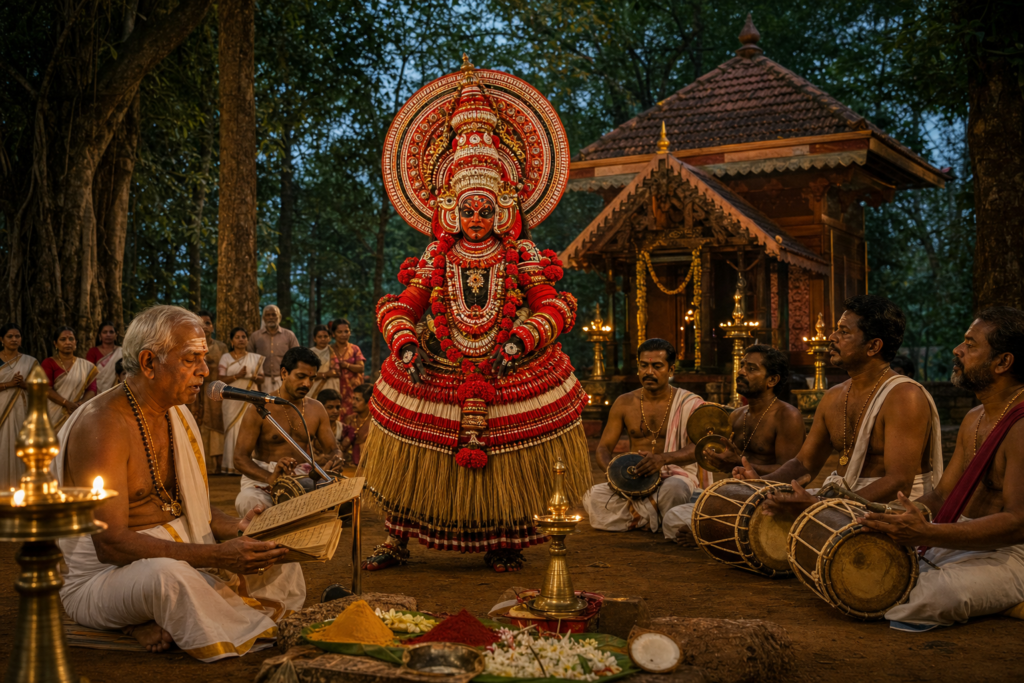
Ritual and remembrance also take on deeper meaning. Ancestor rites such as śrāddha and tarpana honor the chain of care that makes individual life possible. Within Vaishnava practice, chanting the holy names and dedicating merit to the well-being of departed kin integrates remembrance with living devotion. None of this negates scientific care for the dying or psychological support for the bereaved; rather, it complements them by addressing the existential dimension that purely material accounts leave unanswered.
From an epistemic standpoint, the “he has gone” intuition can be viewed as a convergence of perception (pratyakṣa), inference (anumāna), and testimony (śabda). Direct experience of life’s departure, inference about the distinction between a functioning organism and a conscious presence, and scriptural testimony in the Upanishads and the Bhagavad Gita together provide a multi-pronged rationale for the soul-body distinction. This triangulation honors both inquiry and inheritance, the two “parents” of knowledge in the dharmic way of knowing.
Practice makes the vision stable. ISKCON emphasizes nāma-japa, kirtan, and study of the Bhagavad Gita and Śrīmad-Bhāgavatam, habits that steadily shift identity from body-centered to soul-centered. Other streams within Sanatan Dharma may emphasize meditation, seva, or contemplation on the teachings of the Upanishads. Parallel disciplines in Buddhism, Jainism, and Sikhismmindfulness and insight, vrata and ahiṃsā, simran and sevaconverge on the same telos: clarity about the self, compassion in conduct, and liberation from suffering.
Thus, the question “Who is the real father?” is not an invitation to dismiss one’s biological parent but to situate that precious relationship within a fuller map of reality. In the dharmic synthesis, the biological father is the honored giver of this life; the spiritual guide is the trusted maker of character; and the Supreme Sourceconceived personally or impersonallyis the origin, sustainer, and final refuge of the conscious self. Seen this way, fatherhood is not a competing hierarchy but a harmonious triad that binds home, practice, and transcendence into one continuous path.
Ultimately, the most compelling reason to cultivate this father-sense is practical: it heals fragmentation. It enables one to grieve without losing hope, to serve family while seeking truth, and to walk a path that is firm in conviction yet generous in spirit. In aligning body, soul, karma, and the Supreme Source, the dharmic traditions offer a unified, compassionate answer: the real father is the one who gives not only a beginning in this world but also a direction beyond it.
Inspired by this post on Hindu Pad.