Divine touch, articulated in many Dharmic traditions as anugraha or divya sparśa, refers to a transforming encounter with the sacred that reorients understanding, feeling, and conduct. Rather than a single phenomenon, it spans a spectrumfrom a literal transmission in ritual or initiation to a metaphor for the sudden recognition of the ultimate reality described in the Upanishads and elaborated in the Bhakti Tradition. Across Sanatana Dharma and its sister traditions of Buddhism, Jainism, and Sikhism, this touch is received not as coercion but as a freely given grace that harmonizes with disciplined practice, ethical life, and compassionate service.
Classical vocabulary helps frame the idea with precision. The Sanskrit anugraha (grace, benevolent bestowal) emphasizes divine initiative; sparśa (touch) underscores embodied immediacy; and, in certain schools, śaktipāta (descent of power) highlights experiential transmission. In ritual theology, abhiṣeka (anointing) and dīkṣā (initiation) can include forms of touch, while in contemplative philosophy, the “touch” can be an inward awakening of prajñā (insight) consistent with Vedic wisdom.
Hindu scriptures and hagiographies often weave this theme into lives of rishis and devotees whose steadfast bhakti prepares receptivity to grace. Traditions remember sages and royal exemplars such as Sage Bhrigu, Markandeya, Periyalvar, Malayathvaja Pandiyan, and Akash Raj as figures whothrough devotion and servicewere associated with proximity to the divine. Their narratives, taken as spiritual exemplars rather than mere chronicles, illustrate how devotion and virtue become conduits for anugraha.
In Vaishnava lore, the episode of Bhrigu and Vishnu is read as a profound lesson in humility and compassion: the Lord’s patient response to the sage’s provocation conveys a “touch” of transforming forbearance. In Shaiva sources, Markandeya’s devotion at the linga culminates in Shiva’s protective grace, a moment often described as the triumph of steadfast bhakti over existential dread. These narratives do not function as isolated marvels; they map a pedagogy of the heart, showing how divine grace aligns with moral clarity and unwavering remembrance.
Periyalvar’s hymns exemplify vātsalya-bhāvadevotional love suffused with parental tendernesswhere the divine touch is felt as intimate nearness to Krishna. Within Sri Vaishnava tradition, such poetry is understood as both scriptural testimony and inner practice manual, guiding adherents to cultivate love, humility, and service so that grace naturally finds a receptive abode.
Royal paradigms also illustrate grace as responsibility. In southern narratives, Malayathvaja Pandiyan is remembered for yajña-centered kingship aligned with dharma, while Akash Raj is tied to the Tirumala tradition as a devotee whose service supports the Lord’s presence among people. In both cases, kingship becomes stewardship, and stewardship becomes a pathway through which the divine touch reaches the community.
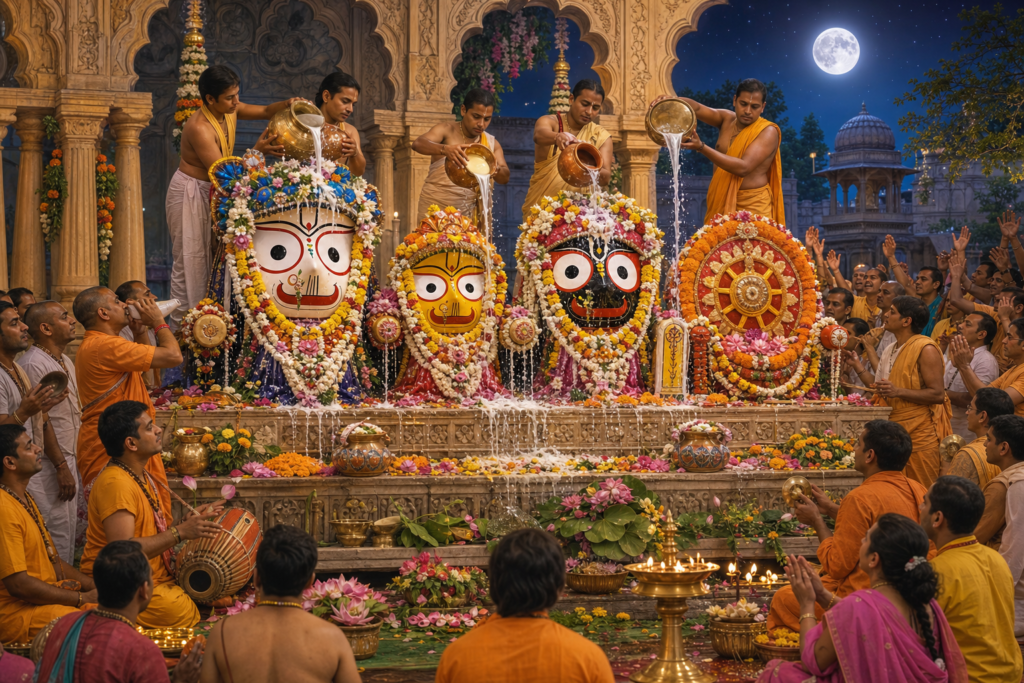
Ritual practice offers a concrete grammar of contact. In temple worship, abhiṣekam (ritual bathing of the deity), alaṅkāra (adornment), and dārśana (beholding the Lord) create layers of proximity: touch by consecrated waters, fragrance of sandal and tulasi, and sight of the murti are experienced as vectors of anugraha. Prasāda and tīrtha, in this theological ecology, function as sanctified substances bearing the imprint of grace to the devotee.
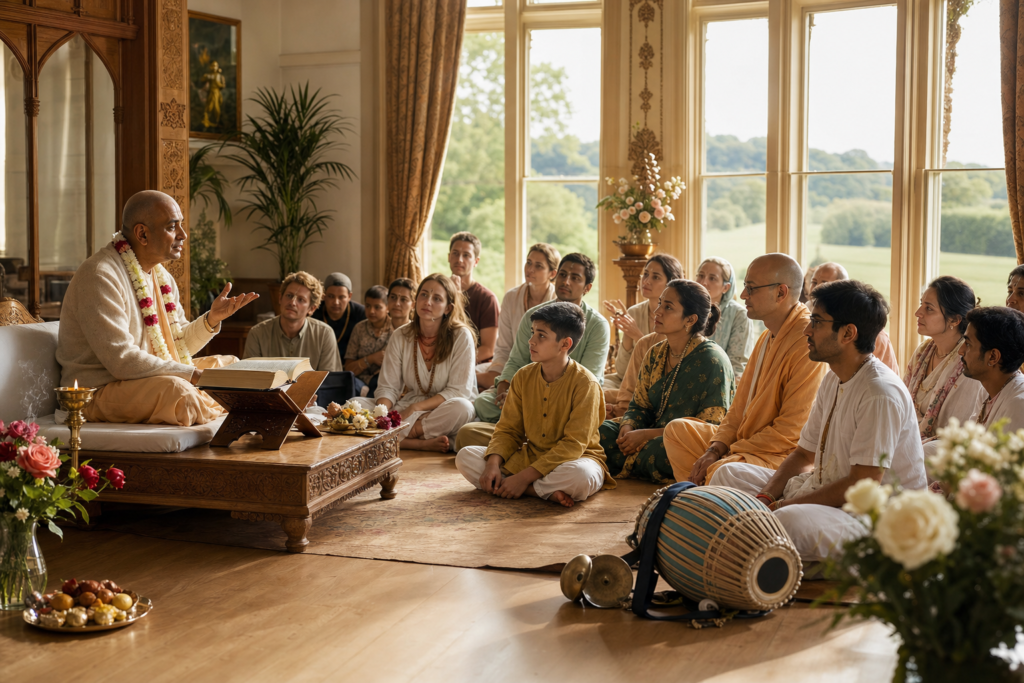
Initiatory lineages speak more technically about transmission. In some Shaiva traditions, sparśa-dīkṣā denotes initiation by touch, while Sri Vaishnava pancha-saṁskāra inscribes belonging through sacred marks, mantra, and vows under the guru’s guidance. Bhakti pedagogy adds that the Guru–Śiṣya Relationship is a living conduit for divine knowledge; when consonant with śāstra and sat-ācāra (right conduct), the teacher’s blessing can feel palpably like a divine touch.
Philosophically, anugraha and effort are complementary, not contradictory. The Bhagavad Gita affirms that divine grace meets disciplined yogashraddhā, abhyāsa (steady practice), vairāgya (dispassion), and dharmic conduct. The Upanishads teach that realization is “seen” by an inner eye purified by truthfulness, self-restraint, and inquiry; the “touch” here is the dawning of insight into ātman–Brahman identity, felt as uncaused joy and clarity.
Yogic physiology provides an embodied vocabulary for these states. As breath deepens and attention refines, practitioners often report warmth in the anāhata (heart) region, a spacious quietude, or spontaneous gratitudesomatic correlates of a mind settling into sattva. In many lineages, this coherence is interpreted as receptivity to anugraha rather than a product of egoic striving, consistent with the axiom that grace is invoked by purity and service, not possessed as accomplishment.
Contemporary psychology offers converging insights without reducing the sacred to the material. Gentle touch, synchronized chanting, and contemplative stillness modulate the autonomic nervous system, enhance vagal tone, and promote affiliative emotions. While these mechanisms do not “explain away” grace, they clarify how ritual, community, and contemplative practices prepare the mind–body to recognize and stabilize profound experiences traditionally described as divine touch.
In the Bhakti Tradition, love is method and result. Nama-japa, kirtan, and seva cultivate qualitieshumility, compassion, steadfastnessthat harmonize the aspirant’s inner world with grace’s descent. Texts emphasize that divine proximity is invited by ethical refinement (yama–niyama), disciplined remembrance, and heartfelt surrender (śaraṇāgati), ensuring that mystical intensity remains tethered to moral clarity.
The concept also radiates across Dharmic sister traditions, underscoring unity in spiritual diversity. Buddhism valorizes the awakening of the luminous mind (pabhassara citta), where compassion (karuṇā) functions like a healing touch reshaping perception and conduct. Vajrayāna abhiṣeka formalizes transmission through empowered rituals, combining devotion, mantra, and visualization to align the practitioner’s continuum with awakened qualities.
Jainism, while non-theistic in its metaphysics, speaks of the transformative presence of Tirthankaras, whose kevala jñāna manifests as divya-dhvanian all-language teaching that “touches” seekers through clarity and non-violence (ahiṁsā). Here the divine touch is the imprint of perfect insight on consciousness, received through right faith, right knowledge, and right conduct rather than supplication to a creator.
Sikhism articulates grace as Nadar and Gurprasād, emphasizing that the Divine bestows understanding and virtue through the Guru’s wisdom and the Sangat’s shared devotion. The inward “touch” arrives as fearlessness, humility, and service, cultivated by simran (remembrance) and kirtan within an ethical life devoted to equality and compassion.
In every case, grace aligns with responsibility. Whether described as anugraha, Nadar, the imprint of kevala jñāna, or the transmission of abhiṣeka, the divine touch deepens virtue and dissolves separateness. This unity across traditions safeguards a shared civilizational insight: authentic spiritual experience expands compassion and strengthens social harmony.
Practical pathways are consistent and accessible. Regular temple dārśana or gurdwara sangat, scriptural study of the Upanishads, Bhagavad Gita, and devotional hymns, disciplined breathwork and meditation, and daily seva anchor inner refinement. Community rituals, whether abhiṣekam, kirtan, satsang, or collective dana (charity), foster a field where grace is recognized and shared.
Safeguards are equally essential. Traditions insist on accountability to śāstra, guru-paramparā, and ethical norms so that claims of special transmission remain humble, verifiable in conduct, and oriented to loka-saṅgraha (the welfare of all). Grace is not performance; it is recognizable by increased integrity, empathy, and steadiness in the face of adversity.
Read through this lens, accounts of Sage Bhrigu, Markandeya, Periyalvar, Malayathvaja Pandiyan, and Akash Raj illustrate a single teaching: sincere bhakti and dharmic service prepare the ground on which the divine touch is received and embodied. Their legacy is prescriptive rather than merely descriptivelive so that grace can work through one’s thoughts, words, and actions.
Ultimately, the divine touch is less about an extraordinary moment than a reconfigured life. It guides a turn from self-centered striving to relational wholenesstoward family, community, society, and the natural world. In honoring unity in spiritual diversity, the Dharmic traditions together affirm that the highest touch is the awakening of wisdom and compassion for all beings.
Inspired by this post on Hindu Pad.