Kamyakali is revered in Shakta lineages as an auspicious and potent form of Goddess Kali who harmonizes fierce protection with maternal compassion. Traditional teachings in Hinduism recognize multiple manifestations of Kali, and several lineages preserve enumerations in which Kamyakali is counted among eleven venerated forms. While these lists vary by region and text, a consistent thread remains: Kamyakali embodies the boon-bestowing presence of the Divine Mother who responds to righteous intention and disciplined devotion.
Etymologically, kāmya in Sanskrit denotes that which is desired or sought, and in Dharmaśāstra and Mīmāṁsā discourse kāmya-karman refers to optional, aim-oriented rites. Read through a Shakta-theological lens, Kamyakali does not sanction unexamined craving; rather, she represents Shakti’s readiness to bless aspirations refined by dharma, wisdom, and self-restraint. In this way, Kamyakali transforms desire into responsibility, aligning personal aims with the well-being of family, community, and the broader moral order.
Within the wider framework of Shaktism, Kali signifies time, change, and the luminous power that clears ignorance. Kamyakali highlights this same transformative agency with an accent on fulfillment that uplifts rather than binds. Icchā-śakti (will), jñāna-śakti (insight), and kriyā-śakti (efficacious action) converge so that what is sought is both ethically grounded and spiritually fructifying. When devotees pray to Kamyakali, the hope is not mere acquisition; it is the maturation of will into clarity and compassionate action.
The classical four aims of lifedharma, artha, kāma, and mokshaframe the inner logic of Kamyakali’s grace. Dharma governs how artha (resources) and kāma (desire) are pursued; moksha (liberation) remains the horizon that prevents fixation. Kamyakali blesses that alignment, encouraging practitioners to exchange restless consumption for purposeful aspiration, and impulsive wanting for devotional steadiness (śraddhā). In numerous communities, she is therefore invoked to guide vocation, family decisions, and service (seva) in a way that benefits many and harms none.
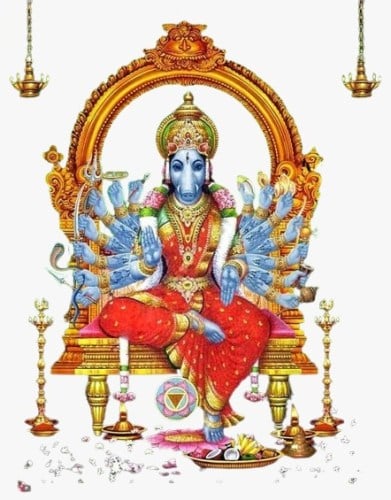
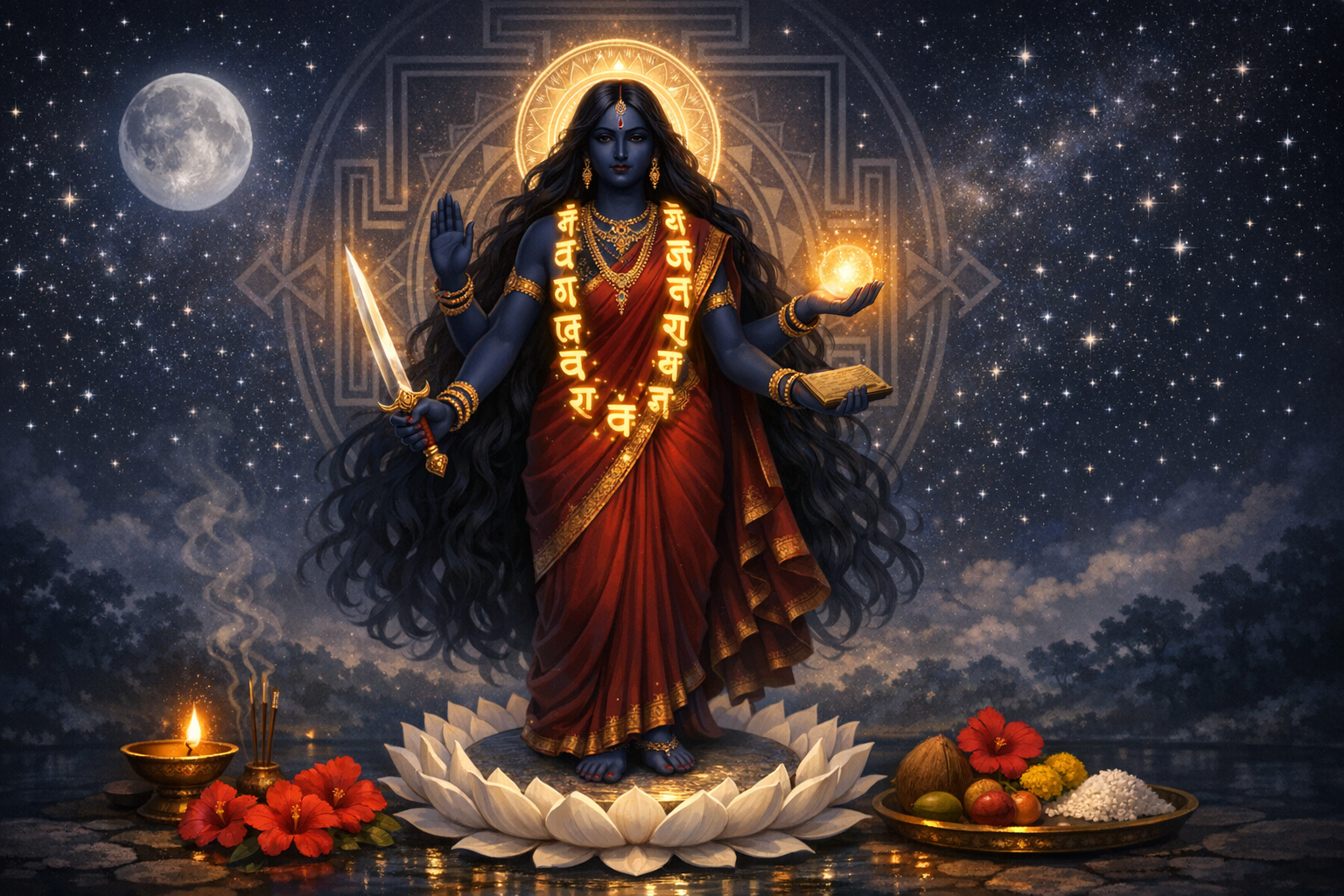
As with all forms of Kali, iconography of Kamyakali varies across texts and regions. Core motifs of Kali’s imagerydark hue symbolizing the ground of being, unbound hair representing freedom from rigid convention, and the integration of fear-dispelling (abhaya) and boon-giving (varada) gesturesremain. When artists and ritualists accentuate Kamyakali’s “desire-fulfilling” dimension, they often foreground her blessing hands, the use of red hibiscus (japa puṣpa) as offering, and a gaze that conveys both fierce vigilance and maternal assurance. Such variations are interpretive refinements rather than contradictions of the classical Kali schema.
The semiotics of Kali’s attributes invite disciplined contemplation. The sword speaks to discriminative wisdom (viveka) that cuts through confusion; the severed head is a stark emblem of ego’s surrender and the ending of ignorance (avidyā); the garland of heads or letters is often read as the manifold of speech and knowledge gathered into unity; the foot placed upon Shiva poetically signals Shakti’s impulse awakening inert consciousness to dynamic life. In Kamyakali’s context, these potent symbols converge to show how discernment and surrender prepare the ground for genuine fulfillment.
Ritual time and space matter in Shakta practice. Kartika Amavasya, widely celebrated as Kali Puja in eastern India and coinciding with Deepavali, becomes a principal night for venerating Kali in her many forms, including Kamyakali. Tuesdays and Saturdays are also favored in several communities. While cremation-ground (śmaśāna) imagery is central to Kali’s esoteric symbolism, most household observances are serene, home- or temple-based acts of devotion that transmute the metaphor of “ego-death” into contemplative stillness and ethical renewal.
Householder worship commonly follows the Panchopachara five offeringsgandha (fragrance), puṣpa (flowers), dhūpa (incense), dīpa (lamp), and naivedya (consecrated food). These gestures are simple, dignified, and theologically rich: they return the beauty of the world to the Divine Mother and, in so doing, shape the practitioner’s inner climate toward gratitude and moderation. In many homes and temples, the ritual cadence stays satvic and contemplative, allowing Kamyakali’s protective and nurturing presence to be felt as calm courage.
Mantra is approached with reverence across Shakta traditions, and lineage guidance remains paramount. A widely attested devotional mantra for Kali is “Om Krīm Kālikāyai Namaḥ,” invoking the Krīm bīja associated with Kali’s transformative power. Traditions differ in nyāsa, meters, and counts; some emphasize silent japa over loud recitation to settle the mind and protect sanctity. Practitioners are encouraged to seek responsible instruction and avoid self-initiating advanced tantric procedures, keeping the emphasis on devotion, ethical living, and inward clarity.
A considered rhythm for Kamyakali practice often includes: a clear sankalpa (statement of intention aligned with dharma), a short period of breath awareness, the offering of the Panchopachara sequence, and mantric japa with attentive posture. A brief reflective period of silence at the end consolidates insight and steadies resolve. These elementsunadorned yet luminousmirror Kamyakali’s promise to turn sincere, modest practices into meaningful transformation.
Psychologically, Kamyakali guides a shift from kāmya (aim-seeking) to niṣkāma (selfless) devotion. The initial appealhelp in study, livelihood, protectionbecomes a doorway into deeper self-examination: What truly matters? What serves the common good? Over time, fear and restlessness can give way to courage and composure, as devotees recognize that the deepest fulfillment arises when personal aims resonate with moral clarity and compassion.
Yogically, Kamyakali’s symbolism can be read as the sublimation of raw impulse (kāma) into luminous energy (ojas) through steadiness, discernment, and mindful restraint. On this reading, swādhishthāna’s turbulent desire is schooled by maṇipūra’s discipline and anāhata’s care, so that aspiration becomes service, and longing matures into devotion. The Mother’s fierce aspect protects this process, clearing obstacles and guarding the threshold against distraction.
Ethical guardrailsahiṁsā, satya, asteya, aparigraha, and a thoughtful approach to brahmacharyaanchor the boon-bestowing dimension of Kamyakali. When these virtues are kept, the fulfillment sought is not zero-sum; it becomes naturally aligned with fairness, dignity, and restraint. In Shakta communities, this ethical emphasis is not adjunct to devotion but its very heart, ensuring that spiritual aspiration heals, includes, and uplifts.
Devotees across regions often speak of Kamyakali in language that is both intimate and awe-filled: an unsettling first encounter that becomes a refuge, a silent prayer answered through unexpected clarity, a season of anxiety steadied into purposeful action. Such narratives cohere around a patternfierceness that removes what harms, and compassion that nourishes what is wholesome. For many, Kamyakali is felt as the immanent, day-to-day nearness of the Divine Mother who turns ordinary life into a field of sacred learning.
Textually and historically, diverse Shakta sourcessuch as the Kalika Purana and various Tantric compendiaaffirm Kali’s multiplicity. Enumerations differ, reflecting the creativity of regional traditions and temple liturgies from Bengal and Assam to Odisha and Tamil Nadu. Rather than competing, these articulations reveal a living tradition where local memory, poetic imagination, and disciplined practice continuously refresh the presence of the Goddess.
Advanced symbolism, including references to practices like the Panchamundi Asana, has often been misunderstood. Responsible teachers emphasize that such motifs are primarily contemplative signs of conquering inner limitations and integrating the five sheaths or elements. For contemporary practitioners, the safest and most effective approach remains devotional worship, ethical living, study, and meditationavenues that are universal, inclusive, and consonant with household life.
Resonances with other Dharmic traditions foster unity rather than fusion. In Buddhist Vajrayana, the fierce-compassion of wrathful deities (for example, Mahākāla) protects wisdom and dispels obstacles; in Jainism, tapas and aparigraha refine desire into clarity and care; in Sikhism, truthful living (sat) and alignment with hukam cultivate purpose and courage. Kamyakali’s spiritual grammartransformation of desire by discernment and compassionthus speaks a shared Dharmic language of responsibility, restraint, and liberation.
The Goddess’s feminine symbolism dignifies life-making power as sacred. In many communities, Kamyakali devotion strengthens social confidence, reverence for mothers and daughters, and commitment to education and safety. Theologically, this honors Shakti not merely as metaphysical energy but as the dignity of persons, families, and communities striving for justice, wisdom, and mutual care.
In contemporary life marked by speed and saturation, Kamyakali offers a corrective: measure desire by dharma, exchange comparison for contentment, and turn capability into service. This reorientation naturally supports mindful consumption, gratitude, and community solidarity. It also stabilizes the inner life, making room for the quiet joy that deepens practice and clarifies choices.
A gentle, beginner-friendly observance might include nine minutes daily: two minutes of relaxed breath-awareness; three minutes of simple Panchopachara offerings; two minutes of “Om Krīm Kālikāyai Namaḥ” with focused attention; and two minutes of silent gratitude. Regularity matters more than intensity. Over weeks and months, many notice that the quality of intention changesthe hallmark, in Shakta understanding, of Kamyakali’s grace.
Ultimately, Kamyakali teaches that desire need not be erased to be sanctified. When illumined by wisdom and held by compassion, aspiration becomes a force for courage, creativity, and care. This is why Kamyakali is called auspicious and powerful: she does not merely grant what is askedshe refines the asker, making the heart capacious enough to hold both fulfillment and freedom.
In honoring Kamyakali, the plural spirit of Hinduism is affirmedmany forms, many methods, one compassionate aim. This openness aligns with the broader unity of Dharmic traditions, where multiple paths of discipline and devotion are welcomed as complementary. The result is a culture of inclusion rather than imposition, dialogue rather than division, and spiritual growth that enriches the shared human home.
Inspired by this post on Hindu Blog.