
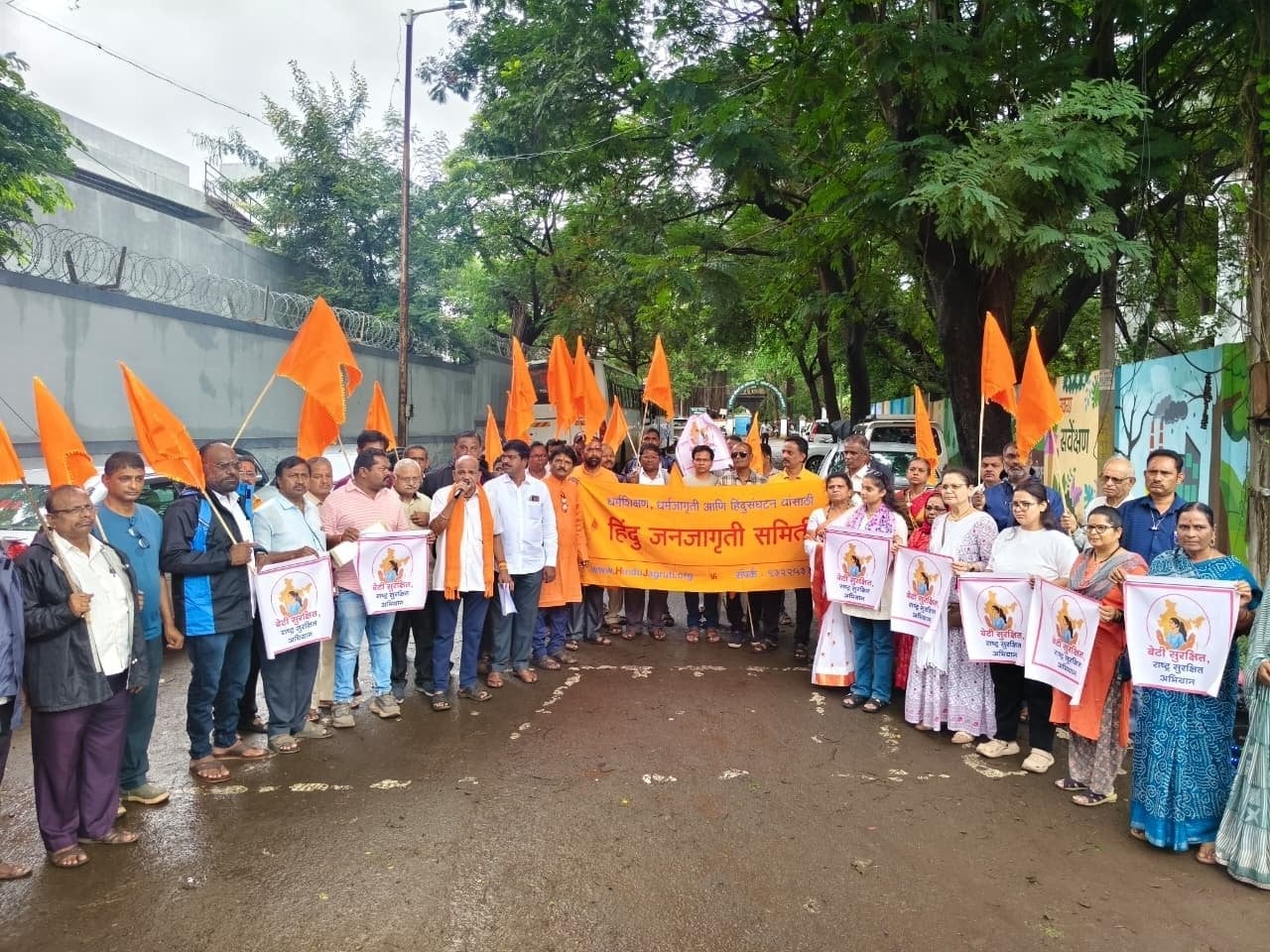
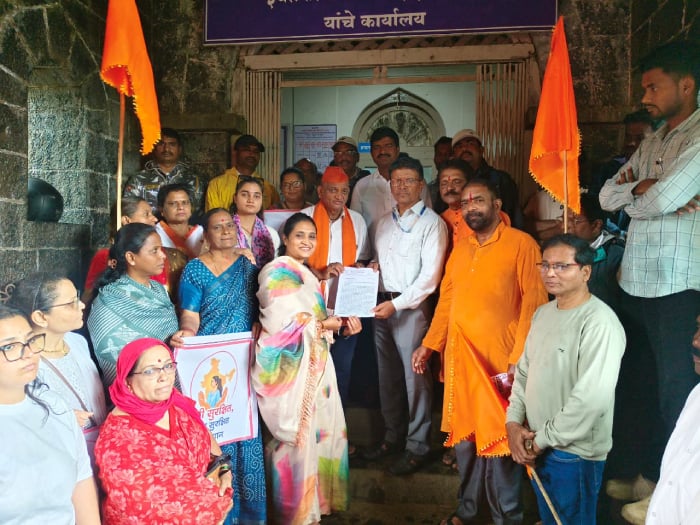
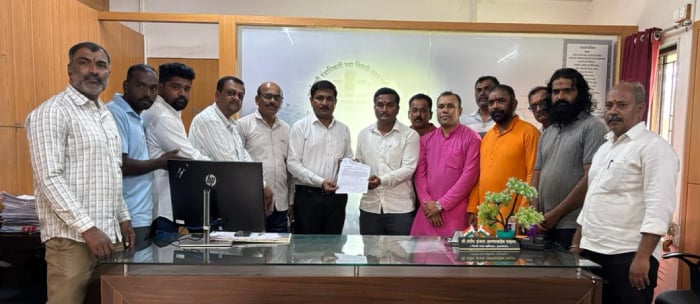
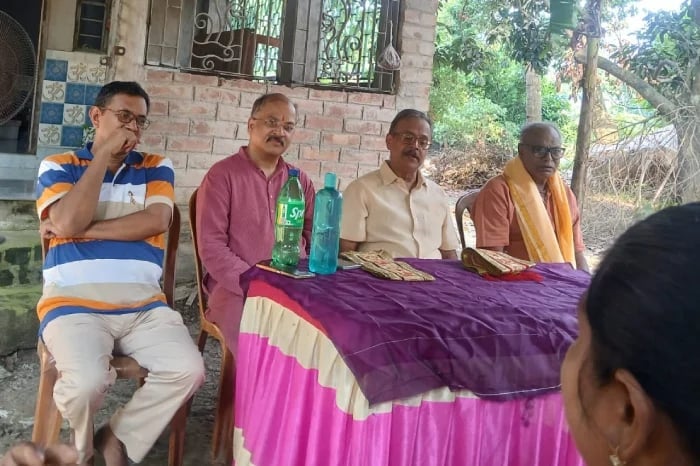
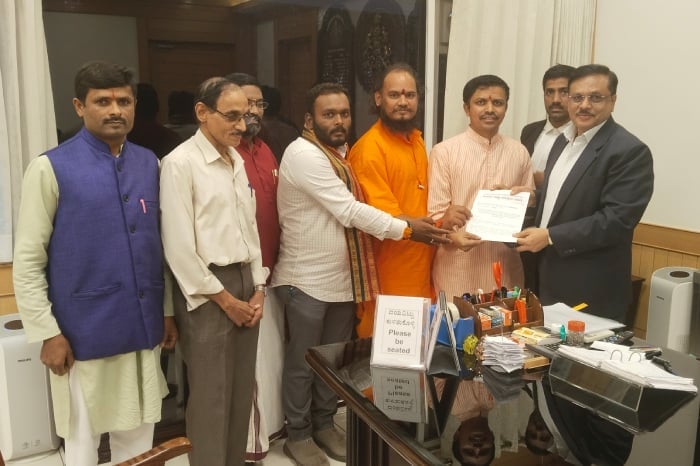
A joint demonstration in Ichalkaranji: Hindu Janajagruti Samiti (HJS), together with other Hindu organisations, reportedly staged a protest in Ichalkaranji demanding urgent state action on what participants described as “love jihad.” The organisations called for the proposed Maharashtra law to be brought into operation and presented their demand as a measure for protecting young women from deceptive relationships, coercion and forced religious conversion. The available event report does not identify the date, exact venue, attendance, complete list of participating organisations, speakers, police response or recipient of any memorandum. Those details therefore cannot be asserted without additional documentation.
What the protest establishes: The concise record supports three limited conclusions. The demonstration was collective rather than the initiative of HJS alone; its central demand concerned legislation rather than the adjudication of a named individual case; and women’s safety supplied the principal public justification. The protest also illustrates how local organisations translate anxieties about relationships, religious identity and conversion into demands for state intervention. It does not, by itself, establish the prevalence of the alleged conduct, prove an organised conspiracy or demonstrate that a particular legislative design would be effective.
A contested expression requires precise use: “Love jihad” is a political and social expression used by some organisations for alleged cases in which a relationship involves concealed identity, deception, coercion or pressure to convert. It is not a neutral finding of fact, and its use should not predetermine the result of a police investigation. In a Lok Sabha reply dated 4 February 2020, the Union Ministry of Home Affairs stated that the term was not defined under the laws then in force and that no such case had been reported by a central agency, while noting that the National Investigation Agency had examined two Kerala cases involving interfaith marriages. That statement concerned the legal category and information available at that time; it did not render independently provable acts such as fraud, intimidation, sexual violence or forced conversion lawful.
Three different situations must remain distinct: A lawful relationship between consenting adults, a voluntary decision to adopt or leave a faith, and a relationship involving criminal deception or coercion are legally and ethically different. Interfaith status does not prove exploitation. Conversion following a relationship does not, without further evidence, prove force. Conversely, describing a relationship as consensual cannot excuse threats, blackmail, impersonation, confinement, sexual abuse or deliberate manipulation of a minor. Sound policy begins by separating these categories and testing each allegation against evidence rather than communal assumptions.
The emotional stakes are real on more than one side: Families can experience genuine fear when a young person becomes isolated, receives threats or appears to be controlled by a partner. Young women can simultaneously fear violence from an intimate partner and loss of autonomy through surveillance, social pressure or forced separation imposed in the name of protection. A credible women’s-safety framework must answer both fears. It should protect individuals from predatory conduct without treating an adult woman as incapable of forming her own beliefs, relationships or life plans.
Existing criminal law already addresses significant parts of the alleged conduct: The Bharatiya Nyaya Sanhita, 2023, in force from 1 July 2024, contains offences relating to rape, sexual harassment, stalking, kidnapping, abduction, cheating, criminal intimidation and violence. Section 69 specifically addresses sexual intercourse obtained through deceitful means or through a promise to marry made without an intention to fulfil it, where the conduct does not amount to rape; its explanation includes marrying after suppressing identity. These provisions apply according to their statutory ingredients and evidence, not according to the religion of the complainant or accused.
Cases involving minors demand a separate legal analysis: The Protection of Children from Sexual Offences Act, 2012 defines a child as a person below eighteen and establishes a dedicated framework for sexual offences against children. A minor’s apparent agreement does not remove the statutory protections provided by POCSO. Age verification, immediate safety, confidential handling, mandatory reporting obligations and child-sensitive investigation are therefore more important than a communal label when a minor is involved.
The legislative question is consequently narrower than public rhetoric often suggests: The issue is not whether rape, stalking, blackmail, abduction or sexual exploitation should be prohibited; they already are. The more specific question is whether Maharashtra needs an additional law focused on unlawful religious conversion, whether that law closes a demonstrable enforcement gap, and whether its procedures can distinguish coercion from voluntary belief and adult choice. A special statute may create dedicated remedies and investigative powers, but duplication, vague definitions or intrusive procedures can also produce unintended harm.
Interfaith marriage remains lawful: The Special Marriage Act, 1954 provides a civil framework under which eligible adults may marry without adopting the same religion. In Shafin Jahan v. Asokan K.M., the Supreme Court restored the marriage of an adult woman whose choice had been displaced in habeas corpus proceedings. The Court treated the choice of a partner and matters of faith as central aspects of individual liberty and autonomy. It also clarified that investigation into independently alleged criminality could continue. The constitutional principle is therefore not immunity from investigation; it is that investigation cannot become a substitute for family, community or state approval of an adult’s partner.

Freedom of conscience protects choice while excluding coercion: Articles 14, 15, 21 and 25 of the Constitution place equality, non-discrimination, personal liberty and freedom of conscience at the centre of the analysis. Article 25 is subject to public order, morality, health and other fundamental rights. In Rev. Stainislaus v. State of Madhya Pradesh, the Supreme Court upheld laws prohibiting conversion through force, fraud or allurement and held that the right to propagate a religion does not confer a right to convert another person. Read alongside later autonomy jurisprudence, the workable distinction is between a person choosing a faith and another person overriding that choice.
“Implementation” and “enactment” are not interchangeable: The Ichalkaranji protesters were reported as demanding immediate implementation of a proposed law. At the proposal stage, however, a bill cannot be enforced as if it were already an operative statute. It must be introduced, considered and passed by the competent legislature, receive the constitutionally required assent, be published, and commence in the manner specified by its text. Rules, designated authorities, police protocols and financial arrangements may also be needed. Precision about these stages improves democratic accountability because it identifies the institution responsible for each decision.
Maharashtra subsequently developed a specific legislative text: The Maharashtra Freedom of Religion Bill, 2026 was introduced in the Legislative Assembly on 13 March 2026. The official text does not create an offence formally named “love jihad.” Instead, it proposes a religion-neutral statutory scheme prohibiting conversion through allurement, coercion, deceit, force, misrepresentation, threat, undue influence, fraudulent means or specified conduct connected with marriage. Calling it an anti-love-jihad law is therefore political shorthand rather than the bill’s legal title or terminology.
The legislative stage later changed: The bill cleared the Legislative Assembly and Legislative Council in mid-March 2026, as reported after the Council vote. Passage by both houses did not make it immediately enforceable. A status report dated 11 May 2026 quoted Maharashtra’s Minister of State for Home as saying that the measure had not received presidential assent and could not then be applied. Even after assent, clause 1(2) of the bill requires a separate State Government notification appointing its commencement date. Any later publication should verify whether that status has changed.
The bill’s definitions extend beyond romantic deception: “Allurement” includes gifts, money, employment, free education at an institution run by a religious body, a promise of marriage, a better lifestyle, divine healing, portraying one religion’s practices detrimentally in comparison with another, and glorifying one religion over another. “Coercion” includes physical force, psychological pressure, threats, divine displeasure and social excommunication. Fraudulent conduct includes impersonation through a false name, surname or religious symbol. “Unlawful conversion” also includes the bill’s undefined idea of brainwashing through education. These provisions show that the proposed framework has a considerably wider reach than cases involving intimate partners.
The proposed conversion procedure is extensive: A person intending to convert, as well as any person or institution organising the ceremony, would have to provide sixty days’ prior notice to the District Magistrate or another competent authority. The proposed conversion would be displayed on official and local-government notice boards, with thirty days allowed for objections. The authority could order a police inquiry into the intention, purpose or cause of conversion. After conversion, the converted person and organiser would have twenty-one days to submit declarations containing personal and religious details. Failure to submit the post-conversion declaration would make the conversion null and void under the bill.
Its enforcement provisions are equally consequential: The converted person, parents, siblings and other relatives by blood, marriage or adoption could lodge a first information report. Police would be required to register a complaint made by an eligible person, and an officer could take suo motu cognisance when satisfied that a contravention had occurred or was occurring. Investigation would have to be conducted by an officer of at least sub-inspector rank. Offences would be cognisable, non-bailable and triable by a Court of Session. The burden of proving that a conversion was lawful would rest on the person alleged to have caused it and on anyone accused of aiding or abetting it.
Penalties and civil consequences are substantial: The bill prescribes seven years’ imprisonment and a fine of ₹1 lakh for a basic offence. Where the person converted is a minor, a woman, a person of unsound mind or a member of a Scheduled Caste or Scheduled Tribe, it prescribes seven years and a ₹5 lakh fine. The same enhanced fine applies to mass conversion, while a repeat offence attracts ten years and ₹7 lakh. A court could declare a marriage undertaken solely for unlawful conversion null and void on a petition by either spouse. The bill also addresses maintenance, custody and rehabilitation, and it would deem a child born from a marriage caused by unlawful conversion to belong to the mother’s pre-marriage religion. That last provision raises separate questions about children’s identity and family rights beyond the immediate problem of coercion.

The supporters’ case deserves accurate presentation: Organisations seeking the law argue that general criminal provisions respond only after serious harm, do not capture conversion as a distinct objective and may be inadequate where institutions or coordinated networks are alleged. They favour stronger penalties, early administrative scrutiny, specialised investigation and rehabilitation for victims. The Ichalkaranji protest belongs to this wider campaign and demonstrates organised public pressure for a preventive legal framework. These arguments can be evaluated seriously without treating every interfaith relationship as evidence of a scheme.
The safeguards require equally serious scrutiny: Broad concepts such as psychological pressure, better lifestyle, glorification and brainwashing may be interpreted inconsistently unless rules and courts establish clear limits. Publicly displaying a proposed conversion can expose an individual to family retaliation, social boycott or community mobilisation before any wrongdoing has been established. Complaints initiated by relatives may protect an isolated victim, but they may also be used against an adult who repeatedly affirms a voluntary choice. Reversing the burden of proof and making every offence non-bailable further increases the importance of precise definitions, prompt judicial review and penalties for abuse of process.
An allegation of organised activity demands organised evidence: A few severe crimes can justify forceful enforcement against their perpetrators, but they do not automatically prove a coordinated campaign. Establishing coordination would ordinarily require evidence of common actors, instructions, financing, communication records, planned victim selection, repeated methods or institutional assistance. Missing-person statistics, interfaith-marriage totals or isolated news reports cannot independently establish motive, conversion, coercion or conspiracy. Public policy should therefore rely on standardised case data, completed investigations and judicial outcomes rather than combining unrelated incidents under one label.
A survivor-centred investigative protocol would improve both safety and accuracy: Authorities should first verify age and immediate danger, allow the person concerned to speak privately and without family or organisational representatives, and document whether there are threats, injuries, confinement, blackmail or non-consensual images. Investigators should preserve digital evidence with a reliable chain of custody, verify disputed identities, examine relevant financial transfers and distinguish a temporary request for protection from detention of a competent adult. Medical care, counselling, legal assistance and shelter should be offered where required. Survivor identities and intimate material must remain confidential.

Prevention cannot depend on criminal law alone: Effective protection includes education about consent, coercive control, digital grooming, impersonation, financial exploitation and image-based abuse. Warning signs such as escalating isolation, threats, blackmail, demands for secrecy, control over money or communications, and deliberate identity concealment should be assessed consistently, regardless of the religions of those involved. Schools, colleges, community bodies and families can strengthen safety by improving legal literacy and access to trusted professional help rather than circulating unverified allegations.
Family communication is itself a protective institution: Young people who expect humiliation, violence or permanent rejection at home may conceal relationships and become more dependent on an abusive partner. Families that keep communication open are better positioned to notice coercion, offer a safe exit and help preserve evidence. Protection becomes counterproductive when it takes the form of confiscating phones, restricting education, forcing confinement or threatening an adult for exercising lawful choice. The objective should be informed autonomy supported by dependable relationships, not guardianship without limits.
Peaceful protest has a legitimate democratic role: Citizens and organisations may assemble, petition representatives and advocate legislative change within the law. Such mobilisation can bring neglected safety concerns into public debate. It must not, however, become vigilantism, public interrogation of couples, disclosure of a survivor’s identity, intimidation of families or collective punishment of a religious community. Police findings, charges and convictions should also be described accurately: an accusation is not a conviction, and organisational claims do not replace evidence tested through due process.
A dharmic framework strengthens this restraint: Hindu, Buddhist, Jain and Sikh traditions are internally diverse, yet their public ethics offer powerful languages of truth, non-harm, compassion, dignity, courage and service. Applied to women’s safety, those principles support assistance to a person facing coercion while rejecting hatred toward uninvolved people. Dharmic unity is not strengthened by transferring the alleged wrongdoing of an individual to an entire community. It is strengthened when institutions protect the vulnerable, respect conscience and insist that justice remain disciplined by सत्य, evidence and lawful procedure.
Any eventual law should be evaluated through measurable outcomes: Maharashtra would need anonymised data on complaints, complainant relationship to the converted person, alleged method of coercion, police closures, charge sheets, bail decisions, trials, convictions, acquittals, processing times and protection delivered to victims. Independent audits should examine whether particular communities or consensual adult couples are being disproportionately targeted. Police training, confidential legal aid, accessible review mechanisms and periodic legislative assessment would reveal whether the law prevents harm or merely increases arrests without sustainable convictions.
The central lesson from Ichalkaranji: The joint protest represents a clear civic demand that allegations of deception, forced conversion and violence against women receive urgent attention. The strongest response is not the broadest slogan or the harshest penalty in isolation. It is a framework that identifies criminal conduct precisely, intervenes rapidly when danger is real, preserves reliable evidence, supports survivors and respects the choices of competent adults. Women’s safety and constitutional liberty are not rival objectives; a carefully designed system must protect both.
Inspired by this post on Hindu Jagruti Samiti.






Leave a Reply
You must be logged in to post a comment.