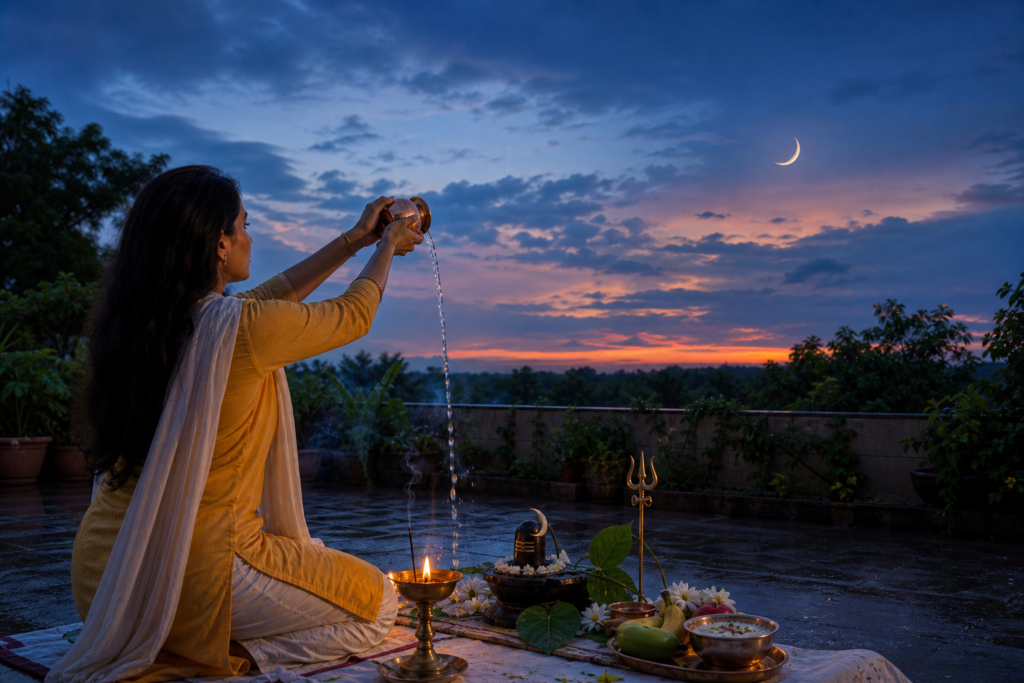
Navreh Mavas is observed in Kashmir, especially among Kashmiri Pandits, as the contemplative eve of the Kashmiri New Year, Navreh. The day holds a quiet, sacred character that frames the transition from the closing lunar cycle to a renewed spiritual and cultural beginning.
Falling on the last day of the Hindu calendar as followed in the Saptarshi Panchang (Kashmiri Hindu Calendar), Navreh Mavas corresponds to the 15th day of the dark fortnight (Amavasya) of the Chaitra Month. In 2026, Navreh Mavas will be observed on March 18, one day before Navreh, which commences with Chaitra Shukla Pratipada.
The observance typically emphasizes simplicity, inward reflection, and quiet preparation. In many homes, the mood aligns with the broader Amavasya ethos found across Hindu traditions: peaceful remembrance of ancestors, gentle lamp-lighting, and restrained ritual practice that readies mind and space for the auspicious dawn of Navreh. This reflective cadence resonates with shared dharmic values of renewal, gratitude, and ethical living.
For many families in Kashmir, memories of elders guiding the household through Navreh Mavas lend the day an intimate warmth. Children often associate the evening with the anticipation of Navrehnew beginnings, the first sight of an auspicious thali at daybreak, and blessings for learning and wellbeingwhile adults recall the soft glow of diyas, the fragrance of freshly cleaned spaces, and conversations that connect family lore with living tradition. Such moments strengthen intergenerational bonds and preserve cultural continuity.
Customs around the eve vary by household but frequently include tidying living spaces, maintaining a sattvic diet, preparing or planning the Navreh thali, and offering gratitude for the year gone by. Practitioners often consult a local panchang for precise timings while keeping the broader focus on clarity of intention, respectful remembrance, and readiness to welcome Navreh at sunrise on the following day. For 2026, observance on March 18 aligns with the Saptarshi Panchang reckoning.
Beyond its regional setting, Navreh Mavas underscores a unifying dharmic insight: endings and beginnings invite mindful alignment with dharma. The day’s quiet practicesrooted in the Hindu calendar yet resonant with the wider South Asian spiritual ethosencourage reflection, harmony, and community cohesion, offering a shared space for cultural heritage to be honored and renewed.
Inspired by this post on Hindu Pad.