Shantadurga of Kelshi stands at the confluence of sacred geography, living memory, and resilient tradition. Rooted in the Konkan’s coastline and the Sahyadri’s shadow, this form of the Hindu Goddess embodies the calming, reconciling power of Devi—honored as Shānta-śakti—across centuries of worship and community life.
The Konkan region, stretching along the western coast of India and embraced by the majestic Sahyadri mountain range, holds a special place in Hindu tradition as the land reclaimed and sanctified by Parashurama, the sixth avatar of Lord Vishnu. According to ancient accounts preserved in Purāṇic memory, Parashurama caused the sea to recede, revealing a landscape later woven into the ritual imagination of Sanatana Dharma. Within this Parashurama-kṣetra, shrines to the Divine Mother have anchored cultural continuity and devotional practice.
Kelshi—situated in present-day Ratnagiri district of Maharashtra—exemplifies this continuity. Here, Shantadurga is revered not only as a local guardian but as an enduring presence in household rites, community festivals, and seasonal observances. The temple tradition, shaped by the rhythms of coastal life, affirms a balance between land and sea, work and worship, and everyday duty (dharma) and inward devotion (bhakti).
In the theological imagination of the region, Shantadurga appears as the peacemaker who harmonizes forces—often narrated as the Devi who brings concord between Shiva and Vishnu. The name itself—Shantadurga—highlights śānti (peace), signaling a goddess whose power (śakti) manifests as gentleness without surrendering strength. This synthesis inspires devotees to practice compassion, restraint, and steadfastness, reflecting Sanatana Dharma’s emphasis on inner equilibrium.
Many Gaur Saraswat Brahmin families venerate Shantadurga as a Kuladevata, carrying her memory across generations and geographies. Oral histories recall migrations along the Konkan and towards Goa and the wider western coast, with household shrines, festival vows, and sacred names preserving a shared identity. In this sense, the Shantadurga of Kelshi is both a place-specific deity and a travelling heart of community belonging.
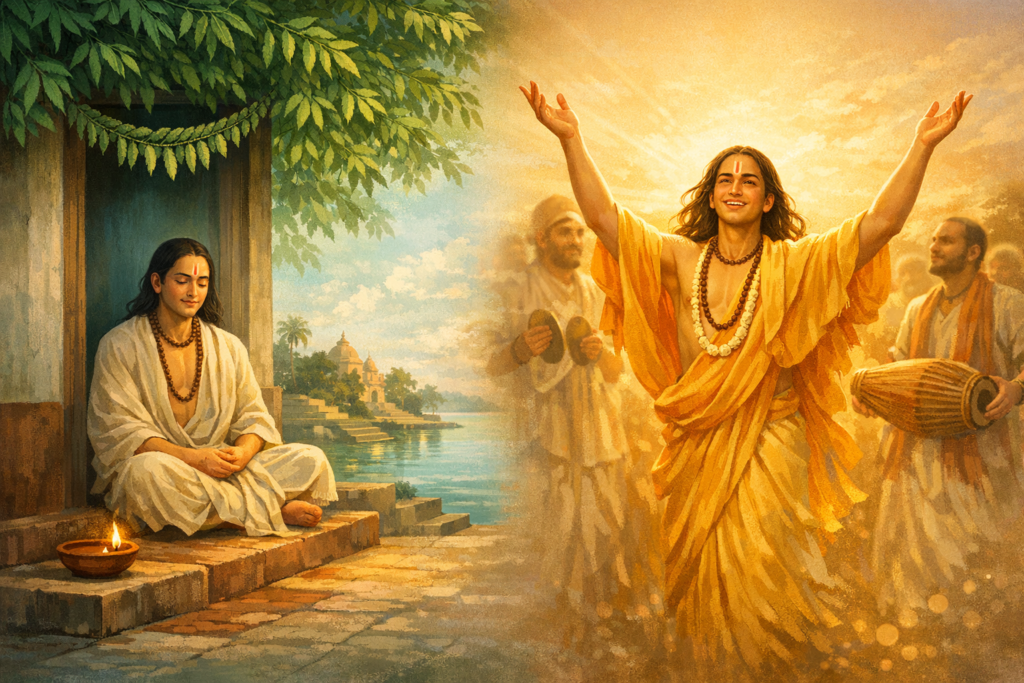
Pilgrims frequently describe a felt quietude upon entering the sanctum: the cadence of the Arabian Sea, the bell’s clear tone, the fragrance of tulasī and camphor, and the soft murmur of mantra-japa. Such accounts point to a devotional environment where Panchopachara five offerings—fragrance, lamp, incense, food, and touch—become gateways to contemplation rather than mere ritual sequence, aligning action with meaning.
As a node in the larger sacred geography of Parashurama’s Konkan, Kelshi’s Shantadurga connects with other Devi traditions along the coast, including those in Goa and inland Sahyadri valleys. This network of shrines has nurtured crafts, music, language, and seasonal fairs, attesting to a civilizational fabric that renews itself through place-bound worship and shared social life.
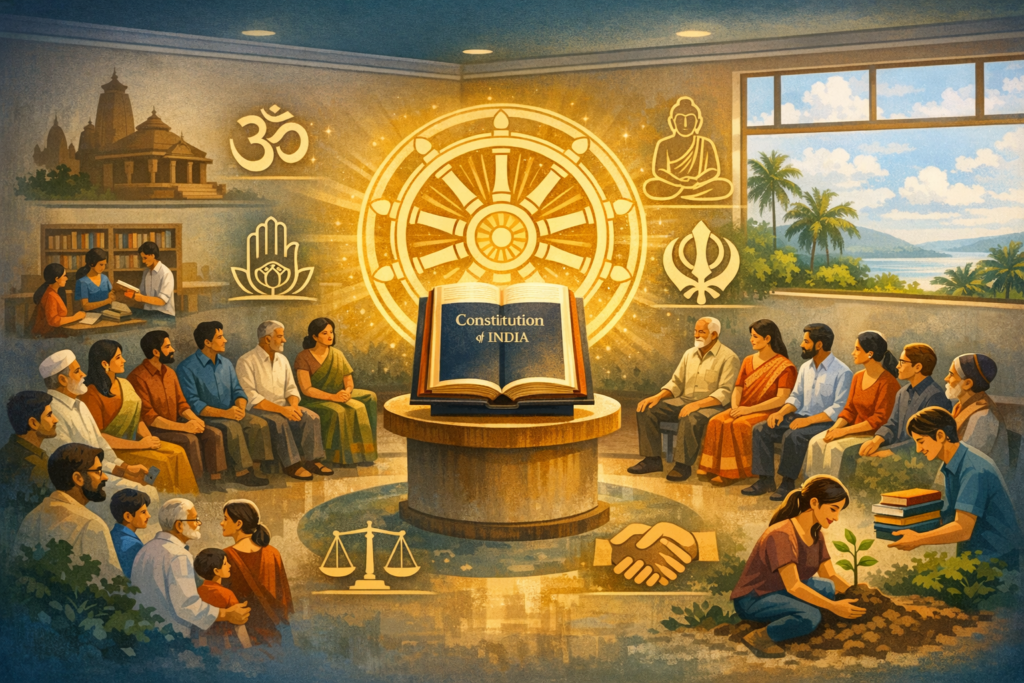
The spirit of this tradition resonates with the wider dharmic family. Hindu, Buddhist, Jain, and Sikh paths each uphold compassion, self-discipline, truthfulness, and service as foundational virtues. In that shared ethical horizon, reverence for the Sacred Feminine—whether approached as śakti, as the wisdom and compassion embodied in practice, or as the inspiration for seva—becomes a unifying thread. The Kelshi shrine thus speaks to unity in spiritual diversity, inviting respectful coexistence and mutual learning.
For students of history and culture, Shantadurga of Kelshi offers a lens onto continuity amid change: how communities adapt while conserving meaning; how sacred narratives, such as Parashurama’s reclamation of land, shape identity and belonging; and how temples function as archives of memory and everyday resilience. Through this living tradition, the Konkan’s coastline emerges not only as geography but as a moral landscape sustained by devotion, scholarship, and care.
In sum, the timeless legacy of Shantadurga in Kelshi affirms that peace, when anchored in dharma, becomes strength. The shrine’s enduring appeal—across families, festivals, and generations—reflects a broader civilizational insight: unity is not uniformity, and diversity deepens when bound by shared reverence, wisdom, and compassionate action.
Inspired by this post on Hindu Blog.