-
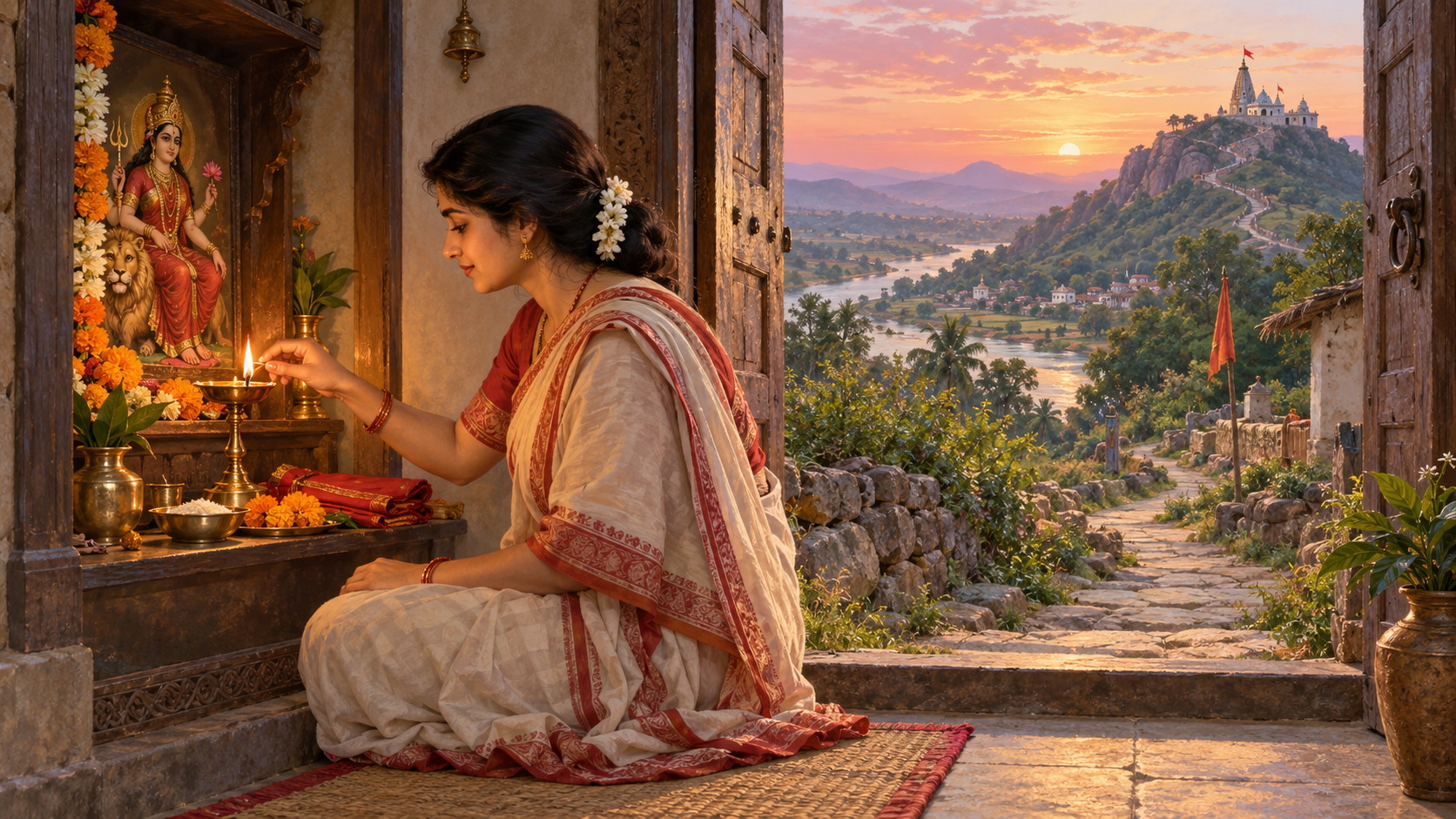
Unveiling Goddess Kaveri in Hindu Sculpture: Iconography, Ritual Power, and Sacred Geography

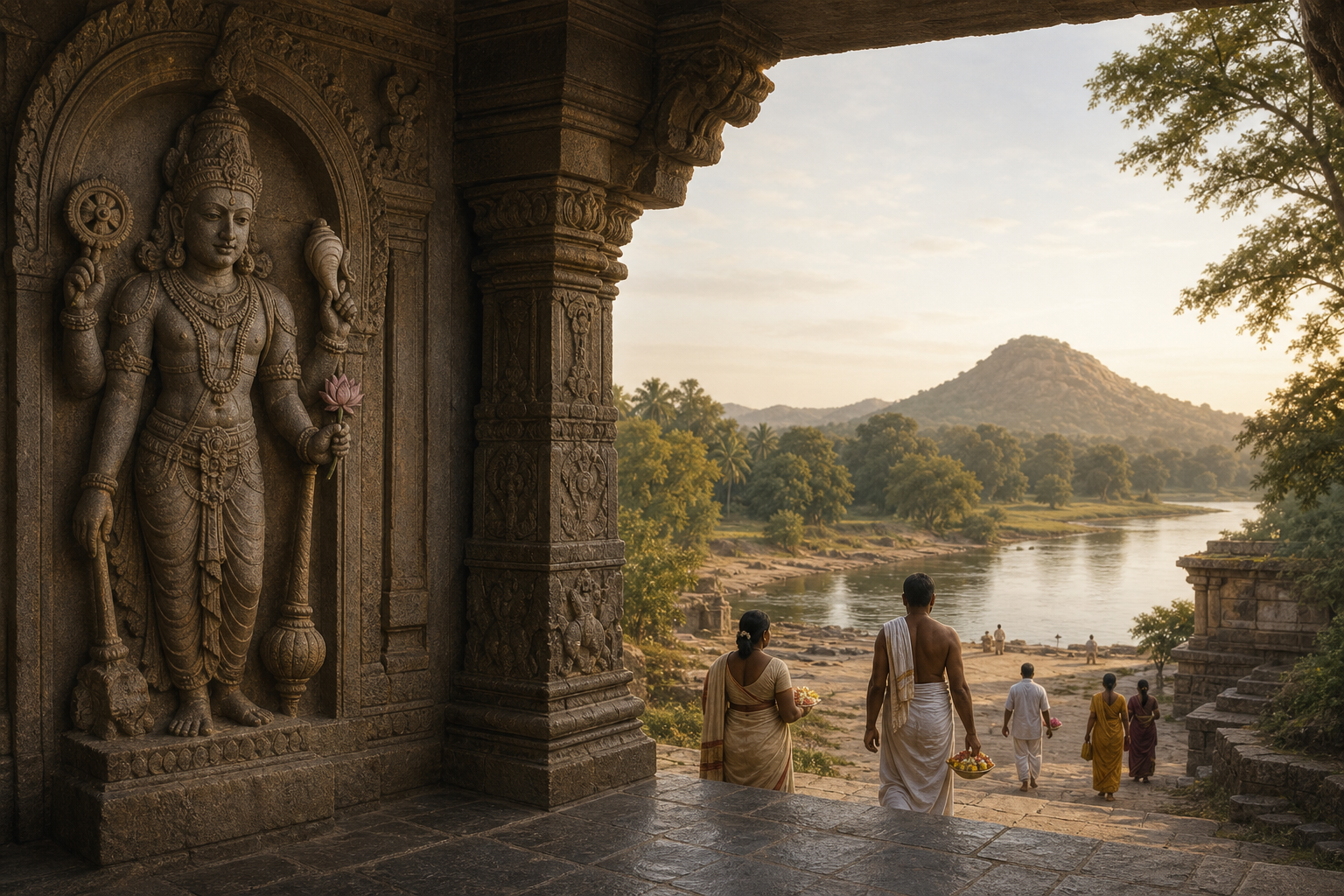
Goddess Kaveri, revered as a living river and divine mother, is rendered in Hindu sculpture through a precise visual grammar that blends Shilpa Shastra canons with the lived rhythms of sacred geography. This essay explains how to recognize her iconography, from kumbha and lotus attributes to makara-toranas and gentle mudras, and shows where she commonly…
-
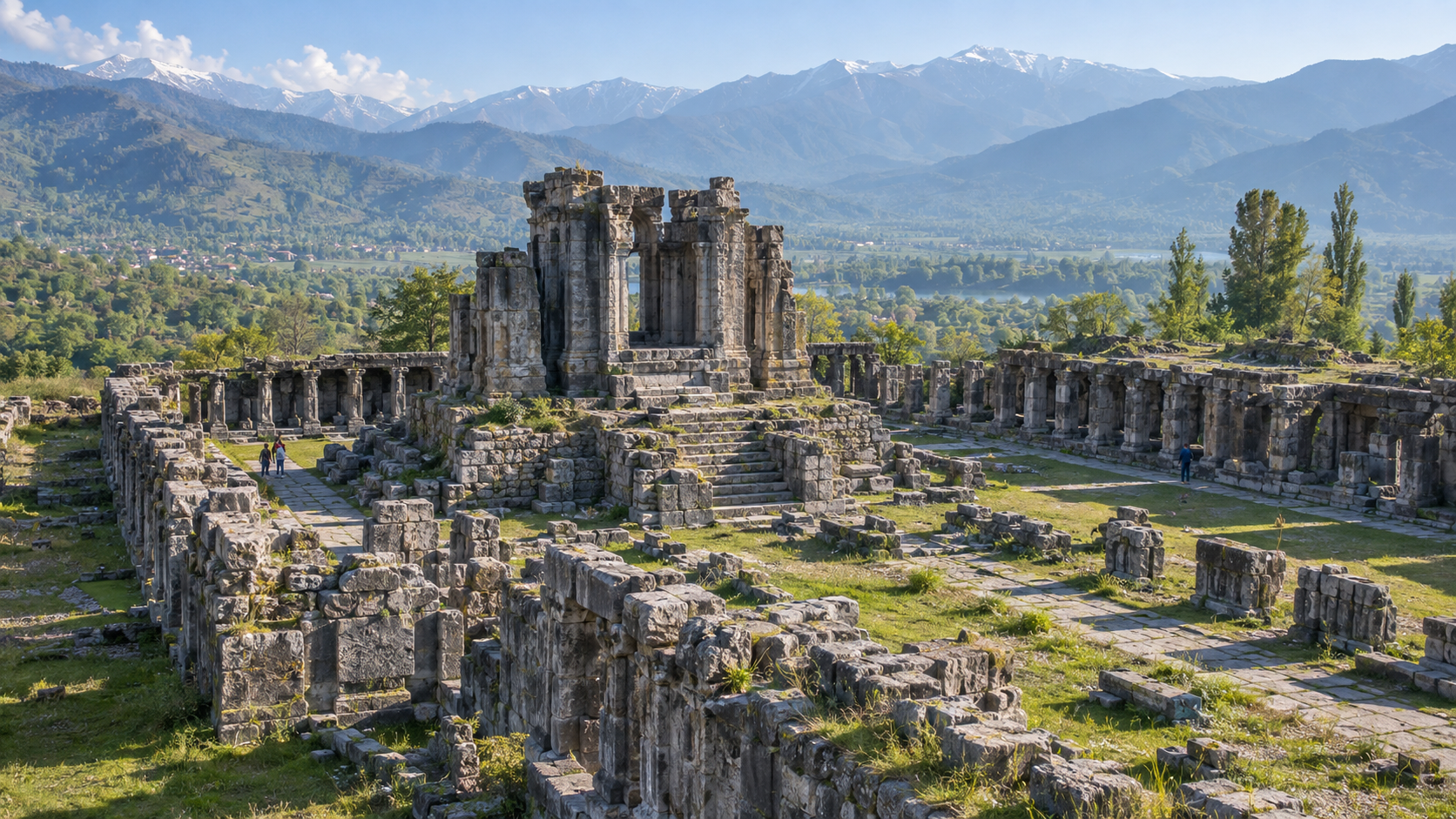
Kishkindha Kanda Unveiled: Rama–Hanuman Alliance, Vali’s Fall, and Hampi’s Sacred Landscapes

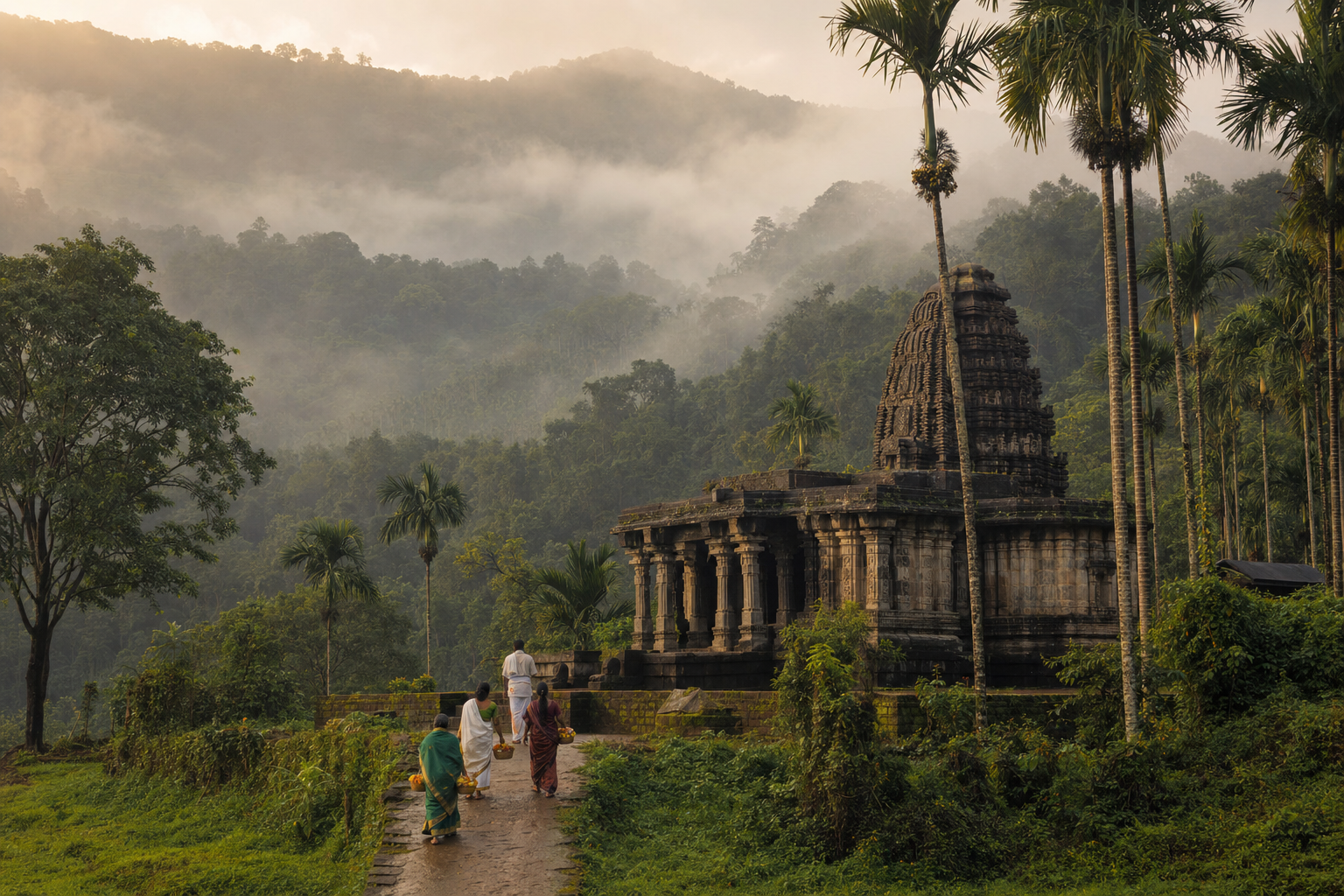
Kishkindha Kanda, the fourth book of the Valmiki Ramayana, turns grief into disciplined action as Rama allies with Sugriva, brings down Vali, and launches a continent-spanning search for Sita. Set against the sacred landscapes around Hampi–Anegundi in Karnataka, it blends political acumen, ethical debate, and ecological poetics. The kanda highlights exemplary speech and statesmanship through…
-
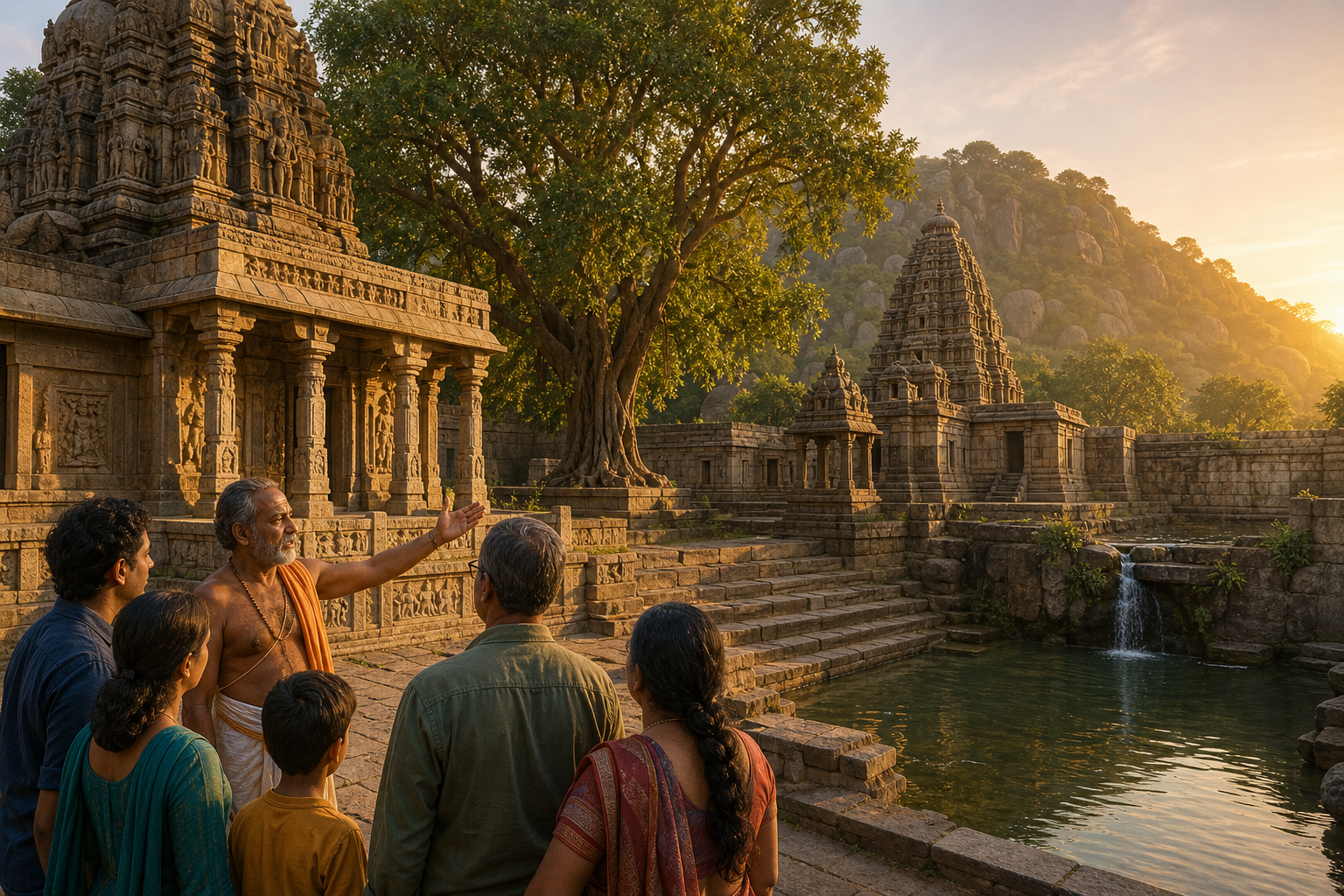
Dhama in Hinduism: Unveiling India’s Sacred Geography and Transformative Char Dham Yatras

Dhama in Hinduism denotes a sanctified abode where the divine presence is experienced most intensely, shaping India’s sacred geography and animating transformative pilgrimages. This long-form exploration clarifies how tirtha, kshetra, pitha, and dhama interrelate, and why Char Dham and the Himalayan Chota Char Dham have become enduring circuits of devotion. Readers discover the theological roots…
-
Varsana Parikrama: Ascending Srimati Radharani’s Hill via Jaipur Mandir and Dan garh

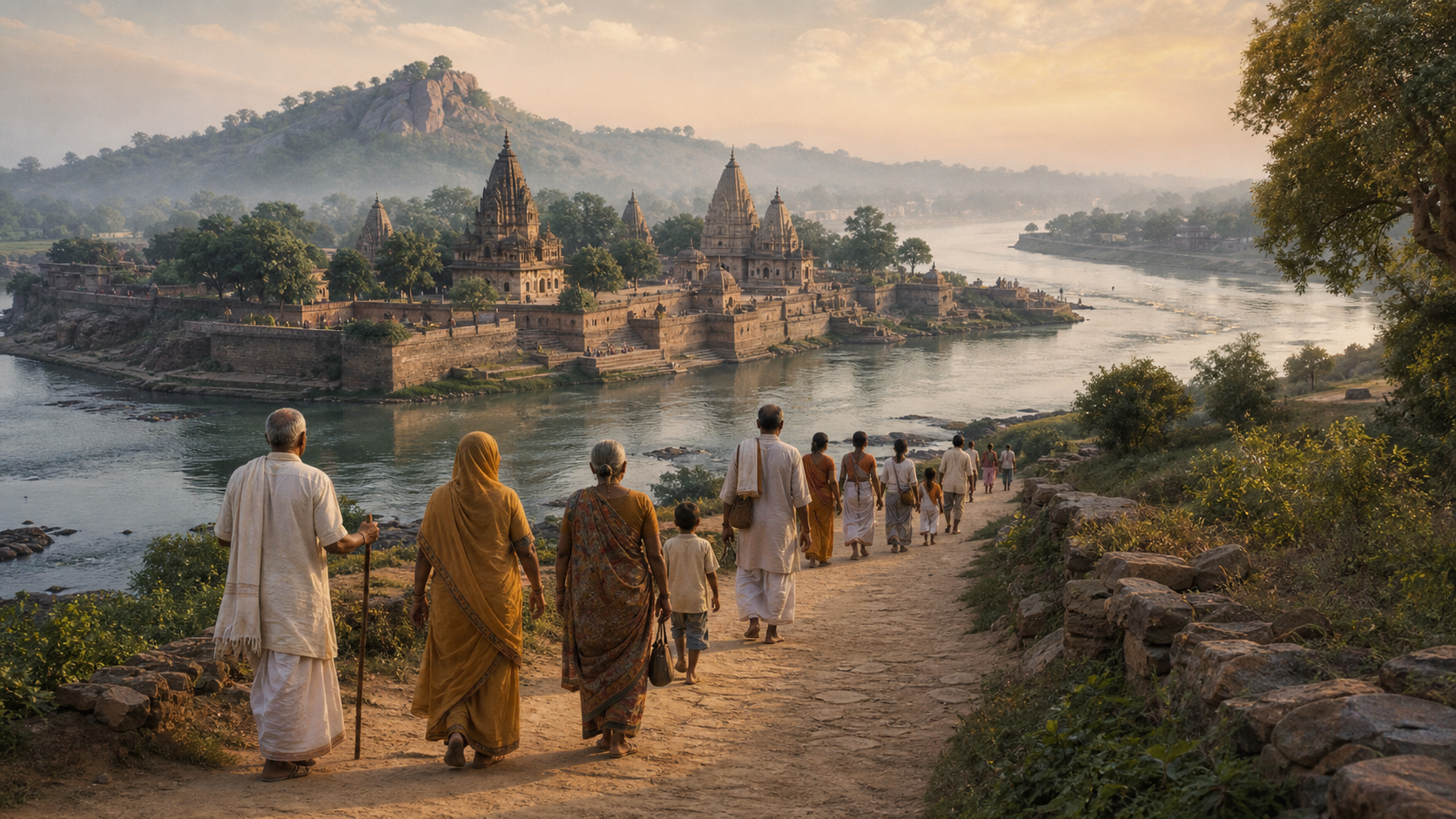
This guided overview of the Varsana (Barsana) parikrama presents a clear, research-based orientation to ascending the hilltop temple of Srimati Radharani and visiting Jaipur Mandir and Dan garh. It situates these landmarks within Braj’s sacred geography and explains how architecture, ritual movement, and sound cohere into a contemplative experience. Readers gain architectural insights into North…
-
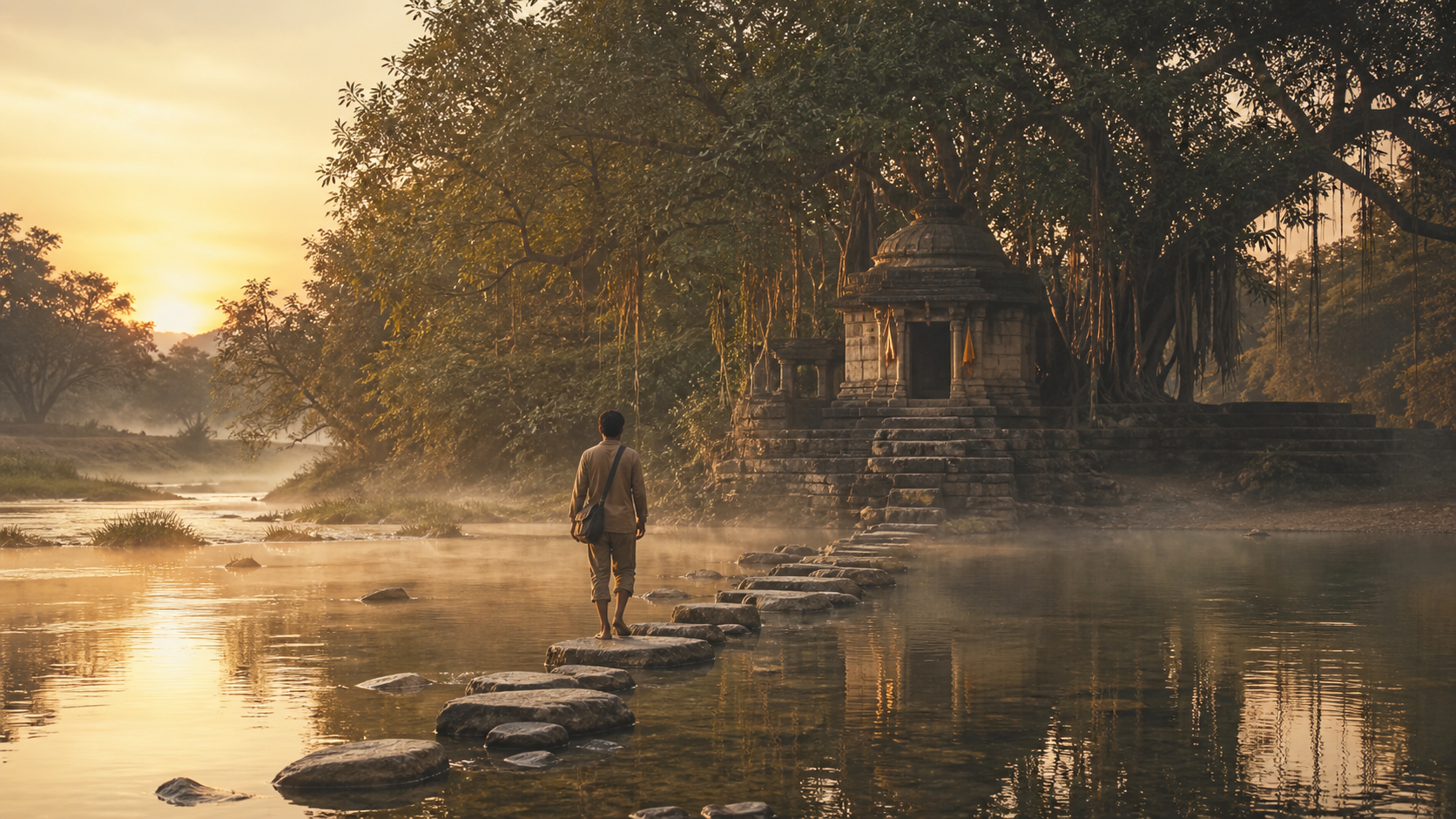
Religious Significance of the Yamuna River: Mythology, Pilgrimage, and Dharmic Ecology

This in-depth overview explains why the Yamuna River—reverentially known as Yamunaji and Kalindi—holds enduring religious significance in Hindu Dharma and stands as a unifying symbol across the dharmic traditions of Hinduism, Buddhism, Jainism, and Sikhism. Readers will discover the river’s Vedic and Puranic foundations, her identity as Yami (sister of Yama and daughter of Surya),…
-
Bhairava as Bhudhara Atma: The Unshakable Ground of Kalika, Earth, and All Worlds

This long-form exploration clarifies Bhudharatmajaya Bhairava as the atma of Bhudhara—the conscious support of Earth and mountains—and the Adhara, the unmoving ground of charachar prakriti. It decodes the Sanskrit terms, situates Bhairava and Kalika within Tantric and Purana frameworks, and maps their complementarity across the panchabhuta and Shaiva tattvas. Temple architecture, kshetrapala guardianship, and contemplative…
-
Why India Reveres Its Rivers: Sacred Geography, Living Heritage, and Dharmic Unity

This in-depth exploration explains why India venerates its rivers as living presences that sustain ecology, economy, and ethics. It traces scriptural roots from the Rigveda to the Puranas, highlights major rivers such as Ganga, Yamuna, Saraswati, Godavari, Narmada, and Kaveri, and shows how sacred geography shapes towns, festivals, and civic infrastructure. It demonstrates unity among…
-
Manidweepa Unveiled: Inside the Jeweled Island of the Mother Goddess and Cosmic Consciousness

Manidweepa (Mañidvīpa) is portrayed in the Devi Bhagavatam Purana as the jeweled island of the Mother Goddess, a sacred geography beyond the fourteen worlds and the Ocean of Nectar. This analysis explains how Śrī Nagara, the Chintāmaṇi gṛha, and the Pañcabrāhmāsana encode Hindu cosmology and Śrīvidyā practice. It maps Manidweepa to the nine āvaraṇas of…
-
Mannarasala’s Sacred Serpent Grove: Origins in Mahabharata’s Khandava Fire and Kerala’s Ecology

Mannarasala Sree Nagaraja Temple in Kerala is a living sacred grove that unites epic memory with ecological care. Local tradition links its origin to the Mahabharata’s Khandava forest burning, reframing epic destruction through rituals of reconciliation and fertility. The article unpacks the toponymy of “Mannarasala,” the temple’s unique priestess lineage, and its signature rites such…
-
Nagarkot’s Sacred Red Silk Rope: Uniting Brajeshwari Devi and Vaidyanath—Ritual, Symbol, Science

In Kangra’s Nagarkot, a vivid red silken rope links the shikharas of Brajeshwari Devi Shakti Peetha and Vaidyanath, translating Shakti–Shiva philosophy into a powerful public symbol. The cord functions as a civic raksha-sutra and an expanded mauli, integrating ritual, urban space, and sacred architecture. Its red silk communicates auspicious energy while engineering considerations ensure safe,…
-
Rameshwaram’s Sacred Paradox: Ananda Ramayana on Rama Consecrating Shiva’s Jyotirlinga

Rameshwaram—Rāmeśvara, “Shiva, the Lord of Rama”—embodies the Ramayana’s sacred paradox: the vanquisher of adharma kneels in devotion. Drawing on the Ananda Ramayana and the Skanda Purana’s Setu-mahātmya, this long-form analysis traces how Rama’s consecration of the Ramanathaswamy liṅga shaped South Indian pilgrimage, temple architecture, and living ritual. It explains the paired sancta of Rāmalīṅga and…
-
Shakti Peeth vs Siddha Peeth: Origins, Rituals, and the Power of India’s Sacred Seats

Shakti Peeth and Siddha Peeth occupy central yet distinct roles in Hindu sacred geography. Shakti Peeth are mythically anchored in the Sati narrative and emphasize Devi–Bhairava worship, major festivals like Navaratri, and communal pilgrimage. Siddha Peeth are experientially anchored in the attainments of siddhas and in anushthanas that reliably catalyze inner transformation. Many renowned shrines,…
-
Mapping Krishna’s Four Horizons: Jagannath, Dwarka, Nathdwara and Udupi as Guides in Kali Yuga

India’s sacred geography can be read as a spiritual compass: four living centers of Krishna-bhakti—Puri (Jagannath), Dwarka (Dwarkadhish), Nathdwara (Srinathji), and Udupi (Sri Krishna)—situated at the subcontinent’s horizons. This article explains how each manifestation offers distinct guidance for Kali Yuga: communal kirtana and prasada at Puri, dharma-anchored leadership at Dwarka, seva and aesthetic devotion at…
-
Kukke Subramanya Sthala Purana: Timeless Serpent-Lord Legends, Ritual Science, and Sacred Landscape

Anchored at the foot of Kumara Parvatha and on the banks of the sacred Kumara Dhara, the Kukke Subramanya Swamy Temple preserves a powerful sthala purana that unites myth, ritual, and landscape. The narrative recounts Subrahmanya’s victory over Tarakasura, his marriage to Devasena, and a lasting covenant of protection extended to Vasuki and the Nagas.…
-
Prabhasa Patan’s Timeless Confluence: Where Krishna Departed and Somnath Inspires Unity

Set on Gujarat’s Saurashtra coast, Prabhasa (Prabhasa Patan/Prabhasa Kshetra) is the Triveni Sangam of the Hiran, Kapila, and subterranean Sarasvati, long revered as a threshold of purification and insight. Scripture situates epochal events here: the Mahabharata’s Mausala Parva narrates the Yadavas’ final conflict, while the Bhagavata Purana memorializes Sri Krishna’s departure at Bhalka and Dehotsarg…
-
Eighteen Steps, One Presence: The Fierce Aniconic Power of Karuppasamy at Azhagar Kovil

Situated in the Azhagar Malai hills near Madurai, the Pathinettam Padi Karuppasamy shrine at Azhagar Kovil embodies an aniconic form of worship—no carved idol, only an intense guardian presence encountered at a threshold of eighteen steps. The shrine harmonizes classical Vaishnava temple worship with the fierce protection of a kaval deivam, emphasizing vows, truth, and…
-
Awe-Inspiring Rameswaram Pilgrimage: Sri Ramanathaswamy Temple, Rama Setu, Sacred Shores

Rameswaram on the Gulf of Mannar is a conch-shaped island central to the Char Dham yatra and home to the Jyotirlinga of Sri Ramanathaswamy. Scriptural accounts in Srimad-Bhagavatam and Caitanya Caritamrta attest to its enduring sanctity, while Ramayana memory links the shrine to Rama Setu. The temple’s nearly 4,000-foot pillared corridor exemplifies South Indian temple…