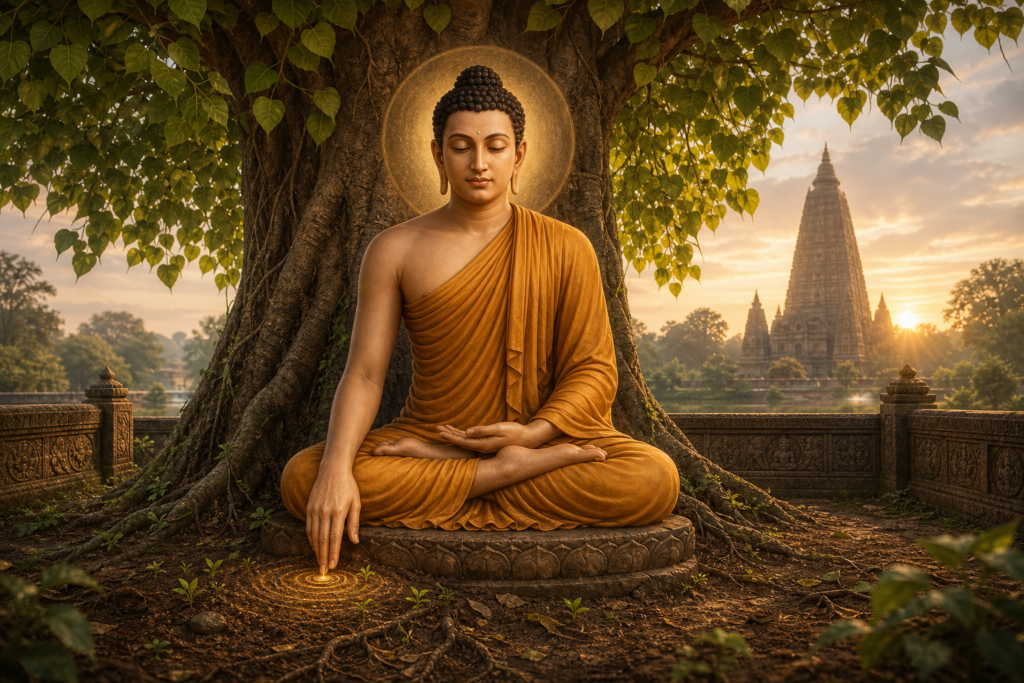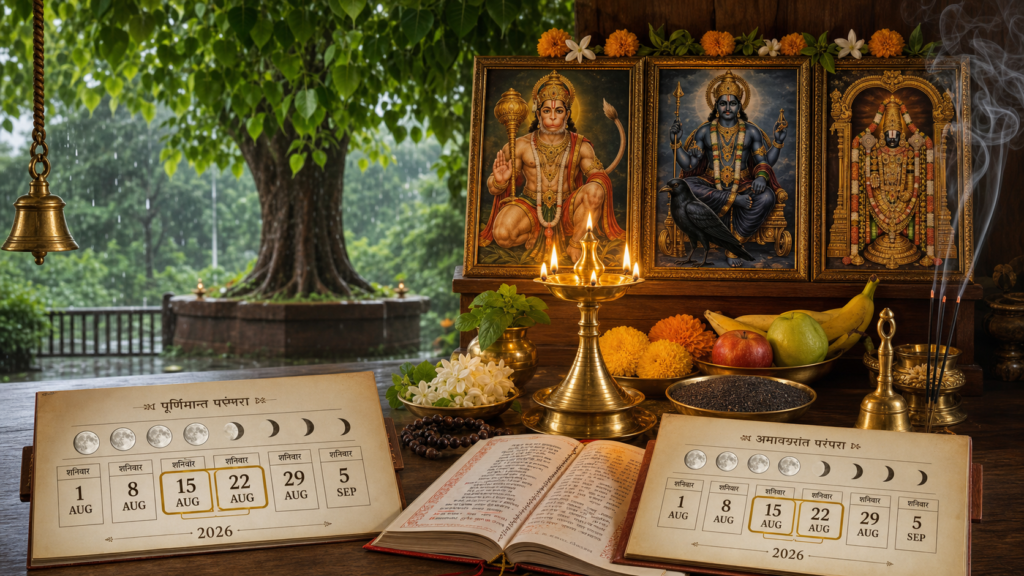
Srila Bhaktisiddhanta Sarasvati Thakura’s teachings, rooted in the Gaudiya Vaishnava tradition, center on Sri Caitanya Mahaprabhu’s declaration in Sikastakam: “param vijayate Sri-Krishna -Sankirtanam.” This emphasis on Sri-Krishna-Sankirtanam presents devotional chanting as a transformative practice that purifies intention, builds community, and nourishes spiritual resilience. Within the wider Dharmic landscape, this spirit of sacred sound resonates with Sikh kirtan, Buddhist recitation, and Jain stavan, illustrating a shared inheritance where sound, remembrance, and compassion deepen spiritual life and social harmony.
In this vision of Bhakti Tradition, Sri Krishna is understood as the supreme enjoyer, and all actions attain meaning in the mood of seva. Rather than self-assertion, the practitioner cultivates humility and non-possessiveness, aligning with the broader Dharmic ethics of self-restraint, ahimsa, and selfless action. Such orientation redirects ambition toward service and gratitude, echoing insights found across Hindu spirituality and related Dharmic traditions.
Srila Bhaktisiddhanta warns against spiritual negligence, describing how estrangement from Hari corrodes one’s own well-being. Read charitably, this counsel is not a condemnation of persons but a diagnosis of inner harm caused by forgetfulness of the sacred. When reframed through compassion, it invites gentle self-inquiry, mindful correction, and solidarity with all who seek truth, aligning with the Dharmic ideal that wisdom blossoms alongside karuna.
Tolerance emerges as a cardinal discipline, particularly for communal life in the math. This echoes the shared Dharmic understanding that sangha flourishes through patience, restraint, and honest communication. In practice, tolerance prevents fragmentation, sustains cooperative sadhana, and nurtures a culture where differences in temperament and method are harmonized by mutual respect.
As heirs to the Rupanuga current, practitioners attribute success to the original source rather than personal prowess. This cultivates gratitude and safeguards against spiritual pride. The posture of receiving grace while serving the whole mirrors a perennial Dharmic intuition: progress is measured not by acclaim but by deepening humility, steadiness, and care for others.
Equally vital is the caution against scattered religiosity“assorted religious activities” devoid of inner alignment. The guidance advocates ekāgratā (one-pointedness), ensuring that ritual and study remain animated by living devotion. Read in a unifying key, this does not negate the diversity of practices found across Hindu, Buddhist, Jain, and Sikh paths; rather, it recommends coherence of purpose so that varied sadhanas converge upon compassion, truth-seeking, and service.
Unity is therefore practical as much as it is philosophical: “Become united with one purpose and serve Hari.” In contemporary terms, unity in spiritual diversity can animate cooperative sevafeeding the vulnerable, educating children, protecting the environment, and cultivating inner discipline. Such loka-sangraha affirms that Dharmic traditions, while distinct in forms and doctrines, share a commitment to human flourishing and ethical responsibility.
“Where there is discussion about Hari, that is a place of pilgrimage.” This reframes pilgrimage as presence: wherever satsang nurtures remembrance, inquiry, and ethical living, sacred geography blossoms. Across traditions, dialogue about Dharma, compassion, and wisdom turns ordinary spaces into sites of renewal, strengthening social trust and moral clarity.
The identity statement “kirtaniyah sada harih” points toward constant remembrance. “We are not pious, sinful or learned or ignorant; we are the carriers of the dust of the feet of Sri Hari.” This radical humility dissolves limiting labels, replacing them with a posture of service and gratitude. Parallels can be seen in Sikh simran, Buddhist mindfulness, and Jain vows of equanimityeach fostering continuity of awareness that animates ethical action.
Practical guidance follows: “Do not criticize others. Try to rectify yourself.” The discipline of self-rectificationanchored in mindfulness and ethical restraintpreserves communal trust and deepens personal integrity. Such counsel, cherished across Dharmic philosophies, redirects attention from fault-finding to reforming one’s own speech, intention, and conduct.
The call to “serve the residents of Vraja who are afflicted by Krishna’s departure to Mathura” models compassion for communities in grief. Whether read as historical devotion or as a metaphor for serving those enduring separation, loss, or uncertainty, the teaching affirms that genuine spirituality expresses itself through empathy, presence, and acts of care.
Finally, “A pure devotee knows that everyone is the spiritual master. Therefore, a pure devotee can be jagad-guru.” This paradox reveals a universal principle: those who learn from all are able to serve all. By seeing every person as a teacher, humility becomes the foundation of leadership, and inter-traditional friendship becomes a path to shared wisdom.
Taken together, these insights offer a coherent path for modern seekers: chant with depth, serve with humility, tolerate with patience, study with focus, and unite across traditions for the common good. In doing so, Gaudiya Vaishnava devotion and the wider Dharmic family illuminate one anotherdemonstrating how remembrance, seva, and dialogue can cultivate inner transformation and societal harmony.
Inspired by this post on Dandavats.