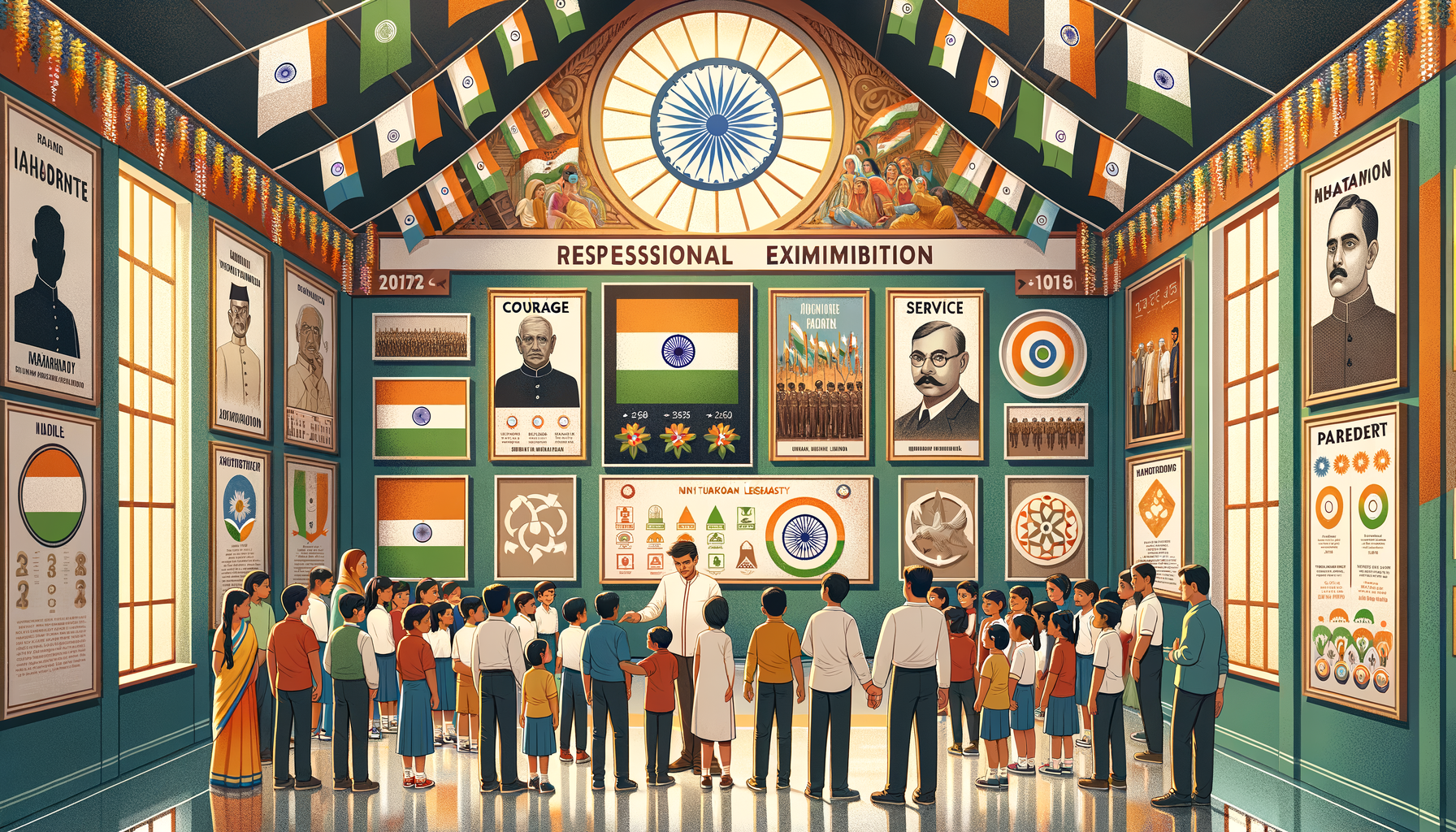
On Indian Republic Day, Hindu Janajagruti Samiti (HJS) organised the “Kranti Gatha” exhibition in Kamthe to familiarise students and youth with the sacrifices of Bharat’s revolutionaries. Designed as a community learning experience, the event encouraged civic understanding and patriotic values through concise, accessible storytelling.
The exhibition presented a clear narrative of the Indian freedom struggle, spotlighting revolutionary courage alongside the everyday contributions of unsung participants. Through portraits, timelines, and curated summaries, visitors engaged with historical milestones and connected them to contemporary notions of civic responsibility and public service.
Attendees repeatedly observed that initiatives of this kind cultivate enduring patriotism among the younger generation. Teachers reported heightened curiosity, while students described gratitude, purpose, and a renewed commitment to community serviceresponses consistent with effective experiential education and youth engagement practices.
The curatorial emphasis situated these sacrifices within a broader dharmic ethos shared across Hinduism, Buddhism, Jainism, and Sikhism. By foregrounding values such as courage, seva, ahimsa, and unity, the exhibition reinforced interfaith harmony and collective nation-building, aligning with the principle of unity in diversity without privileging any single path.
Parents and educators found the format approachable and replicable for schools that seek to integrate history, civics, and ethics. Guided walk-throughs, reflective prompts, and discussion circles helped translate complex themes into relatable learning outcomes, strengthening knowledge of the Indian freedom struggle while nurturing empathy and civic-mindedness among Indian youth.
Community responses underscored the value of recurring, locally hosted exhibitions that connect cultural heritage with present-day citizenship. Participants suggested periodic showcases around national days to sustain momentum, broaden participation, and deepen community engagement across age groups.
By aligning scholarly accuracy with accessible presentation, “Kranti Gatha” demonstrated how cultural heritage programming can inspire patriotism, support unity in diversity, and strengthen social cohesion. The Kamthe initiative thus offers a robust model for Education Initiatives that honor Indian freedom fighters while fostering informed, compassionate citizenship rooted in a shared dharmic foundation.
Inspired by this post on Hindu Jagruti Samiti.