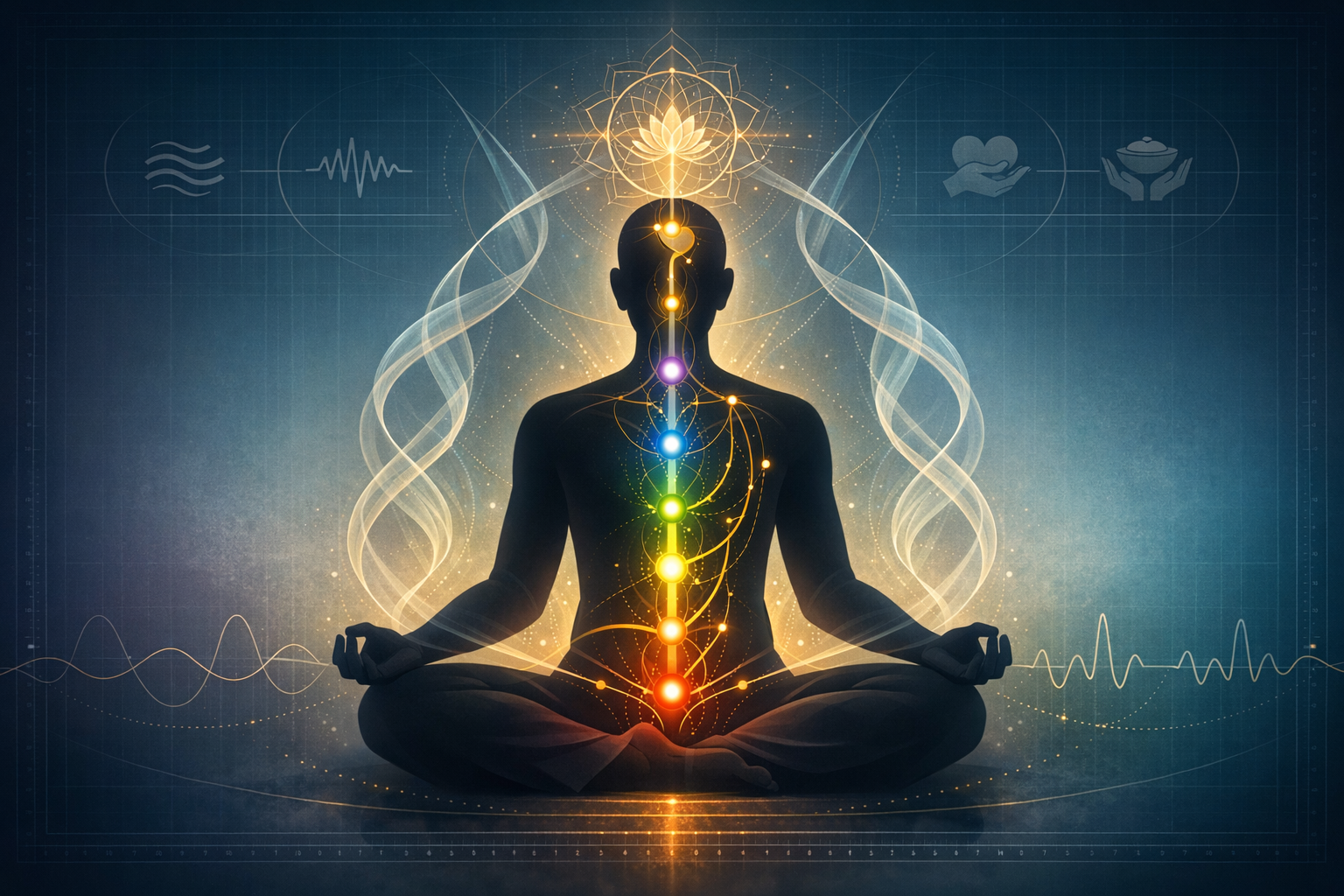
Across the dharmic traditions, a sophisticated inner science describes a dormant yet transformative power within the human body-mind system. Known in Sanskrit as Kundalini Shakti, this “serpent power” is portrayed as a coiled current at the base of the spine that ascends through subtle channels (nadis), catalyzing spiritual awakening, refined cognition, and ethical clarity. Tantric practice situates this ascent within a disciplined framework of purity, breath regulation, mantra, and meditation, leading to stabilized insight rather than transient experiences. Framed correctly, Kundalini is less an esoteric curiosity than a rigorous path harmonizing embodied energy, attention, and wisdom.
Classical sources across the broader Vedic and yogic corpusYoga-Kundalini Upanishad, Hatha Yoga Pradipika, Shiva Samhita, Gheranda Samhita, and the seminal Sat-Cakra-Nirupanaprovide procedural blueprints and symbolic maps for this work. While idioms varyShakta Tantra emphasizes Shakti’s ascent to unite with Shiva at the crown, Classical Yoga stresses nirodha (stilling) of mental modificationsthe core methodology is coherent: purify, concentrate, regulate breath, seal and direct prana, contemplate, and abide in non-dual awareness.
Importantly, the spirit of dharmic unity affirms that diverse vehiclesHindu Yoga and Tantra, Buddhist Vajrayana, Jain dhyana traditions, and Sikh simran and shabad-centered practiceaim at convergent outcomes: freedom from afflictions, compassion, equanimity, and direct realization. Differences in language, ritual, or emphasis are secondary to the shared commitment to inner transformation, ethical conduct, and the realization of the Self or ultimate truth.
Yogic anatomy offers a functional map. Three principal nadis organize subtle flow: ida (left), pingala (right), and sushumna (central). Ida is often associated with cooling, lunar, and parasympathetic qualities; pingala with heating, solar, and sympathetic arousal; sushumna with balanced, non-dual absorption. Tantric discipline seeks to harmonize ida and pingala so prana can enter sushumna, allowing Kundalini to rise steadily through the granthis (psychic knots) and chakras (energy centers).
Chakra schema commonly reference seven principal loci: muladhara (root), swadishtana (sacral), manipura (navel), anahata (heart), visudha (throat), ajna (brow), and sahasra (crown). While iconography varies across lineages, the operational gist is stable: each center encodes psychophysical functions, affective patterns, and capacities for insight. Awakening does not bypass; it integratestransforming fear into grounded strength (muladhara), compulsion into creative flow (swadishtana), will into luminous discipline (manipura), emotion into unconditional care (anahata), expression into truth-aligned speech (visudha), and thought into direct knowing (ajna), culminating in non-dual absorption (sahasra).
Why Tantra for Kundalini? Tantra specializes in methods that are direct yet exacting: mantra, nyasa (sacred placement), mudra, bandha, and visualizations synchronized with breathwork (pranayama) and meditation (dhyana). Properly taught, these techniques are not sensational or reckless; they are methodical, ethical, and cumulative. The aim is not merely to trigger experiences but to establish stable, compassionate, and wise embodiment.
A foundation of yama and niyama (ethical observances) is non-negotiable. Non-violence, truthfulness, non-excess, integrity in relationships and livelihood, contentment, disciplined effort, self-inquiry, reverence, and surrender align the practitioner with sattva (clarity). Without this ethical base, increased energy only magnifies latent tendencies. Most classical manuals quietly insist: character is the first initiation.
Supportive daily rhythm enhances outcomes. From an Ayurveda-informed lens, consistent sleep-wake cycles, simple and sattvic nutrition, and measured work-rest balance stabilize prana. Moderate asana (postural) practiceemphasizing spinal elongation, hip opening, and thoracic mobilityimproves respiratory mechanics and vagus nerve tone, preparing the body for breath awareness, kumbhaka (retention), and the subtle seals (bandhas).
Pranayama is central. An accessible progression begins with breath awareness techniques: even-ratio breathing (e.g., 4-in/4-out), “resonant” breathing near 6 cycles per minute, and sectional breathing that expands the lower, middle, then upper thorax. These establish a calm baseline, enhance heart rate variability, and build interoceptive literacyskills essential before advanced ratios or forceful techniques.
Nadi shodhana (alternate-nostril breathing) is the classical purifier. Starting without retention, a gentle 1:1 rhythm (e.g., inhale left 4, exhale right 4; inhale right 4, exhale left 4) performed for 8–12 minutes balances ida and pingala. Over weeks, retentions may be introduced conservatively (e.g., 1:1:1, then 1:2:1), always keeping comfort and mental clarity as guides. The goal is not numerical feats but nervous system coherence and mental steadiness.
Ujjayi (soft glottal whisper) refines the breath’s tactile quality, deepens focus, and gently warms the system. Kapalabhati and bhastrika are potent cleansers and energizers; however, they require impeccable technique, a calm baseline, and medical prudence (avoid with hypertension, cardiac conditions, pregnancy, or anxiety dysregulation). When well-guided, they clear stagnation, prime prana, and prepare the central channel (sushumna nadi) for meditation.
Bandhas (energetic locks) direct and stabilize subtle flow. Mula bandha (root seal) tones the pelvic floor and consolidates energy at the base; uddiyana bandha (abdominal lift, applied on exhale retention) draws energy upward; jalandhara bandha (throat lock) protects cerebral circulation and concentrates attention. In advanced stages, maha bandha (all three) synergizes the ascent, but only after safe familiarity with each component.
Mudras focus intention and seal pathways. Maha mudra and maha vedha, executed with mindful breath and bandha coordination, are renowned in Hatha Yoga Pradipika for clearing obstructions. Khechari mudra is praised across texts but demands authentic guidance and gradual conditioning; partial forms and inner visualizations often suffice to evoke its concentrating effect without anatomical risks.
Naad (sound) and mantra organize mind and prana. Bija mantras (lam, vam, ram, yam, ham, om) resonate with the chakra model as practical mnemonic anchors for attention. Continuous japa (mantra repetition) refines thought streams, cultivates one-pointedness, and modulates breath subtly. In Sikh practice, the Shabad Guru and naam simran function analogously, tuning consciousness through sacred sound and devotional focus.
Nyasa (sacred placement) and visualization integrate body, speech, and mind. Light-touch rituals of placing mantric awareness at specific locipalms, heart, throat, browwhile silently intoning seed syllables foster embodiment and precision. Practiced with humility and clarity, nyasa transforms metaphor into felt experience without conflating symbol with anatomy.
With the ground of breath regulation, bandha, mudra, mantra, and ethical steadiness established, meditation (dhyana) matures naturally. Two complementary modes are beneficial: chakra meditation that methodically ascends from muladhara to sahasra, and open awareness that witnesses sensations, emotions, and thoughts without grasping or resistance. The first organizes; the second liberates. Together they lead to samadhistable absorptiondescribed across dharmic canons as luminous, compassionate presence.
Parallel insights across Buddhist Vajrayana revolve around tsa-lung (channels and winds) and tummo (inner heat) practice, where the central channel is cultivated through posture, breath, visualization, and mantric focus. Despite distinct symbolism, the operational aim aligns with Kundalini Tantra: purify peripheral currents, collect and dissolve winds into the central channel, and thereby reveal non-dual awareness endowed with spontaneous compassion.
Jain dhyana emphasizes ethical purification, equanimity (samayik), and precise attention that dismantles karmic accretions. Although Jain texts do not typically promote Kundalini imagery, they share the essence: disciplined restraint, contemplative clarity, and transformation of passions into stainless insight. Techniques such as pratikraman and structured meditation cultivate the same inner economy that, in a Tantric idiom, is associated with balanced prana and a quiet mind.
Sikh practice highlights hukam (divine order), shabad (sacred sound), and seva (selfless service) as engines of inner alignment. The refined attention developed through naam simran and kirtan both steadies and softens the heart, allowing deep shifts in perception sometimes analogized, in inter-traditional dialogue, to Kundalini’s balanced ascent. The shared target is unmistakable: humility, clarity, and loving action grounded in direct experience.
Read comparatively, the Upanishads, Patanjali’s Yoga, Tantric compendia, Vajrayana manuals, Jain teachings on dhyana, and the Sikh Guru Granth Sahib collectively insist that spiritual ascent is neither sectarian nor competitive. It is a universal potential expressed through diverse skillful means. Unity in spiritual diversity is not a slogan but the methodological heart of dharmic civilization.
A contemporary scientific lens enriches, without reducing, these insights. Breath awareness and pranayama modulate the autonomic nervous system. Slow, even respiration around six breaths per minute augments baroreflex sensitivity and vagal tone, correlating with calm alertness. Practices that emphasize prolonged exhales recruit parasympathetic pathways, while mild retentions refine CO2 tolerance, supporting attentional stabilityphysiological correlates of pratyahara and dhyana described in yogic language.
The vagus nerve, interfacing heart, lungs, and viscera, helps explain why mantra and ujjayi are so settling: rhythmic phonation and subtle glottal shaping stimulate vagal pathways, stabilizing affect and interoceptive clarity. These correspondences are analogical, not identical, to nadis and chakras, yet they demonstrate how traditional maps anticipated functional integrations now explored in neuroscience and psychophysiology.
Endocrine dynamics also align with classical descriptions. Skillful stress regulation shifts hypothalamic-pituitary-adrenal tone toward resilience; circadian-sensitive melatonin rhythms support deeper meditation; and improved insulin and inflammatory profiles often follow consistent practice. None of these exhaust the meaning of prana or Kundalini, but they show that “subtle energy” need not be anti-scientific; it can be understood as a layered construct spanning experience, function, and, where measurable, physiology.
A safe path emphasizes titration and integration. Signs of healthy progress include steadier attention, increased compassion, perceptible yet manageable waves of heat or vibration, spontaneous refinement of breath, and a wholesome reduction in fear and reactivity. Red flags include insomnia, panic, grandiosity, disorientation, compulsive practice, or neglect of daily responsibilities. Grounding measurestime in nature, warm nourishing foods, social connection, devotional practices, and serviceare integral, not optional.
Ethically, more energy must mean more care. The dharmic measure of advancement is not intensity of sensation but the flowering of ahiṁsa, truthfulness, generosity, and humility. Practice should make one kinder, clearer, and more reliable in community. Each tradition reiterates this in its own voice: awakening without responsibility is incomplete.
A pragmatic 12-week framework can structure initial exploration:
Weeks 1–2: Establish daily rhythm, sattvic diet, and 20–30 minutes of combined breath awareness and resonant breathing. Light asana for spinal health. Begin simple mantra japa (e.g., om) for 5–10 minutes daily.
Weeks 3–4: Introduce nadi shodhana without retention (8–12 minutes). Continue mantra. Add brief, guided visualization of muladhara and anahata while observing natural breath. Keep attention on evenness, not intensity.
Weeks 5–6: Add gentle ujjayi and short, comfortable retentions in nadi shodhana (e.g., 1:1:1). Learn mula bandha on exhale. Include 10–15 minutes of seated open awareness after pranayama.
Weeks 7–8: Combine mula and jalandhara bandha with brief retentions. If health permits and guidance is available, introduce very mild kapalabhati (e.g., one set of 30) and observe effects. Expand visualization to manipura and visudha, balancing will and truthful expression.
Weeks 9–10: Deepen mantra japa; optionally integrate bija mantras for specific chakras. Extend meditation to 20 minutes, alternating chakra-focused and open awareness sessions. Emphasize humility and service in daily life.
Weeks 11–12: Consolidate rather than escalate. Briefly explore maha bandha under qualified instruction if available. Prioritize integration: sleep quality, relational steadiness, and the soft virtues of patience and gratitude. The priority remains coherence, not climax.
Throughout, individual differences matter. Temperament (gunas), constitution (doshas), life-stage, and personal history influence pacing. Many practitioners benefit from periodic consultation with an experienced teacher and, when relevant, collaboration with integrative clinicians who understand both psychophysiology and contemplative practice.
Across traditions, subtle markers of maturation are consistent. Emotional granularity increases; speech becomes cleaner and less reactive; ethical dilemmas are met with steadier courage; devotion and insight feel less like contraries and more like mutual expressions of one reality. The “serpent power” thus ceases to be an exotic image and becomes a living pedagogy for embodied wisdom.
Unity among the dharmic paths strengthens this maturation. Hindu Tantra and Yoga, Buddhist Vajrayana, Jain dhyana, and Sikh simran each offer skillful means suited to diverse temperaments. Respect for different paths, anchored in shared values, inoculates against sectarianism and supports collective flourishing. In this way, the ascent of Kundalini is both personal and civilizational: an inward harmonization that radiates outward as harmony in society.
In sum, the Tantric science of Kundalini is exacting, humane, and integrative. Its promise is not mere experience but transformationof physiology into poise, of breath into awareness, of energy into compassion, and of knowledge into wisdom. Practiced with care, humility, and solidarity across traditions, this path awakens dormant potential in service of a fuller, kinder human life.
Inspired by this post on Hindu Blog.