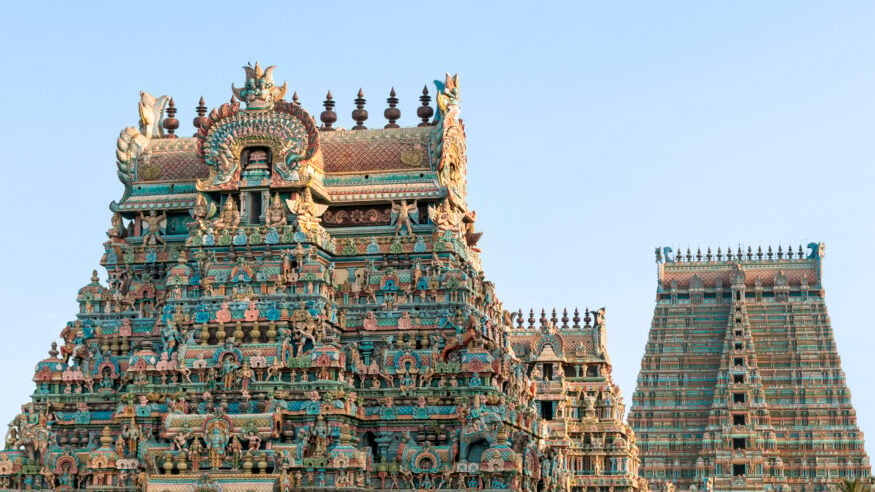
Across Karnataka, three celebrated Subramanya temples form a sacred triad revered for centuries: Adi Subrahmanya at Kukke in Dakshina Kannada, Madhya Subramanya at Nagamangala in Mandya district, and Anthya Subramanya at Ghati in Bengaluru Rural. Together they constitute a living pilgrimage tradition that integrates sacred geography, temple ritual, and regional culture, offering a coherent yatra that is both spiritually resonant and historically grounded.
Subrahmanya (also spelled Subramanya), known as Skanda, Kartikeya, or Kumara, is venerated in the Kaumara tradition and referenced in the Skanda Purana and the Mahabharata. Iconographically associated with the peacock vahana and the Vel (spear), Subrahmanya embodies shaurya (valor), jnana (discriminating wisdom), and raksha (protective grace). In Karnataka, the deity’s close association with naga worship is distinctive, reflecting a longstanding synthesis of sacred ecology, agrarian life-ways, and dharmic ritual practice.
The triadic designationAdi (beginning), Madhya (middle), and Anthya (culmination)maps meaningfully onto Karnataka’s terrain: from the mist-laden Western Ghats and riverine forests of Sullia (Kukke), through the agrarian heartlands of Mandya (Nagamangala), to the granite-strewn uplands near Doddaballapur (Ghati). Pilgrims customarily link these kshetras in a single itinerary, strengthening a pan-regional fabric of devotion and temple culture.
Adi Subrahmanya, Kukke, stands on the banks of the Kumaradhara in the Western Ghats, surrounded by dense evergreen forests. Traditional accounts recount that Vasuki and the nagas sought refuge under Subrahmanya here, a theme echoed in rites dedicated to sarpa devatas. The temple complex includes the renowned Adi Subrahmanya shrine marked by sacred anthills, alongside a larger garbha-griha where Subrahmanya is worshipped as the lord of nagas, integrating Kaumara devotion with serpentine symbolism.
Ritually, Kukke is renowned for Sarpa Samskara, Ashlesha Bali, and Naga Pratishta, observances undertaken for the propitiation of naga deities and the resolution of naga dosha as per family tradition. The tirtha of the Kumaradhara is central to the pilgrimage sequence; devotees often undertake a purificatory snana before darshan and archana. The temple’s festival calendar peaks around Skanda Shashti (Kartik Shukla Shashti) and other Shashti tithis, when elaborate alankaras and processions draw large congregations.
The experiential quality of Kukke arises from its setting as much as from its sevas: monsoon-fed canopies, laterite paths, and nagavana enclosures offer a rare confluence of ritual space and living ecology. For many, the temple’s sarpa-centric worship underscores an ethic of guardianship toward nature, aligning spiritual merit with ecological reverence.
Access to Kukke Subrahmanya is facilitated by road from Mangaluru and Mysuru, and by rail via Subrahmanya Road station, followed by a short roadway ascent. Core darshan timings typically span early morning to mid-day and late afternoon to evening; special sevas may adjust schedules. The post-monsoon months (October to February) provide clearer skies, easier mountain travel, and favorable pilgrimage conditions.
Madhya Subramanya, Nagamangala, anchors the triad’s “middle” in Mandya district’s agrarian belt. The kshetra is traditionally regarded as the central node connecting Kukke and Ghati, and it preserves a robust naga worship ethos alongside devotion to Subramanya as kumarathe youthful guardian of dharma and households. Architectural elements reflect layered renovations across medieval and later periods, with naga shrines and stone prabhavalis articulating the temple’s ritual identity.
Devotees visit Nagamangala for Shashti tithi observances, homas, and pariharas related to naga dosha as determined by family or kula-vrata. The temple’s serenityless crowded than coastal or metropolitan kshetrasallows unhurried darshan and participation in abhisheka and archana, contributing to the triad’s rhythm: reflection and ritual balance at the “middle” point of the journey.
Nagamangala is accessible by road from Bengaluru (via Nelamangala–Bellur Cross corridors) and from Mysuru. Timings generally follow a morning–midday and evening pattern; local temple boards update seva schedules seasonally. The surrounding countryside affords simple lodging and traditional bhojana options, particularly on festival days.
Anthya Subramanya, Ghati, lies near Doddaballapur in Bengaluru Rural district, concluding the triad’s eastward arc. The sanctum is notable for its dual-focus darshan: Subramanya with the naga is enshrined in front, while Sri Lakshmi Narasimha is visible in alignment behind the main murti, traditionally viewed through a strategically placed mirror. This integrated iconographySubramanya and Narasimha in a single visual axisexpresses a sophisticated theological harmony across Kaumara and Vaishnava streams within the broader Sanatana matrix.
The Ghati kshetra is widely known for Naga Pratishta, Shashti tithi observances, and community fairs that draw devotees from Bengaluru and beyond. Its festival cycle around Skanda Shashti and monthly Shashti days animates the precincts with vahana sevas, special alankaras, and annadana, reinforcing the temple’s role as a culmination pointAnthyain the triadic circuit.
Ghati Subramanya is approximately 60 km from central Bengaluru and is reachable via Yelahanka–Doddaballapur. Weekend visits see larger congregations; early arrival facilitates darshan and participation in sevas. Seasonal timings may vary, especially on special tithis and during Brahmotsava-like observances.
Pilgrims often complete the triad in two to three days. One common sequence begins in the east at Ghati (Anthya), proceeds to Nagamangala (Madhya), and culminates at Kukke (Adi) in the Western Ghats; others prefer to begin with the Western Ghats and move inland. Distances are manageable by car or bus, with Ghati–Nagamangala typically 140–170 km depending on routing, and Nagamangala–Kukke approximately 220–250 km through forested ghats and state highways.
Festival timing elevates the yatra’s potency. Skanda Shashti (Kartik Shukla Shashti) remains central across the triad, complemented by monthly Shashti observances and regional celebrations aligned with Karthika masam and Thaipoosam. On such days, additional pujas, alankaras, and prasadams structure the day around darshan windows; planning for lodging and queues is advisable.
Beyond temple walls, the triad illuminates shared dharmic motifs. Nagas, for instance, appear in Hindu, Buddhist, and Jain narrativesMucalinda’s protection of the Buddha and serpent deities in Jain cosmology attest to a civilizational respect for beings entwined with water, fertility, and guardianship. The virtues Subrahmanya embodiesdiscipline, courage, and sevaresonate broadly with the ethical cores of Hinduism, Buddhism, Jainism, and Sikhism, strengthening an interlinked moral horizon rather than sectarian boundaries.
Ethical pilgrimage here includes reverence for nagavana enclosures, responsible offerings that do not harm animal life, and aligning personal parihara rites with scriptural guidance and qualified archakas. Many families treat naga-related vratas as multi-generational bonds, integrating ecological carepreserving groves and water bodieswith ritual observance.
Read in a sacred-geographical key, Adi, Madhya, and Anthya can also be approached as a contemplative arc: origin, transformation, and consummation. In an Indic metaphysical idiom, this triad mirrors the journey from sankalpa (intention) through sadhana (disciplined practice) to anubhava (realization), an interpretive frame that complements, rather than replaces, the historical and liturgical identities of the three temples.
As living institutions, these kshetras reflect centuries of patronage, renovation, and community governance. Inscriptions and local oral histories attest to medieval and post-medieval layers, with contemporary management adapting to increased footfall, festival logistics, and heritage stewardship. The continuity of ritualabhisheka, archana, and tirtha practicesunderscores the resilience of temple traditions amid social and ecological change.
Undertaken thoughtfully, the Adi–Madhya–Anthya Subramanya yatra becomes more than a checklist of shrines. It is an immersion in Karnataka’s sacred landscape, a study in the unity of dharmic values, and a reaffirmation that devotion, knowledge, and ethical care for the natural world are mutually sustaining paths.
Practical guidance for visitors includes checking up-to-date temple timings before travel, planning around major Shashti dates to balance participation and crowd management, and supporting local economies responsibly. With measured preparation and a spirit of shared dharma, the triad offers a profound, cohesive, and memorable pilgrimage experience.
Inspired by this post on Hindu Blog.