Writing can be a profound modality for healing when approached with intention, structure, and embodied awareness. Across dharmic traditionsHinduism, Buddhism, Jainism, and Sikhismthere is a shared emphasis on mindful presence, non-harm, compassion, and disciplined practice. Framed in this spirit, embodied writing functions as a gentle sadhana that integrates reflective inquiry with somatic grounding to transform painful experience into clarity, coherence, and wholeness.
Many people begin journaling in ways that inadvertently reinforce rumination or self-critique. Without supportive frameworks, the page can become a place to relive stressors rather than to metabolize them. Over time, however, guided practices help shift the focus from looping narratives to careful observation, pattern recognition, and values-aligned growth, allowing a person to re-author the life story being lived.
Embodied writing places the body at the center of the reflective process. It invites slow, grounded attention to breath, sensation, posture, and environment before approaching challenging material. This orientation draws on dharmic insightsdhyana (meditative attention), ahimsa (non-harm), karuna (compassion), and simran (remembrance)to cultivate safety, kindness, and depth of presence. The result is a writing practice that is trauma-aware, integrative, and stabilizing.
Evidence from expressive writing research suggests that consistent, structured reflection can support mood, sleep quality, and immune function while reducing stress and rumination. These benefits appear most reliably when writing is paced, titrated, and coupled with practices that regulate the nervous system and promote mind-body connection.
Not all forms of writing are equally therapeutic. Uncontained venting, compulsive analysis, or detail-heavy recounting without grounding may retraumatize or reinforce limiting identities. By contrast, healing-oriented writing emphasizes titration (working with small, manageable pieces), compassionate language, present-moment orientation, and meaning-making that honors complexity without forcing resolution.
Common challenges in the healing process include pushing too fast, aiming for perfection, over-identifying with pain, and neglecting integration. These habits often arise from understandable survival strategies. A corrective, dharma-informed approach invites steadiness, curiosity, and humilityqualities that support sustainable transformation rather than quick but unstable breakthroughs.

Practical steps enhance safety and efficacy. Before writing, brief practices such as breath awareness, orienting to the room, or a body scan help downshift the nervous system. During writing, time-bound prompts, compassionate phrasing, and periodic somatic check-ins maintain regulation. After writing, gentle transitionsmovement, grounding, or gratitudeconsolidate insights and prevent overwhelm.
Useful prompts include: tracing a pattern that is changing, dialoguing with a resilient future self, reframing a difficult memory from a compassionate witness perspective, or articulating core values and commitments. Each prompt invites the practitioner to bring together mind and body, insight and action, with non-judgmental attention.
Over time, embodied writing nurtures a more supportive relationship to one’s story. Many report greater energy, clearer boundaries, and enhanced meaning-making as autobiographical narratives become more coherent and less fused with old wounds. This work aligns with the dharmic value of inner integration: it neither bypasses pain nor amplifies it, but meets experience with wisdom and care.
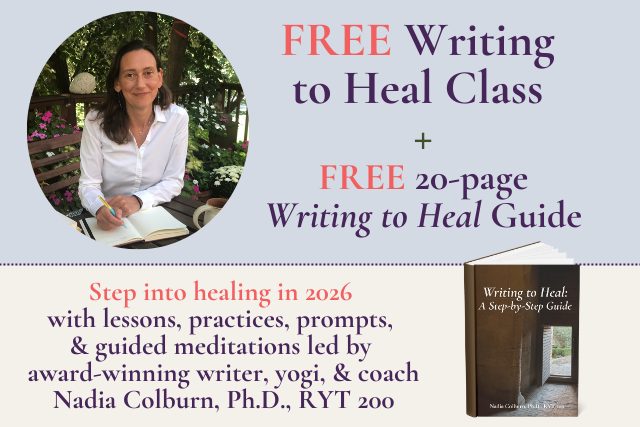
These principles are reflected in the work of educator and poet Nadia Colburn (PhD; RYT 200). With a background that spans poetry, memoir, and trauma-aware teaching, and publications in venues such as The New Yorker, Slate, Lion’s Roar, and The Harvard Review, her approach integrates writing with somatic awareness, meditation, and evidence-based insights. Drawing from talk therapy, EMDR, somatic practices, and contemplative traditions, her teaching models how writing becomes transformative when anchored in the body and guided by compassionate structure.
In practice, the aim is not to produce a perfect text but to cultivate coherent self-understanding and integrated presence. Embodied writing, approached with non-harm and compassion, becomes a unifying path that honors the shared ethical heart of Hinduism, Buddhism, Jainism, and Sikhism. By grounding words in breath and awareness, the page becomes a sanctuary for healing and a vehicle for translating insight into wise, life-affirming action.
Inspired by this post on Tiny Buddha.