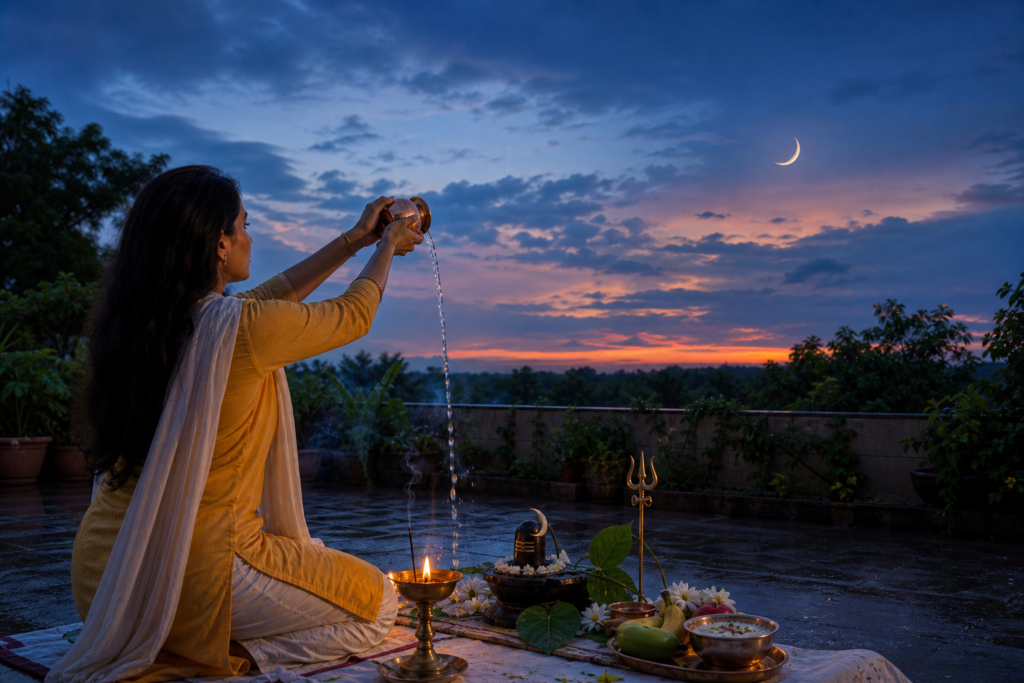
Namaskara, the act of bowing in reverence, stands at the heart of the Hindu way of life, weaving together daily worship, temple etiquette, and yogic discipline. Among its most observed forms are Ashtanga Namaskara and Panchanga Namaskaratwo related yet distinct prostrations that embody humility, devotion, and embodied mindfulness. Understanding their technique, symbolism, and appropriate contexts deepens spiritual practice while safeguarding the body through sound alignment rooted in yogic anatomy.
Etymologically, Ashtanga (ashta = eight, anga = limbs) denotes an eight-limbed prostration, while Panchanga (pancha = five, anga = limbs) denotes a five-limbed bow. Namaskara itself derives from “namas,” a gesture of surrender and salutation. Though both practices share the same devotional intent, their physical configurations, cultural settings, and ritual applications diverge in meaningful ways.
In Hindu worship and temple culture, these prostrations convey surrender to the Divine and cultivate a contemplative state supportive of mantra, dhyana, and bhakti. In yoga practice, especially within Surya Namaskar sequences, Ashtanga Namaskara functions as a transitional asana emphasizing breath-synchronized movement and precise points of contact. Across home puja, temple darshan, and formal sadhana, choosing the appropriate bow reflects both reverence and sensitivity to tradition.
At a glance, the difference is numerical and practical. Ashtanga Namaskara brings eight points of the body to the groundtypically both hands, both knees, both feet (or toes), the chest, and the chin or foreheadwhile Panchanga Namaskara brings fivemost commonly both hands, both knees, and the head/forehead. These contact points, however, are interpreted with regional variations and temple-specific codes of conduct (agamas), which should always be followed respectfully.
Ashtanga Namaskara: step-by-step technique for practice and Surya Namaskar
1) From a plank-like or kneeling position, exhale and lower both knees to the floor. 2) Place both palms alongside the chest, elbows hugging inward. 3) Lower the chest to gently touch the ground, keeping the hips slightly elevated to maintain a mild lumbar curve. 4) Bring the chin (classically in Surya Namaskar) or, in certain ritual contexts, the forehead to the floor. 5) Maintain light contact through both toes or feet. The eight points commonly counted are: two hands, two knees, two feet (or toes), chest, and chin (or forehead). Inhale to transition onward, often to Bhujangasana (Cobra), preserving a smooth respiratory rhythm.
In temple settings, this configuration may be referred to as Sashtanga Pranam (also spelled Sashtanga Namaskara), a traditional full prostration practiced especially by men in many South Indian temples. While nomenclature shiftsAshtanga and Sashtanga are often used interchangeably in ritual discoursethe essential intent is complete surrender with eight points touching. Local customs determine when and where this is appropriate (for example, before the dhvajasthambha or in designated areas outside the sanctum).
Panchanga Namaskara: step-by-step technique and temple etiquette
1) From a kneeling position, bring both knees to the floor as the body leans forward. 2) Place both palms on the ground in front. 3) Lower the head or forehead gently to the hands or the floor between them. The five points counted are both knees, both hands, and the head/forehead. In many Agamic traditions, Panchanga Namaskara is preferred for women within temple precincts, while men may practice Sashtanga; yet such conventions vary, and both forms can be practiced by any devotee where permitted by temple code and personal capacity.
From a yogic anatomy perspective, Ashtanga Namaskara distributes load through multiple joints: wrists bear axial weight with elbows close to protect the shoulders; knees flex and contact the floor; toes anchor posteriorly; the sternum and chin (or forehead) touch lightly without compressing the cervical spine. Proper scapular stability (gentle retraction and depression) protects the shoulder girdle, while a modest lumbar lordosis prevents collapse in the lower back. Smooth exhalation during descent supports core engagement (uddiyana-like stabilization) and somatic calm.
By contrast, Panchanga Namaskara concentrates contact at the knees, hands, and head/forehead, reducing spinal extension demands. The cervical spine should remain long to avoid neck compression; shoulders stay broad but relaxed; and the breath remains soft to prevent bracing. This variant often proves more accessible for elders or practitioners managing lower-back sensitivity, while retaining the devotional and contemplative essence of a full bow.
Breath and mental focus unify both forms. Exhalation initiates the descent (symbolizing surrender of ego), a brief natural pause anchors attention at the nadir, and inhalation accompanies the rise (symbolizing uplift and grace). Simple mantra japasuch as softly repeating “Om” or the chosen Ishta’s namehelps align physical motion with interior stillness, integrating body, breath, and bhava.
Symbolically, Ashtanga Namaskara is sometimes contemplated as the offering of the whole person across eight facetsoften interpreted through lenses like the eight directions (dik), the eight virtues extolled in bhakti, or even evoking resonance (not identity) with Patañjali’s eight-limbed path (Ashtanga Yoga). The gesture proclaims that every aspect of embodied lifemovement, intention, speech, perceptionis offered in surrender to the Divine.
Panchanga Namaskara is frequently contemplated in relation to foundational fivessuch as the pancha-bhutas (earth, water, fire, air, space), the pancha-koshas (sheaths), or the five organs of action and perception taken in totality as a single-minded vow of humility. Knees, hands, and head together express grounded devotion (earth), intentional action (hands), and mental surrender (head/forehead), harmonizing outer conduct with inner clarity.
Ritual context shapes usage. In many temples, Panchanga Namaskara precedes or follows darshan, while Sashtanga/Ashtanga prostration may be reserved for specific spaces or moments, such as after receiving prasada or during particular utsavas. Home worship often mirrors temple practice in simplified form. Regardless of setting, modest attire, removal of footwear, unobtrusive movement, and allowing others unobstructed darshan are marks of good etiquette.
Safety and accessibility matter. Those with knee pain may use a folded cloth beneath the patella or practice from a chair, bowing the torso forward with palms to the thighs and head inclined. Individuals with cervical spondylosis can substitute touching the forehead with gentle head bowing while maintaining length through the back of the neck. During pregnancy or with abdominal sensitivity, avoid pressure on the lower belly; a seated or standing namaskara with Anjali Mudra preserves devotional intent without strain.
Common confusions are easily resolved. First, the terms Ashtanga and Sashtanga in ritual contexts often both mean “eight-limbed” prostration; local usage dictates vocabulary. Second, in Surya Namaskar the classical contact is chin (not forehead), whereas temple bows may favor the forehead. Third, feet may be counted explicitly as two points or referenced collectively in certain enumerations; what matters is even, respectful distribution of contact consistent with the tradition at hand.
Comparable bows appear across Dharmic traditions, underscoring a shared ethic of humility and reverence. In Buddhism, the “five-point” prostration brings both knees, both hands, and the forehead to the ground, while full-length prostrations are also practiced in Tibetan lineages. In Jainism, the Prakrit “Pañca-Namokkāra” (Navkar Mantra) venerates five supreme beings, and prostration may reflect this fivefold salutation in form and intent. In Sikhism, matha teknabowing the forehead to the Guru Granth Sahibembodies respectful surrender to the Shabad. These convergences highlight unity in spiritual values while honoring diversity in liturgy.
Choosing between Ashtanga and Panchanga Namaskara can be guided by three touchstones: tradition (temple code and family parampara), capacity (joint health, mobility, and comfort), and intention (the bhava one wishes to cultivate). When in doubt, Panchanga offers a universally respectful, joint-friendly bow; where permitted and appropriate, Ashtanga/Sashtanga expresses maximal surrender through expanded points of contact. Both, practiced with attention to breath and alignment, refine concentration and deepen devotion.
In essence, Ashtanga and Panchanga Namaskara are complementary expressions of the same aspiration: to align body, breath, and mind in reverent offering. By learning their precise technique, appreciating their symbolism, and honoring local custom, practitioners integrate yogic insight with living traditionstrengthening a shared Dharmic heritage that values humility, inclusivity, and the sanctity of sincere worship.
Inspired by this post on Hindu Blog.