
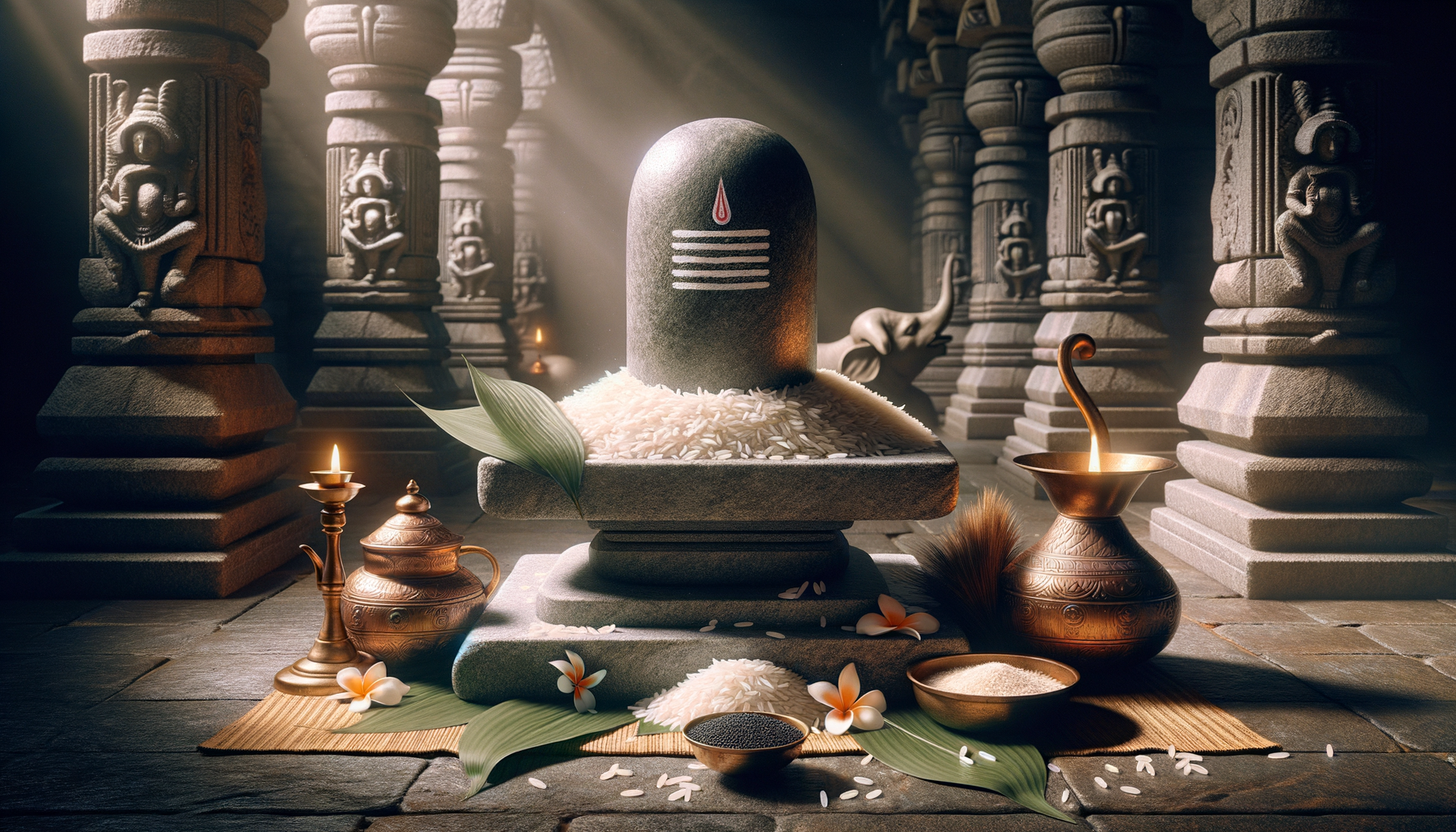
Vilamal Temple, near Thiruvarur in Tamil Nadu, stands as a serene Shaivite sanctuary where Lord Shiva is worshipped as Pathanjali Manoharar. Revered in local memory as a sacred abode of Ajapa Natanam, the temple’s ritual life blends disciplined worship with contemplative stillness, inviting visitors to encounter devotion through both form and silence.
Annabhishekamthe ceremonial offering and anointing of the Śiva Liṅga with cooked riceholds a distinctive place in Tamil temple tradition. While many Shiva temples across Tamil Nadu perform Annabhishekam on Aippasi Pournami (the Full Moon of the Aippasi month), Vilamal Temple is renowned for solemnizing this rite on Amavasai, the No Moon Day. The shift from full moon to new moon intensifies the contemplative mood, underlining themes of renewal, restraint, and inner clarity.
Observed on Amavasai, the Annabhishekam at Vilamal harmonizes naturally with Pithru Tharpanam, the offering made in remembrance of ancestors. The pairing evokes gratitude for sustenanceanna as life-giving nourishmentand gratitude for lineage, acknowledging those whose lives made one’s own possible. Devotees describe a palpable quietude during these observances, as the temple atmosphere turns inward, allowing the collective rhythm of prayer, offering, and reflection to unfold with dignity.
The temple’s association with Ajapa Natanam aligns with this inward turn. In Shaivite understanding, Ajapa Natanam evokes an inner, unforced rhythm of remembranceakin to the spontaneous flow of breath. When the Abelian quiet of the No Moon Day meets the embodied fullness of Annabhishekam, the result is a ritual grammar that feels both minimal and complete: the moon’s dark stillness mirroring inward remembrance, and the abundance of rice signifying life’s plenitude.
As with many practices across dharmic traditionsHinduism, Buddhism, Jainism, and Sikhismthe convergence of remembrance and service at Vilamal reflects shared values: gratitude to one’s forebears, compassion for all life, and ethical restraint. Though liturgies and symbols may differ, the underlying commitment to honoring lineage, cultivating inner discipline, and serving the community forms a common thread of unity in spiritual diversity.
Visitors to Vilamal Temple often note that participating respectfully in these rites involves careful attention to local guidance, quiet presence during Pithru Tharpanam, and a spirit of simplicity. The temple’s rituals are conducted with clarity and decorum; observing them attentivelyrather than intrusivelypreserves the contemplative tone that makes the Amavasai Annabhishekam so distinctive.
Situated in the culturally rich Thiruvarur region, Vilamal Temple contributes to the Tamil Nadu temple heritage in a manner both traditional and unique. Its Amavasai observance, combined with ancestral offerings, adds a rare liturgical contour to the broader Shaivite landscape of the Cauvery delta, where ritual calendars, agrarian rhythms, and devotional arts continue to shape living heritage.
Ultimately, the Annabhishekam on Amavasai at Vilamal Temple stands as a moving enactment of fullness within silencerice as gratitude, Tharpanam as remembrance, and Ajapa Natanam as inward harmony. In a world of constant noise, this rite offers a measured cadence of devotion that unites ritual precision with ethical reflection, and local tradition with dharmic unity.
Inspired by this post on Hindu Blog.
