
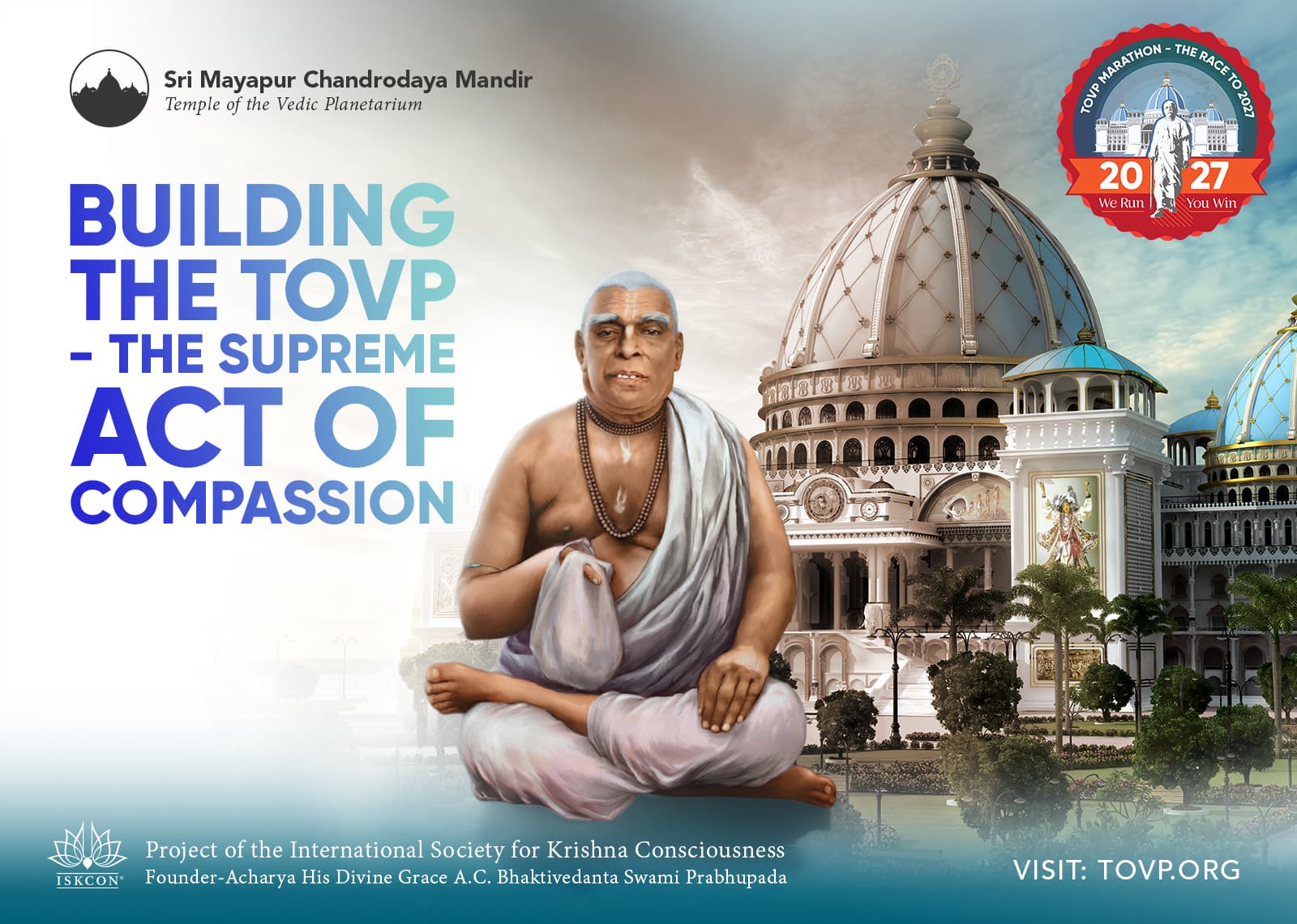
Many observers assume that constructing the Temple of the Vedic Planetarium (TOVP) is simply the building of another grand shrine. This view overlooks a deeper intent: TOVP is widely regarded as a supreme act of compassion, offering a living space where knowledge, service, and spiritual reflection can be pursued in an accessible, contemporary form. Framed within Vedic heritage, its mission aligns with the broader dharmic aim of uplifting society through wisdom, ethical conduct, and shared responsibility.
Compassionkaruṇāholds a central place across Hinduism, Buddhism, Jainism, and Sikhism. In this sense, TOVP functions as a cultural and educational institution as much as a temple. Through exhibitions, learning resources, and community programs, it encourages inquiry, dialogue, and service-oriented living, translating ancient insights into practical guidance for modern life. This makes the project more than an architectural achievement; it becomes a platform for inner growth and social harmony.
Architecturally and pedagogically, TOVP integrates sacred space with learning. The concept of a “Vedic planetarium” introduces visitors to cosmological perspectives preserved in Vedic literature, inviting engagement with questions about time, nature, and consciousness. Families, students, scholars, and pilgrims encounter a curated environment where the aesthetics of temple architecture converge with education, helping cultivate respect for plural perspectives within the dharmic world.
Rooted in the Vaishnava tradition of ISKCON (International Society For Krishna Consciousness), TOVP embodies valuestruth-seeking, devotion, non-violence, and servicethat resonate across dharmic traditions. While maintaining fidelity to its lineage, its emphasis on learning and cultural preservation can serve as a bridge for inter-traditional appreciation. In this way, the temple contributes to unity in spiritual diversity, affirming that multiple paths can coexist while pursuing shared ethical and spiritual goals.
The social impact is tangible. Temple construction supports artisan skills, heritage crafts, and regional livelihoods, strengthening cultural heritage while generating employment. As a hub for visitors and pilgrims, Mayapur benefits from improvements in local infrastructure and community services. Such outcomes demonstrate how a temple can operate as a catalyst for cultural resilience, economic vitality, and responsible stewardship.
Visitor experiences frequently underscore the project’s compassionate orientation. For many, the first encounter brings a sense of awe in the presence of a thoughtfully designed sacred space. Others find quietude for contemplation and an opportunity to reconnect with timeless values amid contemporary pressures. Whether attending educational exhibits or participating in devotional practices, visitors often report a renewed appreciation for the ethical and spiritual threads that bind the dharmic family.
In this light, the TOVP is more than a monumental structure; it is a living expression of compassion and unity. By presenting Vedic knowledge with scholarly clarity and cultural sensitivity, it nurtures dialogue, fosters inclusion, and invites individuals from diverse backgrounds to engage with a shared civilizational heritage. Seen this way, building the TOVP is not merely constructionit is a compassionate investment in wisdom, integrity, and harmony for present and future generations.
Inspired by this post on Dandavats.
