Narasimha, the half-lion, half-man avatar of Vishnu, occupies a vital position in Hindu temple art and devotional life. As the victorious protector of dharma who overthrew the asura king Hiranyakashipu to uphold Prahlada’s unwavering bhakti, Narasimha’s iconography communicates themes of divine intervention, just power aligned with righteousness, and the restoration of cosmic order. In the iconography of Narasimha idol form, sculptors and priests codify a visual theology that is at once fierce, compassionate, and contemplativean enduring grammar in Hinduism’s Vaishnava tradition.
Textual foundations for Narasimha iconography are robust and multi-stranded. The Bhagavata Purana (Skandha 7), Vishnu Purana, and Agni Purana narrate the theological core, while the Narasimha Tāpani Upanishad preserves esoteric reflections. Ritual-theological manuals in the Pancharatra tradition (such as the Ahirbudhnya and Jayakhya Samhitas) and the Vaikhanasa Agamas prescribe consecration, mantra, and worship patterns. Shilpa Shastra treatisesincluding sections of the Vishnudharmottara Purana, Shilparatna, and Pratimā-lakṣaṇa literatureset out measurements, attributes, gestures, and expressive modes that ensure both doctrinal fidelity and aesthetic coherence.
The core iconographic grammar balances human and leonine elements to visualize transcendence. The face is lion-like with flaring mane, prominent fangs, and a gaping mouth; the torso and limbs are human, proportioned by canonical systems (tāla and māna-pramāṇa) that standardize height, limb length, and facial ratios. Typical Vaishnava identifierskīrīṭa-mukuṭa (crown), yajnopavīta (sacred thread), vanamālā (garland), and the śrīvatsa markestablish theological identity. A prabhāvalī (flame-arch) and parikara (backplate) often amplify presence, while the urdhva-puṇḍra (vertical forehead mark) locates the icon firmly within Vaishnava practice.
Attributes (āyudhas) and gestures (mudrās) distinguish mood and function. Rear hands often hold the conch (Pañcajanya), discus (Sudarshana), mace (Kaumodakī), and lotus (Padma). In śānta and saumya modes, the front hands show abhayamudrā (assurance) and varadamudrā (boon-granting). In ugra modes, the principal hands enact nakha-vidāraṇa, the signature rending-by-claws that fulfills the narrative logic of the boon. Stances include alīḍha or pratyālīḍha for ferocity, padmāsana for yoga, and maharājalīlāsana for royal ease, each calibrated to communicate specific rasa (aesthetic mood).
Kevala or Ugra Narasimha represents the theophany’s raw, juridical energy at the threshold moment. The form is commonly four-, eight-, or sixteen-armed, with Hiranyakashipu stretched across the thighs, the torso torn by natural nailsthus honoring the boon’s constraints (neither weapon, nor day or night, nor indoors or outdoors, nor man nor beast). Sculptors accentuate kinetic force with bulging eyes, flaring manes, and wide mouths, rendering terror to evil and refuge to the righteous.
Jvāla, Krodha, and Vīra Narasimha magnify the fiery aspect. Flames may rise from the prabhāvalī, and weaponry proliferates across multiple arms. In Deccan and Tamil ateliers, a vigorous torsional shift (tribhaṅga with alīḍha legs) and taut musculature visualize unstoppable force. These ugra variants are doctrinally fierce yet ritually domesticated through pacifying offerings and mantras.
Lakshmi-Narasimha is the pacified counterpart, seated with Śrī (Lakshmi) on the left thigh. The leonine face softens, the front hands often grant fearlessness and boons, and the rear retain discus and conch. This form, central to public worship, synthesizes protection and grace. Major shrinesincluding Simhachalam, Ahobilam’s Malola, and the celebrated monolith at Hampi (originally Lakshmi-Narasimha)foreground this theological reconciliation of strength with compassion.
Yoga-Narasimha presents the avatar as an ascetic-guardian. Seated in padmāsana with a yogapaṭṭa binding the knees, the icon sometimes reduces or omits weaponry to direct attention to breath, poise, and inward gaze. Hilltop shrines at Melukote (Melkote) and Sholingur exemplify this mode, aligning kṣātra (valorous power) with tapas (discipline) and evoking inner fearlessness among pilgrims.
The Nava Narasimha tradition at Ahobilam (Andhra Pradesh) curates a rare site-specific atlas of Vaishnava iconography: Jwala, Ahobila (Ugra), Malola (Lakshmi), Kroda/Krodha, Karanja, Bhargava, Yogananda, Chatravata, and Paavana. Each sanctum articulates distinct emotional and theological emphases, enabling devotees to encounter Narasimha’s protector-ethic across a spectrum from fierce to tender to contemplative.
Narrative reliefs crystallize the drama into emblematic scenes: Prahlada’s steadfast devotion amid persecution, the pillar-theophany (stambhodbhava), and the twilight-threshold execution of justice. The pillar is often staged as a cosmic axis; courtiers flee or bow; Prahlada remains visually centered. Artists compress scriptural time to encode the essential doctrinal lessons: supremacy of dharma and the inviolability of true bhakti.
The theological symbolism is exacting and layered. A liminal time (sandhyā, twilight) and liminal space (threshold) meet a liminal being (neither man nor beast). Natural nails bypass the weapon taboo; the rending of the tyrant’s belly becomes a visual allegory for loosening adharma’s knots. The icon thereby models kṣātra conformed to dharmaa widely revered Indic ideal that tempers courage with ethical restraint.
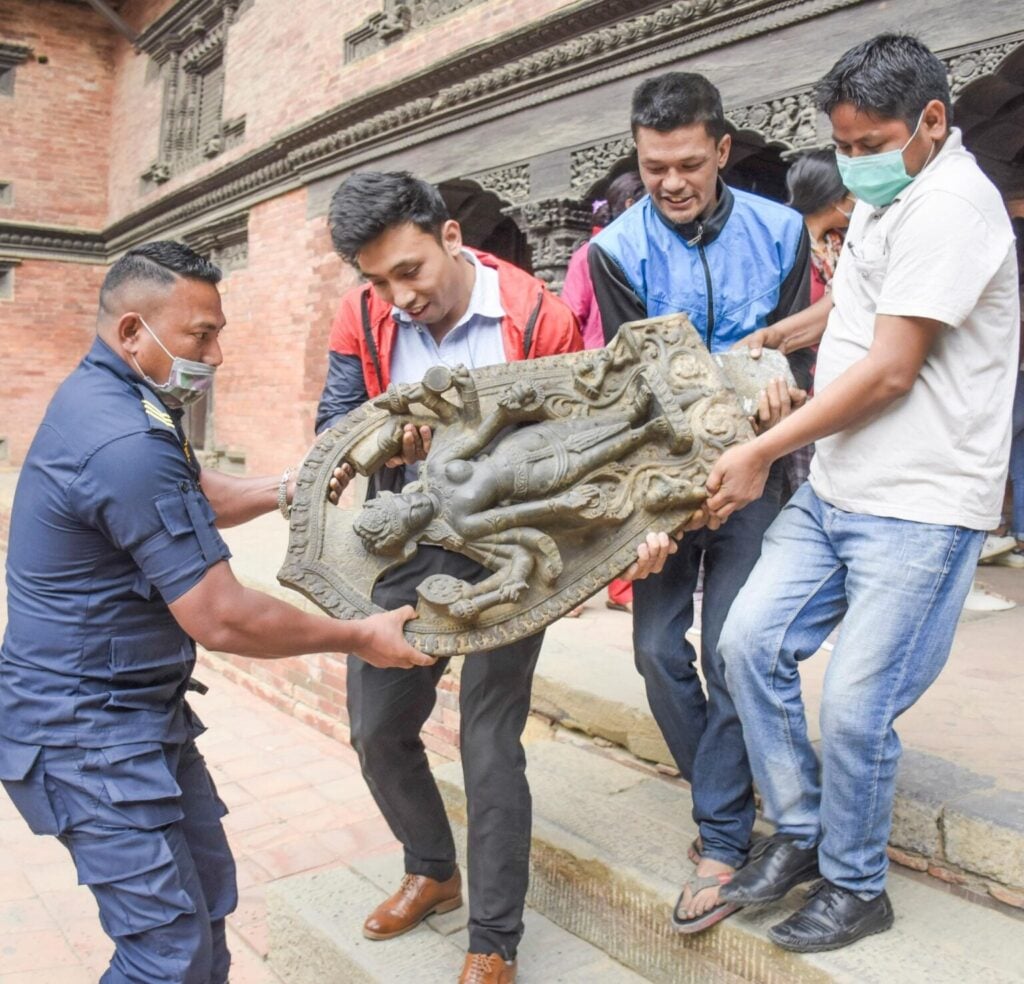
Art-historically, Narasimha images appear by the Gupta period, with early reliefs at the Deogarh Daśāvatāra temple. The theme proliferates through the Badami-Chalukya era, matures under Pallava and Chola artisans, and attains monumental expression in Hoysala and Vijayanagara projects. Northern examples include Ellora’s Cave 15 (Daśāvatāra) panel, while in the Kathmandu Valley, Malla-period stone sculptures monumentalize the lion-faced savior. Across Southeast Asia, Angkorian bas-reliefs integrate Narasimha within a pan-Indic Vishnu iconographic repertoire.
Regional idioms clarify recognition across India. Hoysala carvings at Belur and Halebidu accentuate jewel-like detail and dynamic prabhāvalīs; the Vijayanagara monolith at Hampi dramatizes scale and frontal intensity. Coastal Andhra–Telangana kṣetrasSimhachalam, Yadadri (Yadagirigutta), Dharmapuri, and Mangalagirisustain distinctive local rituals for Lakshmi-Narasimha. Tamil centers at Sholingur and Namakkal foreground Yoga-Narasimha and breath-discipline, while Odisha’s Puri-Jagannath complex maintains Narasimha shrines within its broader Vaishnava sacral map.
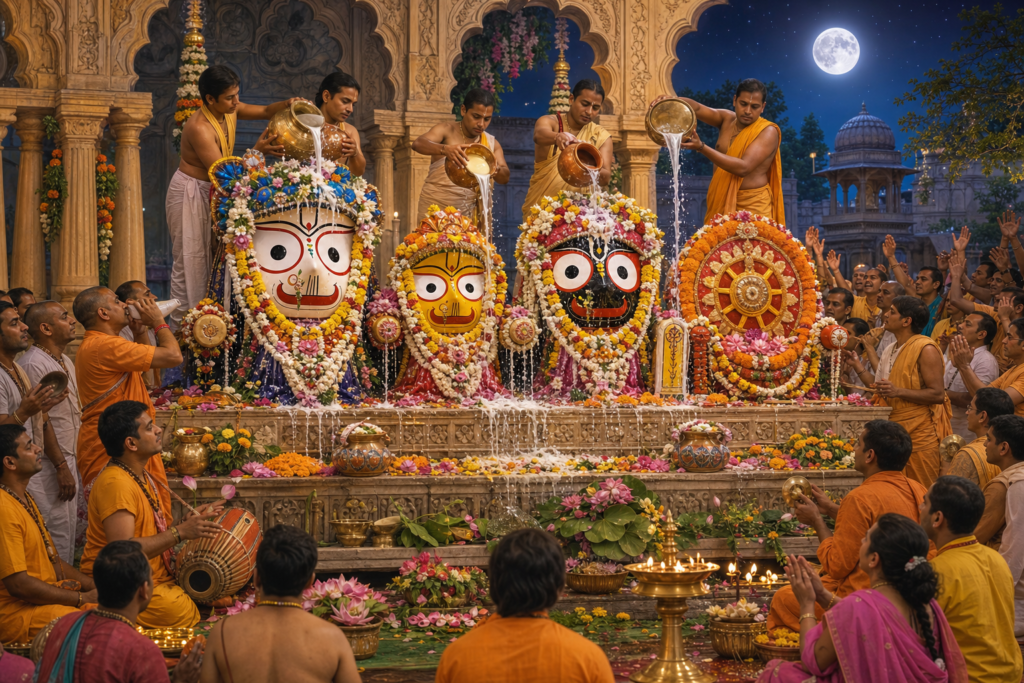
Ritual life intensifies and interprets form. On Narasimha Jayanti (Vaiśākha śukla caturdaśī), abhiṣekam with pañcāmṛta and fragrant unguents pacifies ugra currents and invokes protection for the community. Homas dedicated to Sudarshana and Narasimha mantras are offered for collective wellbeing. At Simhachalam, the mūrti is sheathed in sandal paste through the year, revealing the nijarūpa only on Akṣaya Tritiyāan enacted pedagogy of transforming heat into cool compassion.
Mantric and poetic traditions transmit the icon’s power through sound and memory. Devotees widely recite the Narasimha mantra beginning, Ugram vīram mahāviṣṇuṁ jvalantaṁ sarvato-mukham, and sing stotras such as the Lakṣmī-Narasimha Karāvalamba attributed in tradition to Ādi Śaṅkara. The Bhagavata Purana’s Prahlada hymns underpin these practices, weaving scripture, sound, and sculpture into a single soteriological fabric.
Materials and techniques align with function. South Indian bronzes cast by the lost-wax (cire perdue) method capture flowing manes and nuanced mudrās for processional use (utsava). Granite and schist invite high-relief narrative on vimānas and maṇḍapas; the parikara’s flames often visualize jvāla. Canonical proportions (māna-pramāṇa and tāla) maintain aesthetic balance so that even ugra forms read as morally ordered, not chaotic.
Visitor experience routinely mirrors theology in lived terms. Families frequently report a quickened heartbeat before Ugra Narasimha and a felt calm before Lakshmi-Narasimha. Pilgrims ascending to Yoga-Narasimha shrines describe the breath slowing as the leonine gaze meets the horizona reminder that courage and serenity complement each other on the dharmic path.
Across dharmic traditions, a shared grammar of protective compassion emerges. Vajrayāna Buddhism deploys wrathful-yet-benevolent deities to dissolve obstacles; Jain temples enshrine guardian yakṣas who safeguard the path of ahiṁsā; Sikh thought harmonizes saintliness with valor (sant-sipāhī). Narasimha’s iconography participates in this larger Indic consensus: strength must serve ethics, community wellbeing, and the freedom of the spiritual quest.
Contemporary temple architecture, museum display, and community arts continue to commission Narasimha icons as emblems of resilience. Conservators emphasize careful restoration of broken attributes, contextual interpretation, and respectful lighting that communicates mood without sensationalism, ensuring that form and functiondarśan, procession, and pedagogyremain legible to new generations.
Taken together, the iconography of Narasimha offers a rigorous visual theology: fierce where injustice thrives, tender where devotion flowers, and contemplative where inner battles are fought. Familiarity with textual sources, formal conventions, regional idioms, and living rites enables viewers and pilgrims to read Hindu temple art confidently and to recognize, across dharmic lineages, a shared commitment to protecting dharma through compassion-guided strength.
Inspired by this post on Hindu Blog.