
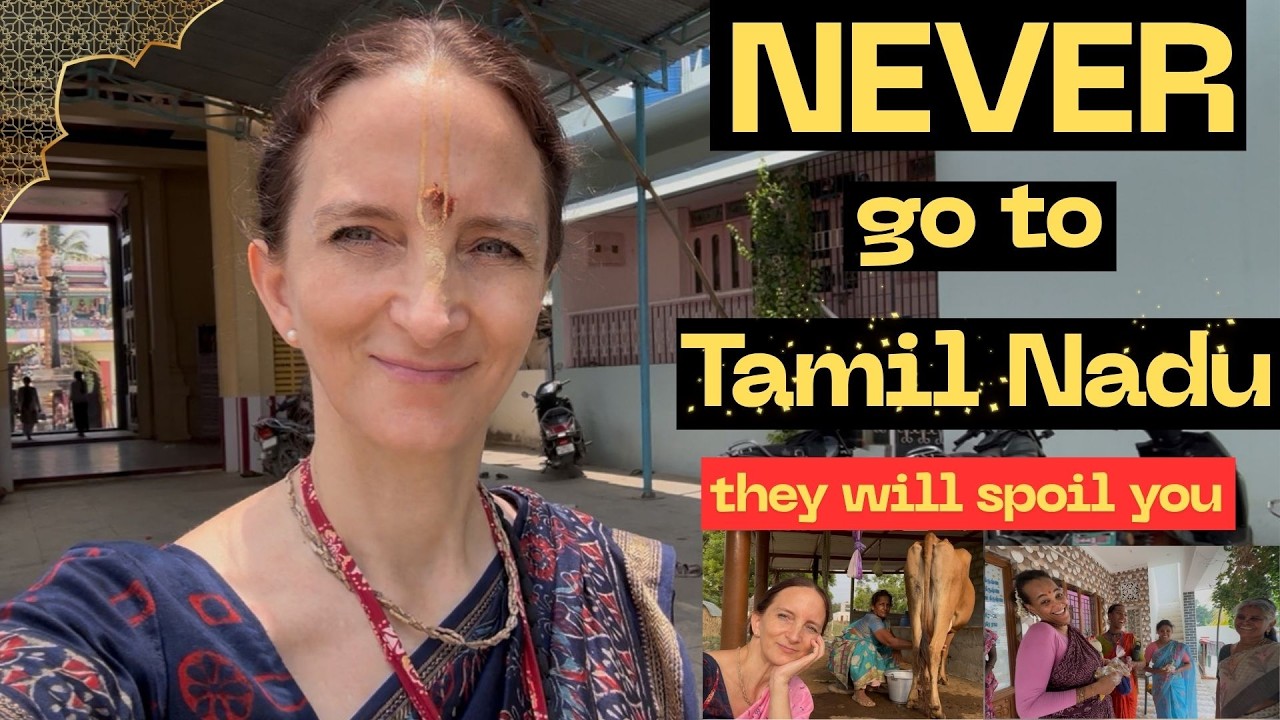
Visitors to ISKCON Salem in Tamil Nadu frequently report an experience so welcoming and spiritually nourishing that departures feel unexpectedly difficult. The community’s hallmark is an extraordinary culture of seva—thoughtful, attentive service—expressed through warmth, organizational clarity, and an unwavering commitment to devotional hospitality. This combination of heart-centered care and liturgical rigor positions ISKCON Salem as a compelling destination within Tamil Nadu’s renowned temple ecosystem.
Situated within a region celebrated for centuries of Bhakti Tradition, ISKCON Salem integrates Gaudiya Vaishnava practices—rooted in bhakti-yoga and the chanting of the holy names—with Tamil Nadu’s deep heritage of temple worship. The result is a familiar-yet-distinct spiritual idiom where universal Vaishnava concepts harmonize with the state’s longstanding ethos of atithi devo bhava (the guest is akin to divine). This alignment resonates strongly with spiritual tourism in India, drawing seekers who value both disciplined practice and heartfelt community.
Several features consistently distinguish the Salem community. First, the service ethos is palpable: volunteers greet newcomers with clarity, help orient them to darshan, kirtan, and prasadam timings, and gently model temple etiquette. Second, the devotional schedule is comprehensive and predictable, which helps visitors engage without uncertainty. Third, the atmosphere is deliberately inclusive; individuals from different backgrounds, languages, and levels of prior exposure to Hinduism are guided with equal care, creating a sense of belonging that often invites longer stays.
A typical ISKCON day—subject to local variations—comprises early morning mangala-arati, group japa of the Hare Krishna maha-mantra, guru-puja, a Srimad-Bhagavatam discourse, midday offerings and arati, evening Gaura-arati with congregational kirtan, and prasadam distribution. The cadence of these practices aligns with classical bhakti-yoga, which emphasizes sravanam (hearing), kirtanam (chanting), and smaranam (remembrance), among the nine limbs of devotion (navadha-bhakti). For travelers, this structure functions like a well-mapped pilgrimage, allowing gradual immersion without cognitive overload.
Kirtan in the Gaudiya tradition uses call-and-response melodies, mridanga, kartals, and harmonium to create a shared devotional field. From a psychosocial perspective, group chanting and synchronized rhythm support affect regulation, reduce stress markers associated with social isolation, and encourage pro-social behavior. In practical terms, even first-time participants find it easy to join, and the sonic texture—gentle yet energizing—invites contemplative focus without sacrificing accessibility.
The community supports both loud japa during congregational chanting and silent japa for personal practice, recognizing that different temperaments respond to distinct modes of engagement. This flexibility reflects a broader Hindu spirituality principle: varied pathways to the same transcendent goal. Visitors often note how alternating between collective kirtan and meditative japa creates a balanced inner state, combining uplifted emotion with centered attention.
Prasadam—sanctified vegetarian food—embodies the theology of grace in edible form and is central to temple hospitality. ISKCON centers typically emphasize sattvic, freshly prepared meals that are both nourishing and inclusive. In Tamil Nadu’s culinary setting, this often means a confluence of local flavors with pan-ISKCON standards of purity and cleanliness. The annadanam tradition here aligns organically with the region’s longstanding reverence for feeding devotees and guests, reflecting dharmic commitments to compassion, non-violence (ahimsa), and service.
Scriptural education is another pillar. Bhagavad-Gita and Srimad-Bhagavatam classes present core concepts of Vaishnava siddhanta in a manner suitable for newcomers and seasoned practitioners alike. In Salem, as elsewhere within the Hare Krishna Movement, lecturers typically emphasize applied spirituality—how devotion informs daily choices, relationships, and mental well-being—linking timeless insights to contemporary questions about purpose, ethics, and contentment.
Community outreach activities—ranging from cultural programs and youth engagement to food distribution—extend the temple’s ethos beyond its walls. While specific initiatives vary over time, visitors can expect to encounter a culture that treats seva as both spiritual discipline and civic responsibility. This approach strengthens social cohesion and situates ISKCON Salem as a constructive participant in the city’s broader community life.
The devotional environment also reflects South India’s aesthetic sensibility: abundant garlands, traditional attire, and meticulous altar arrangements. ISKCON temples across India commonly worship Radha-Krishna and Gaura-Nitai; visitors to Salem should anticipate a similar liturgical focus, though precise altar arrangements and schedules are best confirmed locally. The visual grammar—orderly, colorful, and symbolically rich—supports concentration and reverence during darshan.
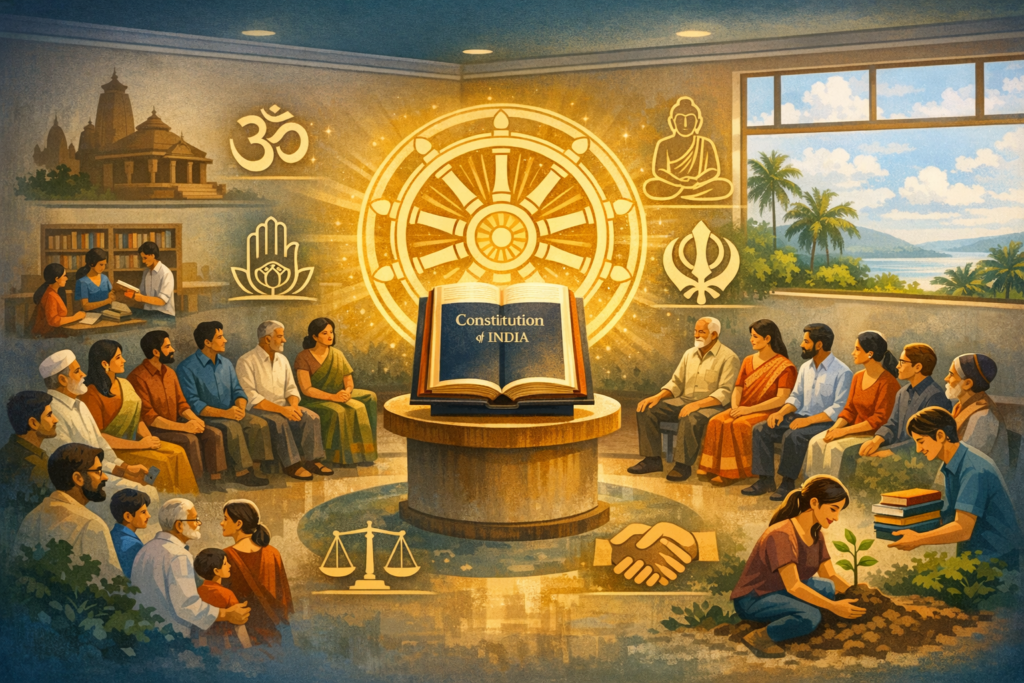
Crucially, the culture of ISKCON Salem aligns with the blog’s aim of nurturing unity among dharmic traditions. The practice of anna-seva echoes Sikh langar, where egalitarian, community-cooked meals dissolve social barriers. The commitment to ahimsa and disciplined restraint resonates with Jain principles of non-violence and aparigraha. Structured meditation and ethical cultivation find natural parallels in Buddhist emphasis on mindfulness, compassion (karuna), and dana (generosity). These interlocking ideals demonstrate how Hinduism, Buddhism, Jainism, and Sikhism share a civilizational kinship centered on compassion, service, and self-transformation.
Respectful participation enhances the experience. Modest attire, mindful movement in worship spaces, and deference to volunteer guidance maintain the sanctity of darshan and kirtan. Photography norms vary; discrete, non-intrusive behavior is preferred, and any posted guidelines should be followed. Leather items are generally acceptable in ISKCON settings, yet deference to local customs—especially near sanctums—reflects good etiquette. A simple, open-hearted presence is welcomed most of all.
Families, solo travelers, and intergenerational groups often find ISKCON environments especially accessible. Children tend to respond positively to music-driven worship and the conviviality of prasadam. Cleanliness, shoe-storage systems, and clear signage contribute to a sense of safety and ease. For those undertaking broader spiritual tourism in South India, a visit to ISKCON Salem offers a complementary experience alongside the state’s classical temple circuits, providing an entry point to Vaishnava devotion that is structured, participatory, and welcoming.
First-time visitors often remark that what begins as curiosity becomes a heartfelt connection. The steady rhythm of arati, the collective uplift of kirtan, the contemplative quiet of japa, and the grace of prasadam compose a complete devotional arc. Coupled with a community that anticipates needs and extends care without ostentation, the experience can feel like a homecoming—an impression behind the affectionate joke that a trip to ISKCON Salem carries the “risk” of not wanting to go anywhere else.
In summary, ISKCON Salem exemplifies how Tamil Nadu’s temple culture and Gaudiya Vaishnava practice reinforce one another: disciplined ritual enlivened by music, philosophy made experiential by service, and personal devotion strengthened by community. The outcome is a living demonstration of unity in spiritual diversity, where the shared dharmic values of compassion, hospitality, and inner growth are not merely taught but practiced, daily, with grace.
Inspired by this post on Dandavats.








Leave a Reply
You must be logged in to post a comment.