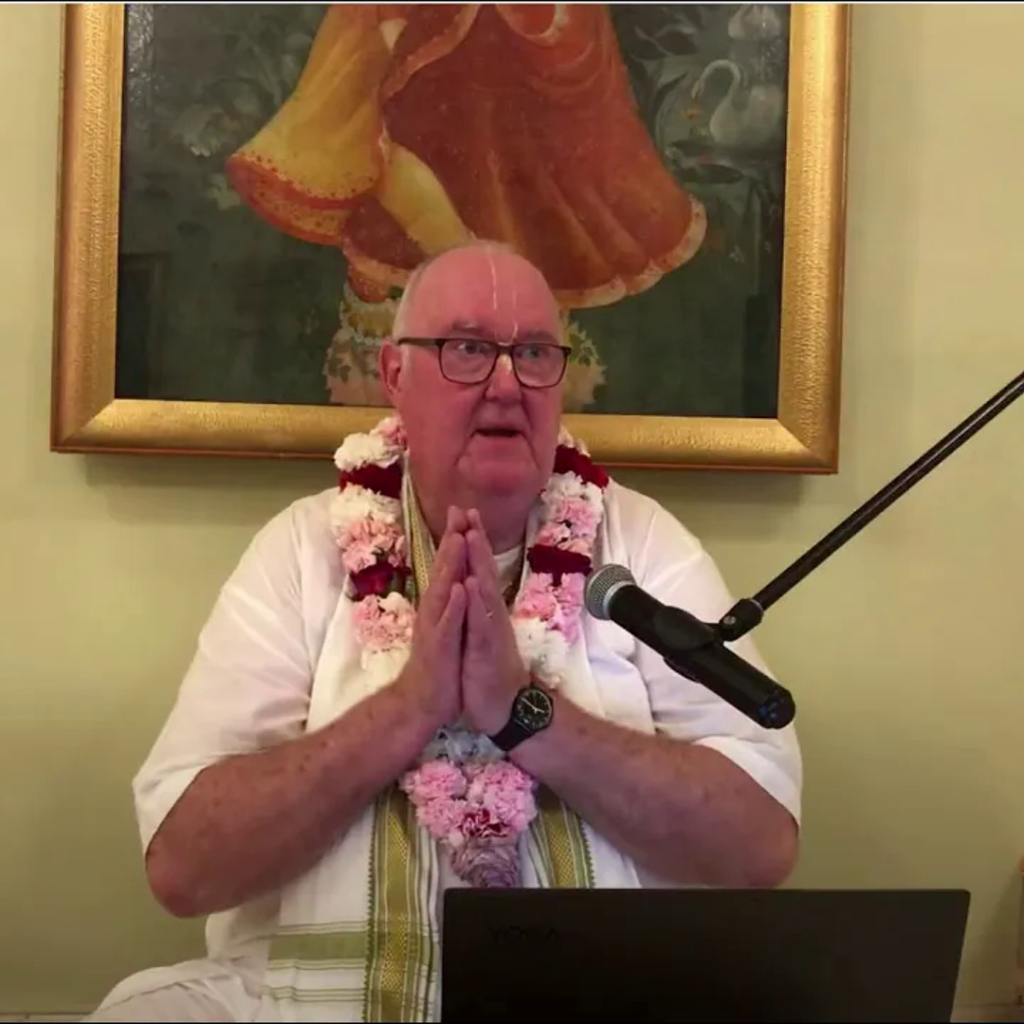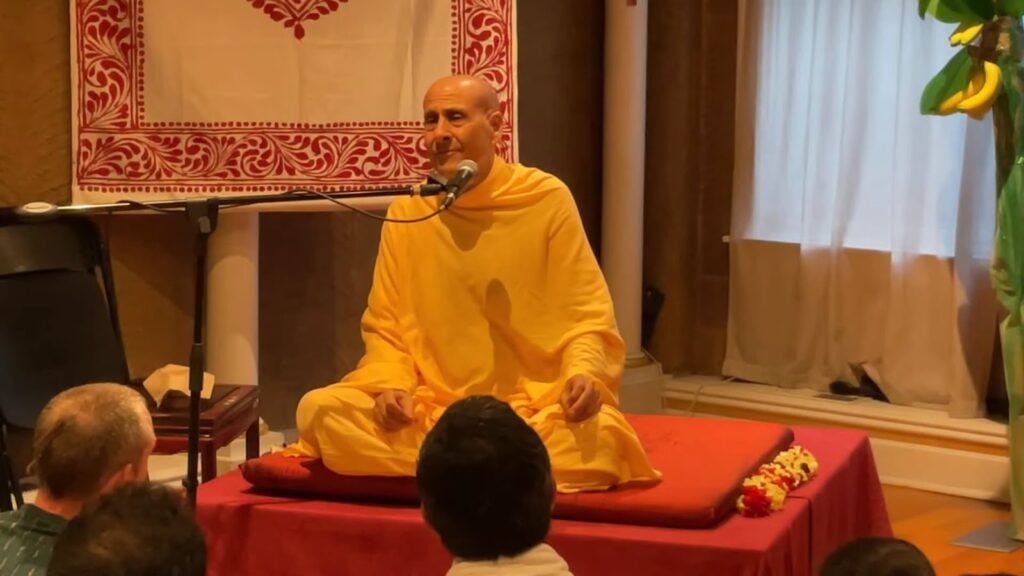
HH SB Keshava Swami’s recent lecture, streamed via the ISKCON Dallas Sri Radha Kalachandji Temple Live channel, exemplifies how contemporary Gaudiya Vaishnavism marries rigorous scriptural study with living practice. The session, hosted in a vibrant diaspora setting, situates bhakti-yoga within both timeless Vedic wisdom and the daily realities of a global audience.
As a sannyasi within ISKCON (International Society For Krishna Consciousness), Keshava Swami is widely appreciated for lucid expositions that elevate the Hare Krishna Movement’s core disciplinesjapa meditation, kirtan, seva, and sadhu-sangawithout sacrificing philosophical depth. Lectures at Sri Radha Kalachandji encourage participants to translate devotion into clarity of purpose, steadiness of mind, and compassionate action.
Historically, the lineage crystallized under Sri Chaitanya Mahaprabhu and the Goswami scholars of Vrindavan. Rupa Goswami’s Bhakti-rasamrita-sindhu articulates the grammar of devotionfrom the 64 angas of practice to the maturation of rati and rasaoffering a systematic map that contemporary teachers draw upon to guide seekers from initial faith to stable practice.
At the heart of the Gaudiya Vaishnava curriculum stands a three-part framework: sambandha, abhideya, and prayojana. Sambandha clarifies ontological relationships among jiva-tattva, Vishnu-tattva, and the multifaceted energies of Bhagavan. Abhideya describes methodsadhana-bhakti grounded in the nine limbs of devotion (sravanam, kirtanam, smaranam, pada-sevanam, arcanam, vandanam, dasyam, sakhyam, atma-nivedanam) as codified in classical texts. Prayojana articulates the culmination of spiritual practice as unalloyed prema, illuminated through the acintya-bhedabheda paradigm of simultaneous oneness and difference.
Bhagavad-Gita and Srimad-Bhagavatam serve as textual anchors for this trajectory. Gita chapters on bhakti-yoga, karma-yoga, and jnana-yoga are synthesized into a coherent pathway that privileges loving service while honoring discipline and knowledge. Bhagavatam’s concise theology of devotion, often summarized through revered verses in the first canto, reinforces the primacy of devotion that refines character and redirects intention.
In practical terms, sadhana-bhakti unfolds through intentional habits. Daily nama-japa steadies attention; congregational kirtan cultivates joy and shared momentum; seva aligns personal capacity with community need; guru-shishya tradition ensures accountable guidance; and svadhyaya, sustained study of shastra, guards against sentimentality and dogmatism. Within ISKCON, practitioners typically undertake a set number of mantra rounds, uphold clear ethical precepts, and gradually deepen participation from vaidhi-bhakti toward heartfelt spontaneity.
Ethical disciplines commonly associated with the Hare Krishna Movementahimsa-centered diet, sobriety, financial and relational integrityfunction not as prohibitions alone but as technologies of freedom. These commitments resonate across dharmic traditions: Jain emphasis on non-violence, Buddhist cultivation of sila and mindful restraint, and Sikh sevā coupled with forthright living. Such convergences demonstrate how unity in spiritual diversity emerges organically from shared first principles rather than enforced uniformity.
Contemporary research on contemplative practice suggests that steady breath, rhythmic recitation, and prosocial ritual can support attentional stability and parasympathetic balance. While the seminar remains scripturally grounded, its modalitiesmantra, music, and mindful servicespeak fluently to modern concerns about stress, distraction, and meaning fatigue. In this way, the lecture bridges classical sadhana with evidence-aligned well-being, without reducing spirituality to technique alone.
ISKCON Dallas, under the darshan of Sri Radha Kalachandji, functions as a learning commons and cultural sanctuary. Festivals, prasadam distribution, and youth education complement regular scriptural study, forming a holistic ecosystem that supports families, students, and professionals. Attendees frequently describe these gatherings as a rare blend of scholarly rigor and warmth, where philosophical precision meets the accessible aesthetics of kirtan and devotional arts.
Keshava Swami’s pedagogy is representative of a Gaudiya tradition that invites critical inquiry alongside devotion. Complex ideasdharma versus adharma, the arc of habit formation in spiritual life, and the tensions between material ambition and inner fulfillmentare translated into concrete contemplations and weekly practices. The outcome is a form of learning that is simultaneously academic, experiential, and service-oriented.
A notable contribution of Vaishnava thought to interreligious understanding is the Ishta concept, the right to approach the Divine according to one’s nature and spiritual temperament. In a plural society, this approach amplifies respect for multiple soteriological methodsbhakti, dhyana, seva, and self-disciplineacross Hindu, Buddhist, Jain, and Sikh lineages. Rather than collapsing differences, lectures at Sri Radha Kalachandji model courteous dialogue that affirms distinctive paths while reinforcing the civilizational ethic of Vasudhaiva Kutumbakam.
Temple Live streaming extends this ethos beyond the temple room, enabling seekers worldwide to participate asynchronously, revisit complex sections, and integrate teachings into personal routines. The digital archive effectively becomes a living gurukula, where consistency of exposure and community feedback accelerate learning and accountability.
Practical integration often begins with small, high-leverage commitments. A fixed window for mantra meditation each morning anchors the day; weekly satsanga nourishes motivation; a defined seva aligns values with behavior; and brief, structured study sessions keep philosophy in direct conversation with lived experience. Over time, these modest choices compound into discernible changes in attention, emotion, and ethical clarity.
Seen against India’s broader civilizational tapestry, Gaudiya Vaishnavism’s emphasis on loving devotion complements pan-dharmic virtues of truthfulness, compassion, restraint, and generosity. Lectures such as this one at ISKCON Dallas preserve continuity with classical sources while catalyzing renewal in new cultural contexts. The result is not mere preservation of heritage but its intelligent transmission.
In sum, the ISKCON Dallas lecture by HH SB Keshava Swami demonstrates how expertly delivered bhakti-yoga guidance can be both philosophically exacting and deeply humane. By rooting practice in authoritative texts, nurturing communal bonds, and honoring unity in spiritual diversity, such sessions offer an enduring blueprint for ethical living, contemplative depth, and inter-dharmic harmony within Sanatana Dharma.
Inspired by this post on Dandavats.