High in Nepal’s Mustang district at roughly 3,700 meters, Muktinathalso known in Buddhist tradition as Chumig Gyatsasits within the Kali Gandaki valley as a rare confluence of sacred geographies. Here, the Gandaki Devi Śakti Pīṭha, the Vaishnava shrine of Śrī Mukti-Nārāyaṇa, and Buddhist sanctities coexist, inviting a single pilgrimage to experience multiple lineages of dharma in one Himalayan precinct.
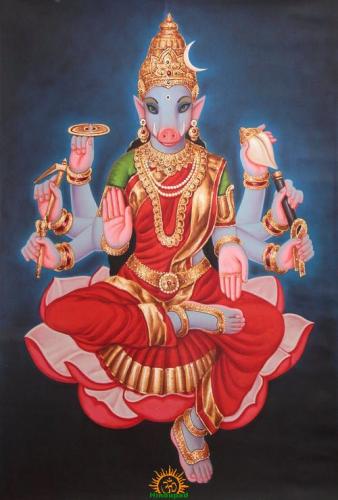
Within this sacred landscape, tradition identifies the Gandaki Devi Śakti Pīṭha as the site where the right cheek of Sati fell. As with all Śakti Pīṭhas, a Bhairava serves as kṣetrapāla, the guardian of the threshold and the shrine’s moral order. At Gandaki, that guardian is venerated as Chakrapani Bhairavaprotector of Shakti and custodian of dharma.
The epithet “Chakrapani,” most familiar as a Vaishnava title of Viṣṇu (bearer of the Sudarśana Cakra), when conjoined with Bhairava, signals a deliberate theological interpenetration among Śaiva, Śākta, and Vaiṣṇava currents. The name itself becomes a doctrinal bridge, encoding unity in spiritual diversity rather than reinforcing sectarian partitions.
Muktinath’s triadic character is striking: a Vaishnava Divya Desam dedicated to Śrī Mukti-Nārāyaṇa; a Śakti Pīṭha venerating Gandaki Chandi; and a Buddhist sanctuary remembered for ḍākinī associations and narratives of Padmasambhava. In a single parikrama, pilgrims encounter conch calls, spinning prayer-wheels, Sanskrit mantras, and butter lampsritual signatures that together model inter-traditional respect.
The Kali Gandaki river that shapes this valley is the wellspring of śālagrāma-śilāammonite fossils revered as Viṣṇu. Their natural spirals recall the chakra’s curve, offering a subtle hermeneutic for why a Bhairava known as Chakrapani would be intelligible and beloved in a region permeated by Vaishnava presence.
Across Āgama and Tantra, Bhairava functions as kṣetrapālastabilizing the shrine’s śakti, warding adverse influences, and enforcing ethical order. Iconographically fierce (raudra, ugra), Bhairava’s office is juridical and protective, securing the conditions under which compassion (dayā) and liberation (mukti) can proceed unimpeded.
Local oral histories describe Chakrapani Bhairava as sentinel of the cheek (gaṇḍa) energy of Devi, ensuring that Śākta rites, the darśana of Mukti-Nārāyaṇa, and the contemplative quiet of Chumig Gyatsa remain mutually reinforcing. Pilgrims often report a distinctive sense of safety on thresholds and mountain paths, attributing it to the guardian’s vigilant presence.
Ritually, salutations to the guardian commonly precede approach to the sancta of Devi and Nārāyaṇa. Offerings to Chakrapani Bhairava typically include mustard-oil lamps, red flowers, akṣata, black sesame, and bilva where available; recitations may feature Bhairava-kavacas or the widely cherished Kāla Bhairava Aṣṭakam, with local sampradāya guidance shaping practice.
Annual cycles heighten guardian devotion on aṣṭamī tithis, during Navarātri, and at Mahāśivarātri. Priests frequently underscore ethical vowssatya (truth), ahiṃsā (non-injury), and seva (service)as lived expressions of Bhairava’s dharma. At Muktinath, these observances align seamlessly with Vaishnava festivals and Buddhist assemblies, reinforcing a civic ethos of harmony.
The complex dramatizes elemental doctrine: the Muktidhāra’s 108 spouts stream glacial waters for purificatory snāna, while Jwālā Mai shelters an eternal natural flame. Water (ap) and fire (agni) co-present in daily sight, offering a sensory catechism in balancejust as Śaiva, Śākta, Vaiṣṇava, and Buddhist lineages co-inhabit the site without erasing difference.
Textually, enumerations of Śakti Pīṭhas vary across regions and manuscripts (e.g., Pīṭhanirṇaya Tantra, Tantracūḍāmaṇi, and later mahātmya compendia). In several widely circulated traditions, Gandaki Chandi at Muktinath is identified with Sati’s right cheek, with Chakrapani named as the attendant Bhairava. Such attributions function as sacred geographymapping memory and meaning onto landscape.
Toponyms such as Ranipauwa, Jomsom, and Kagbeni trace a corridor of Himalayan contact where Sanskritic, Newar, Tibetan, Thakali, and Mustang cultures exchanged goods, lore, and ritual technologies. The result is a shared civilizational fabric: Sanskrit mantras beside Newari liturgy, Tibetan prayer-flags above pagoda roofs, and folk melodies mingling in a single courtyard.
Ethical pilgrimage along the Kali Gandaki includes reverent conduct toward śālagrāma-śilā: avoiding extractive or commercial practices, honoring local regulations, and receiving stones only as prasad where customary. Such restraint sustains riverine ecology and a transregional Vaishnava heritage that lends Gandaki its theological signature.
Visitors consistently recount the affective arc of the yātrā: quickened breath at altitude, bells answering the flutter of prayer-flags, the cold bite of Muktidhāra’s waters, and the hush after evening ārati when snow peaks glow rose-gold. Embodied experiences such as these deepen comprehension: dharma as intimacy with place, guardianship as a felt reality.
Viewed comparatively, Muktinath becomes a field-classroom in dharmic pluralism. Śaiva guardianship (Bhairava), Śākta embodiment (Devi), Vaiṣṇava grace (Mukti-Nārāyaṇa), and Buddhist compassion (Chumig Gyatsa) manifest complementarity rather than competitionadvancing unity in spiritual diversity as a living norm.
Beyond immediate liturgical families, the site’s ethics resonate across dharmic traditions. Jain commitments to ahiṃsā and aparigraha mirror the shrine’s protective vows and ecological restraint, while Sikh seva and the sant-sipahi ideal parallel Bhairava’s protective compassion. Visitors from these communities often describe natural affinities that strengthen civilizational solidarity without collapsing distinct paths.
Access typically proceeds via Pokhara to Jomsom (by air where available or by road) and onward to Ranipauwa, followed by a short ascent to the temple precinct. Late spring to early autumn offers the best windows for travel; altitude awareness, layered clothing, and unhurried pacing mitigate high-mountain strain. Local monasteries and temple authorities provide guidance that sustains a culture of reciprocal respect.
In sum, Chakrapani Bhairava of the Gandaki Devi Śakti Pīṭha stands as juridical and spiritual guardian of a Himalayan node where multiple streams of dharma meet. The guardian’s very namemelding a Śaiva form with a Vaiṣṇava epithetencodes the place’s message: divergent paths can resolve into shared purposeprotection of dharma, compassion for beings, and liberation as the horizon toward which all practices turn.
Inspired by this post on Hindu Blog.