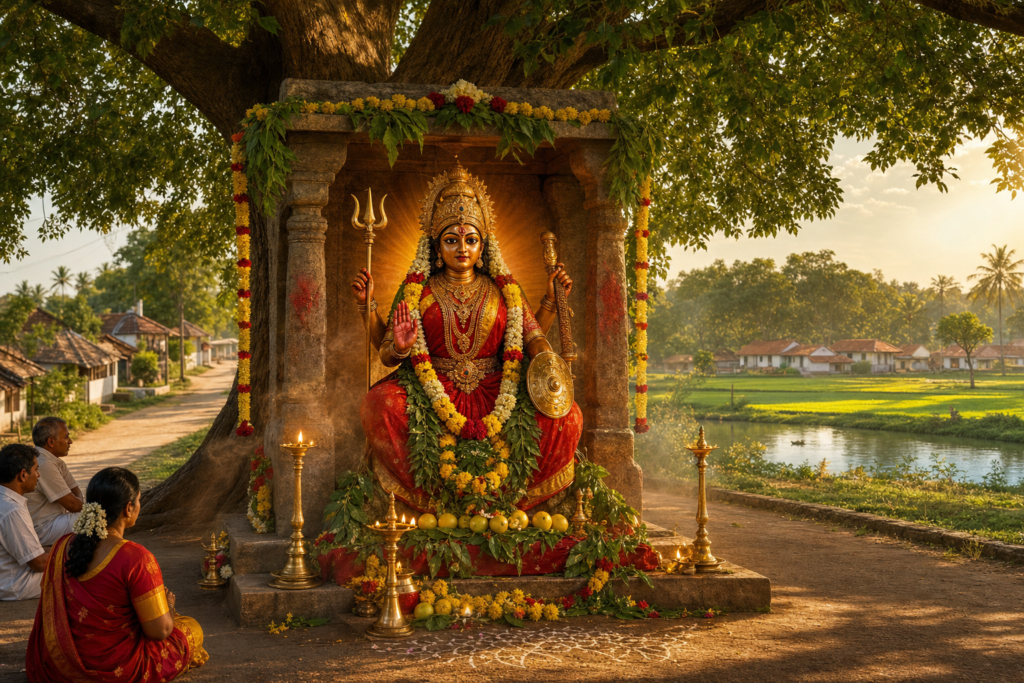
In the sacred landscape of Bengal, the Tarapith Temple in Birbhum, West Bengal, has long stood as a beacon of Shakta Tantra and Hindu spirituality. Its living legacy is inseparable from Saint Bamakheparevered as Bamakhyapawhose ecstatic devotion and “divine madness” became synonymous with the transformative power of Goddess Tara. The temple’s ritual ecosystem and its cremation-ground sadhana have shaped a distinctive Shakti experience that continues to guide seekers across traditions.
Tarapith is revered as a Shakti Peeth, and its worship of Goddess Tara embodies both fierce protection and boundless compassion. The site’s proximity to the cremation ground is not an anomaly; it reflects a Tantric pedagogy that confronts impermanence directly and transforms fear into wisdom. Through mantra, meditation, and ritual, devotees encounter Tara as the ever-present source of liberation, bridging the earthly and the transcendent.
Bamakhepa emerged in nineteenth-century Bengal as an ecstatic mystic whose nameBamakhyapa, “mad for the Mother”captures a life absorbed in Tara’s grace. Accounts describe prolonged sadhana, uncompromising simplicity, and an intimacy with the Divine that dissolved conventional boundaries. Rather than rejecting the world, this path sacralized it, revealing the Shakti that pervades all experience.
His practice exemplified the Tantric synthesis of austerity and love: disciplined mantra-japa and meditative absorption conjoined with spontaneous outpourings of bhakti. The result was not transgression for its own sake, but a refined inner alignmentwhat many describe as a communion with the living presence of Ma Tara. In this vision, devotion and discipline become mutually illuminating, offering a pathway that is experiential, rigorous, and compassionate.
Visitors to Tarapith often speak of a distinctive atmosphere: the fragrance of incense, the red hibiscus garlands, the rhythmic bell, and the hum of mantra that seem to converge in a single, palpable stillness. The adjacency of the smashan (cremation ground) challenges and purifies perception, inviting seekers to meet life’s profundity without ornament. Many report a felt sense of protection and tenderness before the murti of Tara, an experience that anchors ethical living, courage, and humility.
Philosophically, Bamakhepa’s legacy discloses a key insight of Shakta Tantra: the Divine Mother is at once awe-inspiring and intimately near. This duality is not a contradiction but a pedagogyfierceness as compassion’s guardian, and compassion as fierceness transformed. Such understanding encourages practices that are reverent and responsible, honoring temple traditions, the local community, and the sanctity of the site.
Tarapith’s Tara also resonates beyond sectarian lines. The reverence of Tara in Vajrayana Buddhism offers a natural bridge for inter-dharmic dialogue, affirming a shared vocabulary of wisdom and compassion. In the spirit of dharmic unityacross Hinduism, Buddhism, Jainism, and SikhismBamakhepa’s example highlights the primacy of inner transformation, ethical conduct, and respect for diverse spiritual methods. This plurality strengthens a common pursuit of truth without erasing difference.
For contemporary seekers, the Tarapith tradition suggests an integrative approach: cultivate clarity through meditation and mantra, deepen empathy through seva (service), and anchor learning in guidance from competent teachers. Such a path aligns intense devotion with discernment, ensuring that spiritual pursuit remains grounded, responsible, and life-affirming.
Ultimately, Bamakhepa’s spiritual communion with Goddess Tara offers a durable message for modern times: freedom arises when the heart is steadied by practice and opened by love. Tarapith becomes not only a pilgrimage destination, but a living conversation between devotee and Devibetween the finite and the infinite. In that conversation, many find courage to meet impermanence, the intelligence to act ethically, and the grace to recognize Shakti within and around.
Inspired by this post on Hindu Blog.