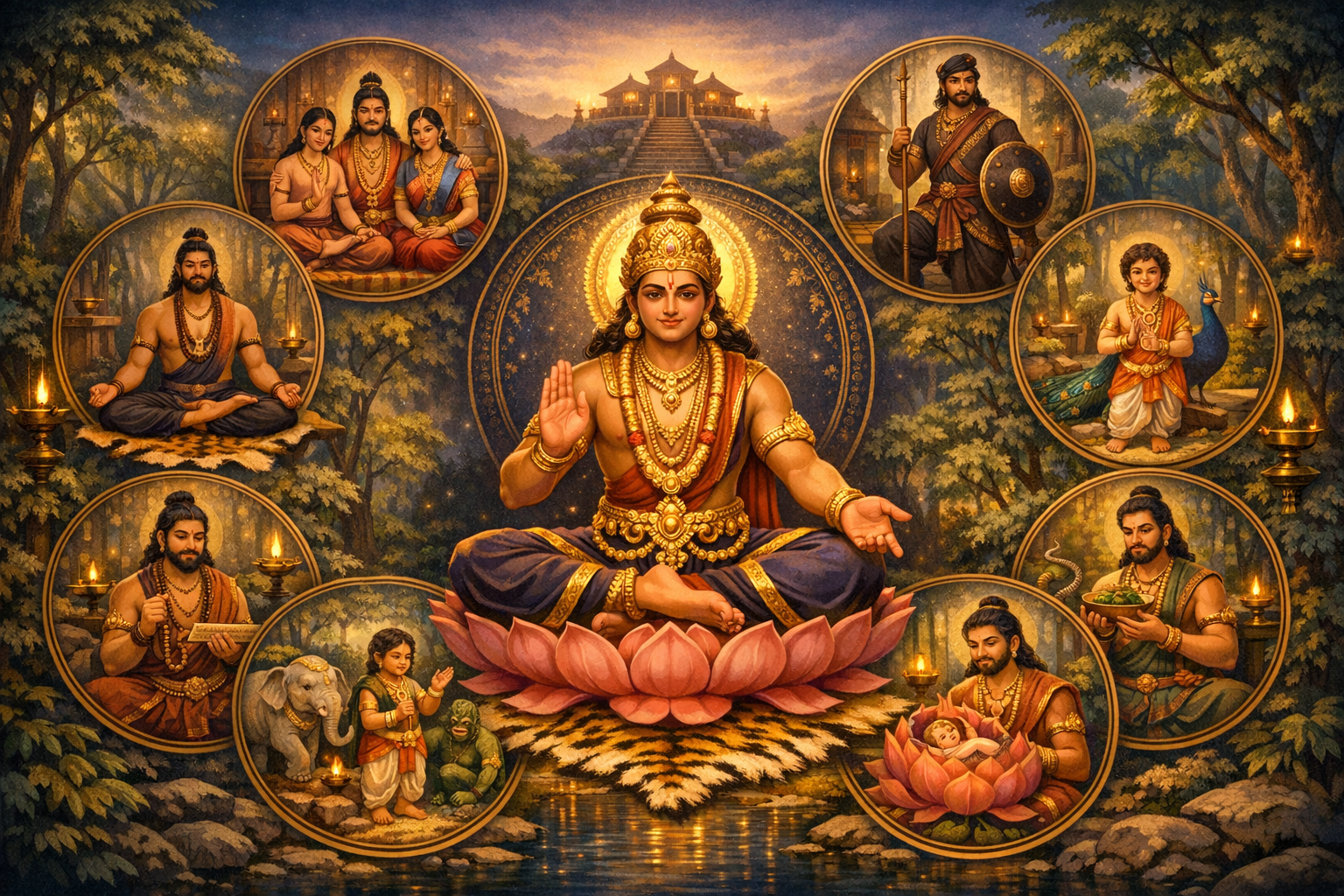
Ashta Sasthaliterally the eightfold Śāstāilluminates how Lord Sastha (Ayyappa, Hariharaputra, Dharma Śāstā) embodies a complete spectrum of spiritual functions, from ascetic self-mastery to household responsibility and compassionate protection. Revered as the son of Śiva and Viṣṇu in the form of Mohini, Śāstā symbolizes the integration of renunciation and engagement, tapas and grace, discipline and care. In lived Hindu spirituality, these complementary facets invite seekers to approach the same divine teacher through the doorway that most directly nurtures their inner growth and service to society.
Philologically, “Śāstā” derives from the Sanskrit root śās, “to instruct/guide,” underscoring the deity’s role as teacher and law-giver of dharma. Puranic literature and regional sthala-purāṇas across Kerala and Tamil Nadu, together with South Indian āgama and śilpa-śāstra traditions, preserve diverse dhyāna-śloka-s and iconographic conventions for Śāstā. While specific enumerations of Ashta Sastha vary by lineage and locality, the eight archetypal modes outlined below are widely recognized in worship, ritual, and pilgrimage, and they map meaningfully to the ethical and contemplative journeys of devotees.
As such, Ashta Sastha may be read as a sacred grammar of spiritual life: the meditative guide (Yoga Śāstā), the guardian of dharma and society (Vīra Śāstā/Bhūtanātha), the wise mentor (Jñāna Śāstā), the healer and remover of affliction (Arogya Śāstā), the bestower of continuity and wholesome aspirations (Saṁtāna-prada Śāstā), the integrated householder (Gṛhastha or Kalyāṇa Śāstā), and the childlike presence of purity and new beginnings (Bāla Śāstā). Temples across the Western Ghats and the Tamil country enliven these forms in distinct cultural textures, while sharing a single spiritual heart.
Yoga Śāstā The Inner Ascetic and Guide: The iconic image at Sabarimala is the best-known expression of Yoga Śāstā: Ayyappa in yogāsana (often padmāsana) with the yogapaṭṭa binding the legs, right hand in cinmudrā or jñānamudrā, gaze inwardly collected, and the aura of manikanta (the bell-girdle) signaling unwavering alertness. The tiger skin seat, minimal ornaments, and serene visage foreground mastery over the senses. Pilgrims undertake the 41-day vrata (maṇḍala kālam) of disciplinetruthfulness, restraint, vegetarian diet, regular japa (Swamiye Saranam Ayyappa), and serviceculminating in darśan at the eighteen steps (Pathinettampadi). Spiritually, Yoga Śāstā transmits the message that clarity, compassion, and courage are fruits of interior order.
Gṛhastha (Kalyāṇa) Śāstā Sacred Household and Social Dharma: In temples such as Achankovil, Śāstā appears with the consorts Pūrṇa and Puṣkalā, sometimes with a child attendant (Satyaka). This form honors the householder’s path as a sacred vocationbalancing livelihood, kinship, hospitality, and justice. In devotional practice, families seek guidance for harmony, ethical prosperity, and wise stewardship of responsibilities. Kalyāṇa Śāstā affirms that spiritual excellence does not demand withdrawal from the world; rather, it calls for dharmic participation infused with compassion and self-knowledge.
Vīra Śāstā Guardian, Protector, and Upholder of Dharma: Closely aligned with the Ayyanar traditions of Tamil Nadu, Vīra Śāstā is the vigilant custodian of thresholds, fields, and villages, sometimes depicted in a dynamic stance or associated with mounted retinues and gaṇa-s. The veera dimension sanctifies righteous protection (kṣātra) as a moral duty grounded in restraint and compassion. In lived culture, community watchfulness, fairness in dispute resolution, and protection of the vulnerable are read as extensions of Vīra Śāstā’s guardianshipstrength guided by dharma rather than force governed by impulse.
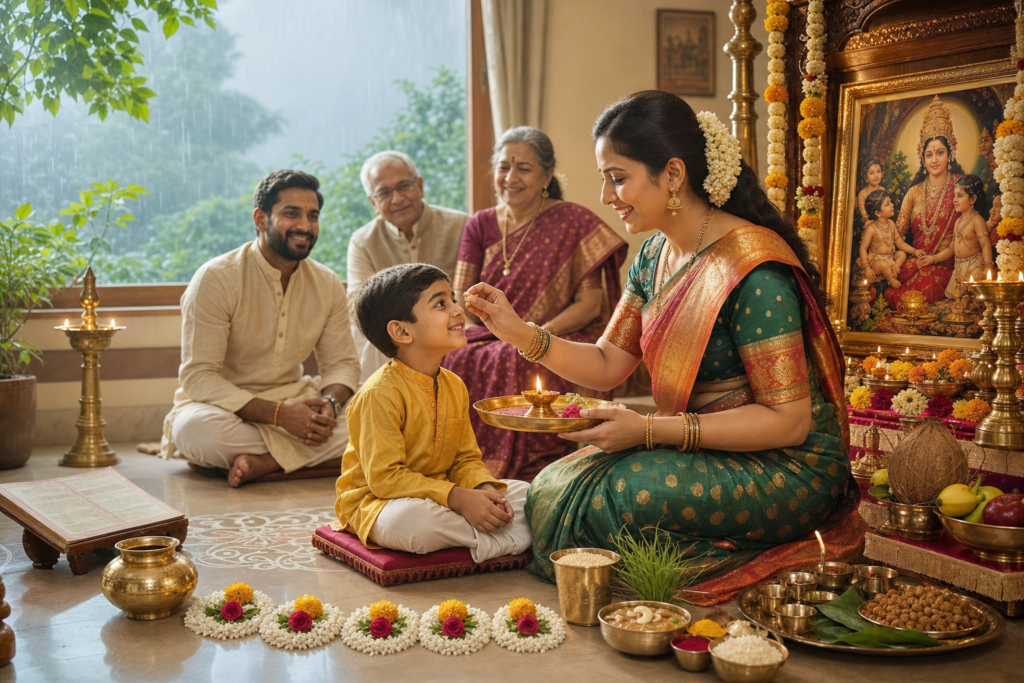
Bāla Śāstā Purity, Wonder, and New Beginnings: Regional lore associates Kulathupuzha with Bāla Śāstā, emphasizing the radiant innocence and spontaneity of the divine child. Devotees read this form as an invitation to cultivate śuddhi (purity), playfulness of heart, and trust in life’s unfolding. In rites of passage and prayers for a child’s well-being, Bāla Śāstā represents the seed of virtue and curiosity that, when nurtured, matures into wisdom and service.
Jñāna Śāstā Teacher, Scripture, and Living Wisdom: True to the etymology of Śāstā, the jñāna aspect celebrates the deity as the living bridge between śāstra (scripture) and sādhana (practice). Iconography can include the akṣamālā (rosary) and palm-leaf manuscripts, signaling the integration of textual learning and contemplative insight. In this mode, Śāstā embodies the perennial teaching that understanding ripens through character. The resonance with the pedagogical ideals cherished across Dharmic traditionsBuddhist, Jain, Sikh, and Hinducenters on inner discipline, compassion, and the guidance of living wisdom rather than dogma.
Bhūtanātha Śāstā Lord of Beings and Harmonizer of Realms: Sabarimala traditions remember Ayyappa as Bhoothanatha, the compassionate lord who brings disordered forces into rightful alignment. Here Śāstā is not an annihilator of the “other,” but a skillful harmonizer, integrating shadow with light and converting turbulence into service. Devotees interpret this as psychological and ecological ethics: to honor the limits of nature, transform restlessness into responsible action, and befriend the disowned parts of oneself for the sake of wholeness.
Arogya (Parihāra) Śāstā Healer and Restorer of Balance: In several kṣetra-s, devotees approach Śāstā for relief from illness, fear, and environmental hazards. Achankovil is renowned in local memory for prayers related to snakebite and for consoling the anxious with ritual care. Arogya Śāstā frames healing as rebalancing: restitution of harmony among body, breath, and mind, supported by devotion, ethical living, and the practical wisdom of Ayurveda and community support. The deeper teaching is that health is sustained where truthfulness, moderation, and mutual care prevail.
Saṁtāna-prada Śāstā Continuity, Care, and the Future: Couples seeking children or harmonious family life find in Śāstā a compassionate listener to hopes and anxieties about continuityof lineage, values, and service. As Saṁtāna-prada, Śāstā blesses the future not merely with progeny, but with a vision of raising children in dharma, empathy, and discipline. This places responsibility at the center of grace: to transmit the best of what has been received to the next generation, refined by learning and love.
Dharma Śāstā The Integrative Center of the Eightfold Whole: While each form is distinct, Dharma Śāstā names the integrative presence that unifies them: inwardly collected (Yoga), socially awake (Vīra), wise (Jñāna), nurturing (Gṛhastha and Saṁtāna-prada), restorative (Arogya), inclusive of life’s polarities (Bhūtanātha), and ever-fresh (Bāla). In this integrative vision, Ashta Sastha functions as a comprehensive pedagogy of spiritual maturationguiding seekers from self-mastery to self-giving.
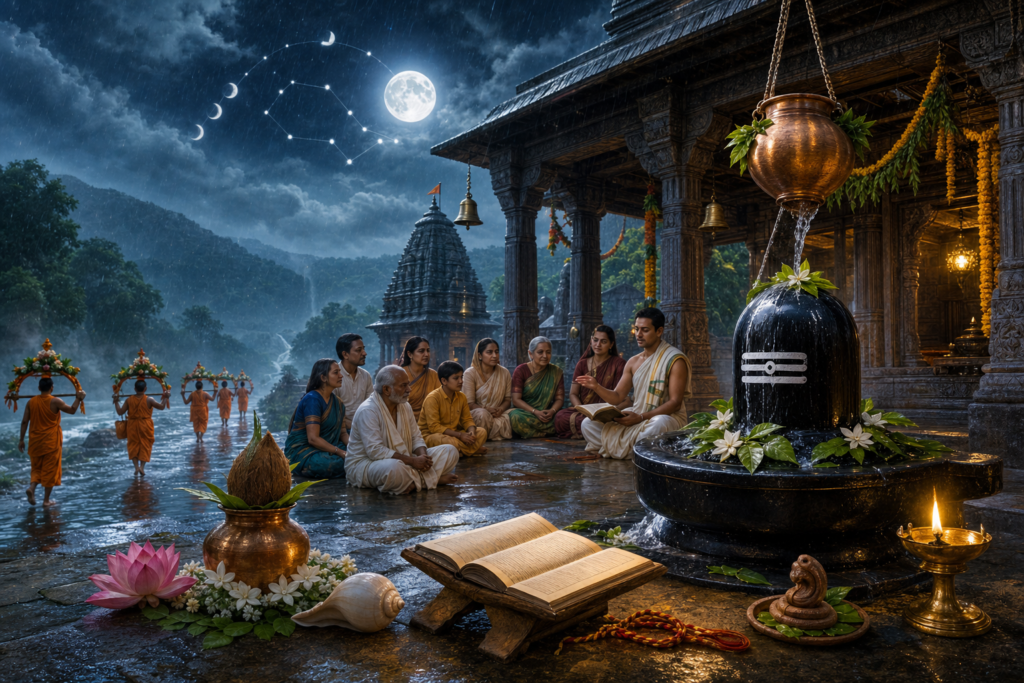
Temples, Pilgrimage, and Ritual Texture: Sabarimala, Achankovil, Aryankavu, and Kulathupuzha are among the most cited kṣetra-s associated with these facets of Śāstā. The Sabarimala pilgrimagecentered on vrata, community annadāna, the sanctity of the Pamba, the Irumudi, and the climactic darśanhas become a living classroom of equality-in-discipline. Offerings such as Aravana Payasam highlight the sweetness of restraint fulfilled. Across the Western Ghats, village shrines dedicated to Śāstā/Ayyanar embed guardianship, reciprocity with land, and communal responsibility into everyday life.
Iconographic Notes and Agamic Nuance: Śāstā appears two-armed or four-armed depending on regional śilpa traditions; common gestures include abhaya (assurance) and varada (benevolence), with attributes signaling protection and wisdom. Yoga Śāstā’s yogapaṭṭa and still gaze teach interior steadiness; Kalyāṇa Śāstā’s family ensemble sacralizes worldly duty; Vīra Śāstā’s dynamic energy extols righteous courage tempered by compassion. These visual grammars function not merely as art, but as contemplative cues for the devotee.
Unity in Spiritual Diversity: The ethos of Ayyappa worship affirms that many valid pathscontemplative, devotional, service-oriented, and duty-centeredconverge in the practice of dharma. This spirit harmonizes with the broader Dharmic family: Buddhist mindfulness and compassion, Jain ahiṁsā and self-discipline, and Sikh seva and dharam-yudh ideals all resonate with Śāstā’s integrative teaching. Rather than privileging a single method, Ashta Sastha invites seekers to identify their most natural doorway to the same summit of inner freedom and social responsibility.
Contemporary Relevance: In a world negotiating strainecological limits, social fragmentation, and personal burnoutAshta Sastha offers a balanced template. Yoga Śāstā teaches attention over distraction; Vīra Śāstā, courage with conscience; Jñāna Śāstā, learning wedded to ethics; Arogya Śāstā, health as harmony; Gṛhastha Śāstā, family as a field of practice; Bhūtanātha, inclusion over denial; Bāla Śāstā, renewal and hope; Saṁtāna-prada, stewardship of the future. This is not antiquarian piety, but a living curriculum for resilient, compassionate societies.
Sources and Memory Traditions: Puranic references, Kerala and Tamil sthala-purāṇas, āgamic liturgies, and oral histories converge to preserve Śāstā’s multifaceted grace. While scholarly treatments discuss Śāstā in Skanda Purana and allied texts, much of what makes Ashta Sastha vivid survives in practicein vrata discipline, community kitchens, shared songs, and the ethics pilgrims carry home. The scholarship of Hindu scriptures and the lived wisdom of devotees together sustain the tradition’s depth and adaptability.
Conclusion: Ashta Sastha is both theology and therapy, both cosmic symbolism and community ethic. By contemplating these eight sacred forms of Lord Ayyappa, seekers discover a complete pathone that refines the mind, ennobles conduct, protects the vulnerable, heals what is wounded, and nurtures the next generation. In this integrative light, Ayyappa as Dharma Śāstā embodies a unifying force within Hindu spirituality and across Dharmic traditions, affirming unity in spiritual diversity as a timeless way of life.
Inspired by this post on Hindu Blog.