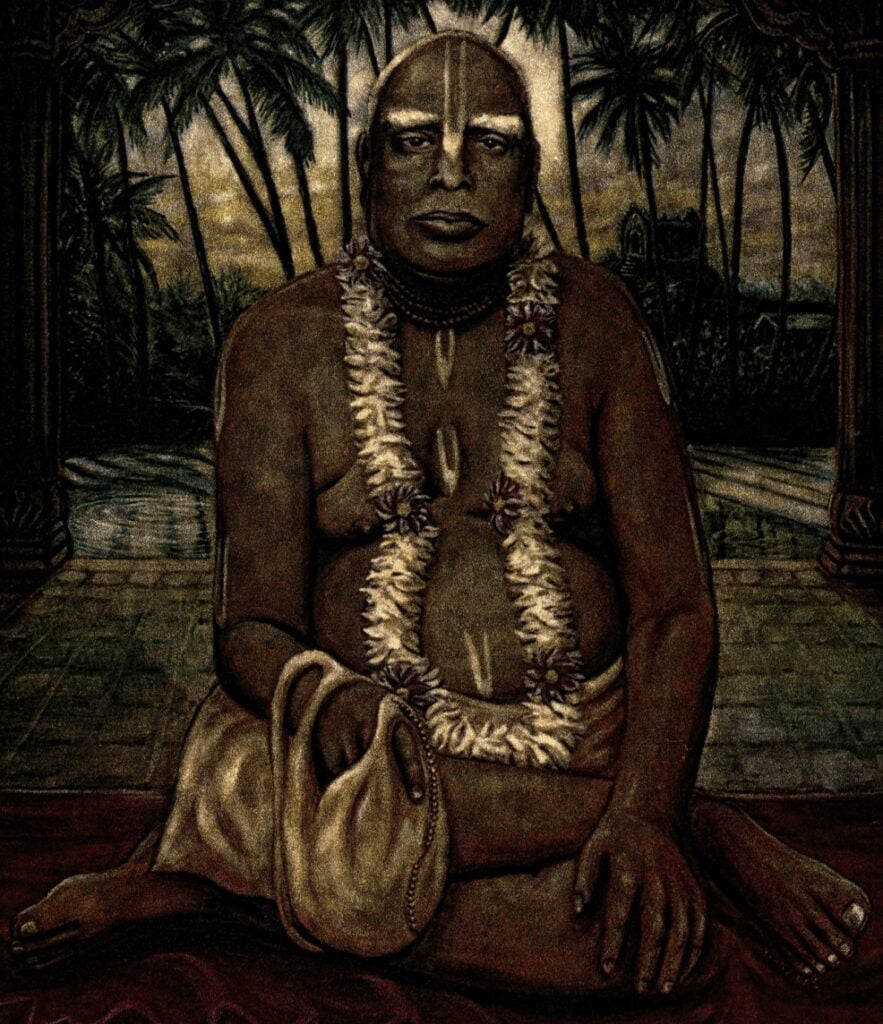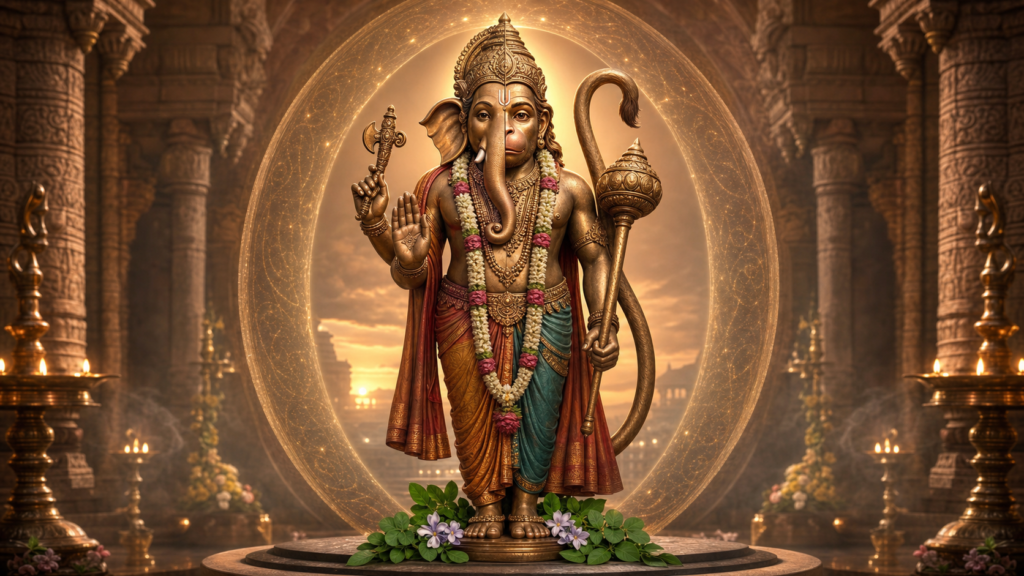
In the village of Mayuresvara, a striking episode from the Bhakti Tradition illustrates a core insight of Hinduism and the wider dharmic heritage: authentic courage is guided by compassion. Two brothers arrived at their maternal grandfather’s village, where a nearby jungle had gained fearful renown for a deadly serpent that devoured any who entered. Despite urgent warnings from villagers, they proceeded, not out of recklessness, but out of a steady commitment to dharma and the protection of the innocent.
As they stepped into the forest, a large poisonous snake emerged from beneath a tamala tree, hood raised and hissing. Nityananda Prabhu did not exhibit fear; rather, as NagarajaAnantadev Nagahe addressed the serpent with measured authority: “Eh! Oh, wicked fellow! Dunta, stay there! Stay there! Don’t come forward!” The serpent halted at once. Nityananda Prabhu then asked, “Why are you killing and devouring innocent people?”
The narrative records that, upon being questioned, the serpent recounted his history from Dvapara-yuga. This motif of memory across yugas, familiar within Hindu scriptures and sacred narratives, frames moral causality as an enduring continuum rather than a single momentary act. The scene, concise yet evocative, places ethical inquiry above retribution: restraint precedes judgment, and speech grounded in dharma interrupts violence.
Read through an academic lens, the episode models kshatra (protective strength) refined by ahimsa (non-violence). Power appears here not as domination but as protective presence and moral clarity. This ethic resonates across dharmic traditions: it parallels Buddhist karuṇā (compassion), Jain ahiṁsā (non-harm), and Sikh daya and seva (compassion and service). The account thus offers a shared language of virtuean integrative vision that affirms unity in spiritual diversity while honoring distinct paths within Hinduism, Buddhism, Jainism, and Sikhism.
At an experiential level, the forest confrontation mirrors moments in ordinary life when fear escalates into aggression. The episode suggests a practical sequence: pause, establish boundary, seek understanding. Just as the command “Dunta, stay there!” checks outward harm, it also symbolizes the inner discipline needed to halt rash impulses. Many readers may recognize in this brief exchange a template for transforming conflictfirmness without cruelty, inquiry without surrender.
Symbolically, the tamala tree evokes associations with Krishna in Vaishnava literature, and Nityananda Prabhu’s identity as Nagaraja (Anantadev Naga) situates the tale within a cosmology where the natural and the sacred interpenetrate. Mayuresvara functions not only as a geographic marker but also as a cultural landscape in which sacred traditions, oral memory, and communal ethics converge. The result is a living narrative that bridges scripture, folklore, and practicefamiliar to many within Gaudiya lineages and appreciated widely in contemporary communities, including those connected with ISKCON (International Society For Krishna Consciousness).
Ultimately, this account presents a benefit-focused teaching for today: courage guided by compassion disarms harm more effectively than fear or rage. It invites all who walk dharmic paths to cultivate steady presence, clear speech, and empathetic inquiry. In this way, the tale of Nityananda Prabhu and the serpent becomes more than a historical episode; it serves as a timeless guide for personal conduct and communal harmonyan enduring call to dharmic unity in a diverse world.
Inspired by this post on Dandavats.