
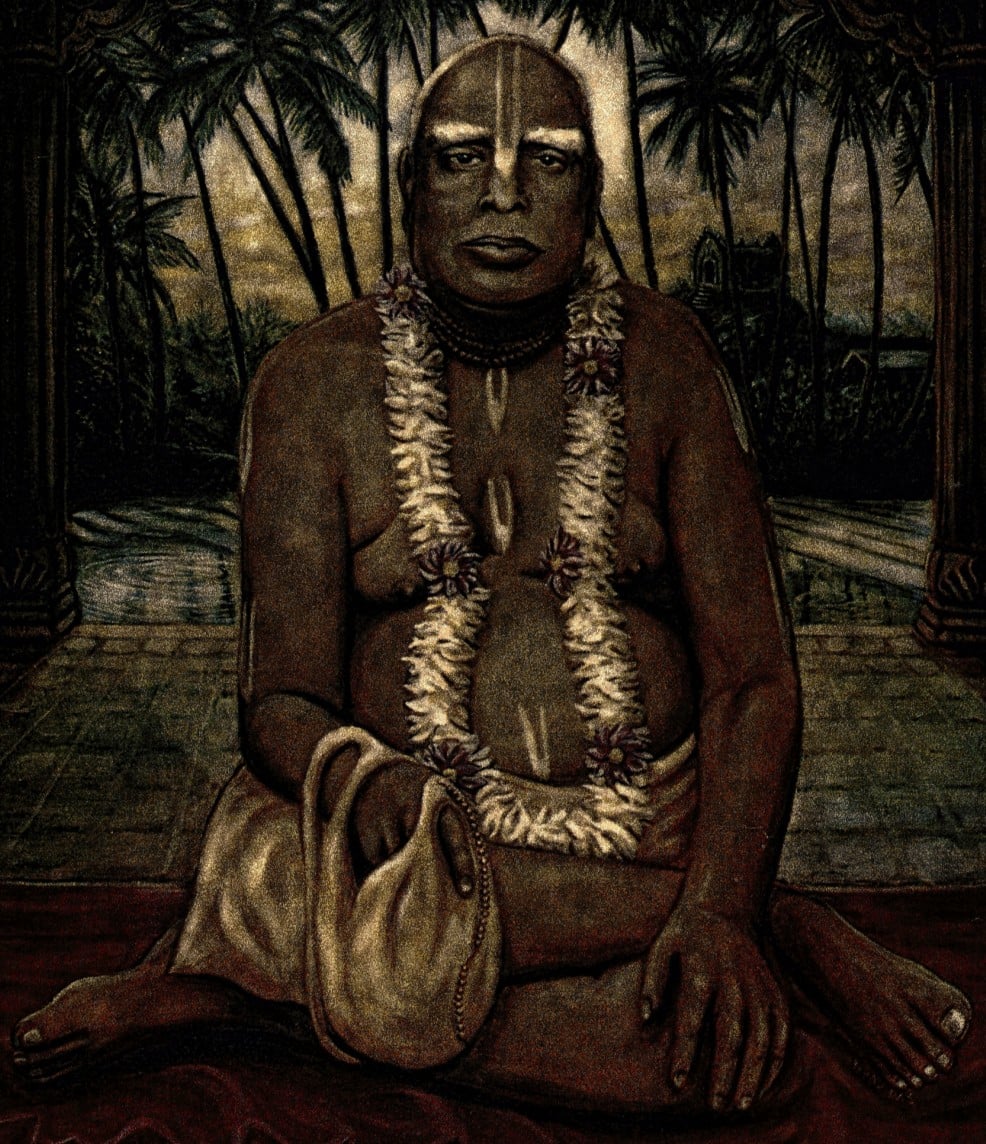
A life at the meeting point of devotion and modernity
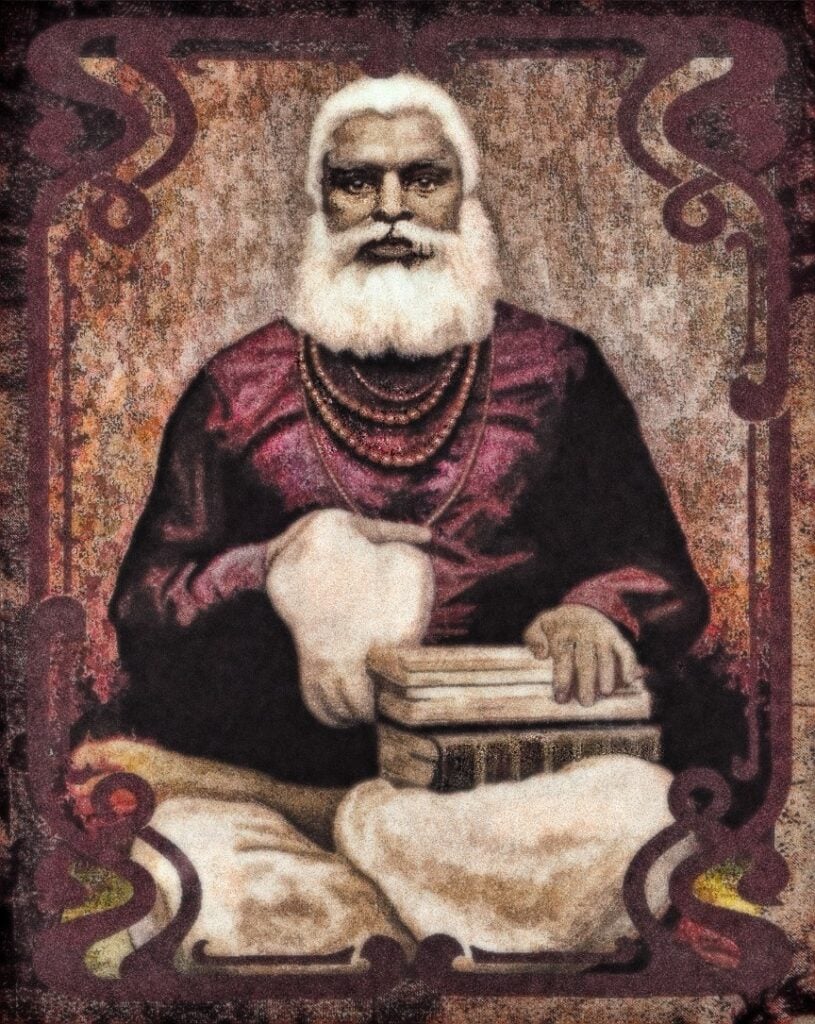
Srila Bhaktivinoda Thakura (1838–1914), born Kedaranatha Datta, occupies a pivotal place in the modern history of Gaudiya Vaishnavism. He combined roles that can appear difficult to reconcile: colonial magistrate, husband and father, theologian, editor, poet, social organizer, temple administrator, and contemplative practitioner. His achievement lay not in abandoning public life for spirituality, but in bringing ethical administration, disciplined scholarship, family responsibility, and devotion to Lord Krishna into a single demanding vocation.
His influence extended well beyond the books and devotional songs he personally composed. He helped recover neglected Gaudiya Vaishnava texts, clarified the teachings of Sri Chaitanya Mahaprabhu, organized public preaching through the Nama Hatta network, developed journals and printing facilities, promoted Mayapur as Chaitanya Mahaprabhu’s birthplace, and carried Vaishnava ideas into international scholarly circulation. Through his son Srila Bhaktisiddhanta Saraswati Thakura and, subsequently, Srila Prabhupada, his intellectual and institutional legacy became foundational to the worldwide Krishna consciousness movement.
The emotional power of his biography comes from its recognizable human pressures. He experienced bereavement, poverty, epidemic disease, administrative conflict, family obligations, ill health, and controversy within his own religious community. Yet he continued to study, write, worship, teach, and organize. For contemporary readers struggling to preserve an inner life amid professional demands, his example offers a compelling study in disciplined attention, although the extreme austerity of his schedule should be understood historically rather than treated as a universal prescription.
A note on sources and historical method
The underlying chronology was compiled by Manu dasa for Back to Godhead and adapted from Rupa Vilasa Dasa’s The Seventh Goswami. It belongs partly to the genre of devotional biography, in which documented events, community memories, theological interpretations, visions, and accounts of providence appear together. Government appointments, publications, travels, institutions, and public lectures can therefore be discussed as historical activities, while miraculous cures, supernatural confrontations, sacred signs, and prophetic dreams are more accurately presented as reports preserved by Vaishnava tradition. This distinction respects religious testimony without confusing it with independently verifiable evidence.
Names, dates, and locations sometimes vary across autobiographical material, lineage histories, and later biographies. Most modern accounts identify his parents as Ananda Chandra Datta and Jagat Mohini Devi, while devotional genealogies also emphasize the family’s connection with Raja Krishnananda Datta and the devotional heritage of Lord Nityananda. Such variations are not unusual in nineteenth-century South Asian biography, where family memory, sacred lineage, and modern documentary history frequently overlap.
The Gaudiya Vaishnava world he inherited
Sri Chaitanya Mahaprabhu (1486–1534) transformed the religious culture of Bengal and eastern India by placing Krishna bhakti and congregational chanting at the center of spiritual life. Drawing upon texts such as the Bhagavad-gita and Srimad-Bhagavatam, his movement presented loving devotion as both the goal and the practical method of spiritual realization. Its best-known practice was sankirtan, the collective chanting of the maha-mantra: Hare Krishna, Hare Krishna, Krishna Krishna, Hare Hare/ Hare Rama, Hare Rama, Rama Rama, Hare Hare.
Gaudiya Vaishnavism did not simply disappear after Chaitanya Mahaprabhu, but its institutions became dispersed and internally diverse. By the eighteenth and nineteenth centuries, changing patterns of patronage, colonial education, Christian missionary criticism, social reform, and disagreements over ritual authority had produced a crisis of public representation. Certain groups criticized by reformers under labels such as sahajiya came to be treated as representative of the entire tradition, even though Bengal’s Vaishnava landscape contained many distinct communities and practices.
Bhaktivinoda Thakura’s reform project sought to distinguish disciplined bhakti from exploitation, sentiment without ethical conduct, and claims of spiritual authority unsupported by character. His polemics should be read within that specific intra-Vaishnava setting. They need not be converted into hostility toward other Hindu schools, including Advaita Vedānta, nor toward Buddhism, Jainism, Sikhism, or other religious traditions. His broader methodological lesson was that a living tradition requires both fidelity and self-examination.
Birth, childhood, and the loss of security
Kedaranatha Datta was born on September 2, 1838, at Ulagrama, later known as Biranagara, in the Nadia district of Bengal. He spent much of his early childhood in the prosperous household of his maternal family. His grandmother supported a primary school, and he later attended an English school at Krishnanagar established under the patronage of the king of Nadia. This environment exposed him to both traditional Bengali culture and the expanding institutions of colonial education.
The security of that childhood did not last. An older brother died during a cholera outbreak, causing Kedaranatha to leave school, and his father died in 1849 when the boy was approximately eleven. A change in the ownership of land previously granted to his grandmother then contributed to a sudden decline in the family’s material position. The movement from privilege to poverty gave his later reflections on duty, impermanence, and moral independence a deeply personal background.
In 1850, when he was about twelve, his family arranged his future marriage to the young daughter of Madhusudana Mitra Mahasaya of Ranaghata. Child marriage and early betrothal were embedded in the social order of nineteenth-century Bengal, although they are incompatible with contemporary standards of consent and childhood welfare. The episode is best understood as evidence of the historical society into which he was born, not as a devotional practice to be idealized.
Calcutta and an unusually broad education
Kedaranatha’s intellectual formation accelerated when he lived in Calcutta with his uncle Kasiprasada Ghosh Mahasaya, a poet, journalist, and editor of the Hindu Intelligencer. The young student assisted with the selection of newspaper articles, explored his uncle’s library, visited the public library, and attended the Hindu Charitable Institution. These experiences introduced him to editing and print culture long before he established his own religious press.
By eighteen he was writing extensively in Bengali and English and studying English literature and public speaking. Between 1857 and 1858 he composed two parts of an intended twelve-book English epic, The Poriade, based on the life of Porus and his encounter with Alexander the Great. Although the project remained unfinished, it reveals an early ambition to bring Indian historical subjects into forms associated with European literary education.
His religious education was equally wide-ranging. He read Christian and Unitarian thinkers such as William Ellery Channing and Theodore Parker, as well as Emerson and Newman. Biographical accounts also associate him with the reformist and literary circles of the Thakur family. He reportedly used the affectionate expression baro dada, or big brother, for an older intellectual companion within that milieu.
At this stage he found aspects of Christian theology more intellectually attractive than the presentations of Hindu monism he had encountered. That preference records one phase of his personal development; it does not establish an objective judgment against Advaita Vedānta or Sankaracharya. His mature work emerged through comparison, criticism, and eventual commitment to the personalist theology of Gaudiya Vaishnavism. The breadth of that search later helped him address readers trained in both Sanskritic and Western intellectual categories.
He also lectured at the British-Indian Society on the development of matter through the material mode of goodness. Even where his early formulations differed from his mature theology, the episode demonstrates a lasting habit: religious claims had to be explained, organized, and communicated rather than merely inherited. His later writing would similarly combine scriptural authority with analysis, argument, historical reflection, and attention to the questions of educated readers.
Epidemic, pilgrimage, and the beginning of public service
In 1858 Kedaranatha returned to Biranagara and found the community devastated by cholera. Many inhabitants and relatives had died, and the once prosperous village appeared nearly deserted. He returned to Calcutta with his mother and paternal grandmother. In accordance with his grandfather’s wishes, he then travelled through Orissa, visiting monasteries, ashramas, and temples. That journey gave him direct knowledge of religious institutions beyond the world of books.
Needing a livelihood, he rejected commerce because he believed its prevailing practices often pressured people into dishonesty. He chose education instead, founding an English school at Kendrapara in Orissa. After passing a teachers examination at Puri, he served at a school in Cuttack and later became headmaster at Bhadraka and Medinipura. School authorities recognized his administrative ability, and he published an English description of the religious institutions he had visited in Orissa.
His years as an educator also became a period of comparative religious investigation. He studied local sects, their doctrines, and their social conduct. What troubled him was not religious diversity itself but the reduction of spiritual life to inherited labels, spectacle, or unaccountable authority. He gradually came to view Chaitanya Mahaprabhu’s sankirtan movement as a rigorous path of devotion whose public identity needed intellectual and ethical renewal.
Personal loss continued to shape his life. In 1860 his first wife died during childbirth, leaving their son Annada Prasada, also known as Acyutananda. Kedaranatha later married Bhagavati Devi. Their household became large and active, eventually including Bimala Prasada, the future Srila Bhaktisiddhanta Saraswati Thakura. Any balanced biography must recognize that Bhaktivinoda’s literary and public achievements depended partly upon the domestic stability and devotional labor sustained by Bhagavati Devi.
A magistrate within the British colonial system
In 1861 Kedaranatha Datta entered the executive and judicial administration of Bengal as a deputy magistrate. His position placed him inside a colonial state whose highest authority remained racially unequal and politically foreign. At the same time, subordinate judicial appointments offered educated Indians a limited sphere in which they could address local disputes, corruption, education, and public order. His career therefore combined genuine administrative responsibility with the constraints of British rule in India.
During these early appointments he observed corruption among government employees, served in the collectorate, formed an association called the Bhratri Samaj, and wrote the English work Our Wants. He also constructed a home at Ranaghata and composed the Bengali narrative poems Vijinagrama, meaning deserted village, and Sannyasi. Their favorable reception showed that his administrative career did not displace his literary ambitions.
By 1866 he held registration, revenue, and magisterial responsibilities in the district of Chapara. He learned Persian and Urdu, mediated disputes involving tea cultivators, and helped obtain public assistance for a school devoted to nyaya-shastra, the discipline of logical analysis and valid knowledge. A subsequent transfer to Purniya placed both governmental and judicial departments under his supervision. These assignments developed the organizational skills later visible in his religious institutions.
In 1868 he became deputy magistrate at Dinajapur, a senior position among those ordinarily accessible to Indians in the subordinate colonial administration. There he obtained copies of the Srimad-Bhagavatam and Chaitanya-charitamrita that had previously been difficult for him to find. Repeated reading of the Chaitanya-charitamrita became a decisive spiritual turning point. His devotion intensified, and he composed the song Saccidananda-premalankara in praise of Chaitanya Mahaprabhu.
This development was not a sudden rejection of intellectual inquiry. It was the crystallization of a religious identity after years of comparative study. In 1869 he presented a substantial treatise on the Srimad-Bhagavatam before a gathering of Indian and British intellectuals. The act was characteristic: a sacred text was not confined to private reverence but entered the public sphere as a work capable of philosophical exposition.
Accounts from his posting at Camparana illustrate the devotional interpretation later placed upon his public career. Local people reportedly worshipped a spirit associated with a banyan tree, believing it could influence judicial decisions. Kedaranatha advised a scholar to recite the Srimad-Bhagavatam continuously beneath the tree. When the tree fell about a month later, devotees understood the event as confirmation of the scripture’s purifying power. Historically, the episode is evidence of how textual recitation, local belief, and administrative authority interacted in community memory.
Jagannatha Puri: administration, danger, and concentrated study
A transfer to Jagannatha Puri brought Kedaranatha into one of Vaishnavism’s most important sacred centers. Puri offered more than personal inspiration. It placed him near temple institutions, Sanskrit scholars, renunciants, pilgrims, manuscript traditions, and debates about legitimate devotional practice. His responsibilities there would test both his administrative courage and his ability to distinguish religious freedom from the misuse of religious authority.
The most dramatic episode concerned Bisakisena, a charismatic ascetic near Kamanala who claimed to be Maha-Vishnu. He was said to demonstrate extraordinary control over fire and to present two companions as Brahma and Shiva. He attracted money, political patrons, and women, announced that he would expel the British, and claimed kingship for himself. Colonial officials regarded his declarations as a threat, but fear of his reputed tantric powers made local enforcement difficult.
At the request of Commissioner Ravenshaw, Kedaranatha personally confronted and arrested Bisakisena. The resulting trial at Puri reportedly lasted eighteen days while large crowds demanded the ascetic’s release. Kedaranatha’s daughter Kadambini became critically ill during the proceedings, and Kedaranatha himself later developed a severe fever. Devotional biographies interpret these illnesses as tantric attacks and emphasize his refusal to abandon the case. The judicial core of the narrative is that he convicted Bisakisena of political conspiracy and sentenced him to eighteen months imprisonment.
Later details—including the belief that Bisakisena’s power resided in his long hair, his collapse after fasting, and his eventual suicide in prison—belong to the received biographical account but are not equally open to documentary confirmation. The episode remains important even when its supernatural interpretation is bracketed. It portrays a magistrate unwilling to let charisma, mass pressure, or fear exempt a powerful claimant from legal scrutiny.
Kedaranatha was also assigned responsibilities connected with the Jagannatha Temple. He worked to regularize worship and established a Bhakti Mandapa in the courtyard where the Srimad-Bhagavatam could be discussed daily. He spent long periods in study and chanting at Tota-Gopinatha Mandir, the memorial site of Haridasa Thakura, the Siddha Bakula tree, and the Gambhira associated with Chaitanya Mahaprabhu.
His Puri studies were technically demanding. He read the Srimad-Bhagavatam with Sridhara Swami’s commentary, copied Jiva Goswami’s Sat-Sandarbha by hand, and examined Rupa Goswami’s Bhakti Rasamrita Sindhu. He also prepared notes on the Vedanta-sutra; these were reportedly used by Sri Syamalala Goswami in an edition of Baladeva Vidyabhusana’s Govinda Bhasya. The pattern shows that his revival of Gaudiya Vaishnavism rested upon sustained textual labor rather than inspirational preaching alone.
He founded a Vaishnava discussion society, the Bhagavat-Samsat, in the Jaganatha-Vallabha gardens. A renunciant named Raghunatha dasa Babaji initially questioned his authority because he did not always display the customary kanthi-mala and tilaka. Devotional tradition recounts that the Babaji later became gravely ill, received a dream directing him to seek Bhaktivinoda’s mercy, and recovered after receiving medicine from him. Whatever interpretation is placed upon the dream, the narrative communicates an important social claim: spiritual seriousness could not be measured by external appearance alone.
Sri Swarupa Dasa Babaji, who practiced bhajana at Satasana near the sea, became an affectionate instructor in the theology and practice of the holy name. Bhaktivinoda also debated Charan Dasa Babaji, who promoted Nitai Gaura Radhe Syama Hare Krishna Hare Rama for public kirtan while reserving the Hare Krishna maha-mantra for japa. Bhaktivinoda defended the received maha-mantra as the proper standard for both private and congregational practice. Later sectarian accounts connect Charan Dasa’s decline to this dispute, but an academic treatment should not turn subsequent illness or death into proof that theological disagreement causes divine punishment.
One of Bhaktivinoda’s own accounts describes a vision of Sri Svarup-Damodara instructing him to arrange verses of the Srimad-Bhagavatam according to sambandha, abhidheya and prayojana. These three categories identify the relationship between the individual, the world, and Krishna; the devotional practices appropriate to that relationship; and the ultimate goal of divine love. Whether approached as mystical experience or theological self-understanding, the vision explains the organizing principle behind Sri Srimad Bhagavata Arka Marichimala.
Family life and the formation of Bhaktisiddhanta Saraswati
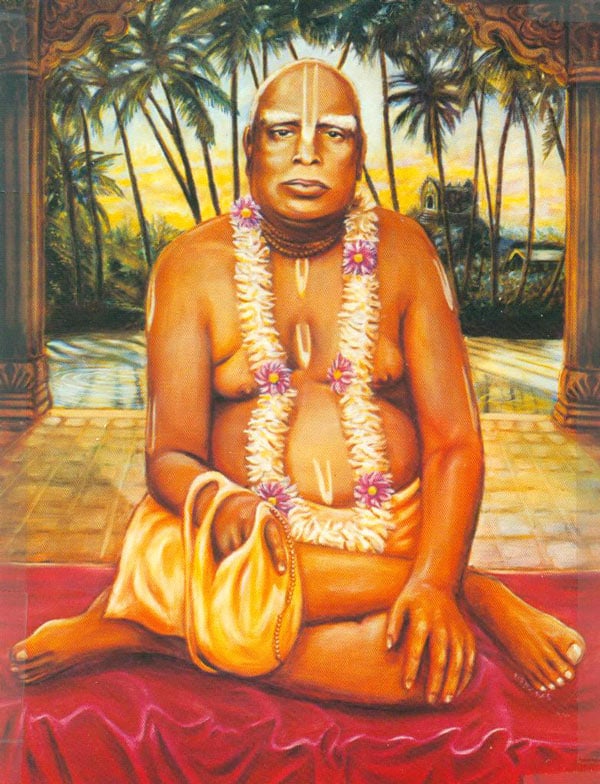
In 1874 Bhagavati Devi gave birth at Puri to Bimala Prasada, later known as Srila Bhaktisiddhanta Saraswati Thakura. His father had prayed for a child capable of carrying Chaitanya Mahaprabhu’s teachings to a wider world, and devotional biographies interpret the birth as an answer to that prayer. Bimala Prasada would become an influential scholar, renunciant, institutional organizer, and the spiritual master of Srila Prabhupada.
Tradition relates that when Bimala Prasada was six months old, Lord Jagannatha’s chariot stopped near the family residence for three days. Bhagavati Devi brought the infant before the deity, whereupon a garland fell around him and Jagannatha prasada was used for his first-grains ceremony. Such an episode functions in sacred biography as a sign of vocation: the child’s later mission is perceived as having been recognized at the beginning of life.
The household observed a disciplined devotional culture centered on prasada, worship, study, and careful association. When Bimala Prasada ate a mango before it had been offered to Krishna, his father corrected him. The child reportedly responded by vowing never to eat mangoes again, a resolution he maintained throughout life. He is also traditionally credited with memorizing the Bhagavad-gita and explaining its verses at seven. These accounts present extraordinary self-control as the defining feature of his childhood.
Bhaktivinoda trained Bimala Prasada not only in worship but also in proofreading and printing for the journal Sajjana Tosani. When a deity of Kurmadeva was found during construction work at Bhakti-bhavan, the young boy was entrusted with its service. During his later schooling he studied mathematics and astrology and devised a shorthand system called Bicanto. This combination of sacred discipline, technical intelligence, and print training anticipated his future leadership.
Accounts of Bhaktivinoda’s temple administration also include a conflict with the king of Puri. According to devotional biographies, he discovered the misappropriation of eighty thousand rupees belonging to the Jagannatha Temple and required the ruler to fund fifty-two daily food offerings. The same narratives state that the king sponsored a tantric rite against him and that the ruler’s son died when the ritual concluded. These claims are best understood as a moral narrative about incorruptibility and providential protection unless corroborating administrative evidence is produced.
A disciplined program of writing and publication
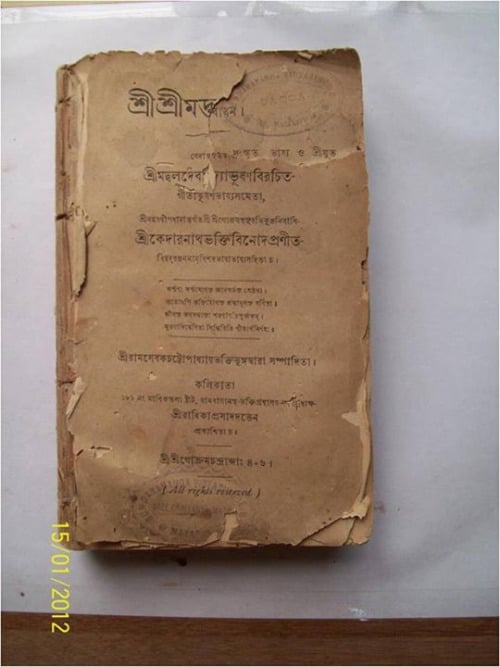
Between approximately 1874 and 1893, Bhaktivinoda combined government duty with periods of concentrated chanting and an extraordinary literary output. His Sanskrit works included Sri Krishna Samhita, Tattva-Sutram, Tattva-Viveka, and Datta-kaustubha. His Bengali writings included Kalyana-kalpataru and numerous theological essays, songs, commentaries, translations, and instructional works. His later corpus also came to include such influential titles as Jaiva-dharma, Saranagati, Gitavali, Hari-nama-cintamani, and Bhajana-rahasya.
His works addressed several audiences at once. Traditional practitioners received systematic explanations of guru, mantra, japa, kirtan, sacred geography, devotional conduct, and progressive spiritual realization. Educated Bengali readers encountered a tradition capable of philosophical argument and literary refinement. English-language readers were introduced to Chaitanya Mahaprabhu through terminology that could enter comparative religion and the international academy.
Sri Krishna Samhita, published during his service at Naraila, is especially important because it engaged questions raised by modern historiography without reducing Krishna to an ordinary historical personality. Bhaktivinoda distinguished levels of interpretation and argued that scriptural narratives disclose transcendent truth even when modern readers raise chronological or historical questions. In 1880 the scholar Reinhold Rost praised the work for presenting Krishna and Krishna worship in a more elevated and transcendental light.
His theology was organized around sambandha, abhidheya and prayojana. Sambandha concerns the ontological relationship among Krishna, individual souls, material nature, and divine energy. Abhidheya concerns bhakti as the practical means by which that relationship is realized. Prayojana concerns the culmination of the path in prema, selfless love of Krishna. This structure allowed complex metaphysical teaching to be connected directly with ethical and devotional practice.
Within that framework he defended achintya bheda abheda, the Gaudiya doctrine that reality is simultaneously one with and different from Krishna in a manner exceeding finite conceptual mastery. The individual is neither absolutely independent nor simply identical with the divine. The world is dependent upon Krishna yet meaningful as the field of relationship and service. Bhakti is therefore not merely an emotional preparation for another realization; it is the proper expression of reality’s relational structure.
This position distinguished his school from Advaita, Dvaita, and other Vedantic systems, but theological difference need not imply social hostility. India’s philosophical traditions have long developed through debate, commentary, and competing accounts of liberation. Bhaktivinoda’s significance lies in articulating the Gaudiya position with unusual clarity, not in erasing the intellectual dignity of other Dharmic paths.
His relationship to modernity was selective rather than submissive. He used history, journalism, print, organizational networks, and comparative theology, yet he did not accept colonial assumptions that Western categories alone determined rational religion. Nor did he reject every inherited custom simply because it was premodern. His method tested practices against scripture, ethical conduct, spiritual purpose, and their capacity to awaken devotion.
Print culture as a form of seva
After returning to Bengal in 1878, Bhaktivinoda served in Mahisarekha, Bhadraka, and Naraila. These transfers could have fragmented his work, but printing enabled continuity across distance. In 1881 he began publishing Sajjana Toshani, a Vaishnava periodical that combined theology, sacred biography, institutional news, reform, and practical instruction. The journal created a recurring community of readers rather than an audience dependent upon occasional lectures.
At Bhakti-bhavan in Calcutta he established the Sri Chaitanya Yantra printing press. It produced Maladhara’s Sri Krsna-vijaya, Bhaktivinoda’s Amnaya-sutra, and an edition of the Chaitanyopanishad associated with the Atharva Veda. Printing was not incidental technology in his mission. It was a form of seva that could stabilize texts, train collaborators, circulate arguments, and connect householders who might never enter a traditional monastic school.
The search for the Chaitanyopanishad illustrates both his persistence and the complexities of canon formation. After extensive inquiry, he received an old manuscript from the Vaishnava scholar Madhusudana dasa. Bhaktivinoda prepared a Sanskrit commentary titled Sri Chaitanya Charanamrita, while Madhusudana Dasa Mahasaya supplied a Bengali rendering known as Amrita-bindhu. Modern textual scholars may examine the manuscript’s date and provenance separately, but its publication was historically important to Bhaktivinoda’s presentation of Chaitanya within a Vedic scriptural framework.
In 1886 he published a Bengali edition of the Bhagavad-gita with the Sanskrit commentary of Srila Vishvanatha Chakravarti Thakura. The work was undertaken at the request of Sarada Carana Mitra, a former judge, and Bankim Chandra supplied a preface recognizing its value. Bhaktivinoda later produced his Vidva-ranjana translation and commentary, published with Baladeva Vidyabhushana’s commentary in 1891.
His publications at Sriramapura included Sri Caitanya Siksamrta, Vaisnava-siddhanta-mala, Prema-pradipa, and Manah-siksa. He issued an edition of the Sri Chaitanya-charitamrita with his Amrita-prabhava Bhasya, promoted the Caitanyabda calendar, and supported the Caitanya Panjika that established Gaura Purnima as an annual public observance. Through calendars, journals, books, and festivals, doctrine was translated into a shared rhythm of community life.
He also established the Sri Visva-Vaishnava Sabha and published Visva-Vaisnava-kalpatavi to explain its purpose. He lectured on Rupa Goswami’s Bhakti Rasamrita Sindhu and published an English account of Chaitanya Mahaprabhu in the Hindu Herald. Learned Vaishnavas eventually honored Kedaranatha Datta with the title Bhaktivinoda Thakura, recognizing the combination of devotional realization, literary accomplishment, and public service represented by his work.
His devotional songs were equally important. Prose can define surrender, humility, longing, and dependence upon grace, but song allows practitioners to inhabit those states collectively. Compositions associated with Saranagati, Gitavali, and Kalyana-kalpataru remain part of Gaudiya Vaishnava practice because they unite theology with memory, melody, emotion, and repeated participation.
Initiating and instructing gurus
Bhaktivinoda received formal diksha from Vipin Bihari Goswami, a teacher connected with the Jahnava lineage of Baghnapara. He consistently demonstrated respect toward his initiating guru. At the same time, he accepted Srila Jagannatha Dasa Babaji as a principal shiksha guru after meeting him during a pilgrimage to Vrindavana. The distinction between diksha and shiksha allowed formal initiation and continuing theological instruction to operate together.
A famous lineage anecdote describes the young Bimala Prasada objecting when Vipin Bihari Goswami placed his feet upon Bhaktivinoda’s head. The boy reportedly declared his father a nitya siddha and criticized the guru as a kanistha adhikari for failing to recognize him. Bhaktivinoda later treated his son’s fearlessness with humor. Because the account also reflects later disagreements over lineage and authority, it should be read as sectarian memory as well as family biography.
Bhaktivinoda’s own conduct conveyed a more general principle: reverence for a guru did not require the suspension of ethical judgment, and intellectual conviction did not justify personal arrogance. The guru-shishya relationship was meant to orient the disciple toward truth and service. Authority became credible when joined with learning, humility, discipline, and care for others.
His pilgrimages to Kasi, Prayaga, Mathura, and Vrindavana deepened his connection with sacred geography. During one journey he gave evidence against the Kanjharas, a criminal group accused of robbing and killing pilgrims, and a government commission was formed in response. Protecting pilgrimage routes was consistent with his broader understanding that religious freedom required practical security and accountable institutions.
After returning from Vrindavana, he purchased a house at 181 Maniktala Street in Calcutta and named it Bhakti-bhavan. He established daily worship of Sri Giridhari there. A deity of Kurmadeva was reportedly found during excavation for construction, and Bimala Prasada was entrusted with its worship. The home thus functioned simultaneously as family residence, temple, editorial office, school, and printing center.
Bankim Chandra Chattopadhyay is said to have discussed his manuscript on Krishna with Bhaktivinoda over several intense days. Devotional accounts state that Bankim revised speculative elements after those conversations. The precise extent of the revision is difficult to establish, but Bankim’s later preface to Bhaktivinoda’s Bhagavad-gita edition supplies firmer evidence of mutual intellectual regard.
The search for Chaitanya Mahaprabhu’s birthplace
In 1887 Bhaktivinoda considered retiring from government service and settling permanently in Vrindavana. According to his devotional account, Chaitanya Mahaprabhu appeared in a dream and directed him first to perform an unfinished service at Navadwipa. He consequently sought a transfer to Krishnanagar, declining prestigious alternatives connected with Assam and Tripura, and eventually arranged an exchange with another deputy magistrate.
One night, while chanting on the roof of the Rani dharmashala, he saw an extraordinary light near a tal tree across the river. He interpreted the sight as a sacred indication, but he did not rely upon the vision alone. He consulted old maps, examined manuscripts of the Chaitanya Bhagavat and Navadwipa Dhama Parikrama, studied changes in the river landscape, visited Ballaladibhi, and questioned elderly residents about local place-memory.
He concluded that the site now identified as the Yogapitha at Mayapur was Chaitanya Mahaprabhu’s birthplace. Srila Jagannatha Dasa Babaji, then a highly respected figure among Nadia’s Vaishnavas, confirmed the identification within the tradition. Bhaktivinoda publicized the sacred geography through Navadwipa Dhama Mahatmya, festivals, lectures, organizations, and sustained efforts to establish worship at the site.
The word discovery requires precision in this context. His work combined textual interpretation, historical maps, oral testimony, observation of a changing riverine landscape, and confessional conviction; it was not an archaeological excavation in the modern scientific sense. Competing claims existed among local constituencies. Nevertheless, his identification proved institutionally transformative because it created a durable center of pilgrimage whose significance is now global.
In 1894 he presented his findings before scholars from across Bengal. The resulting Sri Navadwipa Dhama Pracarini Sabha supported the Mayapur identification, and a major Gaura Purnima festival marked the installation of Gaura-Vishnupriya Deities at the Yogapitha. Bhaktivinoda personally collected funds from householders for a temple. This historical fundraising is significant not as a present request for support but as evidence of his willingness to perform humble organizational labor for a public religious institution.
Surabhi Kunja and the Nama Hatta network
Bhaktivinoda acquired land at Sri Godrumadwipa, also called Svarupaganga, and built a residence for bhajana named Surabhi Kunja. In 1890 he established the Nama Hatta, literally a marketplace of the holy name. The metaphor was intentionally accessible: spiritual teaching could circulate through villages and households as energetically as goods circulated through a market, yet the holy name itself was not a commodity.
He regarded himself as the street sweeper of Lord Nityananda’s Nama Hatta. The expression joined humility with organizational purpose. A street sweeper does not claim ownership of the road; he clears obstacles so that others may travel. In the same way, Bhaktivinoda envisioned preaching as the removal of confusion, social pretension, and institutional neglect so that ordinary people could participate in chanting and study.
The Nama Hatta developed branches across Bengal and became partly self-sustaining. Local groups could gather, sing kirtan, study, host visiting teachers, and remain linked through journals and correspondence. This decentralized architecture allowed a householder-led movement to grow without depending exclusively on monasteries or royal patronage. It anticipated later forms of congregation-based Krishna consciousness.
His government transfers continued during this period. Poor health led him from Krishnanagar to Netrakona in 1888, then to Tangaila and Vardhamana, where he joined kirtan at Amalajora. Later postings included Kalara, Ranighata, and Dinajapura. These movements did not suspend his mission; they created new points of contact through which lectures, correspondence, publications, and Nama Hatta branches could spread.
In 1891 he took two years leave from government employment and used Godrumadwipa as a base for preaching. In 1892 he travelled through the Basirahata district with other Vaishnavas and undertook another pilgrimage to Vrindavana, stopping at Amalajora to observe Ekadasi with Jagannatha Dasa Babaji. He continued writing while travelling, demonstrating how his literary and organizational work reinforced one another.
Bhaktivinoda retired from government service in October 1894 at the age of fifty-six, despite resistance from relatives and officials who valued his secure position. Retirement allowed him to revise earlier writings, preach from Surabhi Kunja, develop the Mayapur project, and deepen his devotional practice. The transition represented not an escape from responsibility but the deliberate reallocation of his remaining time.
Carrying Chaitanya’s teachings beyond India
Bhaktivinoda’s international initiative became especially visible in 1896. He circulated Sri Gauranga-lila-smarana-mangala-stotram, a Sanskrit work accompanied by a commentary from Srila Sitikantha Vacaspati of Nadia and an English introduction titled Chaitanya Mahaprabhu, His Life and Precepts. Biographical sources report that copies reached the Royal Asiatic Society in London, McGill University in Canada, and other institutions, and that F. W. Fraser reviewed the work in the Journal of the Royal Asiatic Society.
This circulation was modest in scale but conceptually bold. Bhaktivinoda treated Gaudiya Vaishnavism as a tradition capable of addressing a global intellectual public without surrendering its central commitments. Sanskrit preserved continuity with learned tradition, Bengali served the regional devotional community, and English opened a channel to universities and readers beyond India. Multilingual publication became a strategy of cultural confidence rather than imitation.
Vaishnava memory also preserves his vision of people from many nations gathering at Mayapur and chanting together in harmony. The later international growth of sankirtan led disciples to interpret this as prophetic. From a historical perspective, the vision reveals the scale of his aspiration: a devotional culture formed in Bengal could become globally participatory without ceasing to be rooted in its sacred geography.
At the request of the Vaishnava ruler of Tripura, he visited the state in 1896 and lectured before scholars, the royal family, and the public. He later travelled to Darjeeling, Karsiyam, Medinipura, and Sauri. Sisira Kumar Ghosa, founder of the Amrita Bazaar Patrika, supported the preaching of the holy name and described Bhaktivinoda as the seventh Goswami, placing him symbolically in continuity with the six Goswamis of Vrindavana.
The year 1896 later acquired another significance because it was the birth year of A. C. Bhaktivedanta Swami Prabhupada. Prabhupada regarded Bhaktivinoda’s international distribution of Chaitanya’s teachings as a meaningful predecessor to his own mission. The historical chain should not be reduced to a single act, but its continuity is clear: Bhaktivinoda developed texts and a global horizon; Bhaktisiddhanta Saraswati built a disciplined preaching institution; and Prabhupada established an international network of temples, publications, communities, and public sankirtan.
Retirement, Bhakti Kuti, and the final years
In later life Bhaktivinoda spent increasing periods at Puri. His son Bimala Prasada had practiced as a brahmacari near the memorial of Haridasa Thakura, and Bhaktivinoda assisted in repairing the associated monastery. He then established his own place of worship near the sea, calling it Bhakti Kuti. Sri Krishnadasa Babaji became a close attendant and remained with him through his final years.
Bhakti Kuti provided space for more solitary bhajana, although visitors continued to seek him. Some came with sincere questions; others, according to devotional accounts, interrupted his seclusion. The tension was familiar throughout his life. He valued contemplative withdrawal, yet his scholarship, family, correspondence, and institutional responsibilities repeatedly drew him back into service to others.
A recollection from 1908 concerns Sir William Duke, a senior British official under whom Bhaktivinoda had once served. Duke reportedly confessed that he had considered removing him from office because capable Indian administrators threatened assumptions about the permanence of British power. Bhaktivinoda responded without resentment and treated him as a friend and well-wisher. Whether every detail can be independently reconstructed, the story expresses the forgiveness and composure attributed to his mature character.
In 1908 Bhaktivinoda adopted the external dress of a babaji, indicating a final concentration on chanting, prayer, and devotional contemplation. He continued travelling between Calcutta and Puri and remained engaged in writing for approximately two years. In 1910 he withdrew more fully from public life. Accounts describe paralysis and samadhi, interpreting physical limitation as the outward condition of deep interior absorption.
Bhaktivinoda departed on June 23, 1914. Gaudiya chronologies agree on the date and on the interment of his remains at Godruma, although modern biographical summaries differ over whether his bodily departure occurred in Puri or Calcutta. The Gaudiya Panjika associates the date with the disappearance of Sri Gadadhara Pandita. His remains were carried to the land of Nadia and placed in samadhi amid sankirtana.
The discipline behind the literary achievement
His son Lalita Prasada preserved a remarkable account of his daily routine. Bhaktivinoda would retire early in the evening, rise around 10:00 PM, light an oil lamp, and write until approximately 4:00 AM. After a brief rest, he rose again around 4:30 to wash and perform Hare Krishna maha-mantra japa. The morning then included letters, reading, receiving visitors, a short rest, bathing, and a simple breakfast before departure for court.
He reportedly left by carriage at about 9:55 AM, began court at 10:00, and concluded the first session around 1:00 PM. After returning home to bathe and refresh himself, he resumed official duties at 2:00. By approximately 5:00 he turned to translating Sanskrit works into Bengali, followed by an evening bath, a simple meal, and early rest. A pocket watch helped him maintain strict punctuality.
The schedule explains how he produced so much, but it also records a severe economy of sleep that should not be romanticized as a requirement for spiritual seriousness. Recollections of exact timings may be approximate, and human needs differ. The more transferable principles are protected time, clarity of purpose, regular practice, modest consumption, and the reduction of distractions.
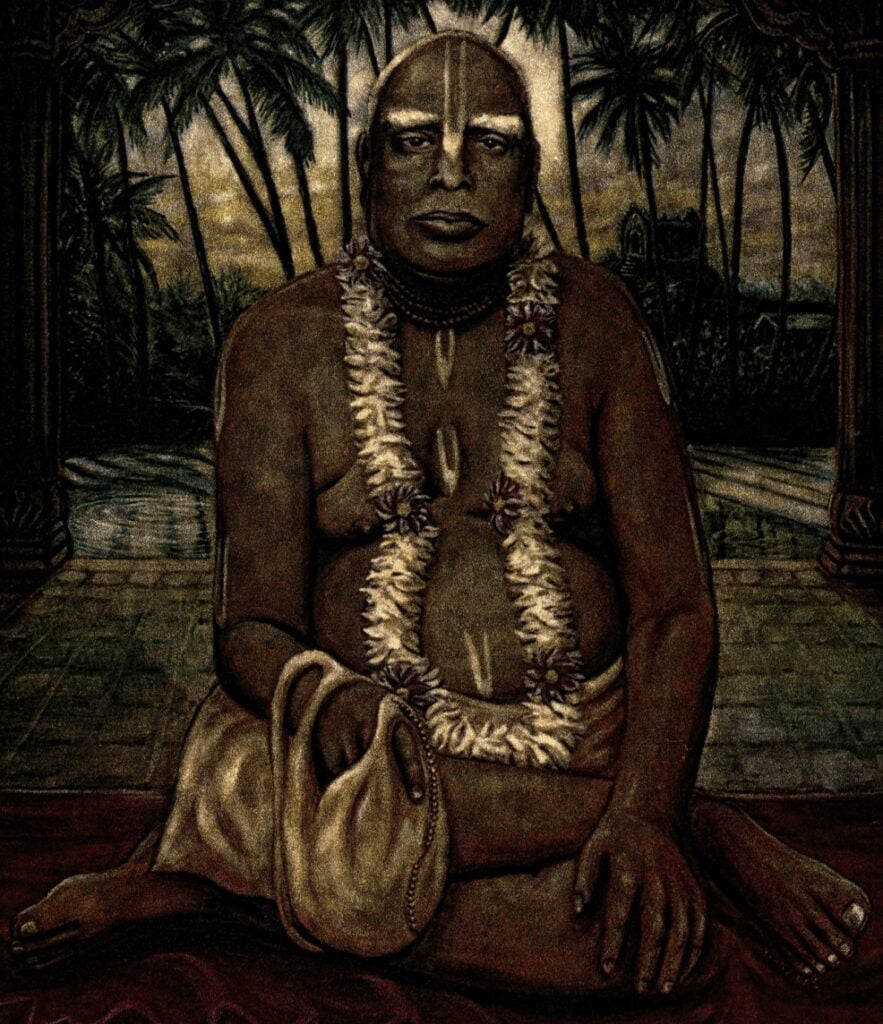
His appearance at court visibly joined two worlds. He wore a coat and trousers appropriate to colonial administration while retaining prominent Tulasi neckbeads and Vaishnava tilaka. He was remembered as decisive, resistant to deception, and unwilling to let social status disrupt judicial order. The combination embodied neither cultural surrender nor theatrical rejection; it represented a strategic participation in public institutions without concealing religious identity.
Accounts emphasize that he avoided debt, declined personal gifts, rejected government honors that might compromise his mission, and lived without luxury. He was charitable toward brahmanas while maintaining friendly relations across caste boundaries. He did not chew betel and disapproved of social environments he considered morally exploitative. He also preferred sankirtan without harmonium because he believed the instrument could distract attention from the sound of the holy name. That musical preference belonged to his discipline and need not be treated as a universal rule for all Vaishnava communities.
He worked across Bengali, Sanskrit, English, Latin, Urdu, Persian, and Oriya. This linguistic range enabled him to move among courts, regional communities, classical texts, colonial institutions, and international readers. He began writing in youth and continued almost until the end of his life. More important than the number of volumes was the integrated ecosystem he created: research led to commentary, commentary to publication, publication to communities, and communities to durable institutions.
Character, family support, and a realistic lesson for busy lives
Sarada Carana Mitra, a Calcutta High Court judge who knew him personally, remembered that even the pressure of a heavy administrative subdivision could not prevent conversation from turning toward bhakti and achintya bheda abheda, dvaitadvaita-vada and the devotional work ahead. Government service brought honor, but Bhaktivinoda regarded it as secondary to service of God. The testimony captures both his concentration and the cost he felt in dividing attention between employment and vocation.
His perseverance can inspire, but a responsible reading must avoid the myth of the isolated male genius. Bhagavati Devi maintained a devotional household, raised children, welcomed associates, and supported a life repeatedly disrupted by transfers, visitors, publications, and pilgrimage. Sons, disciples, printers, scholars, donors, local congregations, and spiritual mentors also participated. Bhaktivinoda’s leadership was exceptional precisely because he learned to coordinate this human network around a coherent purpose.
For modern householders, the relevant insight is not that family and work are obstacles to be resented. His life shows that duty can become a field for integrity, skill, patience, and service. It also shows that meaningful spiritual work requires deliberate boundaries. He reserved hours for study and japa, simplified his material needs, used appropriate technology, delegated responsibility, and connected local effort to institutions that could survive him.
A Gaudiya legacy with wider Dharmic resonance
Bhaktivinoda Thakura was unambiguously a Gaudiya Vaishnava theologian, not a spokesman for an undifferentiated universal religion. Respecting him therefore requires preserving the specificity of his devotion to Radha and Krishna, his allegiance to Chaitanya Mahaprabhu, and his confidence in the holy name. Genuine interreligious respect does not flatten important differences in doctrine, ritual, authority, or the understanding of liberation.
At the same time, his life contains themes recognizable across the family of Indian-origin traditions. Hindu, Buddhist, Jain, and Sikh communities have each developed disciplined practices, ethical codes, teacher-student relationships, textual traditions, pilgrimage networks, public service, and methods of collective remembrance. The traditions interpret these elements differently, yet all benefit when disagreement is joined with accuracy, restraint, and mutual dignity.
His engagement with Christian theology also demonstrates that serious encounter does not require either hostility or uncritical assimilation. He read across traditions, changed his judgments over time, and eventually wrote from a position of rooted conviction. That pattern offers a constructive model for plural societies: study another path carefully, represent it fairly, preserve the freedom to disagree, and refuse to turn theological difference into contempt for people.
Why his work still matters
Bhaktivinoda renewed Gaudiya Vaishnavism by joining five forms of labor that are often separated: textual recovery, theological interpretation, ethical reform, media production, and institution-building. Texts without communities can become archival objects; communities without study can lose intellectual depth; reform without devotion can become merely administrative; and inspiration without organization may disappear with one generation. His work addressed all of these vulnerabilities together.
His identification of Mayapur gave the tradition a renewed geographic center. His journals and press gave it a public voice. His songs gave theology an emotional and participatory form. The Nama Hatta gave householders an organizational role. His English publications opened an international horizon. His training of Bimala Prasada helped transmit the project to Bhaktisiddhanta Saraswati, whose disciple Srila Prabhupada later carried Krishna consciousness throughout the world.
The most enduring lesson is therefore not simply that Bhaktivinoda was exceptionally productive. It is that he converted conviction into systems of transmission. He recovered inherited wisdom without treating the past as inert, adopted modern tools without surrendering intellectual independence, and served a particular Vaishnava lineage while imagining a worldwide community united through sacred sound.
His biography remains moving because its achievements arose within ordinary human constraints: time was limited, institutions were imperfect, health was fragile, and responsibilities were relentless. Through disciplined practice, scholarship, courage, and cooperation, those constraints became the setting of service rather than the end of aspiration. That is why Srila Bhaktivinoda Thakura continues to stand as one of the principal architects of modern Gaudiya Vaishnavism and one of the most consequential spiritual personalities of nineteenth-century India.
Research orientation
Primary evidence for further study includes Bhaktivinoda’s autobiographical Svalikhita-jivani, surviving issues of Sajjana Toshani, his theological books, songs, commentaries, correspondence, and colonial administrative records. Devotional biographies preserve essential community memory, while modern historical studies such as Shukavak N. Dasa’s Hindu Encounter with Modernity help situate Kedaranatha Datta within colonial Bengal. Reading autobiographical, institutional, devotional, and academic sources together produces the most balanced understanding of his life.
Inspired by this post on Dandavats.



Leave a Reply
You must be logged in to post a comment.