-
Unveiling the Serpent Divine: Rigorous Comparison of Hindu Nagas and Ancient Greece’s Glycon

Serpent deities crystallize a universal human intuition about healing, protection, and moral order. This rigorous, evidence-based comparison places Hindu Nagas—plural, ecologically integrated, and cosmologically central—alongside the Greco-Roman Glycon, a historically bounded healing and oracular cult. Drawing on the Mahabharata, Puranas, and living festivals such as Naga Panchami and Nagula Chavithi, it shows how Nagas unify…
-
Unveiling Nāga Kanyā: A Research-Backed Guide to Hinduism’s Boundless Serpent Guardian

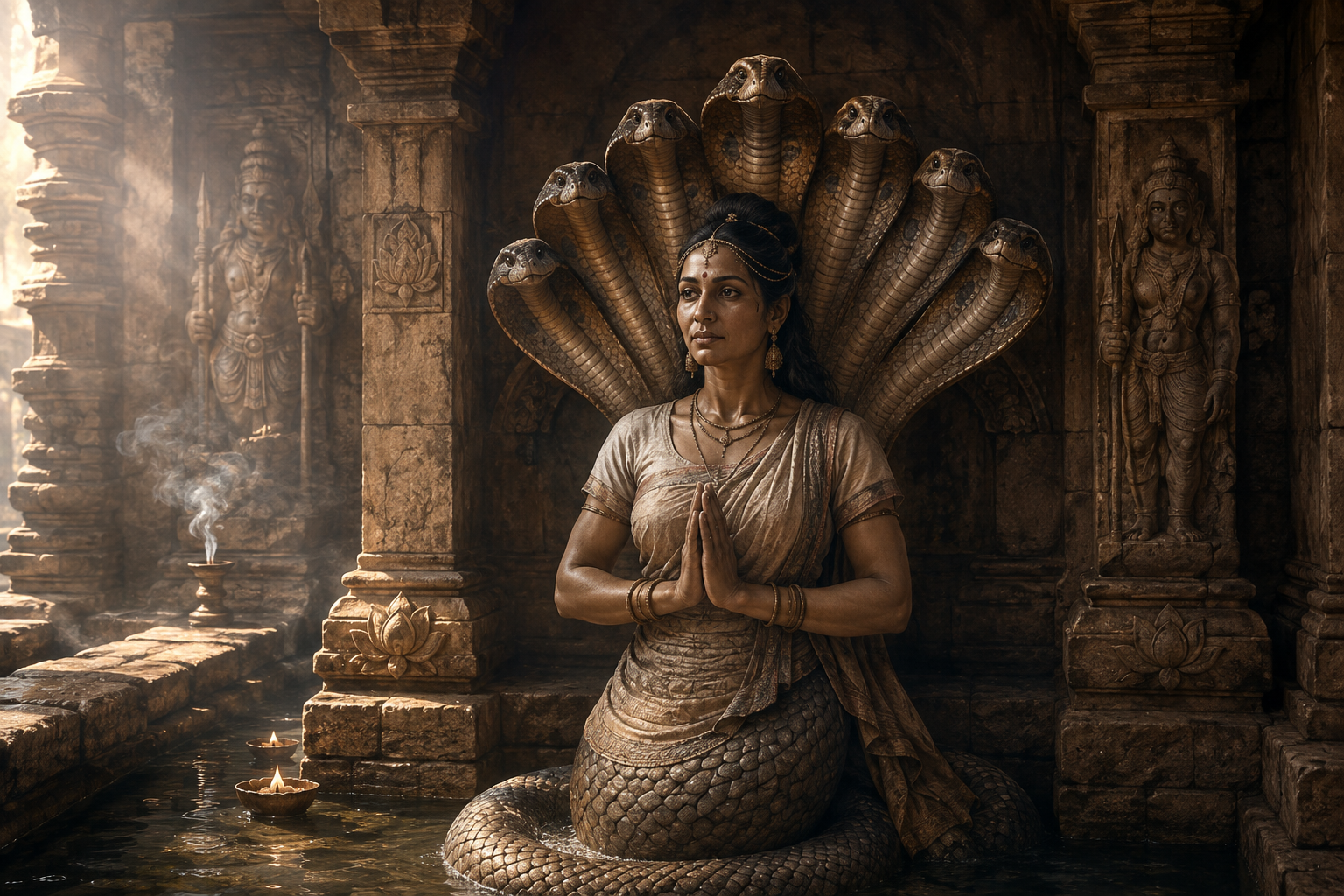
Nāga Kanyā—“the virgin serpent”—is a pan-Indic guardian archetype whose maidenly autonomy and serpentine potency protect thresholds, waters, and life. This research-grounded overview situates Nāga Kanyā in Hindu scriptures and art (Jaratkaru, Ulūpī, Hoysala and Chola sculptures) while clarifying that “virgin” signifies self-sovereignty, not social status. It explains how nāga-kanyā symbolism converges with festivals such as…
-
Kukke Subramanya Sthala Purana: Timeless Serpent-Lord Legends, Ritual Science, and Sacred Landscape

Anchored at the foot of Kumara Parvatha and on the banks of the sacred Kumara Dhara, the Kukke Subramanya Swamy Temple preserves a powerful sthala purana that unites myth, ritual, and landscape. The narrative recounts Subrahmanya’s victory over Tarakasura, his marriage to Devasena, and a lasting covenant of protection extended to Vasuki and the Nagas.…
-
Inside Kukke Subramanya: A Sacred, Comprehensive Guide to Sub-Shrines, Rituals, and Architecture

Kukke Subramanya Temple in Dakshina Kannada, Karnataka, is famed for Subrahmanya’s protective grace and for Naga-related rites such as Sarpa Samskara and Ashlesha Bali. This comprehensive guide maps the temple’s sub-shrines—highlighting the Purathana KukkeLinga Temple (Vimana Type – NO; Sanctorum Shape – Square Shape) located indoors of the main complex—alongside Adi Subrahmanya and Sri Samputa…
-
Timeless Sthala Purana of Kukke Subramanya: Legends, Rituals, and Sacred Ecology of Western Ghats

Situated at the foothills of Kumara Parvatha and along the Kumara Dhara, Kukke Subramanya Swamy Temple fuses mythic memory with living ritual. The sthala purana recounts Kumara Swamy’s arrival with Lord Ganapathi to defeat Tarakasura and sanctify the valley through the marriage to Devasena. Core symbolism centers on Subramanya’s guardianship of Vasuki and Shesha, with…
-
Uragas vs. Nagas in Hinduism: Origins, Scriptural References, and Sacred Symbolism

Hindu texts distinguish clearly between uragas and nāgas. Uraga is a generic Sanskrit term for serpents—a poetic synonym alongside sarpa, ahi, and bhujaṅga—while nāga denotes a semi-divine class with genealogy, kingship, and realm (nāga-loka). Epic and Purāṇic narratives feature named nāga personages such as Śeṣa, Vāsuki, and Takṣaka, whose roles in cosmology and ethics far…
-
Serpents, Secrets, and Shakti: Decoding the Hidden Power of Goddess Guhya Kali

This in-depth exploration decodes the symbolism of serpents alongside the esoteric presence of Goddess Guhya Kali in Shakta Tantra. It clarifies the meaning of guhya (secret) as ethical, paced revelation and shows how Kali, as Shakti, cuts through inner knots that obscure clarity. Readers gain a technical overview of kundalini, the nadis (ida, pingala, sushumna),…
-
Adi, Madhya & Anthya Subramanya: A Scholarly Pilgrimage Across Karnataka’s Sacred Triad

Karnataka’s revered Subramanya triad—Adi (Kukke), Madhya (Nagamangala), and Anthya (Ghati)—offers a unified pilgrimage that blends sacred geography, living ritual, and regional heritage. This guide maps the three kshetras across Dakshina Kannada, Mandya, and Bengaluru Rural, explaining their theological significance, signature sevas, and festival highlights. It details naga-centric observances at Kukke, the contemplative balance of Nagamangala,…
-
Duryodhana’s Poison Plot, Bhima’s Naglok Descent, and King Aryak’s Divine Empowerment

This long-form analysis explores the Mahabharata’s Naglok episode, where Duryodhana’s poison plot leads unexpectedly to Bhima’s empowerment under Naga King Aryak. It traces how treachery is transformed into destiny through kinship recognition, rasāyana-like rejuvenation, and Dharmic ethics. The essay situates Aryak within pan-Dharmic serpent symbolism—paralleling motifs in Hindu, Buddhist, and Jain traditions—highlighting unity through shared…
-
Unveiling the Sacred Nāgas: Cosmic Serpents, Seven Realms, and Living Dharma

Serpents (Nāgas) in Hindu tradition are far more than reptiles; they are guardians of waters, thresholds, and cosmic order across the seven realms and seven netherworlds. Grounded in the Sarpa Suktam and extended through Purāṇic and Itihāsa narratives, Nāga lore unites temple iconography, regional festivals, yogic anatomy, and ecological stewardship. Key figures such as Ananta-Śeṣa…
-
Astika Mantra from the Mahabharata: Powerful Snake-Bite Protection, Meaning, and Safe Use

The Astika mantra, preserved in the Mahabharata’s Astika Parva, is a revered protective chant for snake-bite safety that appeals to remembrance, gratitude, and non-violence. By recalling Astika—born of Jaratkaru and Jaratkaru—who halted King Janamejaya’s sarpa-satra, the mantra respectfully addresses nāgas and requests non-injury. This guide presents the original Sanskrit, accurate transliteration, and a clear, line-by-line…
-
Nagabharana of Venkateswara Swamy: Adisesha’s Golden Embrace on Tirumala’s Divine Shoulders

The Nagabharana of Venkateswara Swamy—twin golden serpents resting on the Lord’s shoulders—embodies Adisesha’s protective presence in Tirumala’s Vaishnava tradition. This in-depth exploration explains its theological meaning, Agamic grounding, and South Indian craftsmanship, while showing how ornament becomes lived theology in darshan. It connects naga symbolism to Puranic narratives and to broader Dharmic motifs found in…
-
Mannarasala Nagaraja: Parashurama’s Penance and the Serpent King Who Made Kerala Bloom

Mannarasala Nagaraja Temple in Kerala is revered as the sacred grove where Parashurama’s penance and the serpent king’s grace transformed reclaimed coast into fertile land. Rooted in Treta Yuga tradition, the shrine venerates Sree Nagaraja and Sarpayakshi amid thousands of serpent stones. The Ayilyam festival in Kanni draws devotees seeking blessings for fertility, health, and…
-
Nagapasha in Durga’s Hand: Unleashing Conscious Power and the Serpent’s Victory Over Evil

The serpent—Sarpa—in Goddess Durga’s hand is not mere ornament but Nagapasha, the symbol of conscious power and ethical control. It signifies the binding of ego and disorder through lucid awareness rather than brute force. A yogic reading links the serpent to Kundalini rising from the muladhara through the sushumna nadi, illustrating disciplined Shakti in service…
-
Sarpa Abharana Moorthy: Why Shiva Wears Vasuki—and the Powerful Promise of Protection

Sarpa Abharana Moorthy presents Lord Shiva wearing the sacred serpent Vasuki to convey protection, fearlessness, and compassion. This revered image communicates mastery over poison and danger while reassuring devotees facing anxieties about illness and harm. Puranic and Agamic traditions describe Shiva as naga-bhushana, integrating Naga symbolism of wisdom and auspiciousness into Shaiva iconography. Dharmic unity…
-
Sarpa Vratam on Sundays: A Powerful Path to Grace, Protection, and Inner Renewal

Sarpa Vratam (Naga Vratam) is a Sunday observance within Hindu traditions that honors serpent deities as symbols of fertility, protection, and cosmic balance. The practice unites fasting, prayer, and ecological reverence, encouraging ahimsa and responsible stewardship of nature. Devotees prepare with sattvic discipline, offer worship at Naga shrines, and recite traditional stotras, aligning intention with…
-
Mannarasala Nagaraja Temple: Vasuki and Ananta’s Sacred Grace in Fertility and Protection

Mannarasala Nagaraja Temple in Kerala is a renowned center of Naga worship, revered for blessings of protection, fertility, and spiritual awakening. The temple’s sacred groves, lined with countless serpent shrines, embody a living heritage that unites theology, ecology, and community devotion. Honoring Vasuki and Ananta (Ananta-Śeṣa), it symbolizes cosmic order, courage, and renewal in the…
-
Padma, Sovereign of the Nagas: Mahabharata Lessons for Inner Harmony and Unity

Padma, the king of serpents in the Mahabharata, emerges as a model of sovereign wisdom anchored in dharma. Cited in Sabha Parva 9 and Shanti Parva 363–371, his presence signals ethical leadership founded on reflection, restraint, and care for the vulnerable. Serpent symbolism frames Padma as a guardian of life’s sources and a custodian of…