Sundarakanda Parayana Procedures (Sundarakanda Parayanam Vidhanam) are presented here in a clear, structured format to support devoted practice at home or in community settings. Sundara Kanda, the fifth book of the Ramayana, composed in Sanskrit by Valmiki, narrates the valor, devotion, and discernment of Hanuman. Across generations, reciting Sundara Kanda has been embraced as a disciplined spiritual practice that strengthens courage, steadies the mind, and deepens bhakti.
Traditions recognize multiple methods of Sundarakanda Parayana based on the number of days available and the practitioner’s capacity. Each method is valid when performed with sincerity and clarity. The following Sundarakanda Parayanam Vidhanam outlines essential preparation, step-by-step procedure, and flexible day-wise schedules so that practitioners can choose an approach aligned with their time, health, and family rhythm.
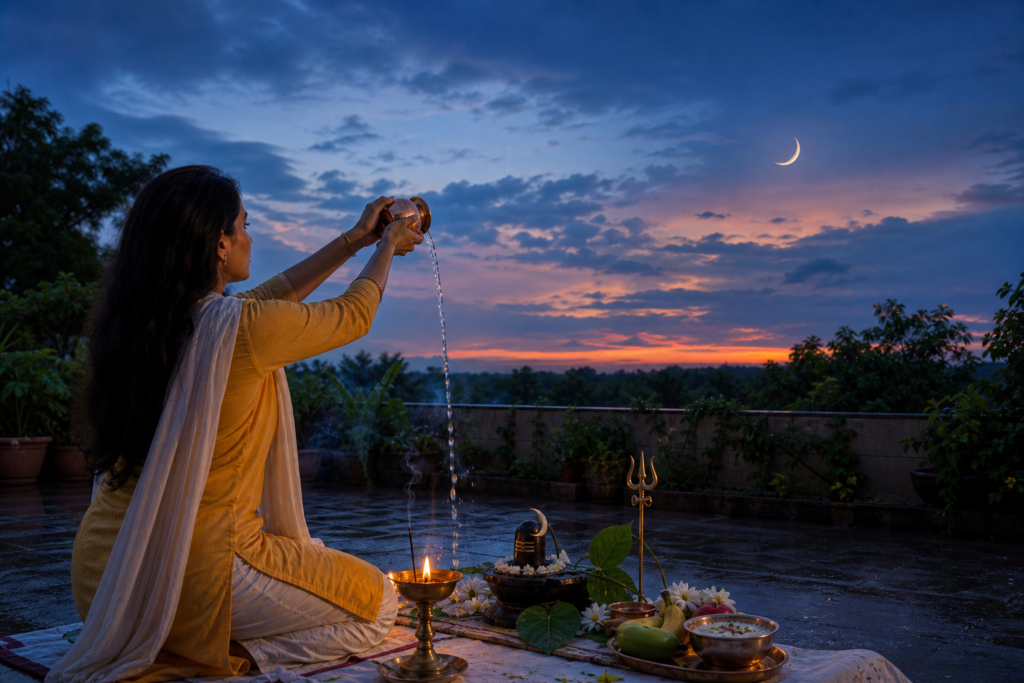
Preparation emphasizes simplicity and sattva. A clean, quiet space is arranged with an oil lamp or diya, fresh water, flowers as available, and a copy of Sundara Kanda in Sanskrit or a reliable translation. Many keep images or murtis of Sita-Rama and Hanuman to center attention. A calm time of day is preferred, though any consistent time is acceptable. Offering simple sattvik naivedyam (fruits, jaggery, or cooked food without onion/garlic) reflects gratitude. While some observe light upavasa, it is not mandatory. This practice is accessible to all; households adapt gently to health needs and family schedules.
The core Vidhanam proceeds as follows. After lighting the lamp, sit with a steady, comfortable posture. Perform a brief achamana and a few quiet breaths to settle the mind. State a sankalpaan intentional vow for personal well-being, family harmony, community peace, and universal welfare. Offer a short prayer to Sri Ganesha for removal of obstacles, honor the lineage of teachers (guru vandana), and bow mentally to Sita-Rama and Hanuman. Begin the parayana with focused attention, reading each sarga with clear pronunciation and a composed pace. Conclude the session with a kshama-prarthana (seeking forgiveness for errors), a short aarti, and distribution of prasad.
Optional concluding prayers may include Hanuman stotras, Rama-nama japa, or a brief reading of the phala-śruti where available. Devotees frequently describe a felt sense of serenity, courage, and renewed purpose after each sittinga lived experience that aligns with Sundara Kanda’s central themes of steadfast devotion and service.
Conduct during a parayana observance emphasizes kindness in speech, moderation in food, and consistency in practice. Many choose Tuesdays or Saturdays for commencement, though there is no strict requirement. Women and men, elders and youth alike, may participate; families often recite together, taking turns by sarga or by day. Recitation may be performed in Sanskrit or a faithful regional translation so that meaning and devotion remain accessible.
Multiple day-wise schedules are traditional; practitioners select according to time and comfort. A one-day sankshipta parayanam covers all 68 sargas in a single sitting and is suited to experienced readers or group recitation. A three-day parayana commonly follows an approximate division such as Day 1: sarga 1–20, Day 2: sarga 21–45, Day 3: sarga 46–68. A five-day plan may assign roughly 13–14 sargas per day, balancing depth and duration.
For a seven-day observance, the reading can pace at about 9–10 sargas daily, allowing unhurried reflection. Nine-day and eleven-day observances refine this rhythm further (approximately 7–8 sargas daily for nine days or around 6 sargas daily for eleven days), enabling steady, meditative engagement. Longer vratas such as twenty-one days (about 3–4 sargas per day) or forty-one days (about 1–2 sargas per day) cultivate sustained discipline and contemplation. These allocations are approximate and may be adjusted to ensure complete sarga endings and a composed pace.
Group or family parayanam is especially uplifting. Shared recitation creates a supportive atmosphere, strengthens collective resolve, and nurtures intergenerational learning. In many communities, collective readings of sacred textswhether Hindu, Buddhist, Jain, or Sikhare valued as practices that refine attention, compassion, and ethical living. In this spirit, Sundarakanda Parayana can be approached as a path that deepens unity across dharmic traditions through shared virtues of discipline, service, and devotion.
Practical tips ensure continuity. Keep a simple day-by-day tracker, choose a steady time, and read at a measured pace. If taking a formal vrata, consult a trusted priest or knowledgeable elder for specific family traditions while honoring the essential spirit of the text. When unavoidable interruptions arise, resume calmly at the next opportunity; the heart of the practice is sincerity rather than perfection.
Common questions arise in household settings. Food discipline is kept sattvik for clarity of mind, yet compassion and health take precedence. Regional customs vary regarding observance during menstruation; many contemporary households continue with discretion and comfort, recognizing that devotion is an inner posture of reverence. Above all, Sundara Kanda recitation is intended to cultivate courage, humility, and servicequalities exemplified by Hanuman and cherished across dharmic communities.
In summary, Sundarakanda Parayana Procedures (Sundarakanda Parayanam Vidhanam) offer a flexible, time-tested framework: prepare a calm space, make a clear sankalpa, read with attention, and conclude with gratitude. Whether completed in one day or over several weeks, the practice invites inner steadiness and grace, aligning daily life with the timeless virtues celebrated in the Ramayana.
Inspired by this post on Hindu Pad.