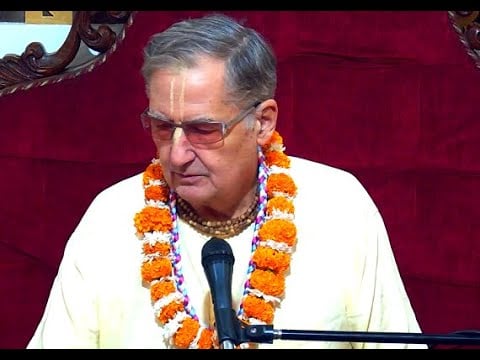
On 10 November 2025 at ISKCON Dwarka, HG Abhinandan Prabhu reflected on SB 12.13.13, emphasizing a central insight of the bhakti tradition: the essential process is simple, yet sustained application is challenging. The teaching highlights how hearing and chanting (sravana and kirtana) can be profoundly transformative when approached with consistency and sincerity.
In contemporary life, attention is often captured by the churn of political conversations and breaking news. As a result, scriptural gatherings such as Srimad-Bhagavatam discussions may receive less engagement than their potential merits. This gap is not a moral failing but an outcome of competing demands on time and attentiona reality that calls for thoughtful, compassionate outreach.
The discussion underscored a practical path forward: begin where people are, invite gently, and cultivate interest through relevance and lived benefit. When individuals step into a Srimad-Bhagavatam session out of curiosity, many discover inner calm, clarity of thought, and ethical direction. Such experiences resonate across dharmic traditionsHinduism, Buddhism, Jainism, and Sikhismwhere disciplined listening, reflective inquiry, and virtuous action form a shared grammar of spiritual growth.
Consistent application can start small. Short daily reading, mindful chanting, or a few minutes of contemplative silence create durable habits that stabilize attention. Community satsanga offers support, while accessible language and inclusive settings help students, householders, and professionals alike connect scriptural wisdom to daily choices. In this way, the simple process matures into lived practice.
SB 12.13.13 celebrates the power of nama-sankirtana and attentive hearing to purify and uplift. The message is academically clear and pastorally compassionate: the doorway is open to all, and progress arises from sincerity rather than perfection. When invitations are extended respectfully and inclusively, many find that the teachings speak directly to personal challenges and aspirations.
Viewed through a unity-centered lens, these insights align with the broader ethos of inter-dharmic harmony. The methods may varyjapa, study, meditation, sevabut the underlying movement toward inner clarity, compassion, and social concord remains shared. Approached in this spirit, scriptural study becomes not an obligation, but a collaborative exploration that strengthens unity in spiritual diversity.
Inspired by this post on Dandavats.