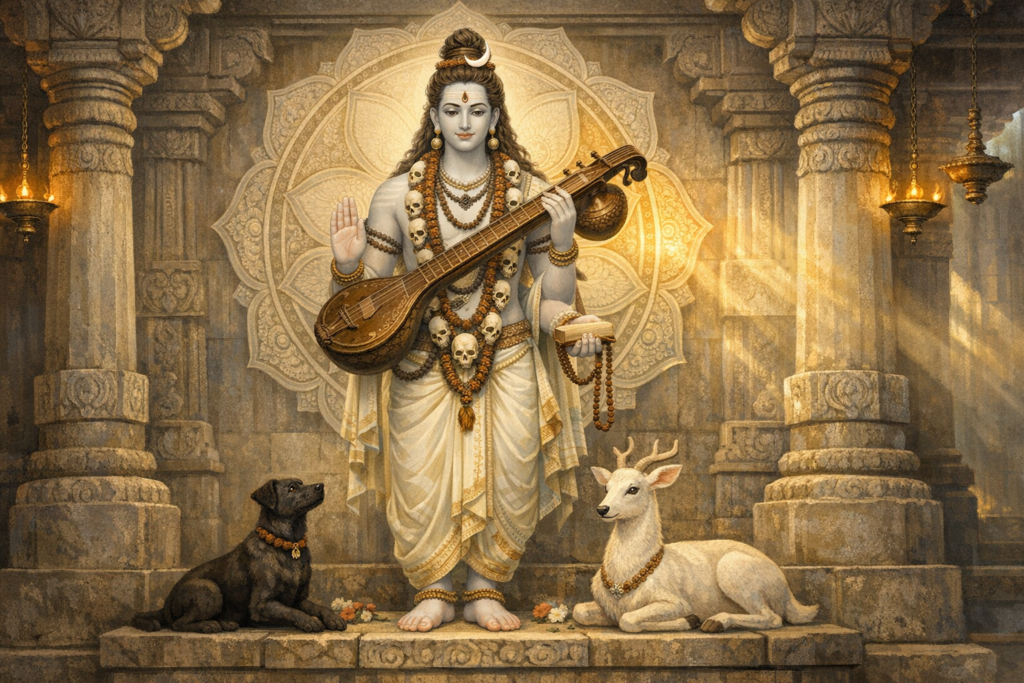
Chakravana occupies a venerable place in Hindu scriptures and epic memory. Described as a lofty sacred mountain rising from the vast Western Sea, it is repeatedly invoked as a setting where cosmic themes unfold—Vishnu’s protective triumphs and the Ramayana’s arduous search for Sita among them.
Within the broader corpus of Puranas and Indian Epics, the portrayal of Chakravana blends sacred geography with spiritual metaphor. The Western Sea functions as an expansive threshold, while the mountain stands as a steadfast axis, a reminder of dharma’s stability amid the turbulence of samsara. Such imagery aligns with long-standing narrative patterns in Ancient Hindu Texts that bind land, sea, and divinity.
Readers and practitioners often find that the image of a mountain rising from the ocean evokes awe, resilience, and hope. Coastal horizons at dusk, the sound of waves, and the silhouette of imagined peaks create an intuitive connection to the Ramayana’s journeys and to Vishnu’s guardianship. For many families raised on Hindu Stories, these scenes nurture a quiet confidence that perseverance, devotion, and compassionate action can bridge any distance.
Interpreted across commentarial traditions, Chakravana’s placement in the Western Sea also suggests India’s historical awareness of boundless oceans and maritime pathways. Whether approached as mythic cartography or as a contemplative symbol, the motif complements archaeological and textual evidence for a culture attentive to oceans, ports, and pilgrim routes, while remaining faithful to the literary integrity of the sources.
In a dharmic frame shared by Hinduism, Buddhism, Jainism, and Sikhism, landscapes become teachers: mountains steady intention, seas expand perspective, and journeys refine ethical resolve. Chakravana, in this sense, is less a single location and more a unifying insight—a way of seeing the world in which terrain and transcendence cooperate to sustain harmony and courage.
Far from being mere legend, Chakravana stands as a testament to the intertwined nature of sacred landscape, scriptural memory, and lived devotion. By situating Vishnu’s victories and the search for Sita within a grand seascape, the tradition invites renewed reverence for Sanatana Dharma’s plural, compassionate, and intellectually rigorous pursuit of truth.
Inspired by this post on Hindu Blog.