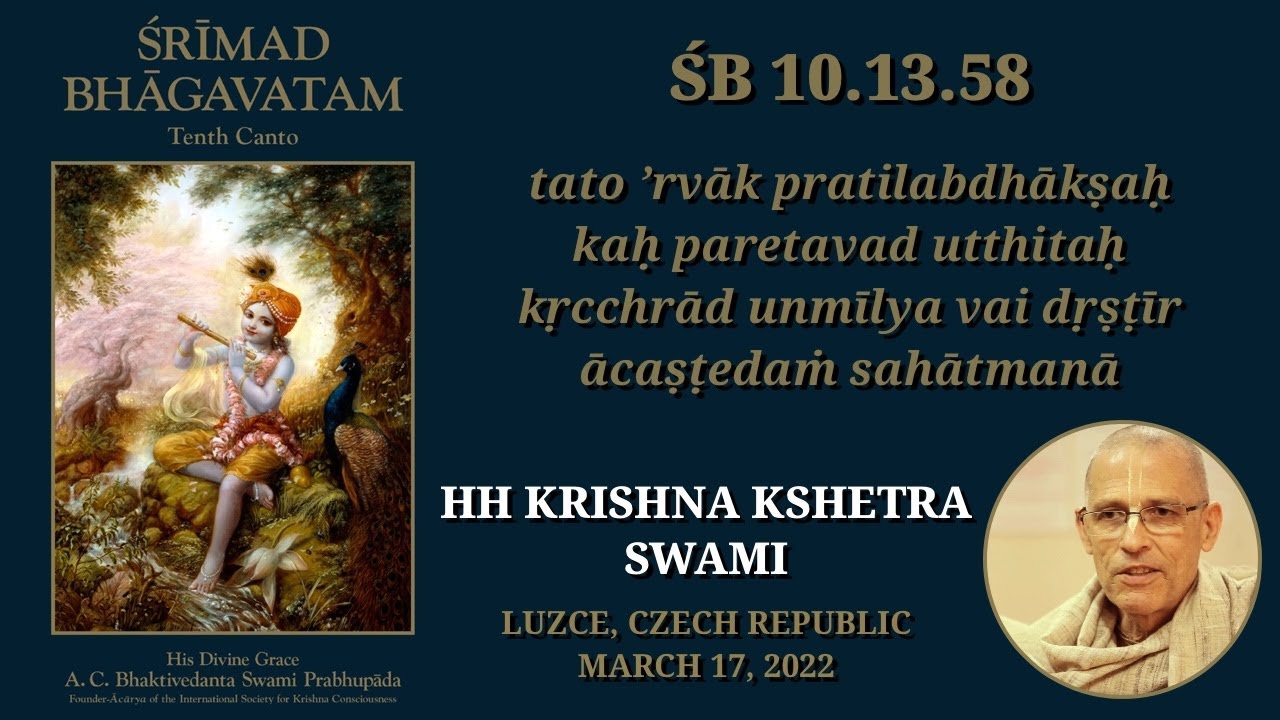
Reflecting on SB 10.13.58 and a teaching associated with HH Krishna Kshetra Swami at ISKCON Sri Sri Nitai Navadvipcandra (17 March 2022), the meditation centers on a striking claim: death is not annihilation but a temporary suspensioncomparable to sleep. This analogy, known as suptotthita-nyāya, frames the transition at death as inertness rather than nonexistence, suggesting that consciousness resumes its course just as memory and activity reappear upon waking.
The suptotthita-nyāya insight draws from everyday experience. Most have awoken from deep sleep momentarily disoriented, only to have memory and purpose return in an instant“Where am I? What do I have to do?” This familiar pattern illustrates how identity and continuity persist beneath periods of inactivity. The analogy offers an accessible lens for approaching complex topics in Hindu philosophy, Vedic wisdom, and the broader inquiry into consciousness.
Viewed through a dharmic lens, the theme of continuity resonates across Hinduism, Buddhism, Jainism, and Sikhism. In Hindu thought, the atman’s persistence across lifetimes aligns with Karma and reincarnation and the pursuit of Moksha. Buddhist reflections on the continuity of mind-stream, Jain perspectives on the jiva’s transmigration, and Sikh teachings on the soul’s journey under hukam converge on an ethic of responsibility, compassion, and liberation. This shared emphasis underscores unity in spiritual diversity while respecting distinct metaphysical nuances.
The practical implications are profound. If death resembles sleep, then life’s purpose becomes clearer: cultivate remembrance, ethical action (dharma), and steady practice. Within the Bhakti Tradition, consistent remembrance of the Divine shapes character and intention; in complementary ways, meditation, mindfulness, seva, and devotion across dharmic paths refine awareness and strengthen resilience. Such practices encourage serenity, clarity, and courage when confronting impermanence.
Emotionally, this teaching offers solace. In moments of grief, the sleep analogy reframes loss, allowing space for compassion and hope without denying pain. Each nightly cycle of rest and awakening becomes a gentle rehearsal for trust in continuity, nurturing acceptance alongside the determination to live meaningfully and lovingly here and now.
Situated within the Srimad-Bhagavatam’s narrative arc, SB 10.13.58 provides an elegant philosophical touchstone: consciousness endures, and responsibility matters. Read as a unifying insight, suptotthita-nyāya encourages dialogue among dharmic traditions and supports a shared commitment to truth, compassion, and liberationprinciples at the heart of Sanatana Dharma and kindred paths. In this way, a simple, relatable experience illumines profound spiritual wisdom for contemporary seekers.
Inspired by this post on Dandavats.