
The vision of unity presented in the Bhagavad-gita begins with a central claim of Vedic philosophy: human life is uniquely suited for self-inquiry. While all embodied beings seek food, rest, shelter, and security, the human form carries a distinctive capacity to ask deeper questions about origin, purpose, consciousness, duty, and liberation. This capacity for inquiry is not treated as a luxury in the Vedic tradition; it is regarded as the proper use of intelligence and the threshold of spiritual life.
In this framework, the ordinary habits of perception are considered incomplete. The senses register fragments of the world, the mind interprets those fragments through memory and desire, and the intellect often becomes entangled in partial conclusions. Vedic wisdom therefore directs the seeker toward a more disciplined mode of knowing, one that combines reason, ethical conduct, scriptural study, devotional practice, and guidance from a living tradition. The goal is not mere belief, but a refined vision of reality that gradually transforms conduct, consciousness, and relationships.
The Vedic revelation is understood within the Vaishnava tradition as a merciful disclosure of the soul’s real identity and its enduring relation with the Supreme. This knowledge is preserved through parampara, the disciplic succession described in the phrase “evam parampara praptam.” Such a lineage is not simply a chain of institutional authority; it is a method of preservation, interpretation, and practice. The Acharyas transmit not only doctrines but also a disciplined way of seeing, living, and serving.
This principle is especially important because spiritual knowledge can be distorted when separated from practice. A text may be memorized without being understood, quoted without being lived, or reduced to ideology without producing humility. The Vedic model asks that knowledge be received with sincerity, examined with intelligence, and embodied through dharma. In this sense, scriptural learning becomes a form of ethical refinement, not a display of intellectual possession.
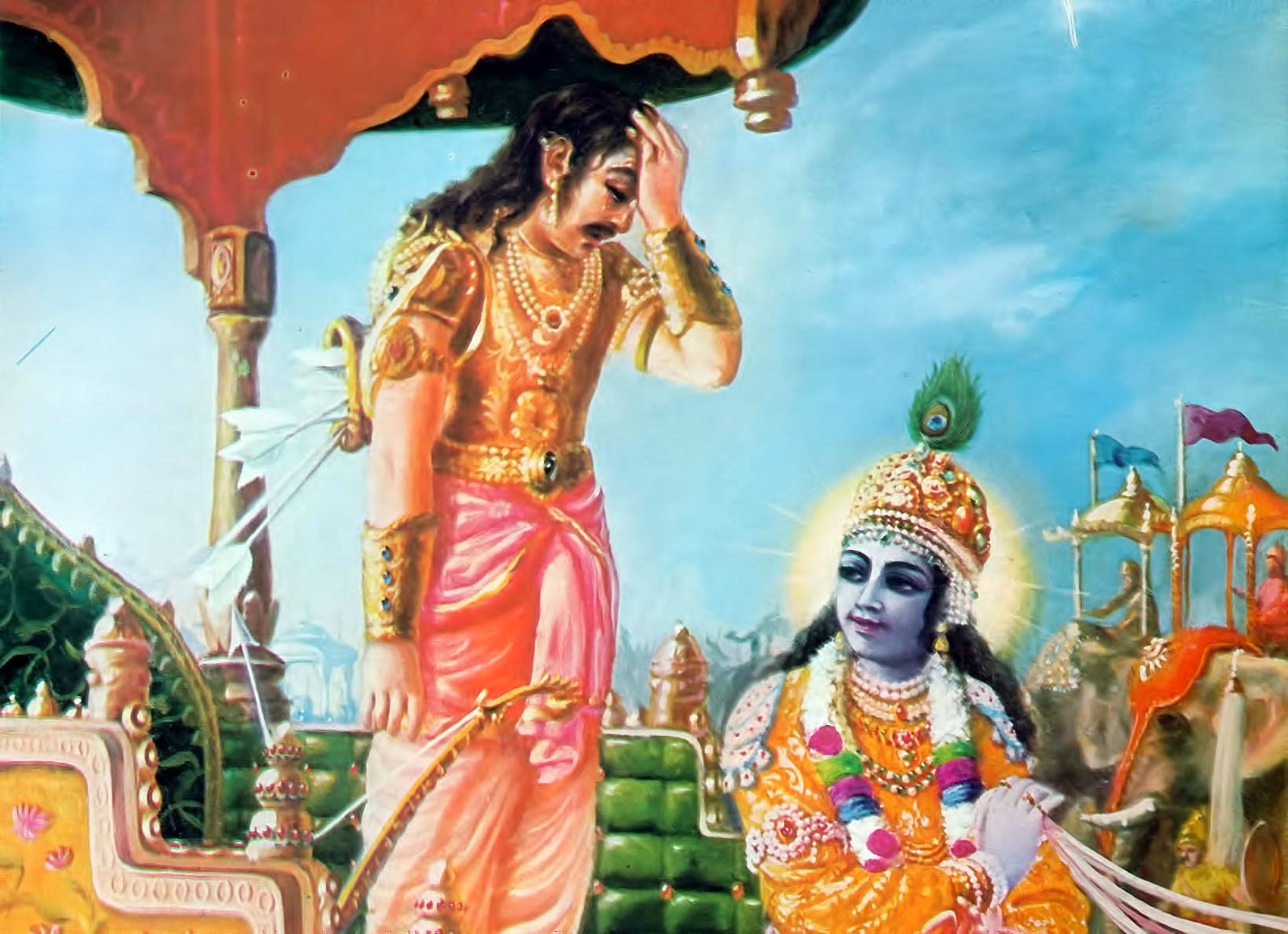
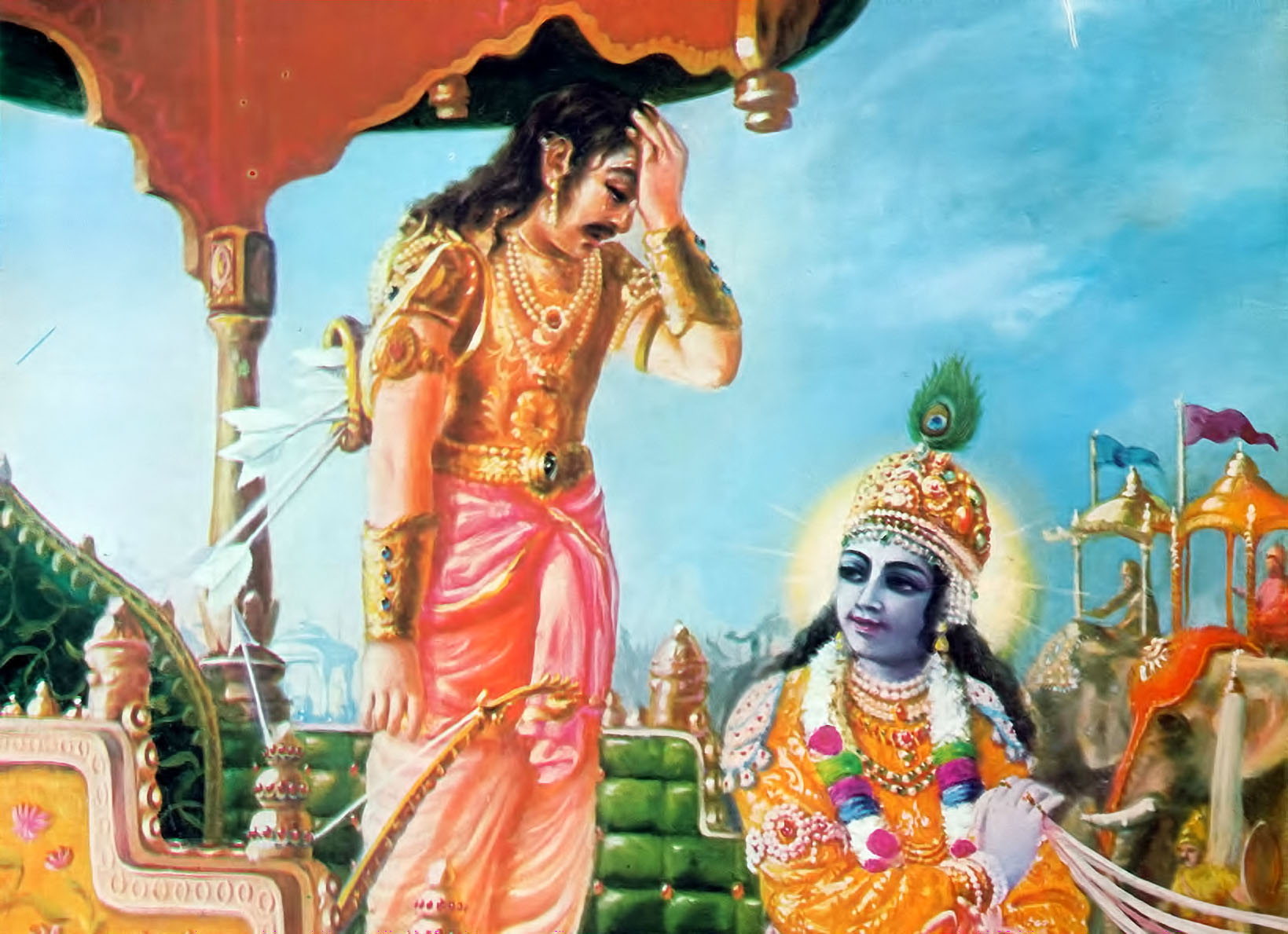
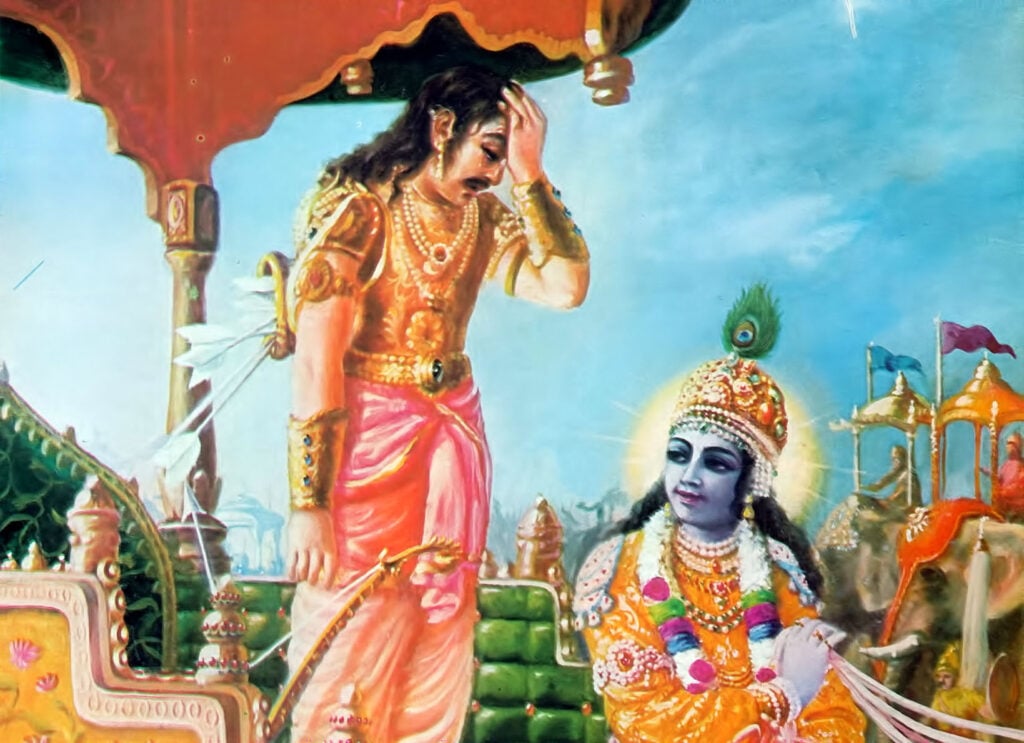
The Bhagavad-gita gives this process its most concentrated expression. Spoken by Sri Krishna to Arjuna on the battlefield of Kurukshetra, it addresses a moment of moral crisis rather than a calm academic setting. Arjuna is not merely confused in theory; he is overwhelmed by grief, family duty, political responsibility, social consequence, and the fear of acting wrongly. This context makes the Gita enduringly relevant because human beings often confront truth most intensely when life becomes difficult, ambiguous, and emotionally charged.
Krishna’s teaching does not dismiss Arjuna’s anguish. Instead, it expands Arjuna’s field of vision. The immediate conflict is placed within a larger understanding of the self, karma, dharma, divine order, and the eternal nature of the soul. The Gita therefore does not offer escapism; it offers spiritual clarity within action. This is one reason the text remains central to Hindu philosophy, bhakti yoga, and broader dharmic reflection.
The text teaches that ignorance is not merely the absence of information. It is a condition in which the eternal self is mistaken for the temporary body, the mind is mistaken for the whole person, and the world is seen as separate from divine purpose. Bhagavad-gita 5.16 compares knowledge to the sun that reveals everything when ignorance is destroyed. This image captures a profound epistemological claim: true knowledge does not merely add facts; it illuminates the field in which all facts are understood.
The traditional phrase “sastra-caksu” expresses this disciplined spiritual vision. To see through scripture is not to reject perception or reason, but to train them. Just as a scientific instrument extends ordinary sight, shastra extends moral and metaphysical perception. It enables the seeker to recognize patterns that the untrained mind easily misses: the impermanence of material arrangements, the continuity of the soul, the consequences of action, and the presence of divine intelligence within the cosmos.
In Vaishnava theology, the ultimate source and controller of reality is Bhagavan Sri Krishna, described in the phrase “Ishwara parama Krishna.” This does not reduce the divine to a tribal or sectarian possession. Rather, it presents Krishna as the all-cognizant, all-pervading Supreme Person, the origin of spiritual and material energies. The Gita’s theological vision is personal, cosmic, and relational: the Absolute is not an impersonal void but the source of consciousness, love, beauty, order, and purpose.
Krishna’s declaration that He is to be known through all the Vedas is preserved in the phrase “vedais ca sarvair aham eva vedyo.” This statement places the Bhagavad-gita within the wider Vedic tradition while also presenting it as a concise theological synthesis. The Gita gathers the concerns of the Upanishads, Sankhya, Yoga, Vedanta, karma, jnana, dharma, and devotion into a practical path of God-realisation. Its teaching is therefore both metaphysical and deeply personal.
Central to this vision is the identity of the living being as an eternal soul. The self is not manufactured by matter, nor extinguished by bodily death. The jiva is described as a part and parcel of the Supreme, eternally connected to Krishna. This doctrine carries ethical consequences. If all beings are spiritual in essence, then exploitation, arrogance, cruelty, and indifference become signs of ignorance. Spiritual knowledge must therefore mature into compassion, humility, and responsibility.
The Gita also explains existence as the interplay of divine energies. Krishna states, “I am the source of all spiritual and material worlds. Everything emanates from Me” and “I am the beginning, the middle and the end of all beings” B.g.10.8/20. These statements do not encourage passivity. They establish a sacred ontology in which the world is neither independent of God nor meaningless. Matter, life, intelligence, beauty, memory, courage, and moral aspiration are all understood as dependent upon the Supreme source.
This theology reaches a powerful expression in the tenth chapter of the Bhagavad-gita, where Krishna describes His vibhutis, or divine manifestations. The text points to the splendor within creation: brilliance, strength, order, majesty, creativity, and moral excellence. Krishna declares, “I will tell you of My splendorous manifestations” and “Know that all opulent, beautiful and glorious creations spring from but a spark of My splendor.” The implication is that the world can become a field of remembrance when viewed with purified intelligence.
This is the foundation of the vision of unity. Unity does not mean that all distinctions disappear. The Gita does not erase difference between the soul and God, matter and spirit, duty and negligence, or devotion and selfishness. Rather, it teaches that all genuine diversity exists within a larger divine order. The many forms of life, the many capacities of human beings, and the many paths of sincere dharmic practice can be honored when they are understood in relation to the Supreme source.
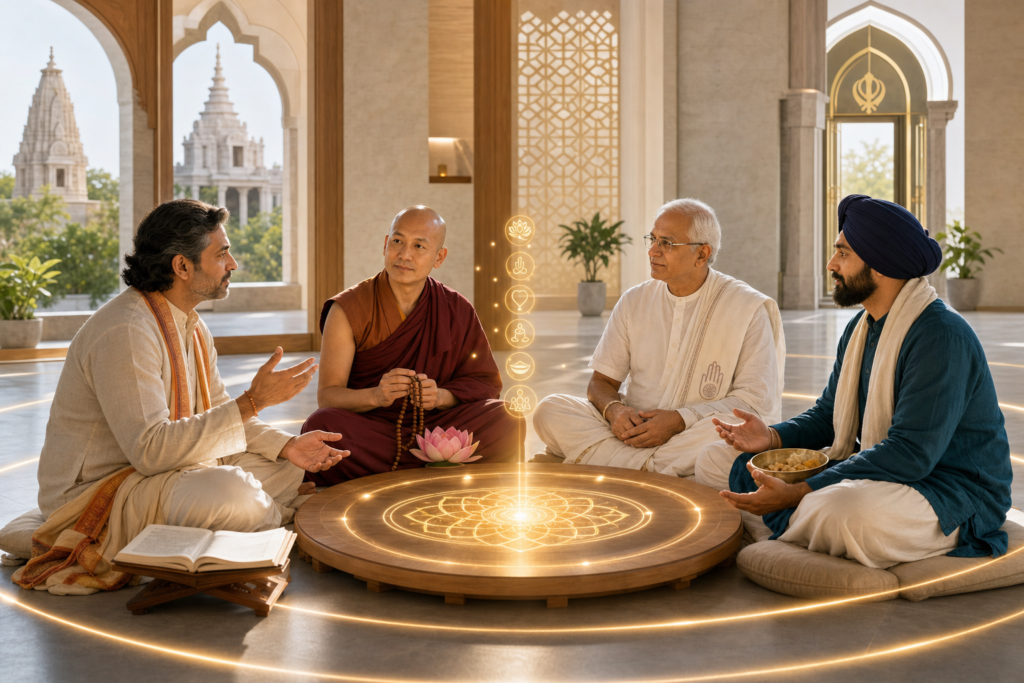
This insight is particularly meaningful for the unity of dharmic traditions. Hinduism, Buddhism, Jainism, and Sikhism differ in metaphysical language, ritual structure, institutional history, and theological emphasis. Yet they share serious concerns with liberation, disciplined conduct, self-mastery, compassion, karma, truthfulness, non-possessiveness, meditation, and the transformation of consciousness. A mature dharmic outlook does not flatten these traditions into sameness. It recognizes their distinct integrity while encouraging mutual respect, dialogue, and shared ethical responsibility.
The Vaishnava vision of unity can therefore contribute to a wider culture of dharmic harmony. When everything is understood as belonging to the Divine, sectarian pride loses its spiritual legitimacy. A temple, a scripture, a mantra, a pilgrimage, a teacher, or a practice should deepen reverence rather than produce contempt. The more refined the devotion, the less room there is for hostility toward sincere seekers walking other dharmic paths.
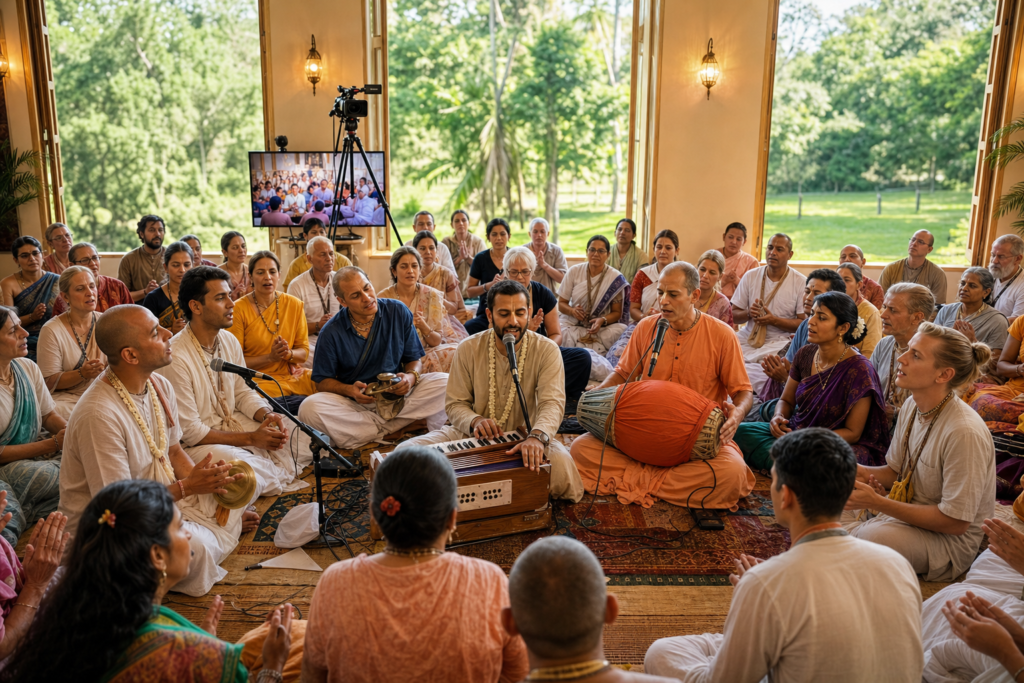
The practical expression of this insight is bhakti-yoga. Bhakti is not sentimentalism. It is disciplined love expressed through hearing, chanting, remembering, serving, worshiping, praying, surrendering, friendship with the Lord, and offering one’s whole being in devotion. The traditional nine-fold process of bhakti-yoga trains the senses, mind, emotions, and intellect so that daily life becomes centered on divine remembrance rather than restless consumption.
Bhagavad-gita 9.27 gives this discipline a remarkably comprehensive form: “Whatever you do, whatever you eat, whatever you offer or give away, and whatever austerities you perform – do that” as an offering to Me.” This instruction transforms spirituality from an isolated ritual into an integrated way of life. Work, food, charity, restraint, speech, study, family responsibility, and social conduct can all become offerings when performed with purified intention.
This teaching carries deep psychological significance. Human beings often experience fragmentation: professional life separated from moral life, ritual separated from conduct, knowledge separated from compassion, and private aspiration separated from public behavior. The Gita’s vision restores coherence. It invites the practitioner to live as a whole person, aligning thought, speech, action, and aspiration with the pursuit of truth.
In ordinary experience, this may appear in simple but transformative ways. A meal becomes prasadam when received with gratitude. Speech becomes service when it avoids cruelty and falsehood. Study becomes devotion when it produces humility. Work becomes yoga when it is performed responsibly without possessive ego. These examples show that bhakti-yoga is not confined to a monastery or temple. It is a method for sanctifying the conditions of daily life.
Krishna consciousness, in this sense, is the revival of the soul’s original orientation toward the Supreme. It is not an artificial identity imposed from outside, but an awakening of the living being’s deepest nature. The Gita teaches that this awakening depends upon divine mercy and sincere practice. Krishna states, “To those who are constantly devoted to serving Me with love, I give the understanding by which they can come to Me” B.g.10.10.
This verse is important because it connects love with understanding. Spiritual intelligence is not merely analytical; it is relational. The devotee comes to know Krishna through service, remembrance, surrender, and grace. This does not mean reason is abandoned. Rather, reason is purified by devotion and directed toward its highest object. Knowledge without devotion may become dry, while devotion without knowledge may become unstable. The Gita harmonizes both.
The culmination of this path is described in Bhagavad-gita 6.29-30: “A true yogi observes Me in all beings and also sees every being in Me. Indeed, the self-realized person sees Me” everywhere. For one who sees Me everywhere and sees everything in Me, I am never lost to him, nor is he ever lost to Me.” This is among the Gita’s most profound statements on spiritual perception. The self-realized person does not merely affirm unity as an idea; such a person perceives divine presence throughout existence.
This vision does not make the world morally indistinct. Seeing Krishna everywhere does not mean approving every action. The Gita repeatedly distinguishes dharma from adharma, wisdom from delusion, and selfless action from ego-driven desire. The vision of unity is therefore not moral relativism. It is the ability to recognize the divine ground of existence while still acting with discrimination, responsibility, and courage.
Arjuna’s example is crucial here. His spiritual realization does not lead him to abandon duty in the name of vague peace. Instead, he learns to act without selfish attachment, guided by Krishna’s instruction. This makes the Gita especially relevant for modern ethical life, where individuals frequently face conflicts between emotion, obligation, justice, family, profession, and conscience. The text teaches that clarity arises when action is aligned with dharma and offered to the Divine.
The unity envisioned in the Gita also has social implications. A society shaped by this wisdom would not measure worth solely by wealth, power, consumption, or external status. It would value self-control, truthfulness, compassion, service, reverence for knowledge, and respect for spiritual diversity. Such values are not merely devotional ornaments; they are civilizational necessities. Without them, community life becomes vulnerable to pride, rivalry, exploitation, and spiritual forgetfulness.
The dharmic traditions offer many resources for this civilizational renewal. Hindu bhakti emphasizes loving surrender and divine remembrance. Buddhist traditions cultivate insight into suffering, impermanence, and compassion. Jain philosophy gives extraordinary attention to ahimsa, aparigraha, and disciplined restraint. Sikh teachings stress devotion, seva, courage, remembrance of the Divine Name, and equality before the One. Their differences remain real, yet their ethical and spiritual concerns can enrich a shared culture of responsibility.
From the standpoint of Sanatana Dharma, unity is strongest when rooted in truth rather than convenience. A superficial unity avoids serious questions; a mature unity permits respectful inquiry, honest difference, and common service. The Bhagavad-gita supports such maturity by teaching that the soul’s dignity comes from its relation to the Supreme, not from sectarian victory. This perspective can soften communal suspicion and deepen mutual reverence among dharmic communities.
The emotional force of this teaching lies in its promise that human life need not remain trapped in fragmentation. The restless mind can be trained. The burden of ego can be lightened. The fear of death can be addressed through knowledge of the eternal self. The loneliness of material existence can be healed through loving relation with Krishna. The apparent disorder of life can be understood within a larger divine arrangement.
At the same time, the Gita does not romanticize spiritual life. Surrender requires discipline. Hearing and chanting require attention. Ethical conduct requires restraint. Service requires humility. The transformation of consciousness is gradual because the habits of ignorance are deeply rooted. Yet the path remains open because divine grace meets sincere effort. This balance of effort and mercy is one of the most practical features of bhakti-yoga.
The original essay’s emphasis on pure devotion points toward the heart of Vaishnava spirituality: the soul’s enduring bond of love with the Supreme Lord. This love is not temporary emotion. It is the soul’s constitutional relationship, awakened through practice and perfected through grace. When the devotee becomes absorbed in Krishna’s names, qualities, forms, pastimes, and teachings, consciousness becomes purified and increasingly capable of perceiving divine beauty.
Such perception is described as seeing the Lord within and without. Internally, the practitioner recognizes the guiding presence of Paramatma, conscience, remembrance, and grace. Externally, the practitioner sees the world as sustained by divine energy and filled with opportunities for service. The same world that once appeared as an arena of competition begins to appear as a sacred field of responsibility.
This is why the vision of unity is not passive contemplation. It changes how a person treats others, how resources are used, how speech is disciplined, how knowledge is honored, and how communities are built. If everything belongs to God, then nothing should be abused. If all beings are connected to the Supreme, then no person should be reduced to a tool of selfish desire. If life is meant for self-realization, then education must include moral and spiritual formation.
In contemporary life, where speed, distraction, and identity conflict often dominate public culture, the Bhagavad-gita’s teaching offers a steadying alternative. It invites the seeker to move from reaction to reflection, from possession to offering, from anxiety to trust, and from division to spiritually grounded unity. Its wisdom remains technically sophisticated because it analyzes consciousness, action, causality, duty, ontology, and devotion. It remains personally powerful because it speaks to fear, grief, love, responsibility, and hope.
The highest potential of human life, according to this Vaishnava understanding, is not merely moral respectability or intellectual achievement. It is God-realisation expressed through pure devotion. In that state, knowledge, love, and action become harmonized. The soul no longer sees itself as isolated, nor the world as separate from divine purpose. It lives in communion with Krishna and recognizes the sacred interconnectedness of existence.
This enduring bond of pure love is the essence of the vision of unity. It does not deny diversity; it sanctifies it. It does not weaken dharma; it deepens it. It does not demand hostility toward other dharmic paths; it encourages humility, reverence, and shared pursuit of truth. Through the Bhagavad-gita, bhakti-yoga, and the disciplined vision of “sastra-caksu,” the human being is invited to awaken from forgetfulness into divine remembrance. Jai Sri Krishna!
Inspired by this post on Dandavats.







Leave a Reply
You must be logged in to post a comment.