
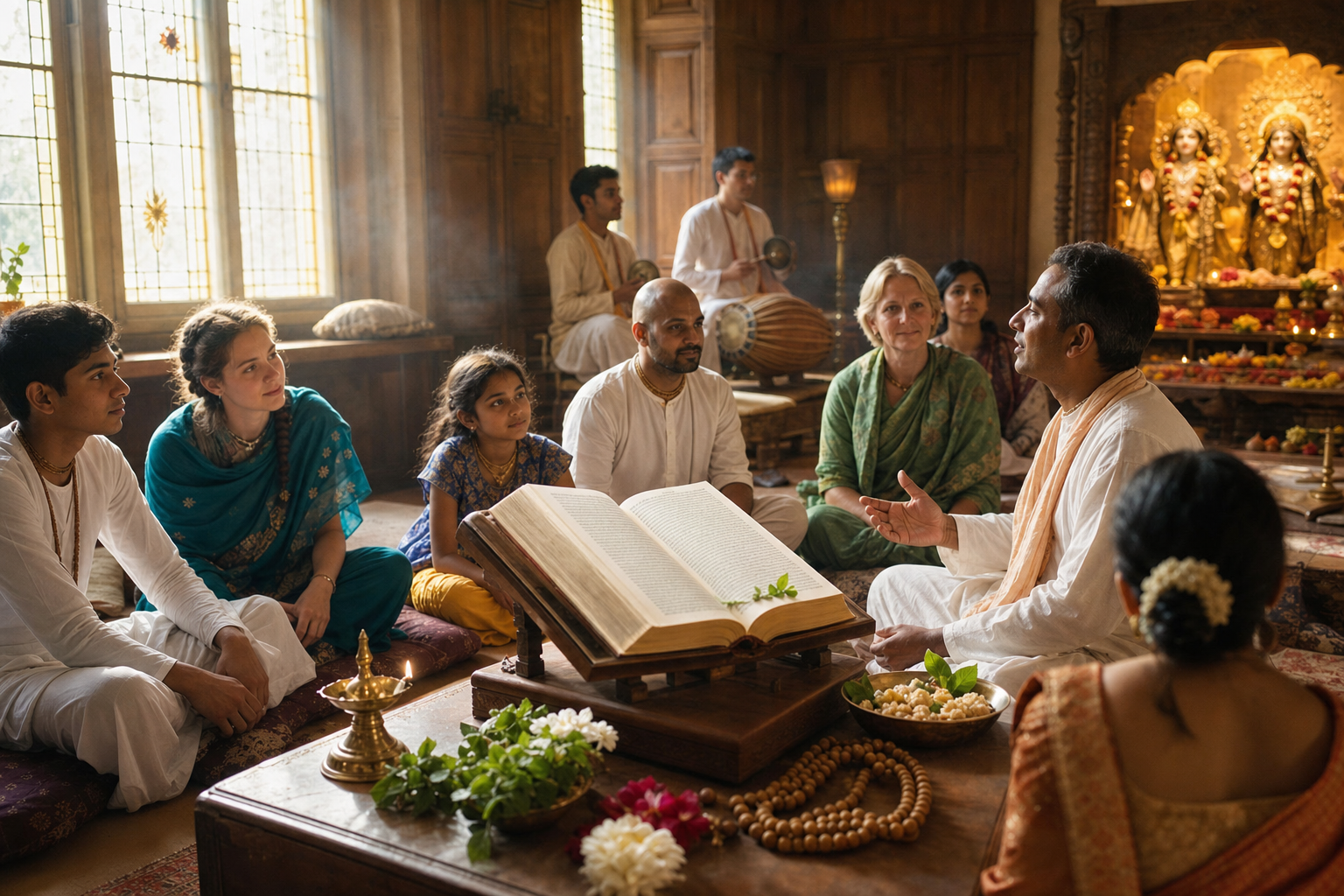
Bhaktivedanta Manor occupies a distinctive place in the religious and cultural life of the Hindu diaspora in the United Kingdom. A class associated with the Manor is therefore more than a lecture in the ordinary sense; it belongs to a living tradition of scriptural reflection, devotional practice, community learning, and ethical formation. Since the available source material contains only a thumbnail image and no transcript, the most accurate approach is to examine the broader context of Bhaktivedanta Manor, the Gaudiya Vaishnava educational model, and the kind of themes such a class typically addresses without inventing specific statements that cannot be verified from the provided source.
Bhaktivedanta Manor is closely associated with ISKCON, the International Society for Krishna Consciousness, founded by A. C. Bhaktivedanta Swami Prabhupada in 1966. The Manor, located near Watford in Hertfordshire, became one of the most important Hare Krishna centres in Europe after George Harrison donated the property in 1973. Its history matters because it shows how a traditional bhakti movement took root in a modern Western setting while retaining its emphasis on Krishna consciousness, Sanskrit scripture, kirtan, prasadam, temple worship, and disciplined spiritual education.
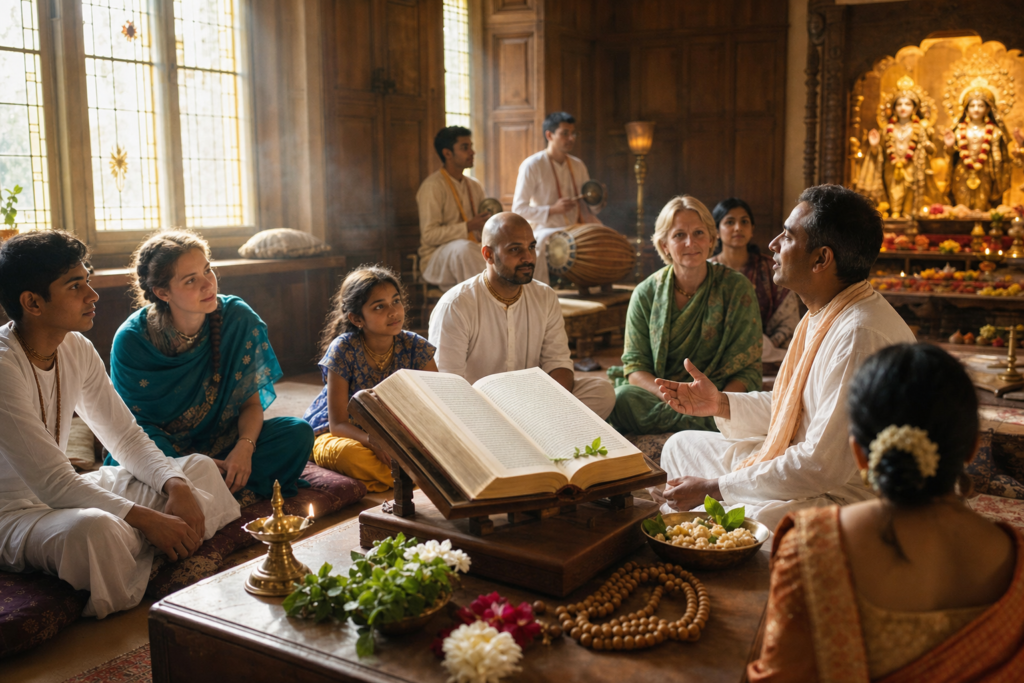
Classes at Bhaktivedanta Manor generally sit within the wider Vaishnava practice of śravaṇa, or attentive hearing. In the bhakti tradition, hearing is not a passive activity. It is a disciplined form of participation through which sacred knowledge is received, questioned, contemplated, and gradually applied. This gives the class format a technical significance: it is not merely religious instruction, but a structured mode of transformation in which philosophy, devotional emotion, ethics, and daily conduct are brought into conversation.
The intellectual foundation of such teaching usually rests on texts such as the Bhagavad Gita, Srimad Bhagavatham, the works of the Gaudiya Vaishnava acharyas, and the commentarial tradition preserved by Srila Prabhupada. These sources do not present spirituality as an escape from life. They address agency, duty, attachment, suffering, leadership, self-control, devotion, and the relationship between the individual self and the Supreme. In this sense, a Manor class often becomes a meeting point between ancient Hindu scriptures and contemporary problems faced by families, students, professionals, and seekers.
The central theological idea is bhakti, loving devotional service to Krishna. Bhakti is sometimes misunderstood as emotion alone, but the tradition treats it as a rigorous discipline involving the body, speech, mind, senses, and social conduct. Chanting, study, worship, seva, vegetarian discipline, cow protection, and community service are not separate compartments. They form an integrated spiritual ecology. The Manor’s setting, with temple worship, education, farm life, and community festivals, makes this integration visible in a way that a purely classroom-based model cannot.
A technically careful reading of Krishna consciousness must also recognize its philosophical structure. Gaudiya Vaishnavism speaks of the jiva, the individual conscious self, as distinct from matter yet eternally related to Krishna. The problem of human life is not simply ignorance in an academic sense, but misidentification: the self mistakes temporary roles, possessions, and bodily designations for ultimate identity. The educational task of a class is therefore to reorient perception, helping the listener distinguish the temporary from the eternal and the ego-driven from the devotional.
This approach has practical consequences. A listener is not asked only to accept abstract doctrine, but to examine habits: how speech is used, how food is prepared, how relationships are handled, how anger is managed, how ambition is purified, and how time is spent. The deepest value of a Bhaktivedanta Manor class lies in this movement from concept to conduct. It encourages a form of self-audit that many people find uncomfortable at first, yet deeply clarifying when approached with humility.
The Manor’s public role also makes its classes culturally significant. For many British Hindus and members of the wider Indian diaspora, Bhaktivedanta Manor is not merely a temple visited during Janmashtami or other festivals. It is a place where inherited traditions become intelligible to younger generations growing up in plural societies. A class can help translate ritual into meaning, Sanskrit terms into lived ethics, and inherited devotion into conscious commitment.
This is especially important in modern Hindu education, where many families preserve festivals and customs but may not always have the vocabulary to explain them. The class format allows questions to be asked without severing reverence from inquiry. A child may ask why Krishna is worshipped, why prasadam is sacred, why mantra matters, or why dharma cannot be reduced to social respectability. A serious teacher does not dismiss such questions; the tradition becomes stronger when its reasoning is presented clearly.
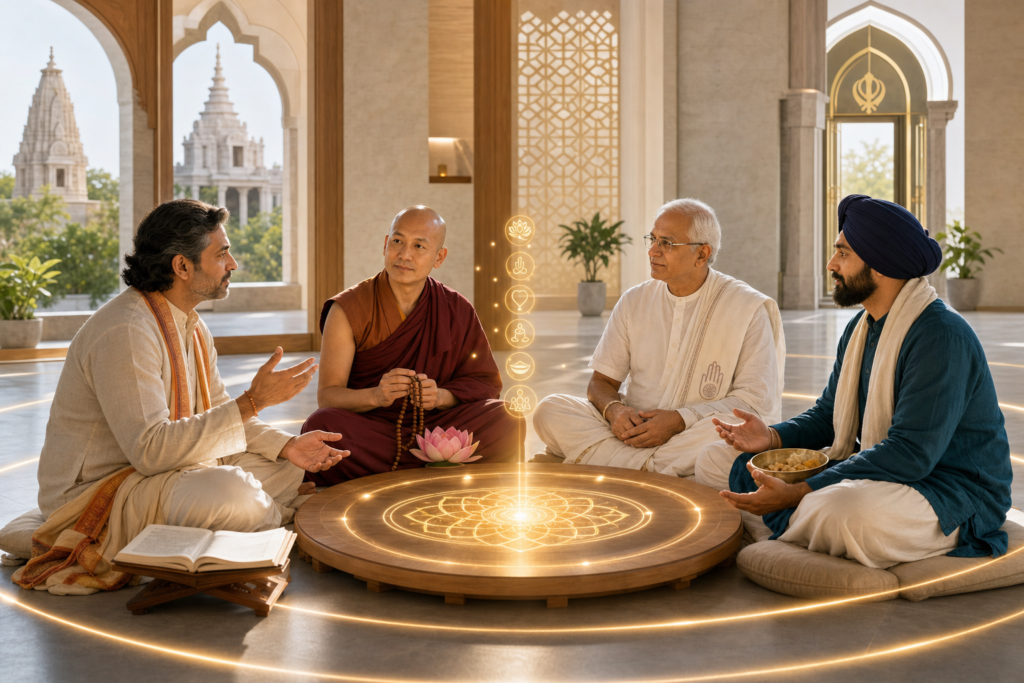
The dharmic value of such learning extends beyond one sampradaya. While Bhaktivedanta Manor is rooted in Gaudiya Vaishnavism, its educational contribution can be understood within the wider family of Hindu, Buddhist, Jain, and Sikh traditions that honour discipline, compassion, self-restraint, service, truthfulness, and liberation from ego-centred living. Unity among Dharmic traditions does not require erasing differences. It requires recognizing that sincere paths can share ethical seriousness and spiritual depth while preserving their own metaphysical language and devotional forms.
In that wider dharmic context, a Vaishnava class can be read as an invitation to refine consciousness rather than as a sectarian boundary marker. The emphasis on chanting the holy names, serving the community, honouring prasadam, and studying scripture offers one powerful path among the many disciplined traditions of Sanatana Dharma. When presented responsibly, this strengthens inter-dharmic respect and helps avoid the narrowness that reduces spirituality to competition between communities.
The emotional force of Bhaktivedanta Manor comes from its combination of sacred memory and active practice. The association with George Harrison is often remembered because it symbolizes a moment when Indian spirituality entered Western public culture in a visible and lasting way. Yet the Manor’s deeper significance is not celebrity history. It is the continuity of daily worship, scriptural teaching, kirtan, festivals, food distribution, and community service across decades.
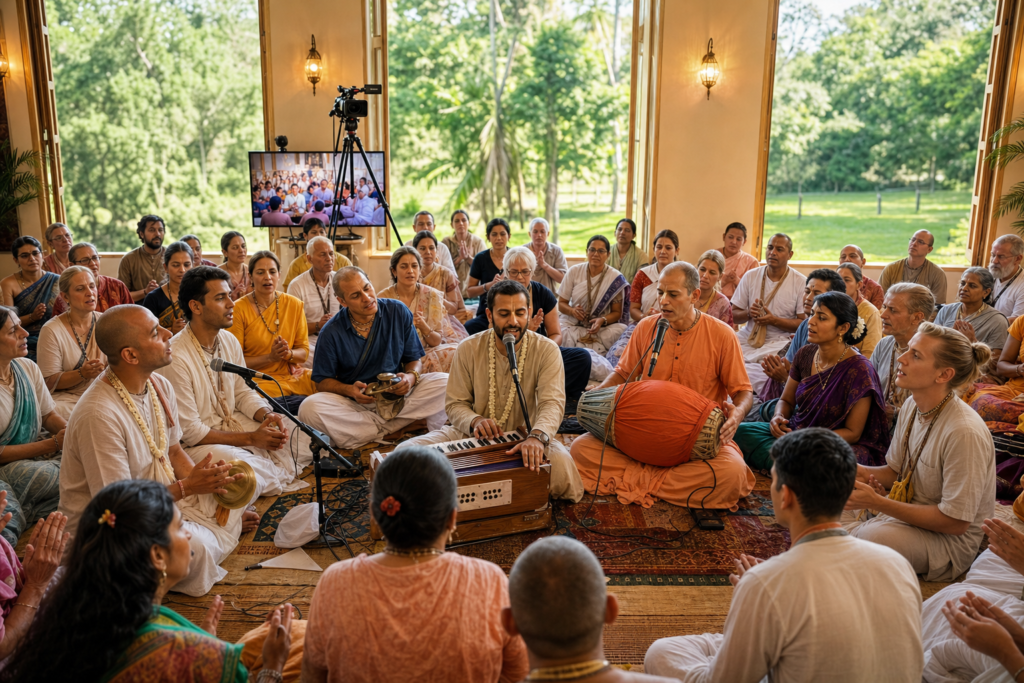
For visitors, the first experience of such a place can be sensory before it becomes philosophical. The sound of kirtan, the sight of deities, the rhythm of temple life, the fragrance of incense, and the experience of prasadam often create an immediate emotional connection. A class then gives language to that experience. It explains why beauty, sound, food, and community are not decorative additions to bhakti, but instruments through which consciousness can be redirected toward the divine.
From an academic perspective, the Manor also demonstrates how religious traditions adapt without dissolving. It functions in a British legal, cultural, and educational environment while maintaining practices rooted in Indian temple culture. This adaptation is not simply modernization. It is a negotiation between continuity and context: preserving deity worship, Sanskritic learning, and Vaishnava discipline while making the tradition accessible to people shaped by contemporary schooling, media, professional life, and interfaith environments.
The class as a genre is central to that negotiation. Unlike a festival, which may attract large crowds through celebration, a class asks for attention and reflection. It slows the mind. It places the listener before a text, a teacher, and a question of personal responsibility. In a culture of constant distraction, this alone is a significant spiritual intervention. The listener is invited to move from consumption to contemplation.
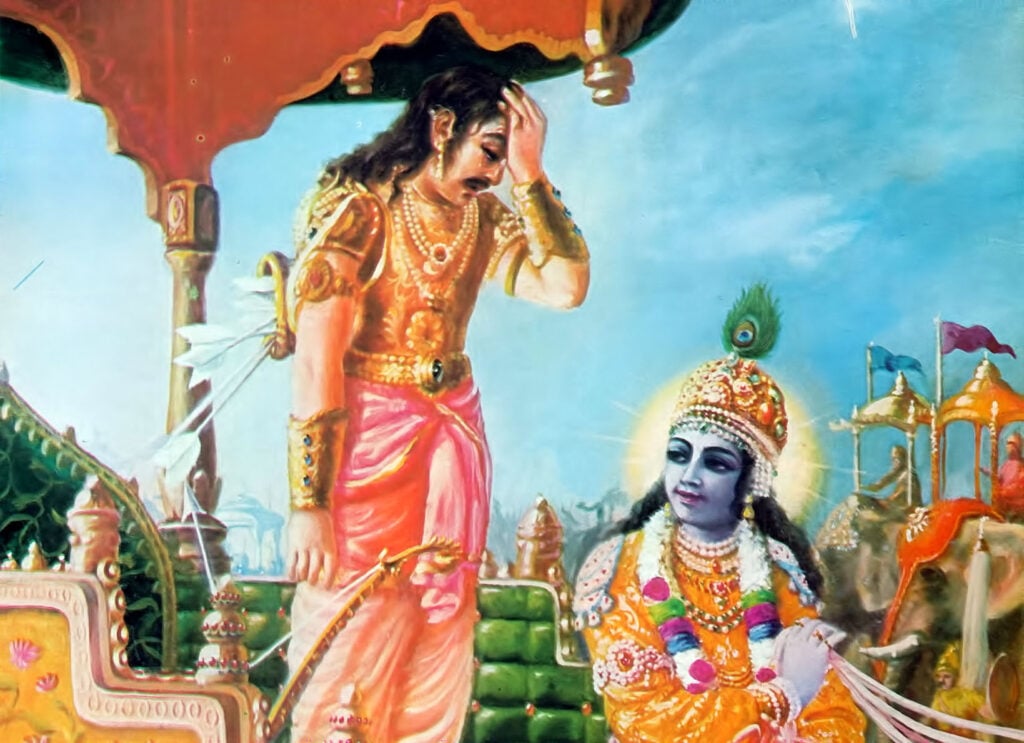
Bhagavad Gita study is especially relevant in this setting because the Gita addresses action in the world rather than withdrawal from responsibility. Arjuna’s crisis is not solved by sentimentality, denial, or escape. It is resolved through a disciplined understanding of the self, duty, devotion, and surrender to Krishna. A Manor class that draws from this framework can speak directly to modern anxieties about career, family duty, moral confusion, and the pressure to define identity through external success.
Srimad Bhagavatham adds another dimension by presenting theology through narrative, cosmology, ethics, and devotional exemplars. Its stories are not merely mythological entertainment. They function as philosophical case studies in pride, surrender, leadership, devotion, envy, compassion, and divine grace. A skilled class can draw out these layers without flattening the text into either literalism alone or metaphor alone. The tradition’s richness lies in allowing narrative, ritual, and philosophy to illuminate one another.
Another important feature of Bhaktivedanta Manor’s educational culture is seva, or service. In many spiritual settings, knowledge can become a form of prestige. Bhakti challenges that tendency by measuring learning through humility and service. The practical question after a class is not only what was understood, but how that understanding changes behaviour. Does it make a person more truthful, more compassionate, more disciplined, more grateful, and more willing to serve without constant demand for recognition?
This makes the Manor’s classes relevant even for those who are not formal members of ISKCON. The themes of attention, gratitude, restraint, devotion, and service speak to a broader human need. Modern life often produces abundance without inner steadiness and connectivity without genuine community. A dharmic class reminds listeners that the quality of consciousness matters as much as external achievement. It asks whether success without self-mastery can truly be called success.
The most responsible conclusion is that a Bhaktivedanta Manor class should be understood as part of a larger ecosystem of Krishna consciousness, Hindu education, and diaspora cultural preservation. Without a transcript, no specific lecture claims should be attributed to the class shown in the thumbnail. Yet the institutional and philosophical context is clear: Bhaktivedanta Manor remains a major centre for bhakti, scripture, kirtan, community learning, and the public practice of Hindu spirituality in the United Kingdom.
Its enduring lesson is that spiritual education becomes powerful when it joins knowledge with practice. Bhakti is not merely explained; it is sung, served, cooked, offered, studied, questioned, remembered, and lived. In that sense, the class format at Bhaktivedanta Manor represents a continuing effort to make Sanatana Dharma intelligible, disciplined, and emotionally meaningful for contemporary seekers while contributing to a broader unity among dharmic traditions.
Inspired by this post on Dandavats.




Leave a Reply
You must be logged in to post a comment.