
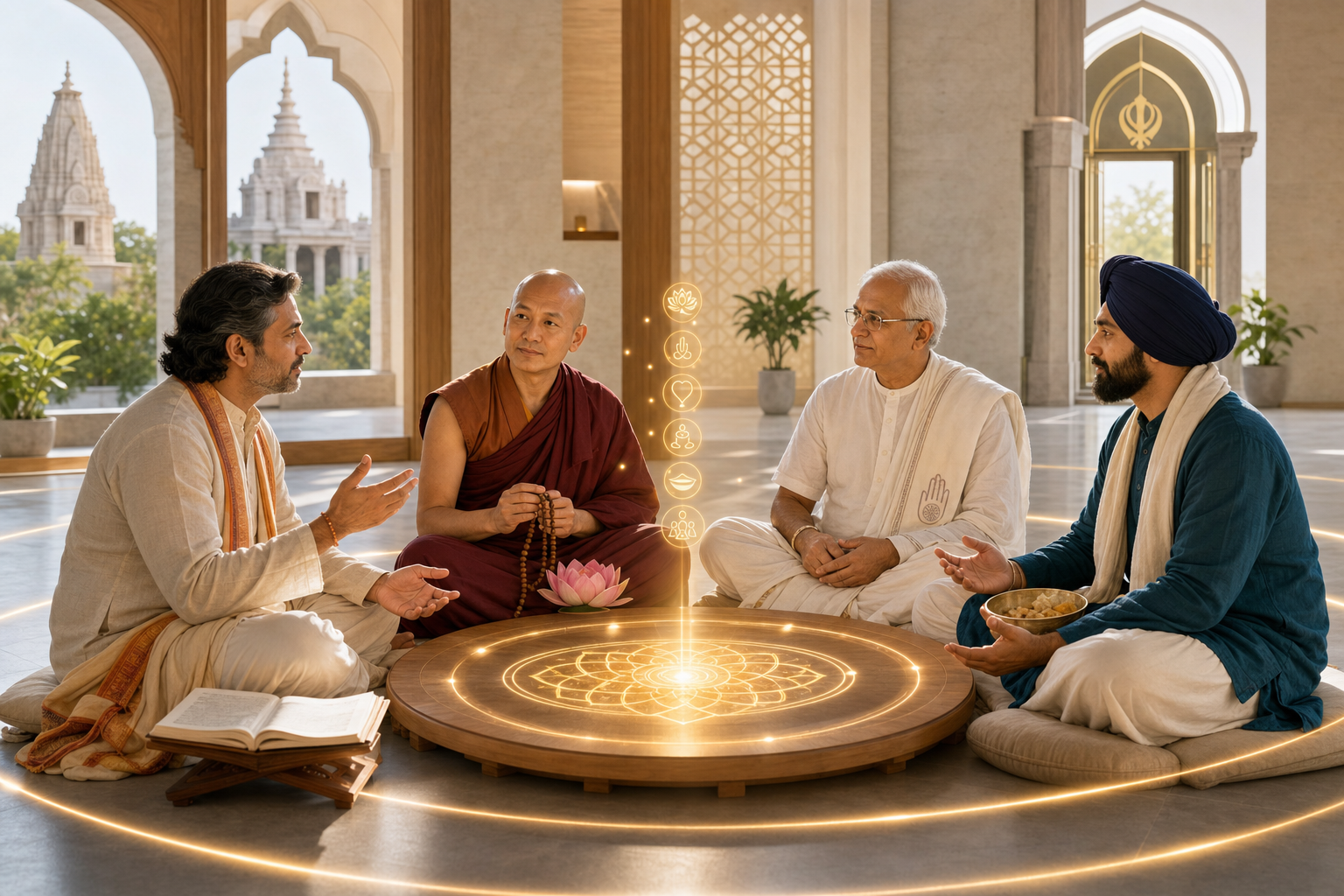
The available source identifies the subject as Respect Seminar, Part 1, and even with minimal source text, the theme invites a serious examination of respect as more than politeness. In a Dharmic context, respect is a disciplined way of seeing the world: it is the ability to recognize dignity in another person, sacredness in diverse practices, and legitimacy in paths that may differ from one’s own. This understanding is essential for Hinduism, Buddhism, Jainism, and Sikhism, because all four traditions place ethical conduct, self-restraint, compassion, truthfulness, and inner refinement at the center of spiritual life.
Respect is often reduced to social etiquette, but in the Dharmic traditions it carries philosophical weight. It is connected to dharma, ahimsa, seva, humility, dialogue, and responsibility. A society that practices respect does not merely avoid insult; it learns how to listen, how to disagree without dehumanizing, and how to preserve sacred traditions without turning them into instruments of division. This distinction matters because contemporary public life frequently confuses disagreement with hostility and conviction with intolerance.
In Hindu thought, respect begins with the recognition that reality may be approached through many valid modes of worship, inquiry, and discipline. The idea of Ishta, the chosen form or path through which a seeker relates to the Divine, offers a powerful vocabulary for pluralism. It does not imply that all practices are identical; rather, it acknowledges that human temperaments, inherited traditions, languages, communities, and stages of spiritual maturity differ. This allows diversity without chaos and conviction without contempt.
Buddhist traditions deepen this discussion through compassion, mindfulness, and the disciplined reduction of ego-centered reactions. Respect, from this perspective, is not passive approval of everything one encounters. It is the practice of meeting others without immediate aggression, projection, or attachment to superiority. The Buddhist emphasis on right speech is especially relevant: speech should be truthful, timely, beneficial, and free from unnecessary harm. Such a framework is urgently needed in families, institutions, media spaces, and religious dialogue.
Jainism contributes one of the most technically refined ethical frameworks for respect through ahimsa and anekantavada. Ahimsa requires sensitivity not only to physical harm but also to the violence created by careless speech, intellectual arrogance, and social humiliation. Anekantavada teaches that reality is complex and that human perspectives are partial. This does not weaken truth; it disciplines the ego that claims total possession of truth. In practice, it creates space for careful listening and more precise disagreement.
Sikh tradition grounds respect in the dignity of all human beings, the remembrance of the Divine, and the ethic of seva. The langar tradition offers a lived social model: people sit together, eat together, and are served without hierarchy. This is not merely charitable activity; it is theological and social teaching enacted through the body. Respect becomes visible when equality is practiced, not only announced. It becomes credible when service crosses boundaries of caste, class, language, and sectarian identity.
A respect seminar, understood through this Dharmic lens, should therefore not be treated as a soft or sentimental topic. It is a rigorous exercise in civilizational ethics. It asks how communities can maintain strong identities while refusing unnecessary hostility. It asks how young people can inherit tradition without contempt for other traditions. It asks how public debate can remain honest without becoming cruel. These questions are not abstract; they shape schools, temples, gurdwaras, monasteries, homes, universities, and digital platforms.
The technical core of respect can be divided into three levels: cognitive respect, verbal respect, and behavioral respect. Cognitive respect concerns how another person is understood internally. Verbal respect concerns the discipline of language, including tone, accuracy, and restraint. Behavioral respect concerns action: fairness, hospitality, protection of sacred spaces, and the refusal to exploit another’s vulnerability. When any one of these levels is missing, respect becomes incomplete. Polite words without fair conduct are hypocrisy; correct conduct without inner humility can become mechanical; inner goodwill without responsible speech may still cause harm.
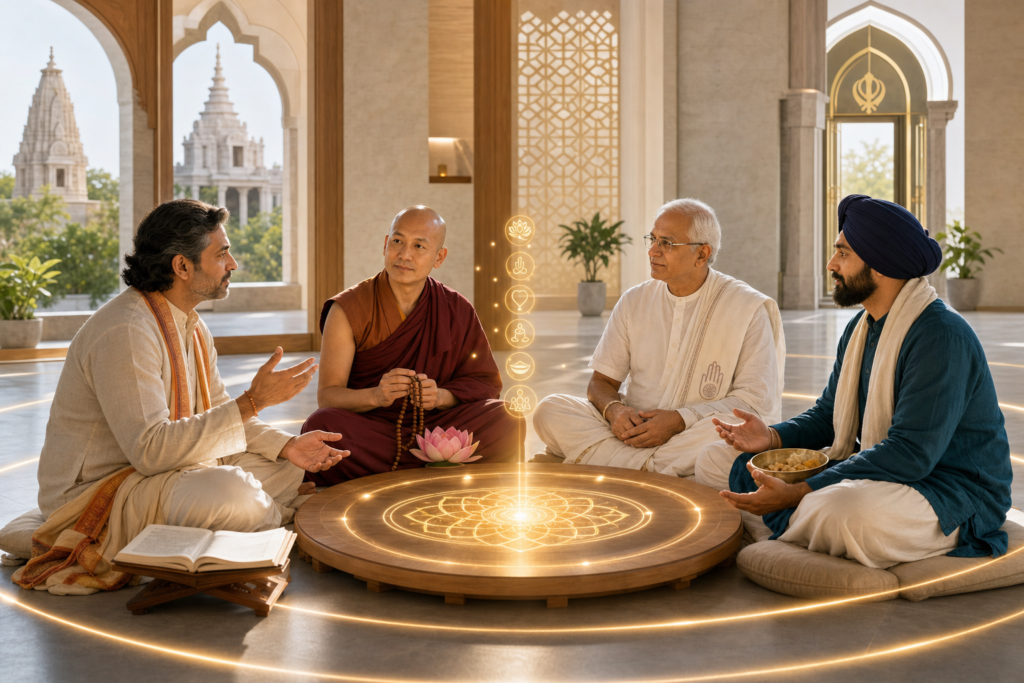
This threefold model is especially useful in interfaith and intra-Dharmic settings. Hindu, Buddhist, Jain, and Sikh communities share many civilizational concerns, yet they also possess distinct doctrines, rituals, histories, and institutional memories. Respect requires acknowledging both unity and difference. Forced sameness weakens serious dialogue, while hostile separation damages shared cultural inheritance. A mature Dharmic approach does not erase difference; it places difference within a wider ethic of reverence, restraint, and mutual protection.
One of the most important insights in this subject is that respect is not the enemy of truth. Some assume that respectful dialogue requires avoiding difficult questions. That is a misunderstanding. Dharmic intellectual traditions have long preserved debate, commentary, refutation, and philosophical disagreement. The difference is that classical debate ideally aims at clarification, not humiliation. Its goal is not to destroy the person but to examine the claim. This distinction is essential for restoring seriousness to public discourse.
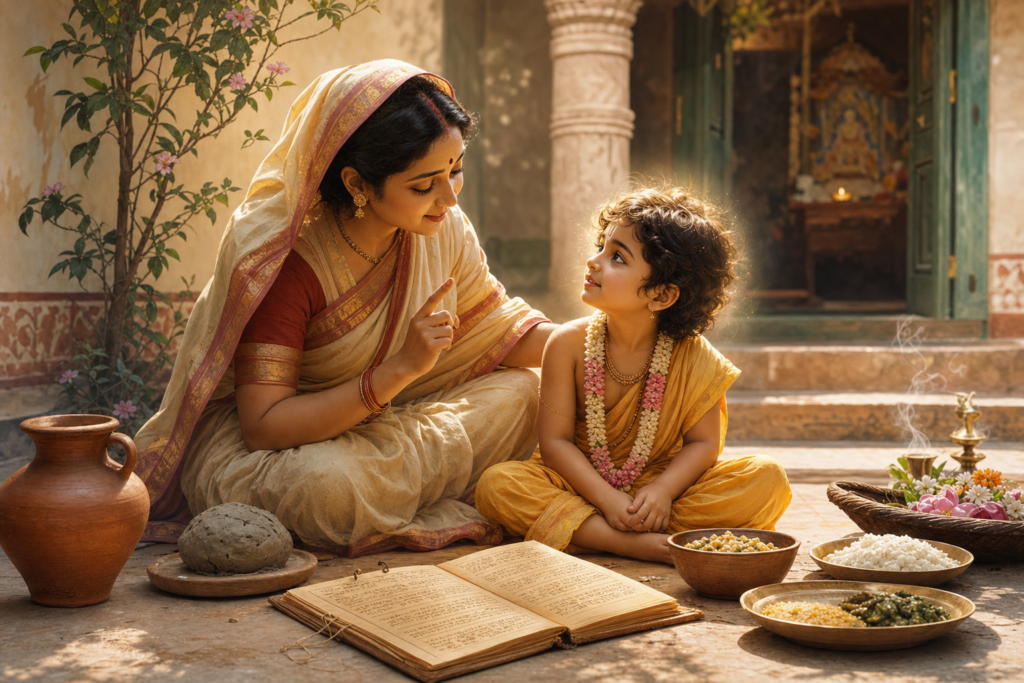
Respect also has an educational dimension. Children and youth do not learn respect only through lectures; they learn it through what adults normalize. If elders speak of other communities with contempt, the next generation absorbs contempt as cultural loyalty. If institutions tolerate mockery of sacred symbols, students learn that derision is intelligence. If teachers model careful listening, fair representation, and disciplined disagreement, young people learn that dignity and critical thinking can coexist. Education, therefore, is not neutral in the formation of respect.
The emotional dimension should not be ignored. Many people carry memories of being dismissed because of their names, rituals, accents, food practices, clothing, caste location, regional identity, or religious commitments. Respect becomes meaningful when it addresses these lived wounds without turning them into permanent resentment. A healthy society allows people to name injury, seek fairness, and still move toward reconciliation. This balance is difficult, but it is central to dharmic ethics, because dignity must be protected without feeding endless hostility.
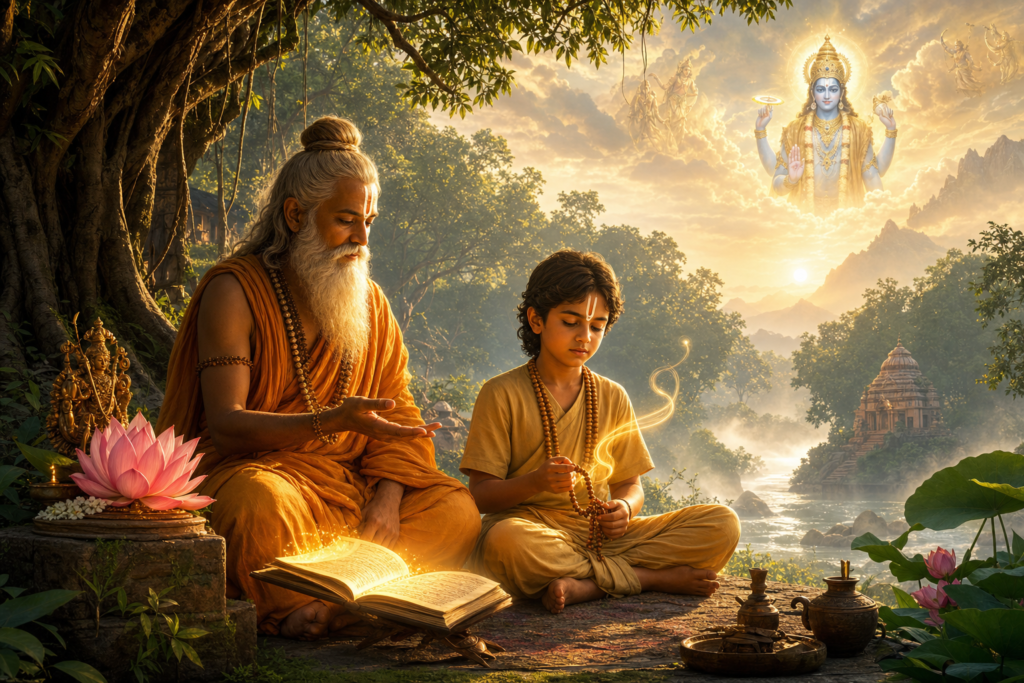
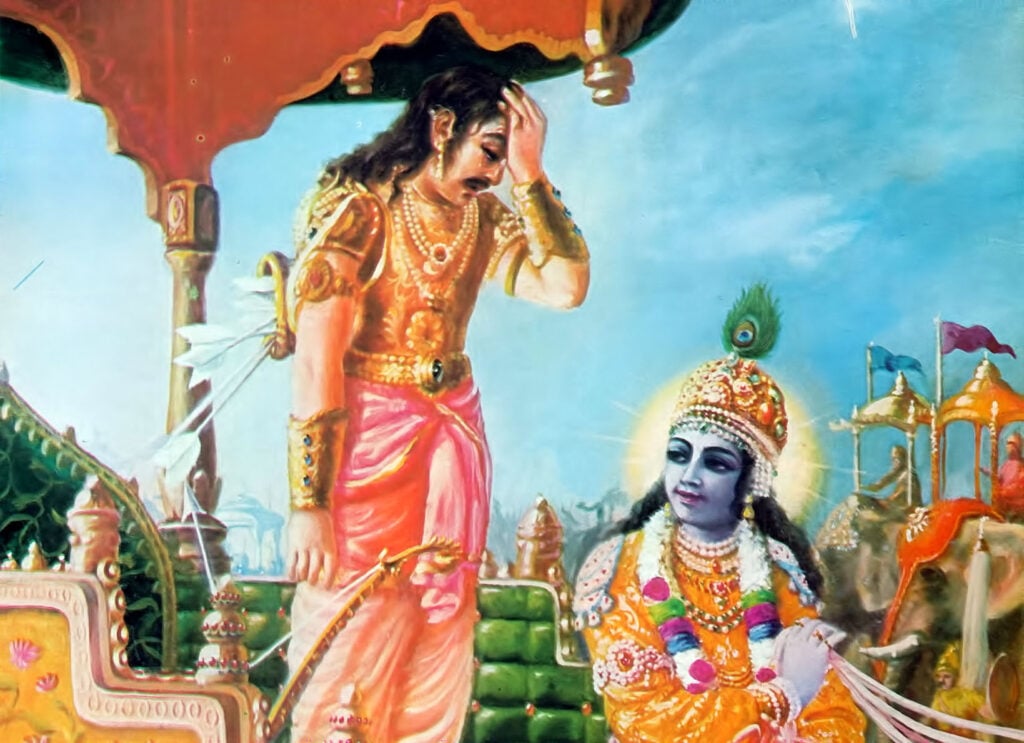
Respect in Dharmic traditions is also inseparable from self-discipline. The person who cannot govern anger, pride, jealousy, or the desire to dominate will eventually fail in respectful conduct. The Bhagavad Gita’s emphasis on steadiness, the Buddhist discipline of mindfulness, the Jain discipline of restraint, and the Sikh discipline of humility all point toward the same practical truth: social harmony begins with inner training. Public respect without self-mastery is fragile.
In contemporary society, digital communication has made this training more urgent. Online platforms reward outrage, speed, sarcasm, and tribal certainty. Respectful discourse requires the opposite: patience, context, verification, and proportion. Before sharing a claim about a community, tradition, or public figure, one must ask whether it is accurate, whether it is necessary, and whether it contributes to understanding. This is not weakness; it is intellectual hygiene. It protects both truth and social trust.
Respect should also be distinguished from appeasement. A respectful person can oppose injustice, challenge falsehood, and defend sacred traditions with firmness. Dharmic ethics does not require surrender before aggression or silence before distortion. It requires that resistance remain proportionate, truthful, and rooted in dharma rather than hatred. This distinction is crucial for communities that face misrepresentation, discrimination, or cultural erasure. Self-respect and respect for others must develop together.
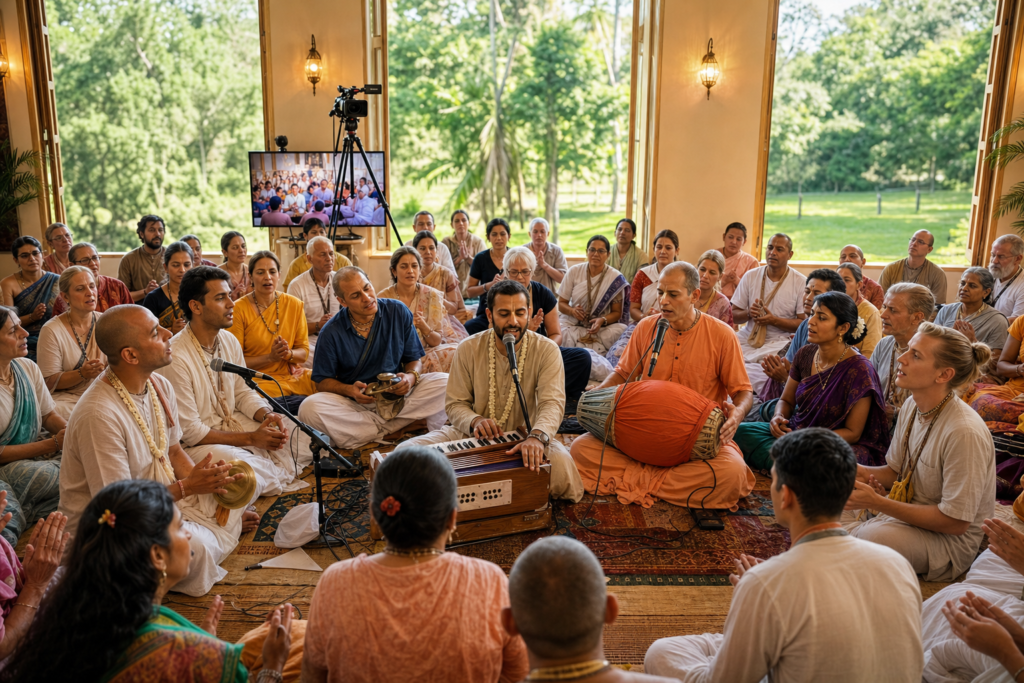
At the community level, respect is expressed through shared spaces and careful conduct. Temples, gurdwaras, monasteries, Jain derasars, schools, cultural centers, and public forums all carry responsibility. They should cultivate environments where visitors are welcomed, sacred norms are explained clearly, and differences are handled with maturity. A community that expects outsiders to show respect must also teach its own members how to represent tradition with accuracy, warmth, and discipline.
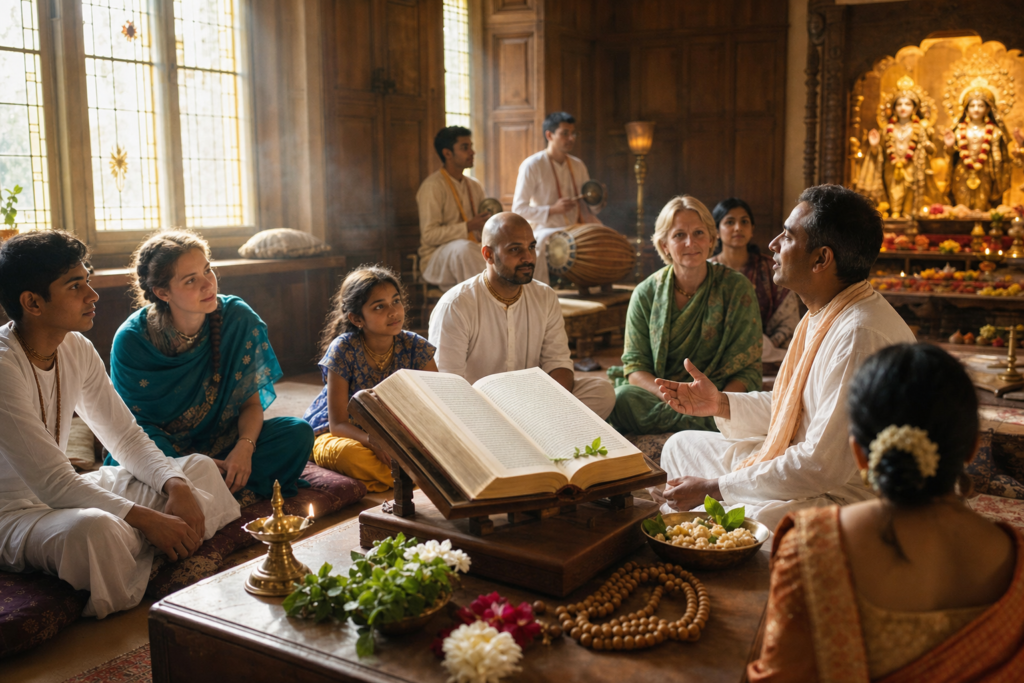
Interfaith respect becomes especially powerful when it moves beyond symbolic gestures. Ceremonial greetings are useful, but they are not enough. Real respect requires learning how another tradition understands the sacred, the human person, suffering, liberation, duty, and moral responsibility. It requires knowing when comparison is helpful and when comparison becomes reduction. It requires resisting the temptation to interpret every tradition through one’s own categories. This carefulness is the foundation of genuine religious pluralism.
Within the Dharmic family itself, respect requires special sensitivity. Hinduism, Buddhism, Jainism, and Sikhism have interacted for centuries through dialogue, debate, shared geography, artistic exchange, pilgrimage networks, ethical vocabulary, and social life. At the same time, each tradition has its own self-understanding. Unity among Dharmic traditions should therefore be built through mutual regard, not absorption. The goal is solidarity without erasure and friendship without theological carelessness.
Respect also has a civic function. Plural societies cannot survive on law alone. Laws can punish violence and discrimination, but they cannot manufacture trust. Trust grows when communities believe that their dignity, places of worship, festivals, histories, and children will not be mocked or targeted. A civic culture of respect reduces polarization because it gives people confidence that disagreement will not become social exclusion. This is why respect is a public virtue, not merely a private preference.
From an academic standpoint, respect should be studied as both an ethical principle and a social technology. It regulates conflict, preserves diversity, reduces humiliation, supports intergenerational learning, and strengthens institutions. It also shapes identity formation. People who are respected are more likely to engage confidently with the wider world; people who are routinely insulted often retreat into defensiveness. Respect, therefore, is not ornamental. It has measurable consequences for social cohesion and cultural continuity.
A mature respect seminar should leave participants with practical disciplines. These include listening before responding, representing another view fairly before criticizing it, avoiding mockery of sacred symbols, distinguishing individuals from entire communities, verifying historical claims, honoring elders without suppressing inquiry, and correcting misinformation without cruelty. These habits are simple to state but difficult to practice. Their difficulty is precisely why they must be taught deliberately.
The most enduring form of respect is rooted in the recognition that every person is more than a label. A Hindu, Buddhist, Jain, Sikh, Muslim, Christian, Jew, atheist, or seeker is not merely a representative of a category but a human being shaped by family, memory, fear, aspiration, devotion, and moral struggle. Dharmic traditions repeatedly remind humanity that conduct reveals inner cultivation. To treat another person with dignity is not to abandon one’s own path; it is to honor the seriousness of spiritual life itself.
Respect, then, is a sacred discipline, a civic necessity, and a practical method for preserving unity amid diversity. It strengthens Hindu Dharma, Buddhist compassion, Jain ahimsa, and Sikh seva by allowing each tradition to stand with integrity while cooperating for the common good. In a time marked by polarization and hurried judgment, the recovery of respect is not optional. It is one of the foundations on which a more truthful, confident, and harmonious society can be built.
Inspired by this post on Dandavats.

Leave a Reply
You must be logged in to post a comment.