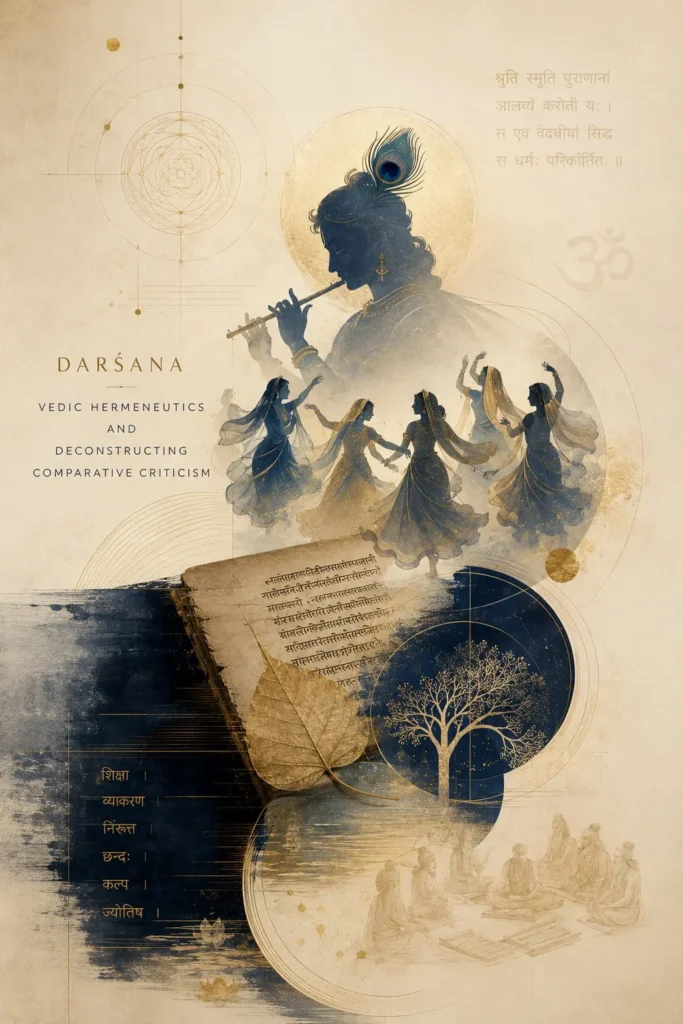
Srimad Bhagavathamalso known as Srimad Krishna Bhagavatam, Bhagavata Navaratna, and Bhagavatha Maharatnais a classical Sanskrit scripture traditionally attributed to Sri Veda Vyasa under the counsel of Deva Rishi Narada. Framed as a dialogue between Shuka and King Parikshit and retold by Suta to sages at Naimisharanya, the Bhagavata Purana integrates bhakti (devotion), jnana (wisdom), and dharma (righteous conduct) into a cohesive theological vision centered on Sri Krishna and the avatars of Vishnu.
Across its twelve Skandhas, this Purana weaves cosmology, ethics, metaphysics, and narrative art into a single, luminous tapestry. Far from being a mere anthology of Hindu stories, it elaborates a mature theology of compassion, humility, and surrender, while offering precise guidance for sadhana and social conduct. Its influence extends across dharmic traditions, resonating with ahimsa in Jainism, karuna in Buddhism, and seva in Sikhism, thereby nurturing shared values and unity.
The following fifteen narratives, selected from the Bhagavata Purana’s most celebrated episodes, present a spectrum of spiritual insightsranging from the power of the divine name to the ethics of rulership and the paradoxes of grace. Each summary notes the Skandha context and highlights practical reflections relevant to contemporary life, enabling readers to bridge scripture and lived experience without sectarian barriers.
1) Vyasa’s despondency and Narada’s instruction (Skandha 1): After compiling the Vedas and Mahabharata, Sri Veda Vyasa experiences a profound dissatisfaction. Deva Rishi Narada diagnoses the cause: an insufficient emphasis on the spotless glories of Krishna. He advises composing Srimad Bhagavatham so that bhakti-rasapure devotional sentimentbecomes accessible to all. The episode inaugurates a literary ideal in which scripture serves compassion by guiding beings toward devotion, ethical clarity, and liberation.
2) Parikshit’s seven-day inquiry into dharma and liberation (Skandha 1): Cursed to die from Takshaka’s bite in seven days, King Parikshit renounces royal comforts and sits on the Ganga’s bank to hear the Bhagavata from Shuka. The narrative models shravana-bhaktiabsorption in divine discourseas a complete spiritual path. It also presents a disciplined approach to mortality: equanimity, inquiry, and surrender. For readers today, it exemplifies how structured listening, contemplation, and ethical resolve can transform crisis into awakening.
3) Kapila’s Sankhya to Devahuti (Skandha 3): The sage Kapila systematically explains prakriti, purusha, and the means to transcend suffering through steady meditation and bhakti. Philosophically rigorous and contemplatively practical, the teaching harmonizes analysis (Sankhya) with devotion, making clear that insight ripens as compassion. Its emphasis on mental purity, one-pointedness, and selfless action echoes across dharmic traditions, offering a shared grammar for inner transformation.
4) Dhruva’s unwavering tapas and the pole star (Skandha 4): Humiliated in childhood, Dhruva resolves to seek the highest status through austere practice. Vishnu appears, grants realization, and redirects ambition into devotion; Dhruva attains the dhruva-pada, the steadfast realm symbolized by the pole star. The story reframes wounded pride as a doorway to grace when guided by humility, discipline, and remembrance of Krishna. It remains a template for converting personal adversity into spiritual steadiness.
5) Prithu, the archetype of rajadharma (Skandha 4): King Prithu, an empowered manifestation, stabilizes the earth (Prithvi) and ensures prosperity through just governance. By ‘milking’ the earth of its resources responsibly, he models ecological restraint, distributive justice, and servant leadership. For contemporary civic life, Prithu offers a Purana-based standard for policy rooted in dharma: prosperity with restraint, power with accountability, and abundance with reverence for nature.
6) Rishabhadeva’s path of renunciation (Skandha 5): Rishabhadeva embodies royal responsibility and later radical detachment, teaching that inner freedom requires mastery over the senses and ego. The narrative foregrounds non-violence, truthfulness, and austerityvirtues honored across Hinduism, Buddhism, Jainism, and Sikhism. It demonstrates that sovereignty over the mind surpasses sovereignty over kingdoms, placing spiritual integrity above worldly acclaim.
7) Bharata’s three lives and Jada Bharata’s wisdom (Skandha 5): Attachment to a fawn derails the advanced yogin Bharata, leading to rebirths that culminate in the sage Jada Bharata. His dialogue with King Rahugana exposes illusions of status and knowledge, teaching that humility and equanimity are non-negotiable. The cycle underscores karma’s precision and compassion’s primacy, illustrating how vigilant awareness and devotion dissolve subtle attachments.
8) Ajamila and the power of the Name (Skandha 6): At death, the sinner Ajamila calls his son ‘Narayana,’ inadvertently invoking the divine Name. Vishnu’s messengers intervene, asserting that sincere or even incidental remembrance can arrest the consequences of vice. The episode defines nama-smarana as both accessible and supreme within the Bhakti Tradition, while still endorsing ethical reform as a natural fruit of grace.
9) Vritrasura, the saintly adversary (Skandha 6): Though appearing as a demon, Vritrasura astonishes the devas by speaking with luminous devotion at the threshold of death. The narrative dismantles crude moral binaries, revealing that bhakti can flourish in unexpected forms. It teaches compassion over judgment and the priority of inner orientation over outer rolean ethic readily recognized across dharmic paths that honor intention and self-mastery.
10) Prahlada’s fearlessness and the Narasimha avatara (Skandha 7): Despite relentless persecution by his father Hiranyakashipu, Prahlada remains steadfast in devotion to Vishnu. The emergence of Lord Narasimha protects the devotee and reasserts cosmic balance, demonstrating that divine justice is precise and compassionate. Prahlada’s resilience, humility, and universal goodwill make this one of the Bhagavata Purana’s most formative lessons in courage grounded in surrender.
11) Samudra Manthana and Mohini-murti (Skandha 8): Devas and asuras churn the ocean of milk to obtain amrita, confronting ethical ambiguities along the way. The subsequent appearance of Mohini demonstrates divine wisdom applying strategic discernment to protect cosmic order. The episode functions as a parable of sadhana: sustained effort, cooperative discipline, and wise detachment are essential to extract nectar from the turbulence of life.
12) Gajendra Moksha, the cry of the heart (Skandha 8): Trapped by a crocodile, the elephant-king Gajendra surrenders to the Supreme with a hymn born of desperation and clarity. Vishnu swiftly liberates him, affirming that earnest surrender eclipses ritual complexity. The story dignifies vulnerability as a catalyst for grace and highlights prayer as a profoundly egalitarian practice within Hindu scriptures.
13) Vamana and Mahabali’s surrender (Skandha 8): The dwarf-avatara Vamana asks the generous asura-king Bali for three steps of land, then expands to cover the cosmos. Bali’s humility in honoring his vow, even at personal loss, reveals the grandeur of surrender. The narrative reconciles dana (charity), satya (truthfulness), and bhakti (devotion), illustrating how integrity and devotion converge in ultimate trust.
14) Ambarisha and Durvasa: the victory of devotion and forbearance (Skandha 9): The kshatriya Ambarisha observes Ekadashi with disciplined devotion. When offended sage Durvasa unleashes a fiery demon, Vishnu’s Sudarshana protects the devotee while Ambarisha patiently waits and offers respect. The resolution emphasizes aparadha-avoidance, patience, and steadfast remembrance, making the episode a canonical guide to interpersonal ethics within the Bhakti Tradition.
15) Krishna lifts Govardhan (Skandha 10): Rejecting a sacrificial display to Indra, Krishna redirects the community to honor Govardhan Hill and the ecosystem sustaining village life. When storms descend, he lifts Govardhan to shelter all, teaching ecological reverence, communal solidarity, and fearless faith. The episode unites devotion to Krishna with dharma in Hinduism, pointing to a sustainable, compassionate social order.
Considered together, these Hindu stories from Srimad Bhagavatham chart a path from existential confusion to luminous devotion. They insist that the highest knowledge is inseparable from compassion, that power must be yoked to service, and that the divine Name and remembrance hold extraordinary transformative strength. By threading ethics through devotionPrithu’s stewardship, Ambarisha’s forbearance, Prahlada’s couragethe Bhagavata Purana equips societies with a dharmic vocabulary fit for personal and civic renewal.
For contemporary seekers, three practices emerge repeatedly: shravana (attentive listening to sacred narratives), kirtana (praise and remembrance), and smarana (mindful recollection in adversity). These are universally approachable and consonant with meditative clarity celebrated across Buddhism, Jainism, and Sikhism. Instead of sectarian insistence, the Purana models spiritual pluralism rooted in shared virtuesahimsa, satya, karuna, and sevafostering unity among dharmic traditions.
As a scriptural work of extraordinary reach, the Bhagavata Purana also offers methodological precision: stories appear within carefully designed frame narratives, philosophical sections are integrated with practice, and cosmological accounts serve devotional insight rather than dogma. This architecture allows readers to navigate metaphysical depth without losing ethical traction, aligning inner transformation with outer responsibility.
Engaging Srimad Bhagavatham today can be as simple as a daily passage from a Skandha, supplemented by reflection on one actionable virtuepatience from Ambarisha, humility from Bali, steadiness from Dhruva, or compassionate clarity from Kapila. Such integration ensures that devotion matures as generosity and wisdom, strengthening families, communities, and the wider world.
Ultimately, the fifteen narratives surveyed here demonstrate why Srimad Bhagavatham is revered as Bhagavata Navaratna and Bhagavatha Maharatna. They present devotion not as escapism but as the most rigorous form of ethical realism: a life anchored in remembrance of Krishna and aligned with the well-being of all beings. In this union of bhakti and dharma, readers discover a timeless, unifying compass for spiritual progress and social harmony.
Inspired by this post on Hindu Pad.