
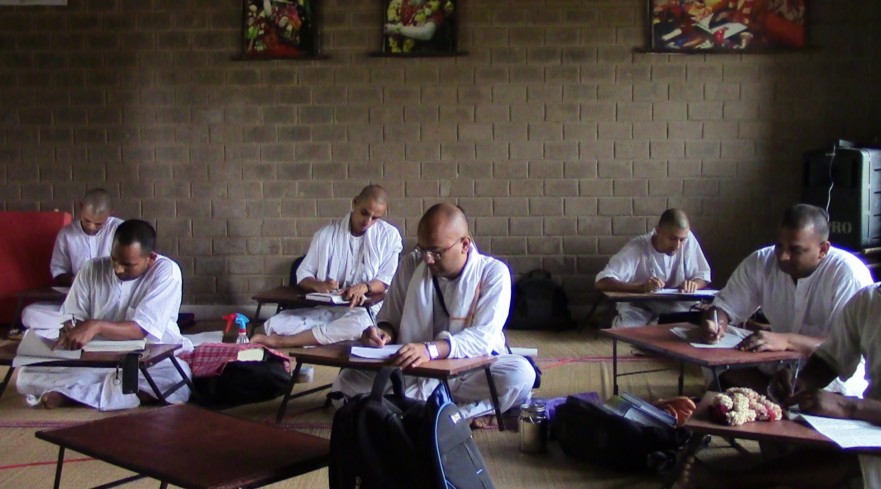
Autonomy, guidance, and the dharmic art of correction
Human relationships are often tested at the point where freedom meets correction. A student wants room to think, a child wants room to grow, an employee wants room to contribute, and a spiritual seeker wants room to mature through sincere effort. Yet no tradition of wisdom, whether in family life, education, management, or spiritual discipline, treats autonomy as an isolated privilege without responsibility. The deeper question is not whether a superior should guide a subordinate, but how guidance can be offered without humiliating, discouraging, or weakening the very person it seeks to strengthen.
Within Hindu philosophy and the broader dharmic understanding of human development, autonomy is not the rejection of guidance. It is the disciplined use of freedom in the presence of wisdom. The guru-shishya relationship, parental training, scriptural instruction, and spiritual leadership all recognize that freedom can either mature into responsibility or deteriorate into pride, negligence, and self-harm. The anatomy of autonomy therefore has two living sides: the sensitivity of the superior and the humility of the subordinate.
Every thoughtful person has experienced the discomfort of being corrected. When a senior repeatedly intervenes, alters decisions, or dismisses preferences, even a sincere junior may feel unseen. The emotional wound is not always caused by the correction itself; it often comes from the manner, timing, and public nature of the correction. A person may accept a difficult instruction when it is offered with trust, but resist even a minor suggestion when it feels like control. This makes sensitivity an essential quality of spiritual leadership and ethical governance.
At the same time, independence without maturity can become dangerous. A novice may not yet possess the judgment, self-control, or long-range vision required to use freedom constructively. A guardian, teacher, parent, employer, or spiritual mentor may therefore need to intervene before a mistake produces lasting harm. Srila Prabhupada cites Canakya Pandita to show that excessive indulgence can weaken character rather than nourish it.
lalane bahavo dosas tadane bahavo gunah
tasmat putram ca sisyam ca tadayen na tu lalayet
“Pampering a subordinate will increase his faults. And chastising him will increase his good qualities. So, a teacher should chastise a student and a father should chastise a child and not pamper them unduly.”
This instruction is severe only when separated from its context. It is not an endorsement of egoistic domination or emotional harshness. It is a warning against negligent affection. In dharmic education, love is not mere approval; it includes the courage to correct. A teacher who never corrects a student may appear kind in the moment, but may quietly permit faults to harden. A parent who avoids all discipline may preserve temporary comfort while sacrificing long-term character.
Correction can fortify or mortify
A humble and intelligent subordinate may feel protected by timely correction. When a superior is responsible, experienced, and affectionate, intervention can become a shield. It prevents avoidable disaster, preserves standards, and helps the junior see blind spots that enthusiasm alone cannot detect. Many people, on reflection, remember one firm correction that saved them years of confusion.
Yet correction can also mortify. If it is constant, public, impatient, or dismissive, it may drain initiative. The subordinate begins to feel that every decision will be overwritten, every attempt will be criticized, and every mistake will become evidence of inadequacy. Such a person may continue externally, but inwardly withdraw. The relationship then loses its warmth, and the work loses its creative energy.
A simple educational example clarifies the principle. A father can easily supply the answer to a child’s arithmetic problem, but if he always does so, the child may never learn mathematics. The superior’s competence must sometimes be restrained for the subordinate’s growth. A guide who solves every problem may appear efficient, but he may also be preventing the learner from developing judgment, patience, and confidence.
This is especially important when dealing with grown-up subordinates. Mature students, adult children, senior volunteers, responsible employees, and experienced spiritual practitioners cannot be trained in the same way as beginners. They need respect along with guidance. When their views are heard, their service is acknowledged, and their sincere preferences are considered, they become more receptive to correction when it is truly necessary.
The account of Lord Brahma and the four Kumaras offers a subtle scriptural example. Brahma asked them to assist in creation by producing progeny, but they expressed their desire to remain celibate and dedicate themselves to spiritual realization. Although Brahma was initially disturbed, he ultimately respected their choice and remained affectionate toward them. The episode demonstrates that authority, even when legitimate, need not become coercive. A superior may hold responsibility, yet still honor the sincere spiritual orientation of a subordinate.
From imposition to inspiration
Whether correction is helpful or harmful depends on time, place, circumstance, and the maturity of both persons involved. Canakya Pandita expresses this through another well-known instruction on stages of upbringing.
lalayet panca-varsani, dasa-varsani tadayet
prapte tu sodase varse, putram mitravad acaret
“Fondle a son until he is five years of age and then use the stick for another ten years. When he has attained the sixteenth year, however, treat him as a friend.”
The principle is developmental. In early stages, affection and encouragement are central because the learner is fragile and new. In the middle stage, stricter correction may be necessary because habits are being formed and the relationship has enough closeness to bear discipline. In maturity, the guide reduces supervision and treats the person more like a friend. The same correction that helps a beginner may insult an experienced practitioner if it ignores his growth.
This developmental model has broad relevance. In education, it encourages teachers to distinguish between ignorance and negligence. In management, it encourages leaders to avoid micromanagement once competence has been established. In family life, it reminds elders that grown children require dignity, not perpetual instruction in trivial matters. In spiritual communities, it protects the guru-shishya tradition from becoming mechanical control rather than transformative guidance.
A sensitive superior therefore shifts from imposition to inspiration. Personal example becomes more powerful than repeated verbal correction. Suggestions, when needed, are offered with due acknowledgment of the subordinate’s contribution, experience, and status. This does not weaken authority; it refines authority. It turns power into service.
Capable authority must also be sensible authority
When a subordinate’s decisions produce negative consequences, correction may be unavoidable. A superior who refuses to address harmful results is not compassionate; he is irresponsible. Yet even necessary correction can be executed with minimal injury to autonomy. Public invalidation, sarcasm, contempt, and excessive exposure before juniors create unnecessary damage. The corrected person feels humiliated, his dependents lose respect for him, and future communication becomes strained.
The highest model of capable yet sensible authority appears in the conduct of Lord Visnu and Lord Krsna in the Puranic and Itihasa traditions. In Vaishnava theology, the Supreme Lord is fully autonomous and is not bound by the limitations that govern cosmic administrators such as Brahma, Siva, Indra, Candra, Varuna, and Vayu. Yet divine authority repeatedly honors the functional autonomy of these beings, even while correcting the disorder created by their mistakes or the misuse of their gifts.
This theological pattern is not merely a story device. It reveals a leadership principle: the strongest authority does not need to crush subordinate agency in order to establish itself. Real power can preserve order, protect the innocent, and correct wrongdoing while still respecting the dignity of delegated responsibility.
Lord Nrsimha and the preservation of Brahma’s word
Hiranyakasipu, king of the demons, performed severe austerities to obtain a boon from Lord Brahma. Seeking practical immortality, he asked not to die inside or outside a residence, during day or night, on earth or in the sky, by weapon, human being, or animal. Brahma granted the boon but warned him not to misuse it. Hiranyakasipu nevertheless became arrogant and tyrannical, eventually attempting to kill his own young son Prahlada, a devoted worshiper of Lord Visnu.
Lord Nrsimhadeva then appeared in a form that preserved Brahma’s benediction while ending Hiranyakasipu’s violence. He was neither ordinary human nor animal, but half-man and half-lion. He killed Hiranyakasipu at twilight, neither day nor night; on His lap, neither ground nor sky; at the threshold, neither inside nor outside; and with His nails, not conventional weapons. The account in Srimad-Bhagavatam 7.2-10 demonstrates both justice and sensitivity. The innocent devotee was protected, the aggressor was stopped, and Brahma’s word was not casually violated.
A similar pattern appears in the Ramayana. Ravana received a boon that excluded death at the hands of most powerful beings, while neglecting humans and monkeys because he considered them insignificant. Lord Ramacandra appeared as an ideal human being and, with the help of vanara allies, defeated Ravana. Once again, divine action corrected evil without dismissing the structure of a subordinate’s earlier grant.
These episodes do not glorify technical loopholes; they reveal principled restraint. The Supreme could have overridden every condition, yet chose to act in a way that preserved cosmic order and subordinate dignity. For human leaders, the implication is clear: even when one has the power to overrule, it is often better to correct in a way that preserves trust.
Krsna, Indra, and patient rectification
The Govardhana episode in Srimad-Bhagavatam 10.24-27 offers another profound case. Indra, proud of his heavenly position, became enraged when Krsna advised the residents of Vrndavana to worship Govardhana Hill rather than perform Indra-puja. In anger, Indra sent devastating clouds to flood Vrndavana. Krsna protected the Vraja-vasis by lifting Govardhana Hill for seven days, thereby defeating Indra’s pride and shielding the community.
Afterward, Indra became ashamed and fearful. Krsna did not publicly humiliate him further. He received Indra privately, allowed him to offer prayers, warned him, and permitted him to continue his administrative function as king of heaven. This is a striking example of correction without permanent rejection. The fault was serious, but the relationship and service were not destroyed.
Indra’s later conflict with Krsna over the Parijata tree, described in Srimad-Bhagavatam 10.59, shows that some subordinates require repeated correction. Krsna again defeated Indra, yet allowed him to continue in his exalted post. In ordinary leadership, repeated mistakes often provoke irritation, resentment, or dismissal. The dharmic model here emphasizes patience, proportion, and long-term reform where reform remains possible.
Brahma’s mistake and the mercy of honest repentance
In Srimad-Bhagavatam 10.13-14, Lord Brahma attempted to test Krsna by stealing His cowherd friends and calves. Krsna responded not with immediate punishment but with revelation. He expanded Himself into the exact number of boys and calves, replicating their forms and behavior. When Brahma returned after one year, he was astonished to find everything apparently normal. Krsna then revealed the divine reality behind the scene, causing Brahma to recognize his mistake.
Brahma’s repentance was sincere. He offered heartfelt prayers and acknowledged Krsna’s supremacy. Krsna forgave him and allowed him to return to his service as universal creator. The episode shows that honest repentance changes the moral atmosphere of correction. Where pride requires humbling, humility invites mercy. A mature superior does not keep a repentant subordinate permanently imprisoned in his mistake.
Growth through honest mistakes
Learning often requires supervised risk. A child learning to walk may receive a mother’s hand in the beginning, but eventually the mother must allow the child to stand without support. The child may fall. The fall may be painful to watch. Yet if the mother always lifts and carries the child, walking may never develop. Protection, when excessive, becomes prevention.
The same principle applies to intellectual, professional, and spiritual growth. A student must sometimes attempt interpretation before receiving the teacher’s final explanation. A young leader must sometimes manage a small responsibility before being entrusted with a larger one. A devotee must sometimes learn steadiness through the consequences of inattentiveness. Honest mistakes, when not catastrophic, can become instruments of maturity.
This does not mean negligence should be romanticized. A superior must distinguish between honest mistakes, repeated carelessness, and willful misconduct. Honest mistakes call for guidance and encouragement. Carelessness may require stronger accountability. Malicious conduct may require firm protection of others. Sensitivity is not softness; it is accurate moral perception.
Assistance at the time of need
The churning of the milk ocean, described in Srimad-Bhagavatam 8.7-9, further illustrates divine pedagogy. When the demigods were defeated by the demons, they approached Lord Visnu for help. He could have restored their positions instantly. Instead, He instructed them to cooperate temporarily with the demons and churn the ocean to obtain nectar. During the process, He assisted them in various ways, and when the nectar was seized by the demons, He appeared as Mohini-murti and arranged for it to be given to the demigods.
This episode balances autonomy and assistance. The demigods were not passive recipients of rescue; they were required to act, cooperate, endure difficulty, and participate in their own restoration. Yet they were not abandoned. Divine help came at critical moments. A wise superior follows a similar pattern: he allows dependents to endeavor, but remains available when the burden exceeds their capacity.
The sensitive superior in dharmic leadership
A sensitive superior corrects with purpose, not with ego. He does not use feedback to display superiority, settle grievances, or demand emotional submission. He studies the person, the circumstance, the likely consequences, and the best method for improvement. Sometimes a private conversation is enough. Sometimes a warning is necessary. Sometimes a counteraction must be taken immediately. Sometimes silence, trust, and time are more effective than intervention.
Such a superior also protects inspiration. Work, seva, study, and spiritual practice require inner enthusiasm. If correction repeatedly crushes that enthusiasm, the subordinate may become technically compliant but spiritually dry. Dharmic leadership therefore seeks reform without discouragement, accountability without contempt, and discipline without alienation.
This has direct relevance in modern institutions. In families, it encourages elders to combine affection with boundaries. In schools and gurukuls, it encourages teachers to correct without shaming. In workplaces, it warns managers against confusing micromanagement with leadership. In temples and spiritual communities, it reminds senior practitioners that juniors are not merely resources to be directed, but souls to be nurtured.
God’s respect for the autonomy of the soul
The highest theological expression of autonomy concerns the soul’s free will. In the Vaishnava understanding, God is supremely autonomous, and the living entity, as a part and parcel of the Supreme Lord Krsna, possesses minute autonomy. Material possessions, social positions, bodily strength, and intellectual achievements are temporary. The soul’s capacity to choose its orientation toward truth, service, and love is therefore deeply significant.
If Krsna wished, He could compel every living being to love and serve Him. Yet forced love is not love. Service imposed by domination does not carry the sweetness of voluntary devotion. Therefore Krsna does not violate the living entity’s minute independence, even though He has the power to do so. He invites, teaches, guides, and waits.
This point has wide dharmic relevance. Spiritual traditions rooted in Bharat have long recognized that inner transformation cannot be manufactured by external coercion. The path may be guided by guru, scripture, discipline, and community, but the heart must turn willingly. Genuine bhakti, authentic sadhana, and meaningful spiritual progress arise when autonomy is offered back in love, not seized by force.
Krsna’s compassion is not passive. He descends in various incarnations, sends spiritual teachers, preserves sacred scriptures, and arranges opportunities for remembrance. Yet after all instruction, the living entity must choose. The autonomy to walk toward dharma or away from it remains with the individual soul, and the experiences of life unfold according to that choice.
The sensible subordinate
The maturity of a subordinate is revealed by his response to correction. Intelligent subordinates do not interpret every suggestion as an insult. They understand that guidance from an experienced, well-wishing superior can save time, deepen skill, and refine character. They are not possessive about autonomy, because they recognize that many forms of delegated freedom are entrusted by seniors, institutions, family systems, or spiritual orders.
Such humility is not weakness. It is disciplined receptivity. A subordinate who can hear correction without becoming defensive becomes more trustworthy. Seniors naturally empower such a person with greater responsibility, deeper knowledge, and more meaningful opportunities. In the guru-shishya tradition, this receptivity is especially important because spiritual knowledge is not merely informational; it is transformational.
By contrast, brittle independence limits growth. When a subordinate resents all intrusion, refuses experienced counsel, and treats autonomy as a private possession, he loses access to the wisdom that could refine him. The inability to be corrected may feel like strength, but it often conceals insecurity. Malleability, when joined with discrimination, is far more powerful.
The sages of Naimisaranya praised Suta Gosvami for this quality of submissive receptivity. Because he was gentle and submissive to his spiritual masters, they revealed confidential knowledge to him.
vettha tvam saumya tat sarvam tattvatas tad-anugrahat
bruyuh snigdhasya sisyasya guravo guhyam apy uta
“Because you are submissive, your spiritual masters have endowed you with all the favors bestowed upon a gentle disciple. Therefore, you can tell us all that you have scientifically learned from them.” (SB 1.1.8)
Srila Prabhupada similarly warns that independent action against the spiritual master’s order obstructs progress: “A spiritual master knows very well how to engage each disciple in a particular duty, but if a disciple, thinking himself more advanced than his spiritual master, gives up his orders and acts independently, he checks his own spiritual progress.” (CC Adi 7.72 Purport).
This teaching should be understood with moral seriousness. Submissiveness in spiritual life is meant for a bona fide, transparent, well-wishing guide, not for manipulation or abuse. Dharmic traditions uphold reverence for the guru, but they also value discernment, character, and alignment with shastra. Healthy submission refines the ego; unhealthy domination exploits it. The difference must never be blurred.
Refinement through discipline
The original analogy remains powerful: a vegetable becomes palatable through cooking, and gold shines after passing through fire. Similarly, a disciple, student, or subordinate often becomes excellent through disciplined refinement under expert guidance. The process may not always be comfortable, but comfort is not the highest goal of growth. Character, clarity, devotion, and responsibility often emerge through correction that is both firm and affectionate.
Modern readers may recognize this in ordinary life. A mentor’s difficult feedback may initially sting, yet later become a turning point. A parent’s boundary may feel restrictive, yet later be remembered as protection. A spiritual teacher’s instruction may challenge personal preference, yet open a deeper path of surrender. The emotional difficulty of correction does not automatically make it wrong; the decisive question is whether it is rooted in truth, compassion, and the genuine welfare of the person being corrected.
Autonomy across dharmic traditions
The principle of guided autonomy can support unity among dharmic traditions. Hinduism, Buddhism, Jainism, and Sikhism each preserve distinct theologies, disciplines, and spiritual vocabularies, yet all take seriously the training of the self. Whether expressed through bhakti, mindfulness, ahimsa, seva, guru-bhakti, self-control, meditation, or disciplined ethical living, these traditions understand that freedom must be purified by wisdom.
Autonomy therefore need not become individualism, and guidance need not become domination. A dharmic view holds both together. The person is responsible for choices, yet also indebted to teachers, elders, scriptures, community, and divine grace. The superior is responsible to guide, yet also accountable to humility, compassion, and restraint. This reciprocal ethic can nourish families, institutions, spiritual communities, and public life.
Conclusion: nourishing relationships without insecurity
A sensible superior respects the autonomy of a mature subordinate and avoids needless micromanagement. He allows growth through experience, tolerates honest mistakes, and corrects gently when correction is required. He gives credit for good work, protects dignity, and uses authority to cultivate responsibility rather than dependency. His goal is not to prove superiority, but to help another person become stronger, wiser, and more devoted to dharma.
A sensible subordinate, in turn, remains willing to be guided. He does not become offended by every correction, nor does he idolize personal independence. He recognizes that sincere guidance is a gift, especially when it comes from an experienced and well-wishing superior. By receiving correction with humility, he becomes eligible for deeper trust and greater service.
When sensitivity and humility meet, the superior-subordinate relationship becomes nourishing rather than tense. Teacher and student, parent and child, employer and employee, guru and disciple, and God and devotee can then relate without insecurity. Autonomy is preserved, correction is purified, and authority becomes an instrument of love, wisdom, and spiritual growth.
Inspired by this post on Dandavats.










Leave a Reply
You must be logged in to post a comment.