
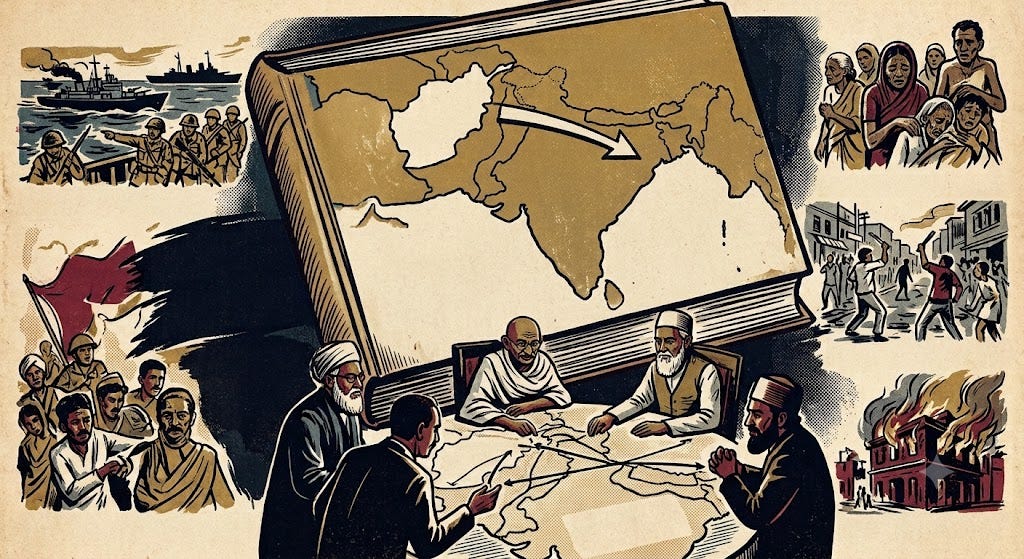
The 1941 publication of Gandhi-Muslim Conspiracy belongs to one of the most charged periods in modern Indian history. Published in Poona by R.D. Ghanekar and attributed only to “A Hindu Nationalist,” the book appeared when the Second World War was reshaping imperial power, Indian politics was entering a decisive phase, and the demand for Pakistan was no longer a marginal slogan. Its tone was severe, its claims were controversial, and its reception reflected the anxieties of a society standing between colonial rule, communal negotiation, and the approaching trauma of Partition.
The text is best approached as a historical document rather than as a final verdict. It reveals how a section of Indian political opinion interpreted Mahatma Gandhi’s support for the Khilafat Movement, his theory of non-violence, his relationship with Muslim political leaders, and his handling of mass mobilization between 1920 and 1922. Whether every allegation in the book can withstand archival scrutiny is a separate question. Its enduring value lies in showing that Gandhi’s leadership was contested not only by colonial officials and Muslim League critics, but also by nationalist Hindus who believed that his political methods carried serious civilizational risks.
The historical setting matters. By February 1941, Britain had dragged India into the Second World War without Indian consent. Indian soldiers, revenue, grain, and industrial output were being absorbed into an imperial conflict. The Indian National Congress had already resigned from provincial ministries in protest in 1939. The Muslim League, under Muhammad Ali Jinnah, had used the political opening to strengthen its separate claim, especially after the Lahore Resolution of March 1940. The language of Hindu-Muslim unity, once central to the Congress-Khilafat alliance, had become increasingly fragile.
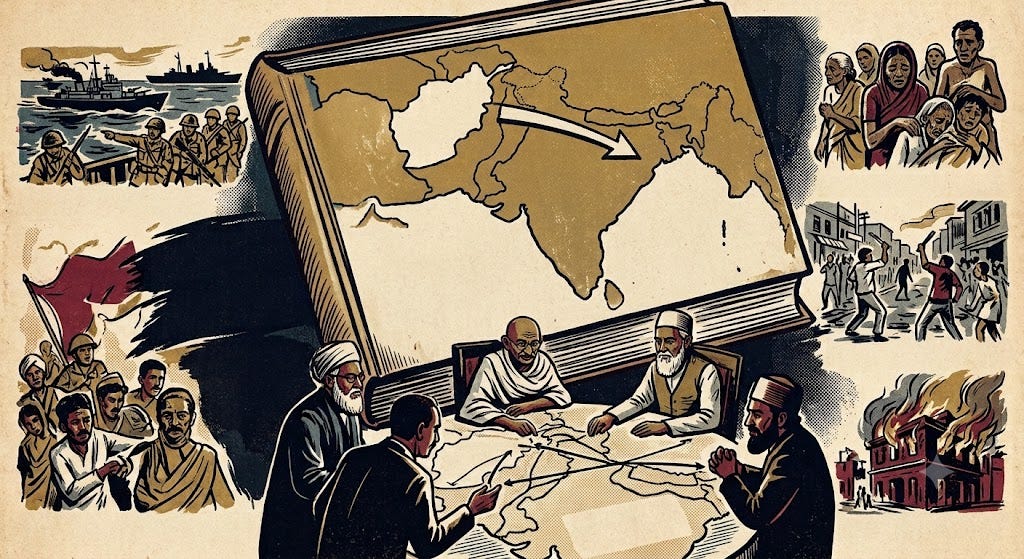
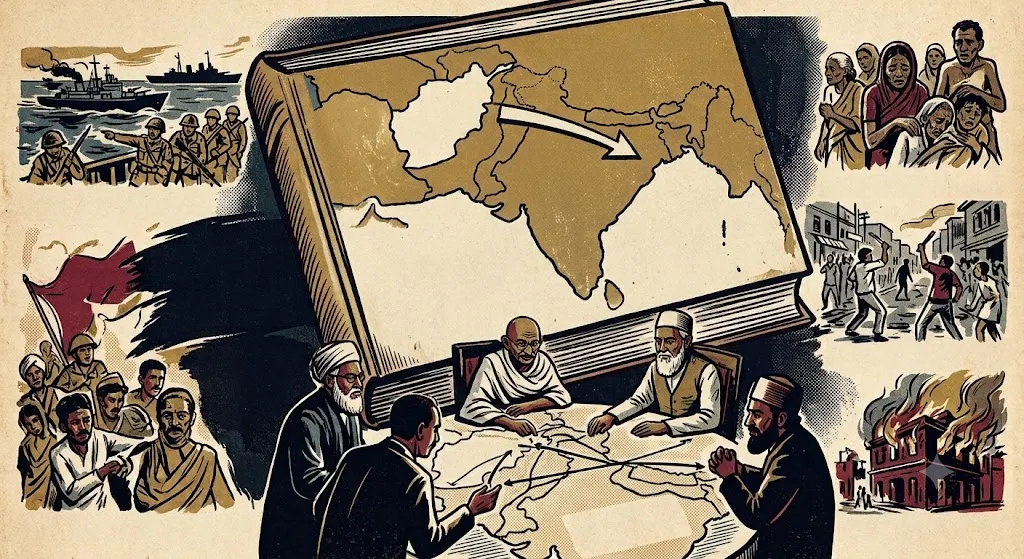
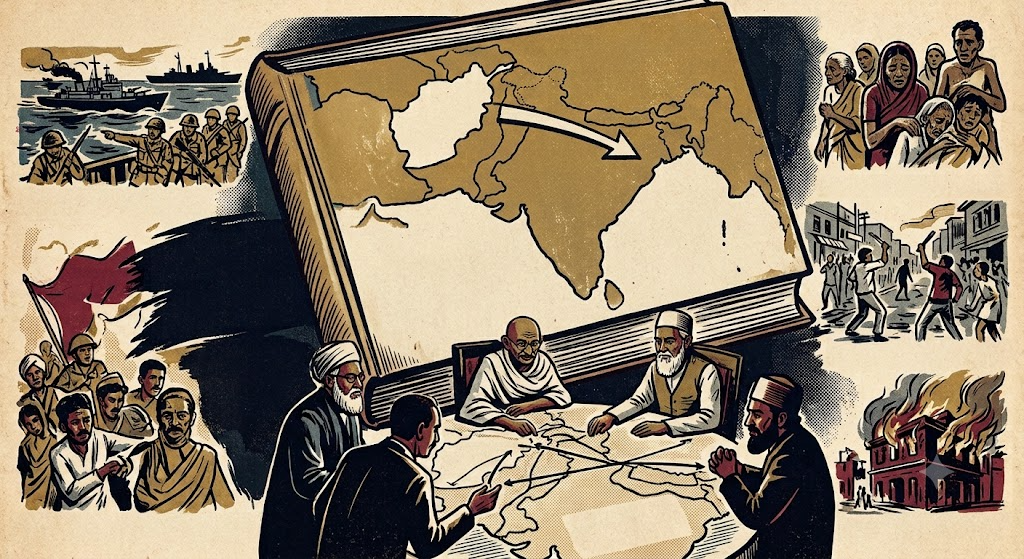
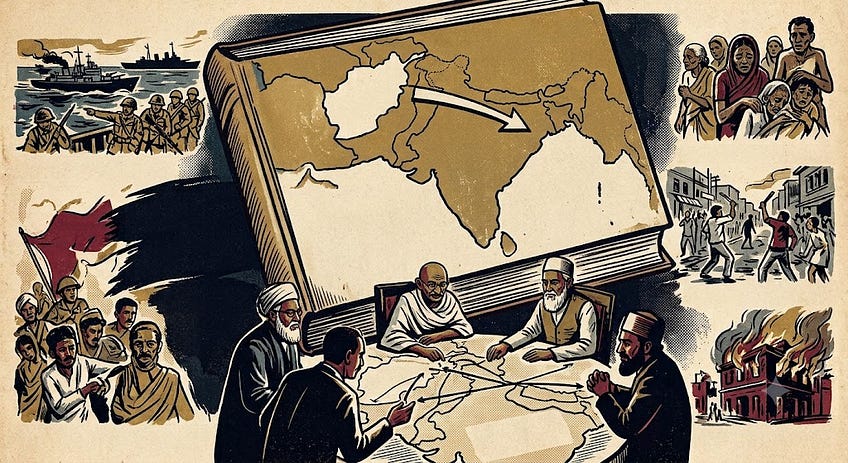
Within this atmosphere, Gandhi-Muslim Conspiracy revisited events from two decades earlier. Its central allegation was that, during the Khilafat and Non-cooperation period of 1920-21, Gandhi and the Ali Brothers had become linked to a wider plan involving the Amir of Afghanistan. The book claimed that this plan contemplated an Afghan invasion of India and the possibility of establishing Muslim political dominance after the British withdrawal. The allegation was presented in sweeping language, but the broader question it raised was real and historically important: how far could anti-colonial politics go when it sought tactical unity between groups with sharply different end goals?
The Khilafat Movement itself was rooted in global Islamic politics after the First World War. Indian Muslim leaders such as Maulana Mohammad Ali and Maulana Shaukat Ali mobilized to defend the Ottoman Caliphate after the defeat of Turkey. Gandhi supported the movement because he saw in it an opportunity to build Hindu-Muslim unity and to transform anti-British sentiment into mass non-cooperation. This decision remains one of the most debated choices of his public life. Admirers describe it as a bold attempt to unite Indians against imperialism. Critics argue that it imported a pan-Islamic grievance into Indian nationalism and gave religious mobilization a dangerous legitimacy.
The 1941 tract belonged firmly to the second interpretation. It charged that Gandhi’s pursuit of unity led him to overlook the ideological content of Khilafat politics and to understate the risks faced by Hindus, Sikhs, Jains, Buddhists, and other communities embedded in India’s plural civilizational fabric. In a more balanced reading, the problem was not cooperation between communities as such. Cooperation across traditions is essential to any stable society. The problem was the absence of a shared constitutional and civilizational framework that could distinguish principled unity from temporary political bargaining.
The book’s probable authorship has long been debated. A common attribution points to Jamnadas M. Mehta, a barrister, public figure, and former Finance Minister of the Bombay Presidency. Mehta was known as a sharp critic of Gandhi’s support for the Khilafat Movement and later associated with the Hindu Mahasabha. His public life illustrates an uncomfortable feature of Indian historiography: many critics of dominant nationalist narratives were gradually pushed to the margins of public memory. Their arguments may be disputable, but their disappearance weakens historical understanding because it leaves later generations with a simplified image of the freedom movement.
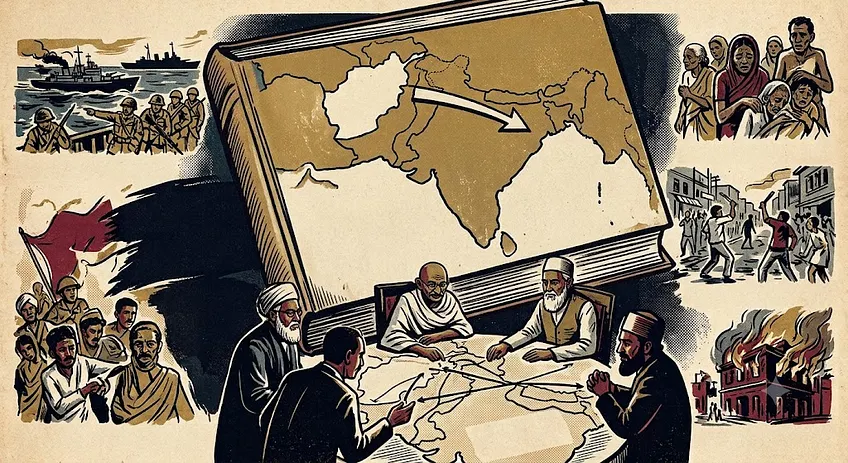
The controversy around the book also demonstrates how political reputations are made and protected. Gandhi became, for many, the global symbol of non-violence, moral courage, and civil resistance. Yet in his own time he was not universally treated as an unquestioned saint. Some revolutionaries considered his methods inadequate. Some constitutionalists considered them disruptive. Some Hindu nationalists believed his religious language and political concessions confused moral aspiration with statecraft. Some Muslim League leaders attacked him from the opposite direction, portraying him as a Hindu leader whose claim to represent all Indians was unacceptable.
One of the most striking features of the period is that Gandhi could be criticized simultaneously as too Hindu and not sufficiently protective of Hindu interests. The Muslim League frequently accused the Congress of being a Hindu-majority organization beneath its secular vocabulary. Hindu critics, meanwhile, argued that Gandhi’s desire for unity encouraged a pattern of unilateral concession. This double criticism does not automatically prove either charge. It does, however, show the extraordinary tension inside nationalist politics, where symbolic gestures, religious identities, and constitutional claims were deeply entangled.
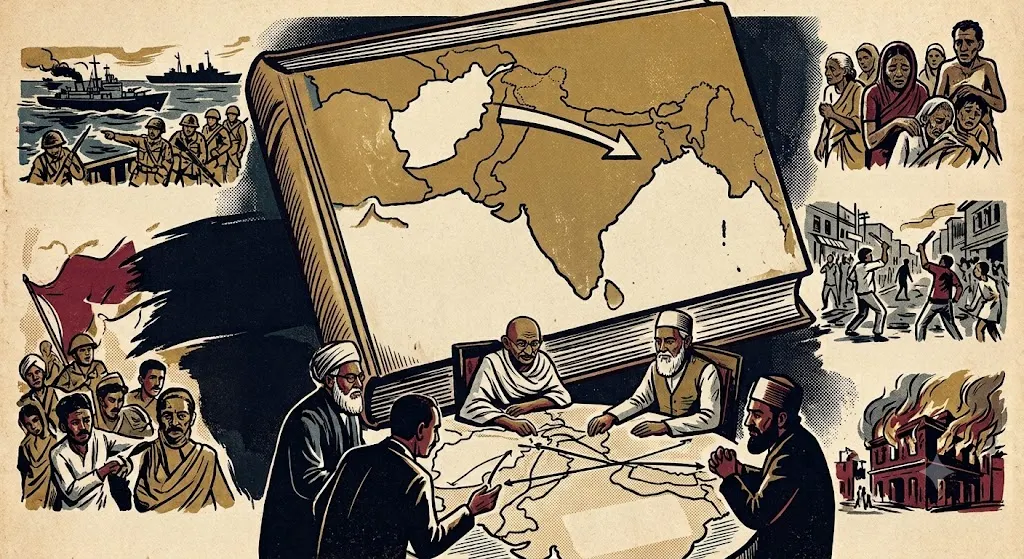
The chapter excerpted in the source material, titled “Muslim Raj in India,” focuses on Gandhi’s decision to call off mass civil disobedience after the Chauri Chaura incident. On 4 February 1922, a violent crowd at Chauri Chaura in the United Provinces attacked and burned a police station, killing policemen. Gandhi initially appeared prepared to continue confronting what he saw as unjust repression, but within days he suspended the Non-cooperation Movement. Standard histories usually explain this decision through Gandhi’s moral horror at violence and his insistence that satyagraha required strict discipline.
The 1941 book offers a different interpretation. It argues that Gandhi’s reversal was influenced not only by Chauri Chaura but also by developments involving Afghanistan. According to this view, the treaty agreed with Afghanistan on 22 November 1921 received the assent of King George V on 6 February 1922 and became operative from that date. The tract claims that Gandhi abandoned the campaign after learning of this ratification, because the international situation had changed. This is a serious allegation and should be read as a claim requiring careful documentary examination, not as a settled conclusion.
The wider Afghan context was not imaginary. Afghanistan occupied a special place in British Indian strategic thinking. The memory of Anglo-Afghan wars, the politics of the North-West Frontier, and the fear of foreign-backed unrest made Afghanistan a constant concern for colonial administrators. During the First World War and after, anti-British networks did seek external support from powers hostile to Britain. Revolutionary groups, pan-Islamic activists, and exile circles sometimes overlapped in ways that remain important for the study of Indian independence movements and geopolitical history.
Maulavi Obeidulla, referenced in the source, belonged to this world of transnational anti-colonial activity. Lala Lajpat Rai’s concerns, as recalled in Jawaharlal Nehru’s autobiography, suggest that leading nationalists were aware of rumors and conversations involving contacts outside India. Nehru did not present the matter as extraordinary in the same way that Lajpat Rai apparently did. This difference in interpretation is revealing. It shows how the same set of political signals could be read either as legitimate anti-imperial networking or as reckless intrigue with unpredictable consequences.
The source also cites Maulana Azad Sobhani, explicitly noting that he should not be confused with Maulana Abul Kalam Azad. The speech attributed to Sobhani in Anand-Bazar-Patrika used the language of Muslim political consolidation and expressed anxiety about future Hindu dominance after the British departure. Such rhetoric, when placed in the larger atmosphere of the 1930s and 1940s, reflects the hardening of communal political imagination. It should be studied carefully, but it should not be converted into a blanket judgment on all Muslims. The historical responsibility belongs to specific leaders, organizations, doctrines, and political strategies, not to communities as inherited human categories.
This distinction is essential for a dharmic reading of history. Hinduism, Buddhism, Jainism, and Sikhism each contain strong resources for ethical inquiry, restraint, truth-seeking, and protection of social harmony. A serious historical examination need not erase violence, appeasement, miscalculation, or ideological aggression. At the same time, it must avoid collective hatred. The aim of civilizational memory is not to inflame resentment but to sharpen discernment, preserve dignity, and build a society where dharma is defended without losing moral clarity.
Gandhi’s doctrine of non-violence sits at the center of this debate. For Gandhi, ahimsa was not merely a political tactic; it was a spiritual discipline, a test of self-rule, and a means of transforming both the oppressor and the oppressed. His critics saw a different problem. They argued that extreme non-violence, when applied to political conflict without regard for power, could make the innocent vulnerable and allow aggressive forces to act without adequate restraint. This debate remains alive because modern societies continue to wrestle with the same question: when does moral restraint become strength, and when does it become abdication?
Dharmic traditions do not offer a simplistic answer. Jainism places ahimsa at the heart of spiritual discipline with exceptional rigor. Buddhism teaches compassion, restraint, and liberation from hatred. Hindu thought honors ahimsa but also preserves the concept of dharma-yuddha, righteous struggle under moral discipline. Sikh tradition upholds both seva and the duty to resist oppression when peaceful means fail. These traditions need not be set against one another. Together, they show that non-violence, courage, and justice must be held in a careful ethical balance.
In that light, Gandhi’s legacy requires neither blind worship nor casual dismissal. His achievements in mass mobilization, moral symbolism, and anti-colonial communication were profound. His failures, especially in assessing political Islam, communal bargaining, and the durability of religious nationalism, deserve equally serious attention. A mature historical culture can hold both truths together. It can acknowledge Gandhi’s sincerity while questioning his judgment. It can respect his spiritual vocabulary while examining the political consequences of his choices.
The phrase “phantom prophetship,” used in the 1941 tract, was polemical and severe. Yet behind the phrase lies an enduring concern about political sainthood. Modern India has often converted leaders into untouchable icons, making critical study emotionally difficult. Once a leader becomes a symbol of national virtue, disagreement is treated as irreverence rather than inquiry. This weakens public reasoning. Civilizations grow stronger when their revered figures are studied with discipline, gratitude, and courage rather than with either contempt or unquestioning devotion.
The reception of Gandhi-Muslim Conspiracy also reflects the fragmented politics of the 1940s. Some Hindu circles welcomed it because it confirmed their suspicion that Congress strategy had endangered Hindu society. Some Muslim League circles could use anti-Gandhi arguments for very different purposes, since the League opposed Gandhi’s claim to represent India as a whole. The same book could therefore be useful to mutually opposed constituencies. This is a reminder that political texts often travel beyond the intentions of those who produce them.
The charge that the book was merely a “polemical tract” should be handled carefully. Polemic is not the same as falsehood, and moderation of tone is not the same as truth. Many works written in heated language preserve important evidence, anxieties, and political perceptions. At the same time, polemical writing can exaggerate, simplify, and assign motives too confidently. The responsible approach is neither suppression nor uncritical adoption. The responsible approach is close reading, comparison with other sources, and attention to the political context in which claims were made.
For readers today, the most valuable lesson is methodological. The freedom movement was not a single harmonious procession toward independence. It was a dense field of competing visions: constitutional liberalism, revolutionary nationalism, Hindu nationalism, pan-Islamic mobilization, socialist thought, Gandhian satyagraha, provincial ambitions, princely interests, and British imperial strategy. Reducing this complexity to a moral drama of heroes and villains prevents a serious understanding of India’s past.
The debate also has contemporary relevance for Hindu-Muslim relations and for broader interfaith discourse. Unity cannot be built on historical amnesia. It must be built on truthful memory, equal dignity, and a refusal to excuse violence or coercion from any side. A dharmic society does not require silence about painful episodes. It requires the discipline to discuss them without dehumanization, the courage to identify ideological threats accurately, and the wisdom to distinguish between ordinary people and political projects pursued in their name.
The neglected figure of Jamnadas M. Mehta, if the attribution is correct, deserves renewed scholarly attention for this reason. His critique of Gandhi may be uncomfortable, but discomfort is not an argument against study. Indian intellectual history contains many such figures who vanished because they did not fit later narratives. Recovering them does not mean accepting every conclusion they reached. It means restoring the debate itself, so that future generations can understand the choices, fears, and disagreements that shaped India’s road to freedom.
The same principle applies to Gandhi. To study Gandhi critically is not to deny his importance. It is to place him back into history, where decisions had costs, allies had agendas, and moral ideals collided with political realities. His support for the Khilafat Movement, his handling of Chauri Chaura, his understanding of non-violence, and his relationship with Muslim leaders must all be examined within that demanding frame. Such study makes Gandhi more human, not less significant.
The original source ended with a continuation, indicating that the debate was part of a larger argument. Even in excerpted form, it opens several lines of inquiry: the place of Afghanistan in anti-British politics, the ideological content of Khilafat mobilization, the internal criticisms of Congress strategy, the relationship between non-violence and statecraft, and the political uses of religious identity before Partition. Each of these themes belongs not only to the study of Gandhi but to the study of Indian nationalism as a whole.
Ultimately, the controversy around Gandhi-Muslim Conspiracy invites a more disciplined historical imagination. It asks readers to resist inherited simplifications, to examine neglected sources, and to recognize that national memory is strongest when it can withstand uncomfortable evidence. For dharmic traditions committed to truth, restraint, and the welfare of society, this is not merely an academic exercise. It is a form of civilizational self-knowledge.
Inspired by this post on Dharma Dispatch.



Leave a Reply
You must be logged in to post a comment.