Human civilization stands at a defining crossroads. Dharmic wisdom across Hinduism, Buddhism, Jainism, and Sikhism has long outlined a coherent path to inner mastery, ethical clarity, and transcendence. Yet contemporary culture often pursues a different idealone that elevates the temporary over the timeless and favors external augmentation over inner evolution. The result resembles a Frankensteinian patchwork of power without integration: impressive capacities grafted onto lives lacking purpose, coherence, and compassion.
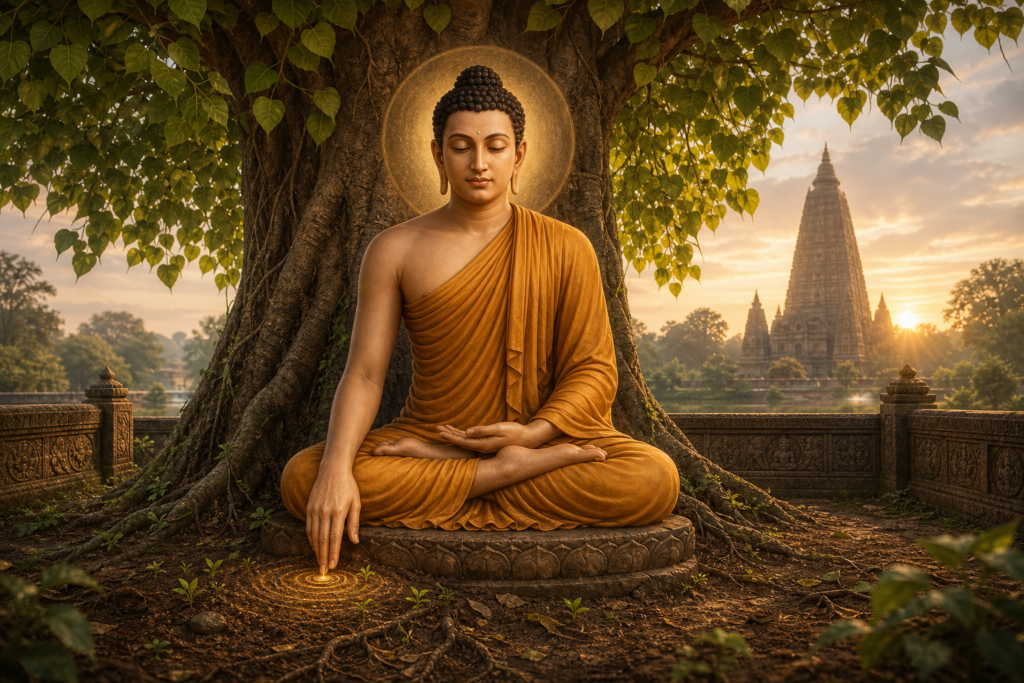
In the dharmic view, the term “superhuman” does not imply conquest or spectacle; it signifies mastery of mind and senses, alignment with dharma, and realization of atman. Sanatana Dharma, the Upanishads, and the Bhagavad Gita describe this ascent through viveka (discernment), vairagya (dispassion), and steady sadhana in Yoga, dhyana, and pranayama. Such disciplines cultivate inner freedom (moksha) and responsible action (karma performed without attachment), producing strength that is both ethical and enduring.
Modern material culture, by contrast, frequently multiplies tools while fragmenting attention. Technologies accelerate communication, consumption, and control, yet leave many with rising anxiety, burnout, and relational disconnection. The “Frankenstein” metaphor captures this paradox: augmentation without integration. Dharmic traditions do not reject innovation; rather, they insist that power be tempered by wisdom, restraint, and compassion so that means and ends remain harmonized.
Across these traditions, a shared ethos emerges. Hinduism emphasizes dharma and inner realization; Buddhism nurtures mindfulness and compassion; Jainism advances ahimsa and aparigraha; Sikhism enshrines simran and seva. Each offers complementary methods toward a convergent outcome: inner harmony, outer responsibility, and social wellbeing. The principle of Anekantavada in Jainism and the plural spirit of Ishta in Hinduism illuminate a unifying insightmultiple valid paths can lead toward a common summit of truth and liberation.
When oriented by Vedanta and allied dharmic philosophies, science and technology become instruments for lokasangrahathe welfare of all. Meditation and ethical self-regulation stabilize attention; discernment guides innovation; compassion shapes policy. Instead of a patchwork of capacities loosely stitched together, there emerges an integrated human being whose actions reflect inner clarity and universal responsibility.
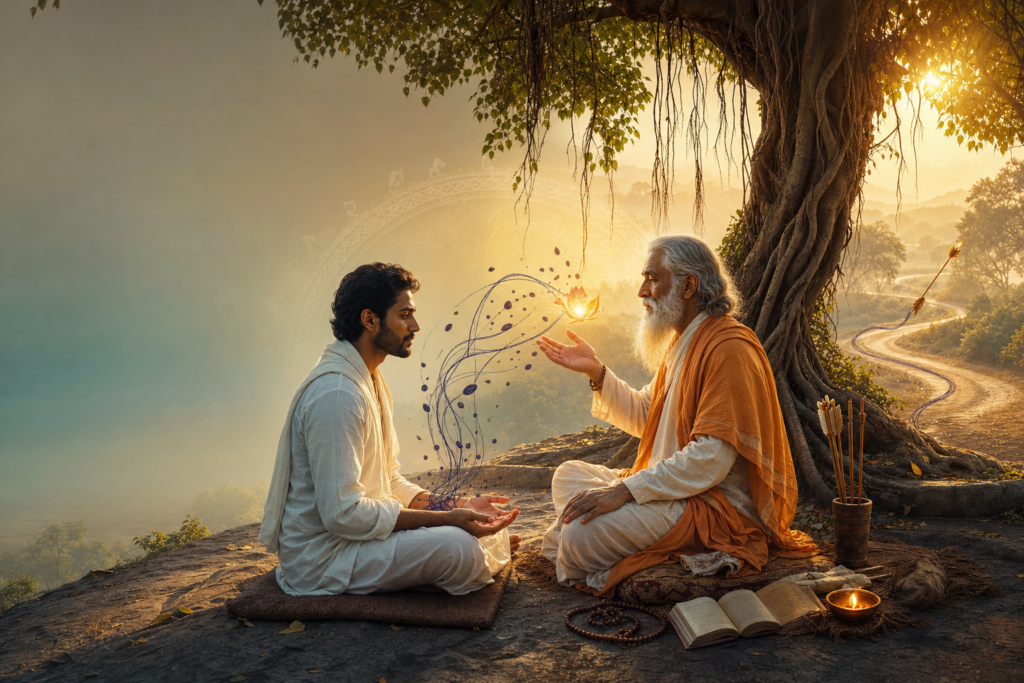
Many will recognize this tension in lived experience. The pull of constant engagement can leave the mind scattered, while even brief practicesfive minutes of mindful breathing, a short period of japa, or a focused reading of the Gitarestore poise and perspective. Over time, pranayama steadies the nerves, dhyana refines awareness, and sattvic conduct aligns daily choices with deeper values. Such ordinary commitments, sustained with sincerity, become extraordinary in their cumulative effect.
A practical realignment is accessible to all: begin with consistent daily sadhana (meditation, pranayama, or contemplative reading), anchor choices in satya and ahimsa, and translate inner clarity into seva. Seek supportive satsang or sanghacommunities that encourage ethical living and shared learning across Hindu, Buddhist, Jain, and Sikh traditions. Curate technology use intentionally so that attention remains a servant of purpose, not its master.
Education and public life also benefit from this integration. Curricula that introduce mindfulness, ethical reasoning, and interfaith literacy foster cognitive focus and civic empathy. Policy guided by dharmic ethics prioritizes ecological responsibility, equitable opportunity, and the dignity of all beings. Measured not only by output but by wellbeing, society gains a more holistic metric of progressone aligned with both inner and outer flourishing.
Choosing the dharmic path does not negate modern achievement; it completes it. Power finds proportion; knowledge gains humility; freedom acquires responsibility. In this integrated vision, “superhuman” potential becomes another name for fully human flourishing: steady attention, courageous compassion, and action guided by wisdom.
The crossroads, then, is clear. One route multiplies capacities but deepens fragmentation; the other integrates power with purpose. By realigning with the perennial insights of Hinduism, Buddhism, Jainism, and Sikhism, humanity can move beyond the patchwork of augmentation toward a coherent, compassionate civilizationone capable of transforming skill into service, knowledge into wisdom, and life into a path of liberation.
Inspired by this post on Hindu Blog.