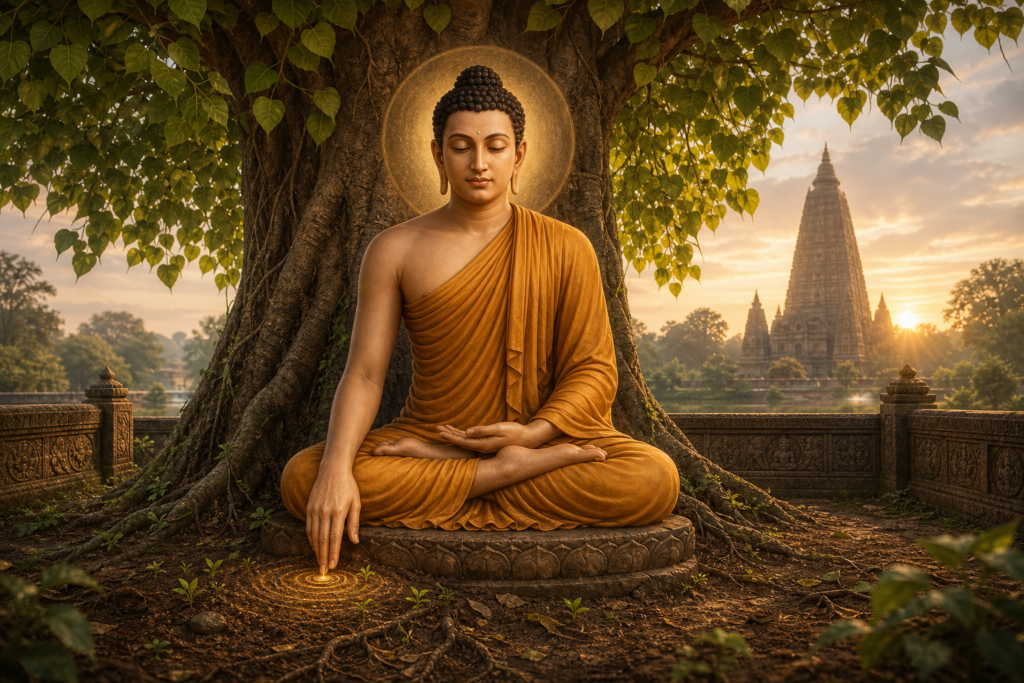
Discover the Proven Inner Science of Shanti: Master Inner Peace with Dharmic Wisdom
In Hinduism, Shanti is understood as a cultivated spiritual energy rather than a fleeting mood. This inner peace arises from disciplined alignment with one’s true nature, or Atman, and remains independent of external conditions. Rooted in Dharma and clarified through the Upanishads and the Bhagavad Gita, this insight frames peace as an energetic state sustained by practice, not accident.
The inner mechanics of Shanti are mapped with precision in Yoga philosophy. Foundational practices such as yama and niyama regulate conduct and intention; dhyana refines attention; Pranayama and breath awareness stabilize the nervous system; and svadhyaya (self-study) deepens insight. Over time, these disciplines shift the inner field from reactivity to sattva, allowing peace to be felt as a steady current rather than an intermittent experience.
This inner science finds resonances across dharmic traditions, affirming unity in spiritual diversity. In buddhism, calming and insight practices cultivate equanimity and clarity. In jainism, Samayik and Ahimsa nurture steadiness and non-harm at the level of thought, word, and deed. In sikhism, simran and seva integrate remembrance with compassionate action. Such shared commitments to ethical living, mindfulness, and contemplative depth point to a common civilizational grammar of inner peace.
Modern lifemarked by digital overload and fractured attentionrenders this knowledge especially relevant. Many practitioners report that even one minute of focused breath awareness before a meeting, commute, or conversation reduces stress and improves clarity. A simple sama-vritti Pranayama (equal-count breathing) often helps transform scattered attention into one-pointedness, making space for wiser choices and calmer speech.
Ethically, Shanti expresses itself as non-violence, patience, and compassion. When Dharma guides decisions, inner stillness becomes relational energy: the household grows calmer, workplaces become more collaborative, and communities gain resilience. Peace thus scales from the individual to the collective, aligning personal well-being with social harmony.
A practical framework can be concise and sustainable: (1) Daily steadiness through a Samayik-like 10–15 minute practice of sitting quietly with slow, even breathing and gentle observation of thought; (2) Ongoing mindfulness via brief check-insthree mindful breaths at natural transitionsto stabilize attention; (3) Reflective study (svadhyaya) of the Bhagavad Gita and the Upanishads to align intention with timeless guidance; and (4) japa to fortify one-pointedness across daily activity. Consistency, or nairantarya abhyase, converts techniques into traits.
Indicators of progress include reduced reactivity under pressure, quicker recovery from setbacks, clearer perception, and a spontaneous preference for Ahimsa in speech and action. Rather than seeking validation from outcomes, the practitioner finds stability in inner alignment, where Shanti is felt as steady, available energy.
Viewed through this integrated lens, peace is not an escape from life but mastery within it. The shared disciplines of Hinduism, buddhism, jainism, and sikhism demonstrate a proven pathway: cultivate inner energy through ethical clarity, mindfulness, meditation, and breath; allow that energy to inform choices; and let Shanti ripple outward. In this way, inner peace becomes a public good, sustained by unity in spiritual diversity.
Shanti is presented as a cultivated spiritual energy, not a fleeting mood. It arises through alignment with Atman and Dharma and is sustained through disciplined practice.
Which practices help cultivate Shanti?
The article names yama, niyama, dhyana, Pranayama, breath awareness, and svadhyaya as core practices. It also offers a concise framework of quiet sitting, mindful breath check-ins, reflective study, and japa.
How do dharmic traditions share a path toward inner peace?
The article connects Hindu, Buddhist, Jain, and Sikh practices through ethical living, mindfulness, contemplative depth, non-violence, remembrance, and compassionate action. These shared commitments affirm unity in spiritual diversity.
How can Shanti be practiced in modern daily life?
The post suggests brief breath awareness before a meeting, commute, or conversation. It also highlights sama-vritti Pranayama, or equal-count breathing, to steady attention and support calmer speech.
How does inner peace affect households and communities?
When Dharma guides decisions, inner stillness becomes relational energy. The article says households can grow calmer, workplaces more collaborative, and communities more resilient.
What are signs of progress in cultivating Shanti?
Progress appears as reduced reactivity under pressure, quicker recovery from setbacks, clearer perception, and a spontaneous preference for Ahimsa. The practitioner becomes more stable through inner alignment rather than external outcomes.