Divine Incarnation and Divine Messenger: Understanding Avatar and Prophet remains a foundational question in comparative religion. Clarifying the difference between a Hindu avatāra and an Abrahamic prophet reveals distinct metaphysical assumptions, modes of revelation, and spiritual aims that have shaped civilizational ethics from India to the Middle East. This exploration adopts an academic lens, honors internal diversity across traditions, and underscores a shared commitment to virtue, compassion, and human flourishing.
In Hinduism, the term avatāra (literally “descent”) designates the Divine taking form within the world. Classical sources such as the Bhagavad Gita, the Puranas, and allied Itihāsas portray the avatāra not merely as a teacher but as the very presence of Īśvara entering history and mythic time to restore dharma, protect devotees, and realign cosmic equilibrium (ṛta). This “God descended” motif positions the avatāra as the ontological source of revelation and grace rather than solely a transmitter of a message.
Bhagavad Gita 4.7–8 is often cited to articulate the avatāra principle: whenever dharma wanes and adharma rises, the Divine appears to protect the righteous and reestablish order. In Vaishnavism, Vishnu’s Daśāvatāra exemplify this recurring descent across yugas. While Vaishnava theology provides the most widely known avatāra framework, Shaiva and Shakta lineages also affirm divine manifestation in forms of Shiva and Devi, reflecting Hinduism’s theological pluralism within a unifying philosophy of Brahman, whether realized as Nirguṇa (qualityless) or Saguṇa (with attributes).
The avatāra concept interweaves ontology and soteriology. Because the avatāra is the Divine Presence, devotion (bhakti) becomes a direct relational pathway to moksha. The Gita positions the Lord’s teachings as salvific instruction and the Lord’s presence as salvific grace, complementing jñāna (knowledge), karma (righteous action), and dhyāna (contemplation). The living reality of darśana, prasāda, and līlā ties metaphysical doctrine to daily practice, temple ritual, and ethical life.
Epistemologically, Hindu traditions ground authority in an interplay of śruti (Vedas, Upanishads), smṛti (epics and Puranas), āgama (ritual and temple traditions), and the guru-paramparā. Within this ecosystem, the avatāra does not replace scripture so much as confirm and enliven it, making the Divine personally accessible while accommodating multiple pathways in accord with one’s adhikāra (spiritual aptitude) and Ishta (chosen form of the Divine).
Across the Abrahamic traditions, a prophet is primarily a chosen human messenger who conveys divine revelation in human language. Jewish, Christian, and Islamic theologies all affirm prophecy while differing on its scope, culmination, and the unique status accorded to key figures. The prophet’s vocation centers on articulating God’s will, calling communities to covenantal fidelity, and, at times, instituting or reaffirming sacred law.
In Judaism, the navi’ speaks on behalf of the one transcendent God, summoning Israel to ethical monotheism and covenant faithfulness grounded in Torah. Prophetic books such as Isaiah, Jeremiah, and Ezekiel blend moral exhortation, social critique, and eschatological hope. Classical rabbinic views hold that public prophecy ceased in antiquity, even as the living voice of God persists through Torah study, communal practice, and divine providence.
Christianity reveres the Hebrew prophets and recognizes New Testament prophetic charisms, yet places distinctive emphasis on the Incarnation: Jesus Christ as the Word (Logos) made flesh. This Christological claimfully divine and fully humancomplicates any simple contrast between “Hindu incarnation” and “Abrahamic prophecy,” because Christianity affirms both the prophetic tradition and a unique, once-for-all divine Incarnation. Salvation, in Christian theology, flows through the person and work of Christ, revealed in Scripture and enacted sacramentally in the life of the Church.
Islam affirms a long line of prophets (anbiyā’) and messengers (rusul), culminating in Muhammad as “Khātam an-Nabiyyīn” (Seal of the Prophets). The Qur’an is the final, complete revelation, and the Prophet’s Sunnah provides authoritative guidance for belief and practice. A core Islamic emphasis is on God’s absolute unity (tawḥīd) and transcendence, with prophecy safeguarding this oneness by delivering unadulterated guidance for just living (sharī‘a) and spiritual refinement (iḥsān).
These brief sketches disclose several critical contrasts. Ontologically, the Hindu avatāra is the Divine entering the world as the source of revelation and grace; the Abrahamic prophet, by contrast, is a human recipient and herald of God’s revelation. Christianity’s doctrine of the Incarnation stands as a notable exception, asserting a singular embodiment of the Divine in history. Judaism and Islam, emphasizing divine transcendence, maintain a categorical distinction between Creator and creature, even for the most exalted prophet.
Temporally, Hinduism envisions multiple avatāras across vast cycles of time, aligning divine action with cosmic rhythms and yuga-dharma. Abrahamic prophecy is historically sequenced, culminating scripturally in each tradition’s canon and, in Islam, in the finality of the Qur’anic revelation. Christianity unites the historical with the metaphysical through a unique Incarnation understood as once for all.
Functionally, avatāras restore cosmic order through divine presence and intervention, while prophets recall communities to covenantal obligations through inspired speech. The avatar teaches, protects, and transforms by being the salvific reality. The prophet reforms by transmitting God’s guidanceethical, legal, and spiritualso communities can realign with the divine will.
Soteriologically, Hindu paths aim at moksha, variously articulated across Advaita (nondual realization), Vishishtadvaita (qualified nondual devotion), Dvaita (devotional dualism), and Achintya Bheda-Abheda (inconceivable oneness-difference) of Gaudiya Vaishnavism. The avatāra’s grace is a direct means of liberation through bhakti. In Judaism and Islam, salvation relates to covenant fidelity, divine mercy, and righteous living under Torah or Sharī‘a. In Christianity, salvation is through participation in Christ’s life, death, and resurrection, received through faith and enacted in love.
Hermeneutically, Hinduism’s scriptural ecology presents revelation as both timeless wisdom and living presence, with the avatāra animating and interpreting dharma in situ. Abrahamic traditions give primacy to a canon of revealed textsTorah, Bible, Qur’aninterpreted by authorized communities of learning. In both frames, authority is textual and communal; the Hindu addition is a sustained theology of recurring divine embodiment that complements robust scripturalism.
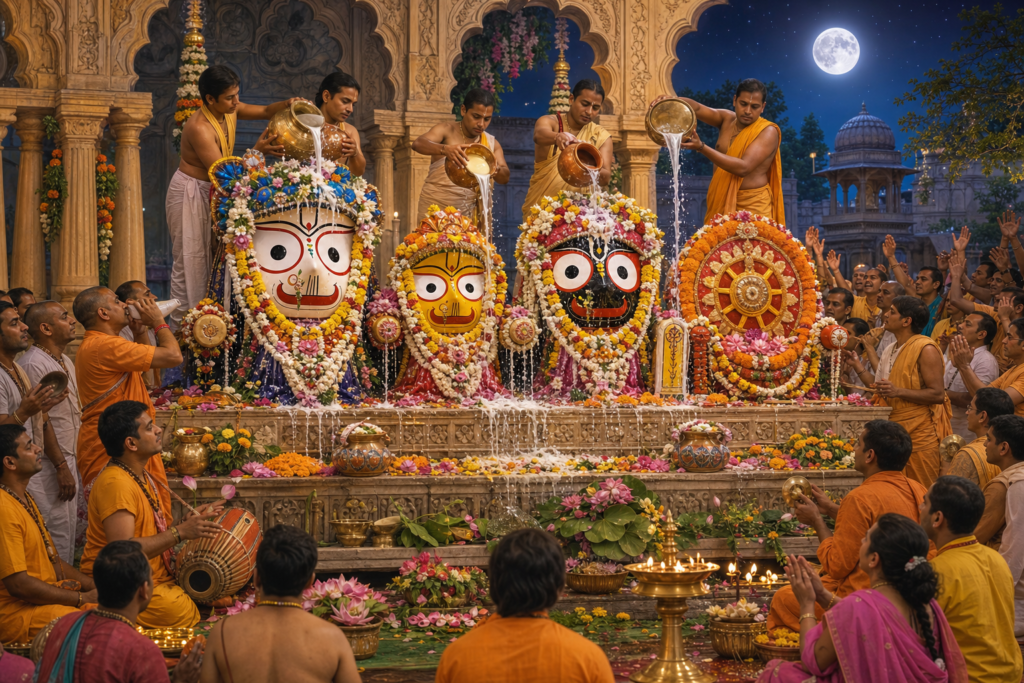
Ritually and socially, Hindu murti-sevā and festival calendars celebrate divine embodiment, with prāṇa-pratiṣṭhā making darśana a channel of grace. Jewish, Christian, and Islamic practices center on prayer, scripture, and ethical action; Christianity further sacralizes materiality through sacramental life. Each tradition, therefore, enacts the divine–human relationship in ways coherent with its metaphysics of presence and word.
Parallels within the broader dharmic family also illuminate avatar–prophet dynamics while affirming unity in diversity. Mahāyāna Buddhism’s bodhisattva ideal, for instance, presents enlightened beings who voluntarily “descend” into the world out of boundless compassion to alleviate suffering. While not divine creators, bodhisattvas embody the principle of skillful means (upāya) and salvific presence, resonating with the avatāra’s compassionate mission without asserting theistic incarnation.
In Jainism, the Tīrthaṅkarastwenty-four ford-makers in each cosmic cycleexemplify perfected beings who reestablish the path to liberation (moksha) through teaching and community formation. They are neither creators nor receivers of divine commands; they rediscover and exemplify eternal truth. Their cyclical appearance across time mirrors, in structure if not in ontology, the Hindu sense of recurring world-guides.
Sikhism venerates the ten Gurus as one Jot (light) in ten forms, culminating in the Guru Granth Sahib as the living Guru and the Guru Panth as the community of practice. This theology unites revelation, presence, and ethical discipline in a singular path to the One (Akal Purakh). While distinct from the avatāra doctrine, the Sikh view of continuous Gurūship resonates with the dharmic emphasis on living guidance and the transformative power of sacred presence.
These dharmic perspectives converge on spiritual pluralism: many upāyas for varied seekers within a shared aspiration toward liberation and ethical excellence. Concepts like Ishtadevotional preference for a divine formand the civilizational ethos of Vasudhaiva Kutumbakam foster respect for multiple pathways without erasing difference. Rather than demanding uniformity, dharmic thought tends to honor complementarity among karma, bhakti, and jñāna, and among distinct but harmonious traditions.
Commonalities across dharmic and Abrahamic worlds also deserve emphasis. All affirm a moral universe in which truth, justice, compassion, and self-restraint matter profoundly. All honor exemplars whose integrity, courage, and sacrifice inspire communities to live nobly. Miracles, while interpreted differently, often function as signs directing attention beyond the phenomenal toward the Real.
Misunderstandings frequently arise from category errors. Calling the Hindu avatāra “merely” a prophet misses the ontological claim of divine descent; calling the Abrahamic prophet “merely” a teacher overlooks the gravity of revealed speech and law. Likewise, flattening Hindu plurality into “many gods” ignores a sophisticated theology of one Brahman manifest in innumerable ways, while caricaturing Abrahamic traditions as narrow neglects their rich hermeneutics, mysticism, and ethical breadth.
Methodologically, “incarnation” itself bears different philosophical entailments across contexts. In Hindu systems, avatāra aligns with cyclical time, divine play (līlā), and the availability of grace through presence. In Christianity, the Incarnation is historically unique, bound to the person of Christ and salvation history. Judaism and Islam foreground divine transcendence, emphasizing revelation without divine embodiment, yet cultivate intense intimacy with God through prayer, remembrance, and moral obedience.
For interfaith engagement, a practical grammar emerges. First, clarify ontology before comparing functions: who or what is the figure in question? Second, distinguish source from messenger: is revelation identical with the person or delivered by the person? Third, map soteriology: does liberation or salvation arise through direct participation in the person’s being, obedience to revealed law, sacramental life, contemplative insight, or integrated pathways?
Equally important is attending to lived experience. Across India and the global diaspora, Hindus recount transformative darśana of Krishna or Shiva, while Buddhists speak of the palpable compassion of Avalokiteśvara; Jains revere the serene exemplariness of Mahāvīra; Sikhs feel guided by the Sabad (Word) of the Guru Granth Sahib. In parallel, Jews experience the enduring voice of Torah in communal study and prayer; Christians encounter Christ in Scripture, Eucharist, and neighbor-love; Muslims testify to the Qur’an’s inimitable power and the Prophet’s luminous character. These narratives humanize doctrine and anchor dialogue in humility.
Within Hinduism itself, schools nuance the avatāra’s nature. Advaita emphasizes the ultimate nondual Brahman, interpreting avatāra through māyā and upādhis (conditioning factors), whereas Vishishtadvaita, Dvaita, and Gaudiya Vaishnavism articulate degrees of personalist presence and the loving reciprocity of bhakti. Shakta traditions affirm the Divine Mother’s manifestationsDurga, Kali, and othersas world-engaging powers (Śakti) who protect, liberate, and nurture.
Similarly, Abrahamic traditions host profound inner diversity. Jewish thought ranges from rationalist medieval philosophy to the mystical currents of Kabbalah and Hasidism. Christianity includes Eastern Orthodox, Catholic, and myriad Protestant theologies, each deepening the meaning of Incarnation, grace, and Church. Islam’s legal schools, theology (kalām), Sufism, and varied cultural expressions elaborate tawḥīd, virtue, and God-consciousness (taqwā) in distinctive yet resonant ways.
A balanced synthesis may be stated succinctly. The Hindu avatāra is the Divine as saving presence in recurring forms across cosmic time, teaching and transforming by being the reality to which scripture points. The Abrahamic prophet is the divinely authorized human messenger who transmits God’s guidance, reforms communities, and secures fidelity to revelation, with Christianity uniquely claiming a singular Incarnation at the heart of salvation history. Both patterns elevate ethical responsibility, sanctify community, and orient the seeker toward ultimate truth.
Understanding these distinctions is not a prelude to competition but to mutual illumination. For dharmic traditionsHinduism, Buddhism, Jainism, and Sikhismrecognizing shared commitments to liberation, compassion, and disciplined practice strengthens unity without erasing difference. For engagement with Abrahamic faiths, appreciating the nobility of prophetic vocation alongside the mystery of avatāra fosters respect, reduces caricature, and opens space for genuine learning.
Ultimately, the comparative inquiry into avatāra and prophet clarifies how communities experience God’s nearnesswhether through divine embodiment, revealed word, or sanctified exemplarsand how they translate that nearness into just action, contemplative poise, and loving service. Such clarity advances interfaith dialogue, honors religious pluralism in India and beyond, and invites all to walk their chosen path with humility and conviction.
Inspired by this post on Hindu Blog.