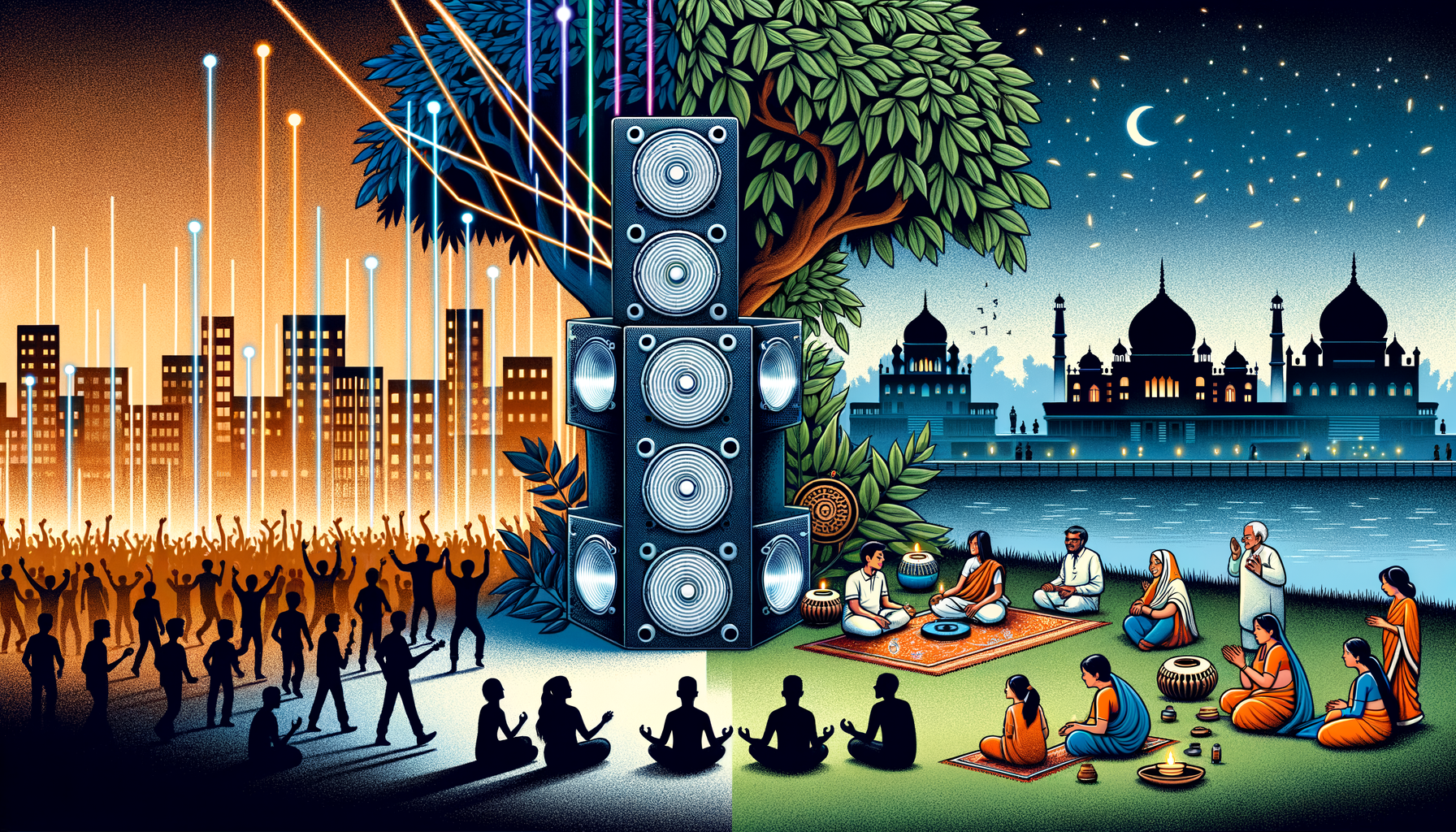
Debate around the “Sunburn” festival reflects a larger question facing Bharat: what kinds of public celebrations best serve a society rooted in devotion, dignity, and collective well-being. While large-scale electronic dance events promise tourism and entertainment, increasing evidence and public concerns point to their social costsnoise pollution, safety risks, and cultural dissonance. In a land where devotional music, mindful celebration, and community harmony have shaped public life, it is prudent to reassess whether rave culture aligns with these civilizational priorities.
Community impact is the first and most visible concern. High-decibel music, late-night scheduling, and crowd congestion can burden local residents, disrupt study and sleep cycles, and strain municipal services. Cities and temple towns with ongoing rites, festivals, and everyday rhythms of prayer often experience these disruptions acutely. For a society that values seva, shraddha, and social balance, minimizing noise pollution and neighborhood nuisance is not merely regulatory complianceit is an ethical responsibility.
Public health and safety form the second pillar of concern. International studies on comparable mega-events have recorded spikes in emergency responses due to crowd-related incidents, dehydration, and substance misuse. Indian law enforcement advisories routinely caution against such risks at large gatherings. While responsible attendees and organizers do exist, the structural risks of densely packed, stimulant-fueled environments are well documented. A youth-oriented culture can remain vibrant without normalizing behaviors that jeopardize mental clarity, bodily well-being, and community safety.
There is also a profound question of cultural alignment. The dharmic ethosshared across Hinduism, Buddhism, Jainism, and Sikhismforegrounds restraint, awareness, compassion, and collective uplift. Principles such as Ahimsa (non-harm), Aparigraha (non-excess), and disciplined celebration inform the Hindu way of life; Mettā in Buddhism, Ahimsa and self-restraint in Jainism, and Seva in Sikhism equally emphasize care for self and society. Normalizing a rave-centric celebration model, especially when amplified by aggressive marketing and aspirational branding, can sit uneasily with these shared values.
Supporters often argue that “Sunburn” drives tourism, jobs, and a modern cultural identity. Economic benefits, however, must be balanced against the long-term costs of strained public infrastructure, policing, healthcare responses, and environmental footprints. A more sustainable path is available: culturally rooted, safety-forward, and inclusive festivals that blend contemporary creativity with devotionalcohol-free or substance-free concerts, day-time youth music summits, and community-curated events near appropriate venues and away from sensitive residential or sacred zones.
Such alternatives need not be austere. Bharat’s musical heritagefrom kirtan and bhajans to folk traditions and classical fusionalready demonstrates how rhythm and rapture can uplift without excess. Thoughtfully designed events can feature modern production values, robust security, clear health protocols, green standards, and strict decibel/time caps, all while celebrating the nation’s living cultural tapestry. When celebration is aligned with care, joy becomes expansive rather than extractive.
Policy guidance can anchor this balance. Municipalities and state administrations can prioritize: (1) zoning that protects residential and sacred spaces; (2) enforceable noise and time regulations; (3) preventive health services and zero-tolerance policies on illicit substances; (4) transparent environmental benchmarks; and (5) community consultation that respects local traditions and livelihoods. These steps enable vibrant public culture while safeguarding the social fabric.
Crucially, the question is not whether youth should celebrate, but how celebration can remain life-affirming. A dharmic approach invites festivals that nurture clarity, camaraderie, and compassion rather than courting risk and excess. This approach does not stigmatize music or modernity; it simply asks that culture be curated with wisdomhonoring the shared heritage of Sanatana Dharma and its sister traditions while meeting contemporary aspirations.
Bharat has always innovated within its civilizational grammarrenewing forms without abandoning foundations. Reconsidering “Sunburn” and the broader rave culture within this framework is a call to protect harmony, champion youth well-being, and uphold cultural integrity. When celebrations reflect Ahimsa, Aparigraha, and Seva, they strengthen unity in diversity and preserve the living wisdom that makes this civilization resilient, inclusive, and radiant.
Inspired by this post on Hindu Jagruti Samiti.