

Once upon a time, in the vast deserts of Arabia, there was a wise and kind-hearted merchant who roamed the dunes with his trusty camel. They relied on each other for survival in the harsh desert, with the merchant providing shelter, and the camel, in return, carrying heavy loads through the endless sands.
One chilly night, a fierce desert storm swept through the dunes. The howling wind and stinging sand made it nearly impossible for the merchant and his camel to find shelter. Exhausted and desperate, the merchant decided to share his small tent with his faithful camel, believing it was a small act of kindness.

As the storm raged on, the camel rested its head inside the tent. The merchant thought this was a harmless gesture, but soon, the camel’s neck followed, then its hump, and finally, its whole body. Before the merchant realized it, he was pushed out of his own tent, forced to endure the storm outside.
Learning from the Past: The West’s Encounter with Islamist Jihadism
The West’s encounter with the Islamist jihadist mindset is a relatively new phenomenon, and its unique challenges have begun to manifest in recent decades. The rise of global jihadist movements, marked by acts of terror and radicalization, has prompted Western nations to grapple with unfamiliar ideological and security threats. This paradigm shift has led to complex debates surrounding multiculturalism, national security, and the preservation of democratic values.
In stark contrast, the Indian subcontinent, particularly Bharat (India), has a history spanning over 1500 years of enduring the Islamist jihadist mindset. The roots of this enduring challenge can be traced back to various historical invasions, from the Arab conquests to the Ghaznavid, Ghurid, and Mughal invasions, each leaving a profound impact on the cultural and religious fabric of the region. For Bharat, the experience of living alongside these historical transformations has fostered a deep understanding of how jihadist ideologies function.
A common template utilized by jihadists worldwide involves gaining sympathy or pity, followed by an infiltration phase into the host society. This is often succeeded by a systematic attempt to displace the original culture and values. The Indian subcontinent has witnessed this template in action over the centuries, as jihadist forces sought to establish their dominance and impose their religious and ideological beliefs on the indigenous cultures. The Indian experience serves as a significant historical lesson for Western nations facing a similar challenge today. By studying Bharat’s long history of resilience, Western societies can gain insights into dealing with this multifaceted threat, which encompasses not only security measures but also strategies for preserving democratic values and cultural diversity.
Exhibit A : Gradual but brutal Islamic invasion of India
The Arab Conquests: Traders Turned Conquerors – 7th century
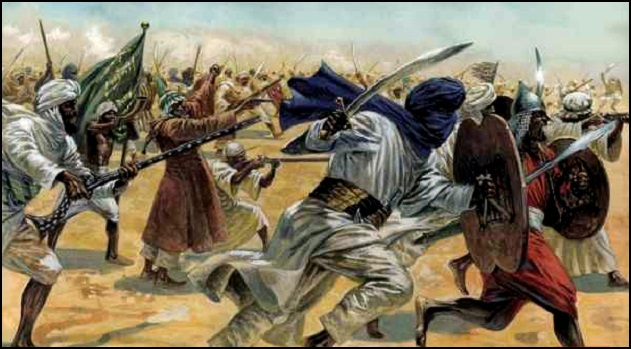
The Arab Conquests, which commenced in the 7th century, mark a somber chapter in history characterized not only by the spread of Islam but also by the subjugation of vast territories. These conquests were carried out by early Islamic Caliphates, notably the Rashidun and Umayyad Caliphates, with the dual objective of advancing their faith and extending their dominion.
The Arab Conquests represented a remarkable transformation of intent, where a people who had initially arrived as traders evolved into fervent conquerors. The prelude to these conquests lay in the flourishing trade routes that crisscrossed the Arabian Peninsula. Arab merchants traversed these ancient highways, connecting the distant realms of the Eastern Roman and Sasanian Empires.
Initially, their presence was that of merchants, benefiting from the prosperous trade and diverse cultural exchange that these routes facilitated. It was during this period that Islam was emerging as a major monotheistic faith in the Central Asian region, gradually uniting the Arabian tribes under a common religious banner. The transformation from traders to conquerors was swift and profound, driven by religious zeal and a desire to expand the Islamic faith.
Soon, the Arab forces commenced military campaigns, embarking on conquests that saw the rapid acquisition of vast territories. These conquests effectively shifted their role from traders seeking economic gain to conquerors driven by religious fervor. The result was a fundamental alteration of the political, religious, and cultural landscape across the conquered regions. The Arab Conquests thus began as a story of trade and swiftly transformed into a tale of relentless territorial expansion, imposing the new faith of Islam and forever altering the course of history.
The Ghaznavid Invasions (10th-12th centuries): Transformation of Intentions
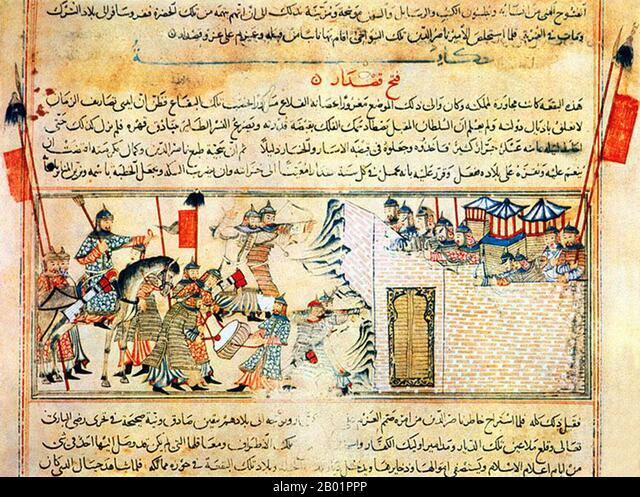
The Ghaznavid Invasions, occurring between the 10th and 12th centuries, represent a significant historical episode characterized by a notable transformation of intent. These invasions were conducted by the Ghaznavid dynasty, with its founder, Mahmud of Ghazni, playing a prominent role in the early stages.
Mahmud of Ghazni initially embarked on his campaigns with the primary goal of accumulating wealth and treasures. His military expeditions into the Indian subcontinent, particularly in the context of the plundering of rich temples and cities, were driven by a desire for material gain. During these early stages, his invasions were marked by the looting of priceless treasures and the subjugation of local populations.
However, over time, the objectives of the Ghaznavid Invasions underwent a significant shift. Mahmud of Ghazni began to recognize the potential for political and religious influence in the regions he had conquered. With the burgeoning influence of Islam, the Ghaznavid ruler transitioned from being a mere plunderer to a proselytizer. Mahmud understood that the conversion of the local populations to Islam would result in a more stable and unified empire.
As a result, the later Ghaznavid Invasions saw an emphasis on spreading the Islamic faith. Mahmud initiated a series of religious campaigns alongside his military conquests, seeking to establish Islamic rule in the newly acquired territories. This shift in intentions transformed the nature of the Ghaznavid Invasions from mere conquests for wealth to a convergence of territorial expansion and religious propagation.
The Ghaznavid Invasions thus serve as a historical example of how conquests driven initially by material gain can evolve into campaigns of ideological significance, shaping the course of history and leaving a lasting impact on the regions they touched.
The Delhi Sultanate (13th-16th centuries): Shifting Intentions

The Delhi Sultanate, which spanned the 13th to the 16th centuries in the Indian subcontinent, provides an intriguing narrative of evolving intentions over the course of its existence. The early phase of the Delhi Sultanate was characterized by the ambition of establishing a dominant Islamic authority in the Indian subcontinent. The early rulers, including Qutb-ud-din Aibak and Iltutmish, sought to expand their dominion and assert their authority over newly acquired territories.
However, as the Delhi Sultanate endured and experienced successive dynasties, the intentions of its rulers underwent a significant transformation. With the advent of the Khilji dynasty and later the Tughlaq dynasty, the focus shifted from mere territorial expansion to the establishment of an Islamic state (under the caliphate) and the consolidation of power.
Exhibit B: The Kashmiri Hindu Genocide of the 1990s – A Tragic Transformation
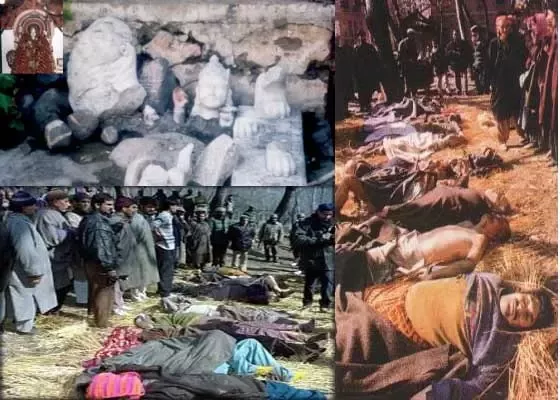
The history of Kashmir is deeply intertwined with its Hindu heritage, with references to the land’s origin associated with the legendary sage Rishi Kashyap. For centuries, the Kashmir Valley was a sanctuary of spiritual and cultural richness for Hindus, and its iconic temple architecture and traditions were intrinsic to the region’s identity.
Muslims came to the Kashmir Valley with noble intentions, seeking refuge from the turbulent events occurring in other parts of the Indian subcontinent (present day Afghanistan & west Pakistan). It was meant to be a haven of coexistence and harmony. But, as time passed, demographic shifts occurred, and the Muslim population reached a critical mass, transforming the once-peaceful coexistence into a gruesome tragedy.
In the early 1990s, the Kashmiri Hindu community, known as Kashmiri Pandits, endured a horrifying ordeal. The shift from a Hindu-majority population to a Muslim-majority one triggered a devastating transformation. The radicalization and rise of separatist movements resulted in a spate of violence, as homes of Kashmiri Pandits were looted, women were raped, and entire neighborhoods were set ablaze. The exodus of the Kashmiri Pandits from their ancestral homeland marked one of the darkest chapters in the history of modern India. The transformation of what was once a place of spiritual and cultural unity into a site of terror and persecution stands as a stark reminder of the tragic consequences of a transformation fueled by intolerance and extremism.
Exhibit C: Radicalization in Western Nations – A Growing Concern

In several Western nations, the problem of radicalization within Muslim communities has become an increasing concern. A significant factor contributing to this issue is the problem of illegal Muslim immigration, leading to the formation of Muslim-exclusive neighborhoods where little inter-mixing with native populations occurs. This isolation can breed a sense of detachment and a lack of engagement with the broader society.
Furthermore, some segments of these communities may struggle to contribute to society and, in certain cases, have larger families heavily reliant on state-funded social support. This dependency on public resources can exacerbate tensions and grievances within these communities.
Mosques, originally meant to be places of worship and community gathering, are increasingly being exploited as centers for radicalization. Vulnerable youth can be drawn into extremist ideologies within these religious institutions, further contributing to the problem.
Radicalization often includes adopting an anti-Western stance in global matters, which can pose security risks and challenge the principles of inclusivity and diversity that many Western nations hold dear. Addressing these issues requires a comprehensive approach that combines improved immigration policies, community engagement, and strategies to counter extremist narratives to ensure that Western nations remain vibrant and inclusive societies while tackling the menace of radicalization.
Here are 10 specific incidents of radicalization and extremism in Western nations, along with their sources:
- 2005 London Bombings (7/7 London Attacks): On July 7, 2005, four suicide bombers attacked London’s public transportation system, killing 52 people and injuring hundreds. The attackers were British citizens radicalized by extremist ideology. Source: BBC
- 2013 Boston Marathon Bombing: Two brothers, Tamerlan and Dzhokhar Tsarnaev, carried out a bombing at the Boston Marathon on April 15, 2013. Three people were killed and hundreds were injured. The brothers were radicalized, in part, by online extremist content. Source: NPR
- 2014 Sydney Siege: Man Haron Monis, an Iranian-born Australian, held hostages in the Lindt Chocolate Cafe in Sydney, Australia. Two hostages were killed during the siege. Monis had a history of extremism and criminal activity. Source: ABC News
- 2015 Paris Attacks: On November 13, 2015, a series of coordinated terrorist attacks occurred in Paris, France, resulting in 130 deaths and hundreds of injuries. The attackers had connections to extremist groups. Source: BBC
- 2016 Orlando Nightclub Shooting: Omar Mateen, an American citizen, opened fire at a nightclub in Orlando, Florida, on June 12, 2016, killing 49 people and injuring many others. Mateen had expressed support for extremist groups. Source: The New York Times
- 2017 London Bridge Attack: In June 2017, three attackers drove a van into pedestrians on London Bridge and then carried out a stabbing spree, killing eight people. The attackers had been influenced by extremist ideology. Source: The Guardian
- 2017 Quebec Mosque Shooting: Alexandre Bissonnette opened fire at a mosque in Quebec City, Canada, on January 29, 2017, killing six people and injuring several others. Bissonnette had expressed far-right and anti-immigrant views. Source: CBC News
- 2019 Christchurch Mosque Shootings: Brenton Tarrant, an Australian citizen, carried out mass shootings at mosques in Christchurch, New Zealand, on March 15, 2019, killing 51 people and injuring dozens. Tarrant was influenced by far-right extremist ideologies. Source: Al Jazeera
- 2019 Poway Synagogue Shooting: In April 2019, a shooting occurred at a synagogue in Poway, California, USA, resulting in one death and several injuries. The attacker, John Earnest, had expressed far-right and anti-Semitic views. Source: The New York Times
- 2020 Vienna Terror Attack: On November 2, 2020, a terrorist attack took place in Vienna, Austria, in which four people were killed and many others were injured. The attacker had been radicalized and had ties to ISIS. Source: BBC
Conclusion: A Broken Spine or Resilience in the Face of Challenges?
In an increasingly interconnected world, where nations grapple with the complexities of multiculturalism and democratic values, the challenges of extremism and radicalization loom as a looming concern. To consider the consequences of unfettered appeasement and uncontrolled extremist ideologies is to envision the potential collapse of the delicate balance between compassion and national interest. The cautionary tales of history remind us that bending too far in one direction may lead to unforeseen and unpalatable outcomes.
The fable of the camel and the merchant, drawn from the Arabian sands, serves as a poignant reminder of the potential consequences of accommodating extremist ideologies. Like the camel in the tent, the embrace of extremist ideals can transform intent. The tragic history of Islamic invasions in India speaks to the transformation from traders to conquerors, changing not only territorial boundaries but the very fabric of civilization.
We find another sobering lesson in the plight of the Kashmiri Pandits, who once called the paradisiacal land of Kashmir home. The change of intent that occurred when the demographic balance shifted altered their lives irrevocably. Their forced exodus serves as a harrowing example of how unchecked extremism can disrupt the harmony of diverse societies.
The series of terror attacks listed above, spanning the globe and devastating the lives of innocent people, remind us that complacency in the face of extremism can have dire consequences. If Western nations do not address the rise of extremist Islamic jihadist ideologies on their soil, they risk seeing a pattern of intent that mirrors the historical events discussed.
In conclusion, it is incumbent upon Western democracies to maintain a delicate balance between empathy and pragmatism. While embracing those in need and fostering diversity are commendable goals, it is essential to keep a vigilant eye on the rise of extremist ideologies. Without careful consideration, the camel may indeed push the merchant out, leading to unintended consequences, transforming intent, and putting native populations at risk. The challenge is clear: to navigate the path of resilience and protect the values that form the backbone of their nations.
The story of the camel and the merchant reminds us that wisdom lies in understanding when to stand firm and when to extend a hand.