
This long-form analysis expands the questions raised by News18’s July 8, 2026 commentary and incorporates additional historical, legal and political context. It separates reported events, party statements and interpretive judgments so that political opportunism is treated as a proposition to be tested rather than a slogan.
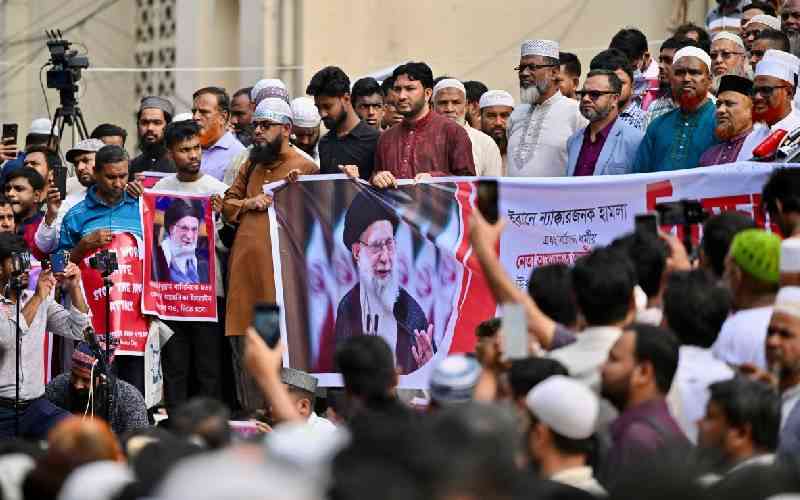
The image is deceptively simple: two delegations from Bangladesh travelled to Iran for the state mourning ceremonies of Ayatollah Ali Khamenei. One represented the Bangladeshi state; the other represented the parliamentary alliance led by Bangladesh Jamaat-e-Islami. Yet behind that ceremonial overlap lies a consequential question about Bangladesh politics. Does Jamaat’s outreach to Iran reflect principled solidarity, ordinary diplomatic pragmatism or an effort to present different political faces to different audiences?
That question matters because political flexibility is not automatically political opportunism. Every serious party must communicate with ideological supporters, undecided voters, neighbouring governments, trading partners and strategic rivals. A party may also revise old positions after electoral defeat, generational change or democratic participation. Adaptation becomes opportunism only when declared principles are applied selectively, inconvenient facts are concealed, or incompatible promises are offered without explaining the trade-offs between them.
The event that exposed the tension. Ayatollah Ali Khamenei was killed on February 28, 2026, in the opening U.S.-Israeli strikes on Iran. His funeral was delayed while the conflict continued and eventually became a multi-day state event beginning on July 4. Contemporary reporting described both the scale of the ceremonies and their overt political symbolism, including condemnation of the United States and Israel. Those facts place the Bangladeshi visits within an active war rather than a routine period of bilateral diplomacy, as documented in Associated Press coverage of the funeral.
Bangladesh’s official delegation was headed by Parliament Speaker Hafiz Uddin Ahmad. Separately, the Jamaat-led alliance dispatched a delegation headed by Jamaat Nayeb-e-Ameer and Member of Parliament Professor Mujibur Rahman. Jamaat said that the delegation would convey “deep condolences, sympathy and solidarity” and hoped to deepen Iran-Bangladesh cooperation. The visit, scheduled from July 3 to 9, also included possible meetings with senior Iranian officials, according to reporting on the alliance delegation. The Speaker’s participation, by contrast, was an act of official state diplomacy documented by Bangladesh Sangbad Sangstha.
The separate alliance mission was politically significant because Jamaat was no longer a marginal or underground movement. In the February 2026 parliamentary election, Jamaat won 68 seats, while its allies increased the alliance total to 77. It consequently emerged as the principal parliamentary opposition. An autonomous visit to Tehran therefore functioned as opposition diplomacy: it allowed the alliance to display international access, reinforce its Islamic identity and signal that it possessed an alternative foreign-policy voice.
The language used in Dhaka. Jamaat had already organised a protest near the Baitul Mukarram National Mosque on March 1. Party leaders condemned the U.S.-Israeli attacks and presented Khamenei’s killing as an assault not only on Iran or Muslims but also on “democracy, human rights and humanity.” ATM Azharul Islam warned that continued Israeli attacks could strengthen calls to boycott Israeli products. Contemporary reports also recorded demands for intervention by the Organisation of Islamic Cooperation, as summarised by The Financial Express.
The News18 commentary identifies a revealing asymmetry in that rhetoric. Israel received a direct warning, while the United States—despite its central role in the joint operation—was treated more cautiously. Silence in one reported speech is not conclusive evidence of an institutional policy, and a full transcript would always be preferable. Nevertheless, selective emphasis is politically meaningful when the same party is simultaneously cultivating Washington, discussing trade and tariffs with American officials, and presenting itself as a potential governing partner acceptable to Western capitals.
Legal vocabulary should be precise. If a political party describes a military strike as an attack on humanity or democracy, it should explain the governing rule. Under the United Nations Charter, the use of force is generally prohibited by Article 2(4), subject principally to Security Council authorisation and the right of self-defence in Article 51. During armed conflict, international humanitarian law separately requires distinction, proportionality and precautions to protect civilians. A serious legal position should identify which rule was allegedly breached and apply the same standard regardless of the attacker’s identity.
Islam and Islamism must not be conflated. In this discussion, Islamism refers to a political project that places a particular interpretation of Islamic principles at the centre of state and public policy. It is not a synonym for Islam, for Muslims, for conservatism or for violence. Criticism of Bangladesh Jamaat-e-Islami is therefore criticism of a political institution, its history, organisational rules and public conduct—not a judgment on Bangladesh’s Muslim citizens or their faith.
A practical definition of opportunism. Pragmatism adjusts methods while preserving an intelligible set of objectives. Democratic moderation openly revises an earlier position, explains why it changed and embeds the new commitment in rules. Opportunism, by contrast, changes the apparent principle according to the audience or immediate advantage while avoiding responsibility for the contradiction. Realpolitik can be morally uncomfortable but transparent; opportunism depends more heavily on ambiguity, selective memory and deniable messaging.
Six tests help distinguish these categories. The first is universality: does the party condemn equivalent conduct by allies and adversaries? The second is institutionalisation: do speeches become charter amendments, candidate selections and parliamentary votes? The third is cost: does the party uphold a principle when doing so threatens trade, votes or diplomatic access? The fourth is transparency: are policy changes explained? The fifth is internal equality: do women and religious minorities share decision-making power? The sixth is historical accountability: does the organisation acknowledge documented wrongdoing and specify measures against repetition?
Why multiple faces are politically useful. Jamaat addresses several audiences whose expectations do not naturally align. Its ideological base values Muslim solidarity and resistance to Western power. Exporters and workers require stable access to American and European markets. Nationalist voters respond to sovereignty disputes with India. Younger voters may be attracted by discipline, welfare activity and anti-corruption claims. Women and religious minorities seek credible guarantees of equal citizenship. Foreign diplomats want predictability. Strategic ambiguity allows each audience to emphasise the portion of Jamaat’s programme it finds reassuring.
The historical foundation. Jamaat belongs to the wider movement established by Abul A’la Maududi in British India in 1941. Maududi treated Islam as a comprehensive social and political order, not merely a sphere of private devotion. Bangladesh Jamaat-e-Islami inherited this cadre-based tradition while operating in a Bengali, electoral and constitutionally complex environment. Scholarship on the party therefore describes neither an entirely static movement nor an ideologically empty electoral machine. It describes an organisation repeatedly compelled to reinterpret doctrine under local political pressure, as examined in Modern Asian Studies.
This dynamic resembles what political scientists call inclusion-driven moderation: participation in elections can encourage a movement to broaden its programme, recognise new constituencies and accept institutional constraints. The same process, however, can produce cosmetic moderation when inclusive language is adopted for electoral access without redistributing internal power. The difference cannot be established from slogans. It must be measured through organisational membership, leadership pathways, policy documents, disciplinary decisions and conduct after the election.
The unresolved weight of 1971. Jamaat’s predecessor opposed Bangladesh’s independence and supported a united Pakistan during the Liberation War. Senior figures associated with the party were later convicted of grave crimes committed during that conflict. This history cannot responsibly be erased by presenting every discussion of 1971 as contemporary partisan propaganda. At the same time, current members should not be assigned personal criminal guilt merely by association. Institutional responsibility and individual criminal responsibility are related but legally distinct questions.
The International Crimes Tribunal proceedings created another necessary distinction. Accountability for murder, rape and crimes against humanity was indispensable, but organisations including Human Rights Watch criticised retroactive changes and failures of fair-trial safeguards. It is possible to recognise the seriousness of the underlying crimes while also insisting that every defendant receive due process. Neither historical denial nor procedurally defective justice serves the democratic memory of the Liberation War.
Suppression, return and electoral legitimacy. Sheikh Hasina’s government banned Jamaat and its affiliates under anti-terrorism law during the 2024 uprising. The interim administration revoked that measure weeks later, stating that it had found no specific evidence tying the organisations to the alleged terrorist activity cited in the ban, as Reuters reported. In June 2025, the Supreme Court cleared the way for restoration of Jamaat’s electoral registration, and the Election Commission subsequently restored its scales symbol. These decisions established legal political status; they did not adjudicate every historical or ideological controversy surrounding the party.
The 2026 election then transformed legal return into democratic power. Official preliminary figures gave Jamaat 68 seats and more than 23 million votes, while the wider alliance obtained 77 seats. That result was Jamaat’s strongest performance and entitled it to be treated as a major representative institution. Democratic legitimacy, however, authorises participation and opposition; it does not exempt a party from constitutional scrutiny, minority-rights obligations or accountability for its own claims.
The new manifesto presents a different face. Jamaat’s 2026 election manifesto promises a discrimination-free state, equal rights, stronger parliamentary oversight, independent prosecution, media freedom, women’s participation and representation for religious and ethnic communities. It also promises to establish the ideals of the Liberation War—equality, human dignity and social justice—and to teach its accurate history. In foreign policy, it combines constructive relations with India and Western states with an explicit priority for stronger ties across the Muslim world.
Those commitments are substantial enough to be evaluated seriously. They may represent generational reform, strategic adaptation or both. Yet a manifesto is an offer, not proof of delivery. The decisive questions are whether its language changes internal rules, whether Jamaat legislators defend the same freedoms for opponents, whether minorities enter senior leadership, and whether the party accepts historical findings that remain uncomfortable for its institutional identity.
Iranian solidarity is not automatically cynical. A predominantly Sunni Islamist party’s public respect for a Shi’a leader can be understood as pan-Islamic solidarity that crosses sectarian boundaries. It may also reflect opposition to externally imposed regime change, concern about regional war or support for national sovereignty. Attendance at a funeral does not by itself demonstrate endorsement of Iran’s clerical system, domestic repression or every element of Khamenei’s record. Academic analysis should resist converting diplomatic condolence into guilt by association.
The American relationship reveals the harder calculation. Jamaat representatives met senior American officials before and after the Iran strikes. On March 5, a party delegation met the U.S. Assistant Secretary of State for South and Central Asian Affairs. Jamaat also asked Washington to reduce tariffs and softened its position on a reciprocal trade agreement, according to The Daily Star. In June, the U.S. ambassador met Jamaat’s chief to discuss bilateral trade, investment and economic policy.
Such engagement is rational. Bangladesh’s export economy is heavily dependent on ready-made garments, and the United States remains a crucial market. An opposition party claiming readiness to govern would be irresponsible if it refused contact with Washington merely to preserve protest rhetoric. The relevant criticism is therefore not that Jamaat speaks to both Tehran and Washington. Its own manifesto expressly anticipates simultaneous cooperation with Muslim-majority countries and developed Western economies.
The credibility problem arises when the party does not reconcile its messages. If a joint military operation is described as an assault on humanity, both participating states should be addressed under the same legal standard. If relations with Washington must continue because of Bangladesh’s national interest, that necessity should be stated openly. Voters can understand difficult diplomacy. What weakens trust is a division of labour in which emotionally forceful language is reserved for low-cost targets while economically powerful actors receive carefully softened treatment.
India presents a comparable duality. The Jamaat-led alliance organised protests over alleged push-ins, border deaths and mistreatment along the India-Bangladesh frontier. These are legitimate subjects for evidence-based diplomacy, and Bangladesh has every right to defend its citizens and territorial sovereignty. At the same time, Jamaat’s manifesto promises peaceful and cooperative relations with India, while party leaders have participated in diplomatic outreach. Protest and engagement are compatible if criticism remains directed at policies and institutions rather than becoming hostility toward Indians, Hindus or Bengali cultural connections across the border.
Responsible India-Bangladesh relations require the same reciprocity from New Delhi. Border deaths, water sharing, migration, trade restrictions and the political consequences of India’s long support for the Hasina government cannot be dismissed as manufactured grievances. Yet Bangladesh’s domestic actors should also avoid using India as a permanent external enemy through which every internal failure is explained. National sovereignty is strengthened by precise negotiation and accountable border management, not by communal polarisation.
Pakistan cannot be approached through amnesia. Better Bangladesh-Pakistan relations may serve trade, regional cooperation and diplomatic stability. Jamaat leaders have supported renewed engagement while describing unresolved matters as questions for the two governments. Nevertheless, normalisation cannot require Bangladesh to forget the Liberation War, the conduct of Pakistani forces or the role of local collaborators. Reconciliation becomes credible when it includes acknowledgement, archival access, accountability and respect for victims—not when historical “baggage” is treated as an inconvenience to be discarded.
Parliament now provides a test unavailable during repression. Jamaat can translate rhetoric into motions, committee questions, proposed legislation and recorded votes. It can request publication of Bangladesh’s legal analysis of the Iran war, scrutinise agreements with major powers, demand transparent border investigations and propose safeguards for religious minorities. A party with 68 elected members should increasingly be judged by this institutional record rather than by rallies alone.
Internal democracy deserves equal attention. Jamaat’s published organisational constitution states that it seeks a welfare society based on equity and justice through democratic strategies. It also places obedience to Islamic principles at the centre of decision-making. The document separately states that a non-Muslim citizen may become an associate member and includes a distinct oath for non-Muslim members. Jamaat should clarify how these classifications affect voting rights, eligibility for senior committees and access to the party’s highest office.
Women’s representation reveals the gap between promise and practice. The organisational constitution set a goal of at least 33 percent women in committees by 2020, while the 2026 manifesto promises meaningful participation, women in key cabinet positions, workplace support and protection from violence. Yet Jamaat reportedly fielded no woman in the directly contested constituencies of the 2026 general election. The alliance later nominated women for reserved parliamentary seats, including several Jamaat nominees. That later representation is relevant, but it does not answer why women were absent from direct electoral competition.
Minority outreach must move beyond symbolism. Jamaat’s nomination of Krishna Nandi in Khulna-1 was widely reported as the party’s first Hindu parliamentary candidacy. It was an important departure from past practice and should not be dismissed merely because it also carried electoral advantages in a constituency with a substantial Hindu population. The stronger test is whether such participation becomes routine, whether minority representatives can dissent, and whether they influence policy rather than functioning as evidence displayed during campaigns.
Security is the decisive measure. Hindus and members of other religious and ethnic minorities have faced attacks, intimidation and property-related violence during Bangladesh’s turbulent political transitions. The motives have not always been identical: the Human Rights Watch country assessment and other investigations identify mixtures of religious prejudice, political revenge, local disputes and criminal opportunism. Differences over classification should not obscure the state’s duty to prevent violence, investigate promptly, prosecute fairly and publish reliable disaggregated data.
For Dharmic traditions—Hindu, Buddhist, Jain and Sikh—the essential demand is equal citizenship, not conditional protection granted in exchange for political loyalty. The same civic standard protects Christians, Ahmadi and Shi’a Muslims, Indigenous communities, atheists and dissenting Sunni Muslims. A temple, vihara, gurdwara, church, mosque or secular cultural gathering must be protected because the people using it possess equal rights. Religious harmony becomes durable only when it rests on law rather than the goodwill of whichever party is ascendant.
This framework also avoids a damaging civilisational trap. Protecting Bangladeshi Hindus and Buddhists does not require hostility toward Muslims, just as criticism of an Islamist party does not justify contempt for Islam. Bengali history contains shared language, music, neighbourhoods, markets and memories that cannot be reduced to rival religious blocs. Dharmic unity is strengthened when it supports universal dignity and resists the political use of fear against any community.
Historical apology requires specificity. Jamaat chief Shafiqur Rahman asked forgiveness in 2025 from anyone harmed by the party’s conduct, and a later statement was presented as an unconditional apology for suffering caused since 1947. Critics responded that an apology for 1971 should explicitly identify 1971, acknowledge the organisation’s position and address victims. That criticism is analytically sound: reconciliation requires a factual account, responsibility, remorse, repair and safeguards against repetition. A broad expression of regret can begin that process but cannot substitute for it.
Evidence of genuine transformation would be observable. It would include an explicit historical resolution on 1971; equal leadership pathways for citizens of every faith; publication of progress toward women’s representation targets; transparent candidate-selection rules; disciplinary action against communal incitement; consistent condemnation of abuses by allies and adversaries; audited welfare institutions; and parliamentary votes matching manifesto commitments. None of these measures requires voters to accept or reject Jamaat’s religious worldview. They simply permit its democratic claims to be verified.
A useful accountability method is to create a public consistency record containing six fields for every major issue: the claim, the intended audience, the legal principle invoked, the proposed policy, the action taken and the measurable outcome. Applied to Iran, the record would compare statements about the United States and Israel with parliamentary action and diplomatic meetings. Applied domestically, it would compare promises of pluralism with candidate lists, leadership composition, hate-speech discipline and prosecution data. This approach turns ideological debate into evidence-based political analysis.
The human stakes should remain visible beneath that technical framework. A garment worker needs access to foreign markets without becoming expendable in great-power politics. A Hindu family should not have to calculate whether a festival can be observed safely after an election. A Muslim household may want solidarity with civilians in Iran while also wanting peace, jobs and stable relations with the United States. A young woman evaluating Jamaat’s promises needs more than protective rhetoric; she needs equal opportunity to lead.
The standard must apply to every party. Opportunism is not unique to Jamaat. The Awami League invoked secularism while presiding over serious repression, and other Bangladeshi parties have alternated between religious, nationalist and democratic language according to electoral need. A durable democracy cannot depend on one party’s monopoly over the Liberation War, religion, nationalism or reform. It requires competitive politics bounded by constitutional rights, fair trials, peaceful succession and equal citizenship.
Bangladesh Jamaat-e-Islami’s many faces may ultimately reflect a mixture of ideological continuity, democratic adaptation and calculated political expedience. The Tehran delegation alone cannot settle the question. It does, however, illuminate the central test: whether the party can connect Muslim solidarity, national sovereignty, Western economic engagement, relations with India and Pakistan, women’s participation and minority rights through one consistent set of rules. When different audiences receive different emphases but the same rights and legal principles, plurality can be legitimate statecraft. When principles change with the audience and the cost, the politics of opportunism remains the more persuasive explanation.
Inspired by this post on Hindu Post.








Leave a Reply
You must be logged in to post a comment.