
This article was originally posted on the Chanakya Forum.
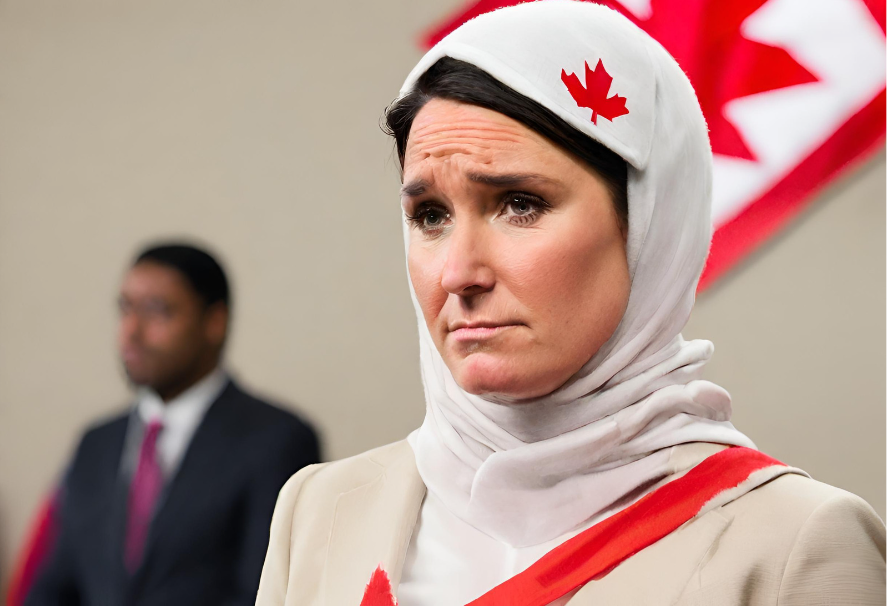
Canadian Prime Minister Justin Trudeau was booed during his visit to a mosque in Toronto over his response to the Israel-Hamas war, The Toronto Sun reported.
According to The Toronto Sun, Liberal MPs in Canada are joining calls by Muslim groups for Canada to push for a ceasefire in the region, while major Canadian Jewish groups have demanded Trudeau retract an earlier comment as lending credence to the claim by Hamas that Israel was responsible for an attack on a hospital in Gaza city.
Additionally, the federal New Democrats, who entered into a confidence-and-supply agreement with the minority Liberal government last year, are also calling for a ceasefire.
The Toronto Sun cited a video post on X by a Global News reporter which showed some people gathered in the mosque are heard saying “shame” during Trudeau’s visit on Friday and urging a facilitator not to let the Canadian PM speak at the podium. The video shows Trudeau addressing the dozens gathered, thanking them for allowing him to “pray alongside you in this difficult time,” the daily reported.
The daily said that the Prime Minister’s Office confirmed Trudeau attended the International Muslims Organization of Toronto on Friday “to show his support to those impacted in the Muslim community from the horrific events in the Middle East.”
“Everyone is hurt and hurting, everyone is grieving, everyone is scared of what this means,” Trudeau told reporters on Friday in Brampton, Ontario when asked if his caucus is at odds over how the Liberals should respond.
The Toronto Sun reported that the Toronto-area Liberal MP Salma Zahid, who is chair of the Canada-Palestine Parliamentary Friendship Group have written a letter to the Canadian PM that laid out certain demands in consideration of 33 MPs.
The letter demands Canada to join the call for an immediate ceasefire, help facilitate the opening of a humanitarian corridor and stand up for international Law, which was signed by 23 backbench Liberal MPs, eight NDP MPs and both Green Party MPs.
“International law is clear that innocent civilians and all those not taking part in the fighting must on no account be attacked and must be spared and protected,” the letter said.
On Thursday, a dozen Muslim, Jewish and Arab MPs from the Liberal caucus met to discuss the conflict. Israel declared war against Hamas after the militant group killed 1,400 Israelis in a brazen attack on Oct. 7. Hamas, which Canada considers a terrorist organization, has control over the Gaza Strip, reported The Toronto Sun.
Tensions have risen across the Middle East as Israel has retaliated with airstrikes and cut off the Palestinian territory’s access to water, food and electricity. The United Nations says this violates international humanitarian law. (ANI)
Please consider supporting Chanakya Forum and following their twitter account.
Editor’s Note
In recent years, Canada has witnessed a growing trend of appeasement policies aimed at the Muslim community, purportedly as a gesture of inclusivity and understanding. While fostering an inclusive society is a commendable goal, a critical examination of the potential unintended consequences of these policies becomes essential. It is essential to recognize that the Muslim community is not a monolithic entity; rather, it comprises a diverse spectrum of beliefs, values, and expectations. In this context, any short-term appeasement efforts for political gain can have detrimental effects on the fabric of Canadian society.
Appeasement, as a political strategy, often stems from a well-intentioned desire to bridge gaps and foster unity. However, history reminds us that it is a strategy fraught with challenges. The danger lies in assuming that such policies will suffice to meet the multifaceted needs and expectations of a diverse community. The Muslim community, like any other, cannot be satisfied through a one-size-fits-all approach. In reality, appeasement might lead to a never-ending cycle where demands grow more substantial, potentially sowing the seeds of discord.
The fundamental risk of persistent appeasement is that it can further polarize Canadian society. As appeasement policies favor one community, they inadvertently alienate others, resulting in a society divided along ethnic, religious, or cultural lines. Such divisions can lead to social discord, eroding the sense of unity that Canada has worked so hard to build. To safeguard social cohesion, it is crucial that we strike a balance between addressing the specific needs of communities and ensuring equitable treatment for all.
Moreover, the unanticipated outcome of appeasement is its potential to create fertile ground for radicalization and extremist ideologies. As some individuals feel that their concerns are left unaddressed due to a focus on appeasing specific groups, they may become more vulnerable to extremist narratives, seeking an outlet for their grievances in radical ideologies. Consequently, appeasement, intended to foster inclusivity, may inadvertently drive segments of the population towards radicalization.
In conclusion, while promoting an inclusive society is undoubtedly a noble pursuit, it is crucial to understand the complexities of implementing appeasement policies. The Muslim community, like any other, is diverse, and appeasement is an inherently problematic approach. The risk of never-ending demands, social polarization, and the potential promotion of extremist ideologies underline the importance of striking a balance between addressing specific community needs and upholding the values of a united and inclusive Canadian society. True inclusivity involves listening to all voices, fostering open dialogue, and ensuring equitable treatment for all its citizens.