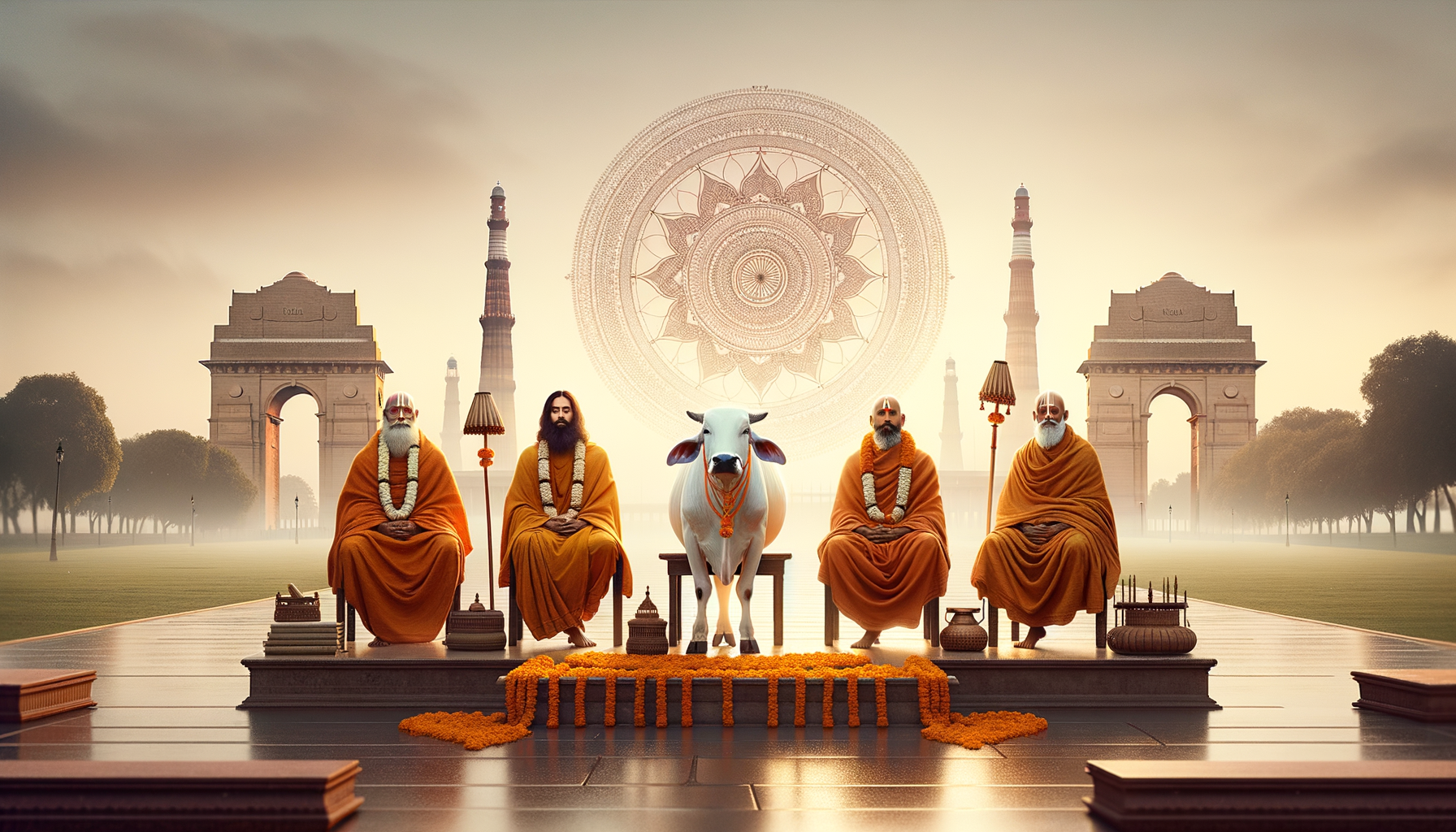
A major Delhi Gau Raksha event is planned in January 2026 under the banner “Gau Mata Rashtra Mata,” where four Shankaracharyas are expected to share one platform for the first time in 19 years. The convergence is significant for Hinduism and the broader dharmic community, signaling a rare moment of collective guidance on cow protection, ethical stewardship, and social harmony within Sanatan Dharma.
Public memory recalls few occasions when multiple Shankaracharyas have appeared together, and such moments have historically served as touchstones of continuity and consensus in religious life. In this context, the “Gau Mata Rashtra Mata” conference is poised to offer measured, tradition-grounded reflections on Gau Raksha, emphasizing compassion (karuna), non-violence (ahimsa), and community welfare as mutually reinforcing values.
The gathering occurs amid discussions associated with Avimukteshwaranand, which have drawn attention to interpretive differences within contemporary discourse. Rather than amplifying contention, the conference framework underscores respectful dialogue and shared purpose. By prioritizing ethical clarity and unity in spiritual diversity, the event aligns with the long-standing dharmic commitment to resolving differences through deliberation, scholarship, and seva.
The program is expected to highlight practical pathways for Cow Protection in Bharat, including humane animal care, sustainable agriculture, ecological balance, and informed civic engagement. Themes such as rural livelihoods, legal frameworks, and temple-based community responsibility are likely to feature prominently. Delhi, as a national hub, offers an inclusive platform for stakeholderscommunity groups, temple trusts, scholars, and youth volunteersto collaborate on constructive, non-partisan solutions.
While the conference centers on Hindu traditions, its message resonates across dharmic lineages. Jainism’s ahimsa, Buddhism’s emphasis on compassion, and Sikh seva converge with Hindu principles in advocating dignity for living beings and environmental responsibility. This orientation supports social cohesion and reinforces that reverence for lifesymbolized here by Gau Matacan serve as common ground for inter-community goodwill within the dharmic family.
Observers anticipate that the presence of the four Shankaracharyas will bring academic rigor and scriptural depth to public understanding of Gau Raksha. Outcomes may include consensus statements on compassionate animal welfare, recommendations for civic education through temples and community institutions, and guidance for volunteers to support shelters, fodder banks, and veterinary outreach with transparency and accountability.
Beyond immediate policy conversation, the “Gau Mata Rashtra Mata” conference invites communities to cultivate everyday practices that express dharmic ethics: reducing waste in food systems, supporting sustainable dairying and fodder cultivation, organizing inter-tradition study circles, and hosting temple workshops on ecology and ethics. These measures strengthen local resilience while honoring religious duty (dharma) in practical life.
In sum, the Delhi Gau Raksha Event represents an academically grounded, socially conscious moment for India. By drawing together four Shankaracharyas after nearly two decades, it promises careful reflection, unifying counsel, and a values-based roadmap that integrates spirituality, environmental stewardship, and community well-being under the shared ideals of Sanatan Dharma.
Inspired by this post on Struggle for Hindu Existence.