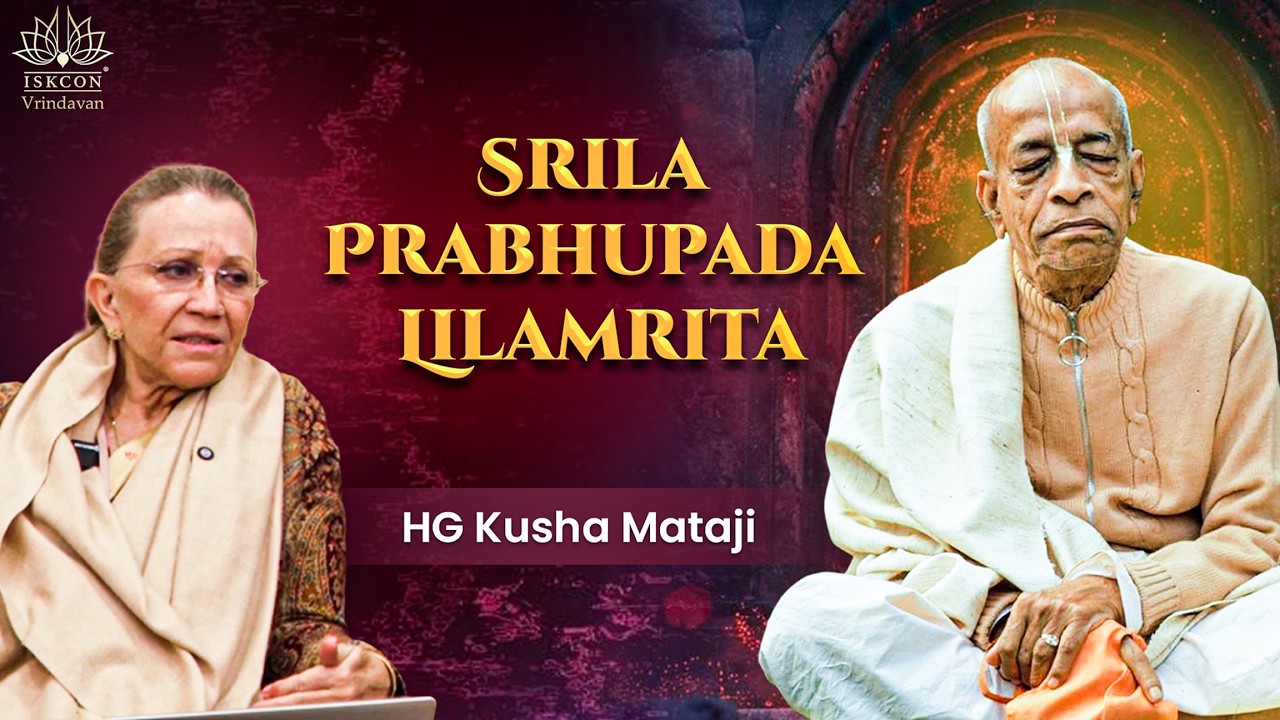
This reflection examines the early history of ISKCON’s London mission (1968–1969) as presented by HG Kusha Mataji, interlacing Jamuna Devi’s and Shyamasundar’s recollections with contemporary letters from Srila Prabhupada. By juxtaposing multiple memoirs as parallel timelines, the account clarifies what converges across testimonies and what gently diverges, allowing the historical narrative to remain both precise and humanly textured.
Read together, these sources illuminate the disciplined yet compassionate way Srila Prabhupada trained and empowered new devotees in Krishna consciousness. The pace was strikingswift, purposeful, and pedagogically soundanchored by letters that functioned as living guidance. Even slight differences in memory, far from weakening the record, enhance authenticity and deepen trust in the overall chronology of ISKCON London’s formative phase.
The recollections of Jamuna Devi and Shyamasundar evoke the atmosphere of early outreach in London: concentrated sadhana, public kirtan, and steady engagement with seekers. Within months, a small circle took on responsibilities far beyond its size, reflecting a Gaudiya Vaishnava ethic of service that combined humility with initiative. The letters from Srila Prabhupada consistently reinforced clarity of purpose, personal accountability, and unity of mission.
Methodologically, placing memoirs and letters side by side reveals how lived experience and written instruction informed one another. Where memories align, they underscore shared milestonesmoments of guidance, correction, and encouragement. Where they differ in nuance, they remind readers that history is not merely a sequence of facts but a synthesis of perspectives, each carrying emotional weight and devotional insight.
At the heart of this narrative is a leadership model marked by presence, precision, and care. Srila Prabhupada’s training combined philosophical depth with immediate application: developing competence in kirtan and scripture, cultivating personal discipline, and building resilient community bonds. Such formation speaks to a wider dharmic ideal recognizable across Hinduism, Buddhism, Jainism, and Sikhismwhere seva, compassion, and inner discipline converge to sustain spiritual communities.
The London mission’s early momentum further illustrates how devotion and organization can coexist without friction. The team’s rapid learning curve, guided by direct correspondence, demonstrates a transferable template for community-building: clarify the goal, trust the process, and honor individual strengths within a shared spiritual framework. This balance between structure and inspiration remains a powerful lesson for contemporary practitioners and cultural historians alike.
Beyond institutional milestones, the narrative resonates emotionally through small, human momentshesitation turned to confidence, fatigue transformed by kirtan, and uncertainty steadied by guidance. These lived details invite empathetic reading and situate ISKCON London’s beginnings within a universal dharmic story: diverse journeys coalescing around a common commitment to truth, humility, and collective uplift.
Ultimately, the early ISKCON London experience, as reconstructed through memoir and letter, offers a historically grounded, spiritually integrative view of leadership and community. It affirms that unity in spiritual diversity is strengthened when memory is carefully curated, when differences are respected, and when purpose is continuously renewed through study, sangha, and service.
Inspired by this post on Dandavats.