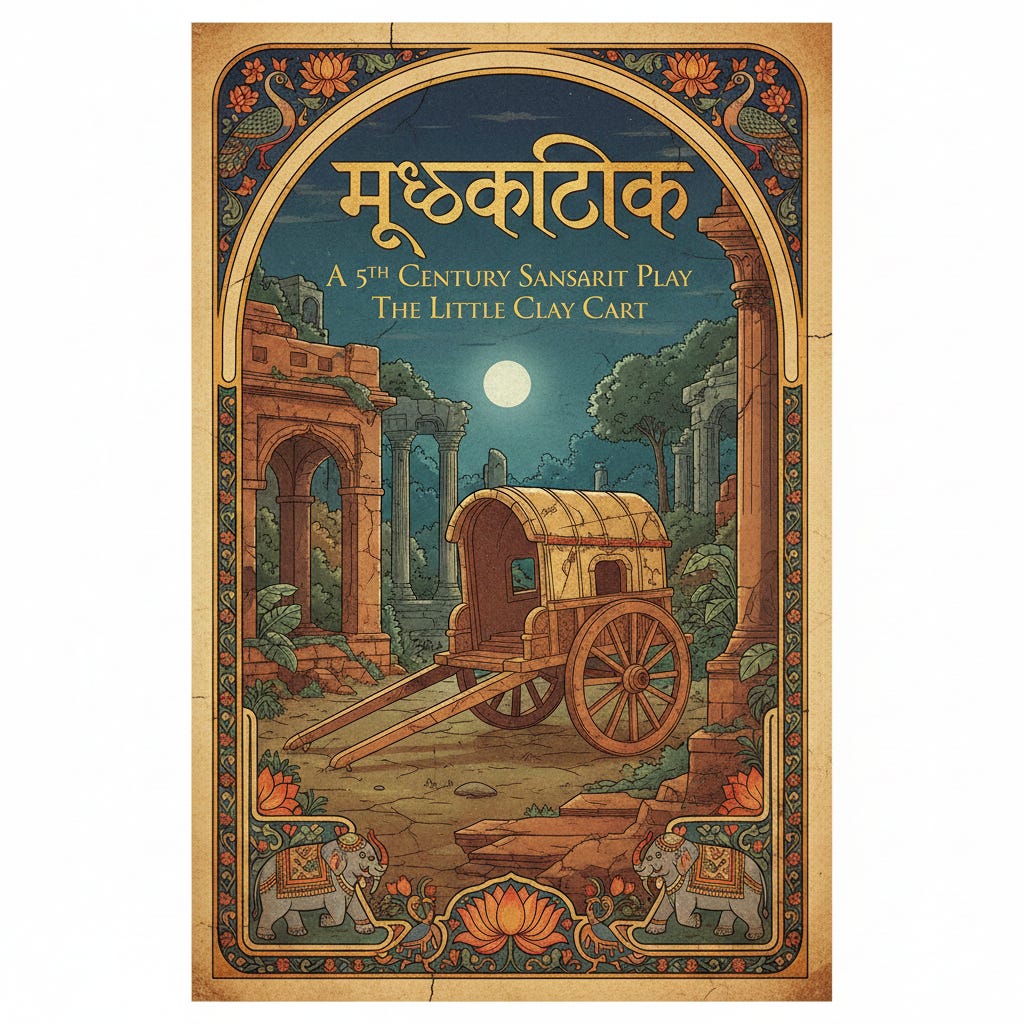
Mricchakatika (The Little Clay Cart), attributed to Śūdraka and commonly dated to the fifth century CE, retains an enduring relevance that extends far beyond the Sanskrit stage. Its dramatic architecture, moral psychology, and civic vision form a lens through which later historical ruptures can be understood, including the Emergency (1975–77) in India. The play’s universeUjjaini, its virtuous poor, its powerful courtesans, its petty officials, its pliant judges, and its unscrupulous courtiersmaps eerily onto the anatomy of modern authoritarian turns. The echoes are not incidental; they arise from the play’s sustained investigation into dharma and adharma within public life.
Over more than a century of global translations and productions, Mricchakatika has been received both as a romance and as a socio-political drama. That classification is helpful but incomplete. What persists across languages and epochs is the work’s analytical core: it exposes how personal vice scales into public injustice, how fear corrodes institutions, and how ethical courage can redirect history. In Natyashastra terms, the rasa of compassion (karuṇa) is inseparable from the civic ethic that sustains it; the play’s characters are at once individuals and types that dramatize a perennial moral economy.
Scholarly attention has reliably illuminated these layers. Arthur W. Ryder’s early twentieth-century translation provided a gateway for English readers despite certain period biases. In Kannada, Prof. A. R. Krishna Sastri’s exposition in Samskruta Nataka and Shatavadhani Dr. Ganesh’s detailed lecture series have deepened appreciation for Śūdraka’s craft. Cultural historians such as Dr. R. G. Basak have mined the play for social detail, showing how its world coherently reflectsand critiquesurban life in classical India.
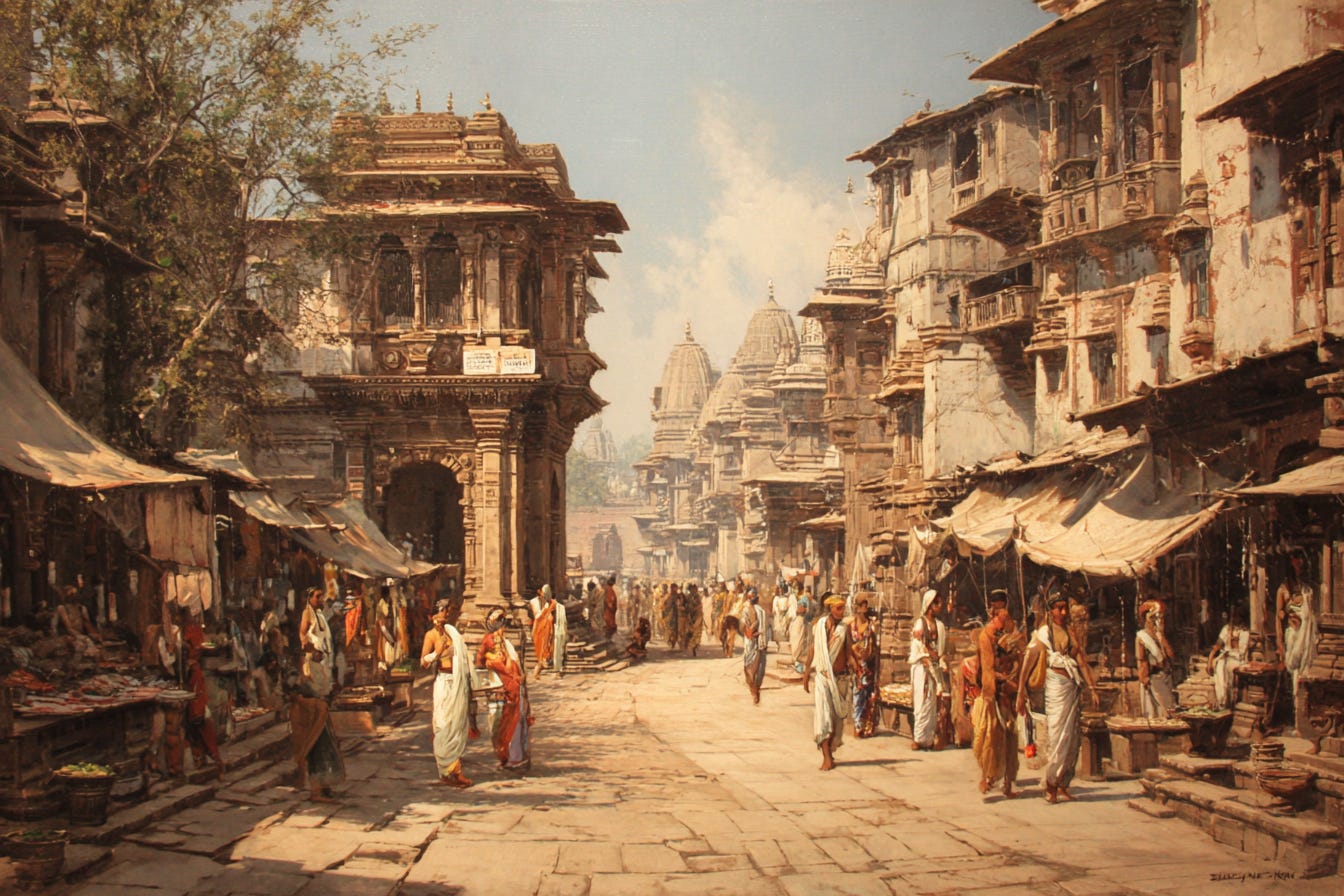
The settingUjjainifeels specific yet archetypal. The narrative orbits Charudatta, a cultured Brahmana merchant fallen into poverty, and Vasantasena, a wealthy courtesan drawn to his uncompromising integrity. Their lives intersect under the rule of Pālaka, whose formal sovereignty masks a substantive weakness. Power in practice is brokered by his brother-in-law, Śhakāracrude in appetite, inventive in manipulation, and relentless in pursuit of impunity. Around them gathers a full civic stage: honest servants, fearful judges, principled ascetics, and ambitious plotters.
Every scene serves a double function. It advances the plot while also clarifying a thesis: institutions are only as sound as the moral fiber of those who animate them. The play’s metaphors are transparentwealth without restraint corrodes, poverty with virtue ennobles, and status without responsibility invites collapse. These themes resonate across dharmic traditionsHindu, Buddhist, Jain, and Sikheach of which emphasizes ethical self-mastery, compassion, and the primacy of truth in public life.
It is in this spirit that the play’s parallels with the Emergency become analytically meaningful. During 1975–77, India experienced a concentration of executive power, suspensions of civil liberties, press censorship, mass detentions under preventive laws, and widespread coercive governance documented in the Shah Commission Report. While Mricchakatika does not name modern institutions, it depicts their moral deformations with striking clarity: a sovereign who abdicates responsibility, a power-broker who instrumentalizes fear, and legal officers who misread duty as obedience.
Śhakāra’s methods are instructive. He seeks criminal ends through proxies and inducement, escalating to direct violence when conscience thwarts him. At one point, he urges a subordinate to commit murder; the subordinate refuses with a statement of universal accountability: “The Ten Regions, the forest gods, the sky, The wind, the moon, the sun whose rays are light, Virtue, my conscience these I cannot escape, Nor earth, that witnesses to wrong and right.” The countermand“Well then, put your cloak over her and murder her”is a darkly efficient workaround. Śūdraka reveals a timeless pattern: when institutions do not block wrongdoing, agents are found who will blur its moral visibility.
Modern historians have described the Emergency’s extra-constitutional centers of influence, notably the prominence of Sanjay Gandhi’s initiativesslum clearances and mass sterilizationwhose abuses were widely recorded. The pattern aligns with Śhakāra’s shadow power: not formally enthroned, yet determinative in outcomes. The parallel is structural, not personal invective; it illustrates how concentrated, unaccountable authority degrades both policy and process, often making the harm seem administratively routine.
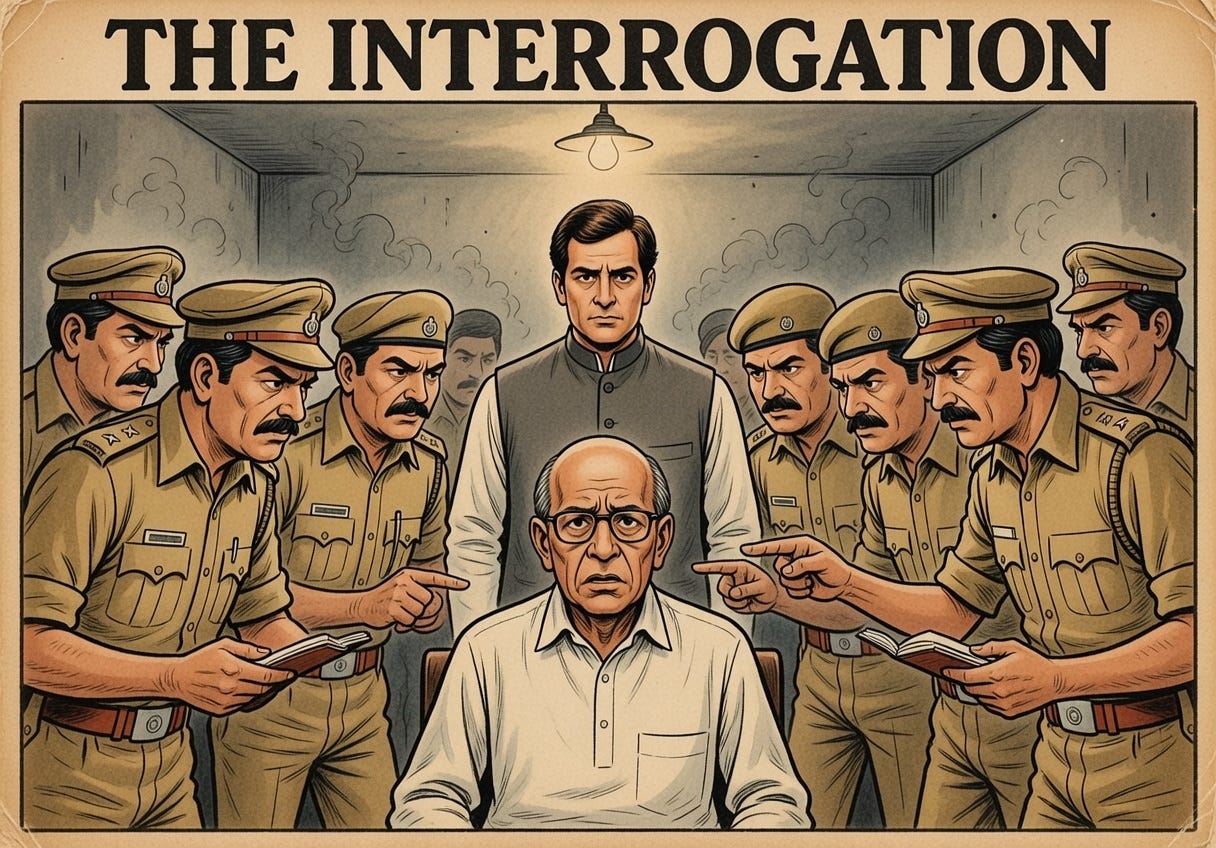
If Śhakāra symbolizes the corrosion of justice by intimidation, Act NineVyavahaara (The Trial)dramatizes how a legal system can be bent without being formally abolished. Charudatta, obviously innocent to anyone acquainted with his character, is nevertheless implicated through contrived proofs. The judge, while privately respectful“Go, summon Charudatta, but do it gently without giving him cause for anxiety. Do it respectfully.”publicly capitulates to pressure. He praises Charudatta’s virtue (“This is Charudatta. A countenance like his… is not the home of wantonness.”) yet authorizes punishment when the palace tightens the screws.
The political implication is unambiguous: when executive power overrides or intimidates judicial discernment, the form of adjudication remains while its substance collapses. Mricchakatika even shows the crown usurping the bench: Pālaka escalates the sentence to public impalement, an act the judge himself recognizes as a functional eclipse of his office“Like an eclipse at sunrise, this betokens the ruin of some great man.”
India’s twentieth-century constitutional history supplies a sober parallel. In 1973, the supersession of three senior justices to appoint A. N. Ray as Chief Justice of India provoked deep concern about judicial independence. During the Emergency, debates over a “committed judiciary,” the Habeas Corpus case (ADM Jabalpur), and subsequent apologias in later years collectively underscored how fragile adjudicative courage can be under political duress. Mricchakatika’s judge, though morally uneasy, still buckles; in modern India, a minority voice of judicial courage did endure, exemplified by H. R. Khanna’s famous dissent. The play thus helps parse a troubling boundary: sympathy without fortitude imperils justice as surely as hostility does.
Equally revealing is how Mricchakatika resolves its civic crisis. Charudatta is rescued not by force but by testimonyby a Buddhist monk and, crucially, by Vasantasena herself. Śūdraka thereby affirms a dharmic pluralism: truth requires witnesses, and the community of conscience spans social professions and spiritual paths. This inclusivityHindu ethics in Charudatta’s self-restraint, Buddhist truth-telling in the monk’s interventionspeaks directly to the shared civilizational values of Hinduism, Buddhism, Jainism, and Sikhism: satya (truth), ahimsa (non-violence), karuṇā (compassion), and seva (service) must animate public institutions for them to remain just.
The political aftermath within the play is equally measured. Pālaka is deposed by Aryaka, whose accession inaugurates a regime of justice and compassion. Charudatta is vindicated, and mercy tempers retribution. The message is classical and contemporary: when ethical citizens persist and institutions realign around dharma, civic health can be restored without substituting one lawless excess for another.
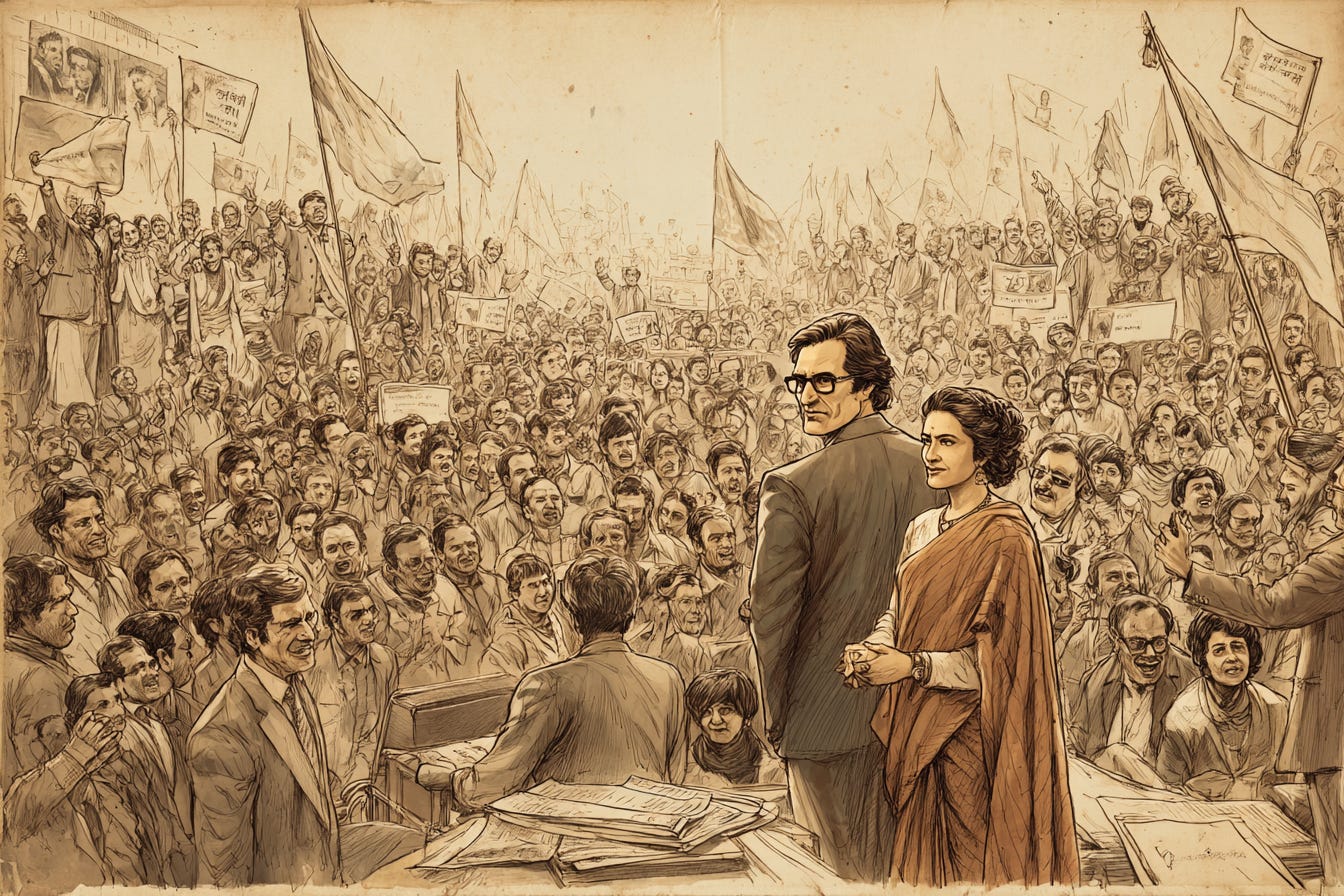
Historical memory offers a close analogue. In 1977, the Indian electorate decisively ended the Emergency through the ballot box and restored an environment in which institutional self-correction could proceed. Journalistic courageexemplified by figures such as Ramnath Goenka of the Indian Expressplayed a critical role in sustaining public awareness under censorship. The harassment he faced under state scrutiny and regulatory pressure mirrors Charudatta’s ordeal: one principled individual resisting the weight of a coercive apparatus. Both the fictional and historical arcs converge on a simple proposition: truth allied to civic courage can outlast fear.
Assessments from Indian intellectual life have reinforced this understanding. In Bhitti, Dr. S. L. Bhyrappa reflects on how ethical transgressions at the summit of power propagate corrosion through the entire social edifice. While his judgment is severe, the analytical point dovetails with Śūdraka’s dramaturgy: tyranny is rarely a single act; it is a pattern sustained by incentives, rationalizations, and silence at multiple levels. Reversing it requires the opposite patternclear speech, interfaith and inter-communal solidarity around shared virtues, and an insistence that lawful authority is accountable to ethical reason.
In exploring cinematic retellings, it bears noting that later adaptations have emphasized different tonal registersfrom sensuous romance to social critique. Such treatments, including popular films, may engage new audiences yet often underplay the play’s juridical insights. The original text is more than a love story; it is a carefully structured study in civic ethics. Its continuing relevance lies not in provocation but in precision: it shows how public evil recruits private weakness, and how public good demands private courage.
Beyond the Emergency parallel, Mricchakatika functions as a civic mirror fit for any age. It depicts how poverty can ennoble without romanticizing deprivation; how wealth can dignify without sanctifying indulgence; and how law becomes justice only when animated by a living conscience. This is the dharmic heart of the drama: institutions are sacred not because they are ancient or powerful but because they serve truth, protect the vulnerable, and correct themselves when they err.
The lesson extends naturally across the dharmic spectrum. Hindu, Buddhist, Jain, and Sikh traditions alike prioritize self-restraint, compassion, truthful speech, and responsible leadership. When read through that civilizational prism, Mricchakatika becomes a shared texta reminder that plural spiritual lineages converge on a common civic ethic. The monk’s testimony, Charudatta’s integrity, Vasantasena’s agency, and Aryaka’s just rule are not competing ideals; they are complementary facets of the same moral order.
As a work of classical literature, Mricchakatika also invites rigorous historical reading. Its social detailurban professions, market life, the functions of courts, and the informal politics of kinshipgives historians a rich archive of lived realities. As a work of political thought dramatized through action, it models how law and morality relate: authority must be limited by reason, and the ritual of adjudication is void if its spirit is suppressed.
Read alongside India’s twentieth-century constitutional struggles, the play acquires an added valence. The Emergency did not emerge ex nihilo; it exploited tensions that are recurrent in political life everywherebetween order and liberty, between executive decisiveness and institutional independence, between public welfare and personal ambition. Śūdraka’s achievement is to give these tensions names, faces, and consequences that audiences can grasp and remember.
The ultimate reassurance is twofold. First, that civic decay is reversible when citizens, leaders, and spiritual communities return to the shared foundations of dharma. Second, that literaturefar from being ornamentalcan stiffen a society’s moral spine by forecasting dangers and clarifying remedies. In that sense, Mricchakatika belongs not only to the history of Sanskrit drama but also to the living handbook of Indian public ethics.
|| Satyameva Jayate ||
Inspired by this post on Dharma Dispatch.