-
West Bengal Restores Pre‑2010 OBC List; 7% Quota Reset Prioritizes Lawful, Data‑Driven Equity

West Bengal has restored its pre‑2010 OBC list and reset the OBC quota to 7%, presenting the change as a law‑aligned, interim framework pending a fresh, data‑driven review. The move foregrounds constitutional compliance under Articles 15(4) and 16(4), adherence to Indra Sawhney benchmarks, and the need for quantifiable evidence of social and educational backwardness. By…
-
Faith, Judiciary, and ‘Double Standards’: Sanatan Sanstha on a former CJI’s visit to a saint

A spokesperson for Sanatan Sanstha, Shri. Abhay Vartak, objected to Shyam Manav’s remarks on a former Chief Justice of India’s visit to a Hindu saint, framing the criticism as ‘double standards.’ This analysis clarifies how constitutional secularism in India protects personal faith while demanding institutional integrity. It explains why ethical yardsticks—like appearance of bias or…
-
Urgent Call to Enforce Maharashtra’s Anti-Conversion Law in Nashik TCS Case, With Due Process

The Nashik TCS case has prompted a focused demand to apply Maharashtra’s emerging anti-conversion framework with rigor and due process. Grounded in Article 25 and the Supreme Court’s jurisprudence, the analysis explains how state Freedom of Religion Acts are designed to deter force, fraud, and allurement without chilling voluntary faith choices. It outlines practical steps…
-
Criminal Complaint Against Prakash Raj Over Ramayana Video Ignites Legal and Social Firestorm

Reports indicate a criminal complaint has been filed against actor Prakash Raj after a video linked to the Ramayana—perceived by some as mocking Prabhu Shri Ram—went viral. The case spotlights India’s legal thresholds for speech touching religion, especially Section 295A IPC, and Supreme Court precedents that demand proof of deliberate and malicious intent. It also…
-
Supreme Court clarifies: SC status for Hindus, Sikhs, Buddhists; conversion ends benefits

The Supreme Court of India has reaffirmed that Scheduled Caste status, under the Constitution (Scheduled Castes) Order, 1950, applies to persons professing Hinduism, Sikhism, or Buddhism and ceases upon conversion to any other religion. The ruling emphasizes constitutional continuity under Article 341 and clarifies that expansions of eligibility are for Parliament to decide, not the…
-
Viral Gau Raksha Video Sparks Outcry: Law, Ahimsa, and Communal Harmony Over Vigilantism

A viral Gau Raksha clip from Lucknow triggered public concern about communal tension, digital virality, and the boundary between legitimate advocacy and unlawful incitement. This analysis places the event within India’s constitutional and statutory framework, emphasizing that cow protection must operate entirely through due process. It shows how ahimsa, shared across Hinduism, Buddhism, Jainism, and…
-
Ahmedabad Protests Over ‘Kerala Story 2’: Safeguarding Interfaith Harmony, Law, and Rights in Gujarat

Protests in Ahmedabad over The Kerala Story 2 and an interfaith relationship have brought constitutional rights, community anxieties, and public order into sharp focus. This analysis explains how Gujarat can protect free expression for certified films while ensuring peaceful, lawful protests and rapid action against intimidation. It outlines the legal landscape—from the Cinematograph Act to…
-
Maharashtra urged to pass anti-conversion safeguards: HJS leads 75-site drive for consent and faith

Hindu Janajagruti Samiti (HJS) and allied organisations have submitted memorandums at more than 75 locations in Maharashtra urging immediate anti-conversion safeguards. The analysis situates this demand within India’s constitutional framework—Articles 25–28, Article 21, and privacy—while highlighting Supreme Court guardrails from Rev. Stanislaus (1977) and Shafin Jahan/Hadiya (2018). It maps the national patchwork of state laws…
-
How a Fifth-Century Sanskrit Classic Anticipated the Emergency: Mricchakatika’s Warnings

Mricchakatika (The Little Clay Cart) is a fifth-century Sanskrit classic whose legal and civic insights strikingly anticipate the dynamics of India’s 1975–77 Emergency. Set in Ujjaini, it portrays how a weak sovereign and an unscrupulous power-broker deform institutions, and how conscience-driven citizens and spiritual witnesses restore justice. The Ninth Act, Vyavahaara (The Trial), functions as…
-
Landmark Thirupparankundram Verdict: Will Tamil Nadu Honour SC Directions on Karthigai Deepam?

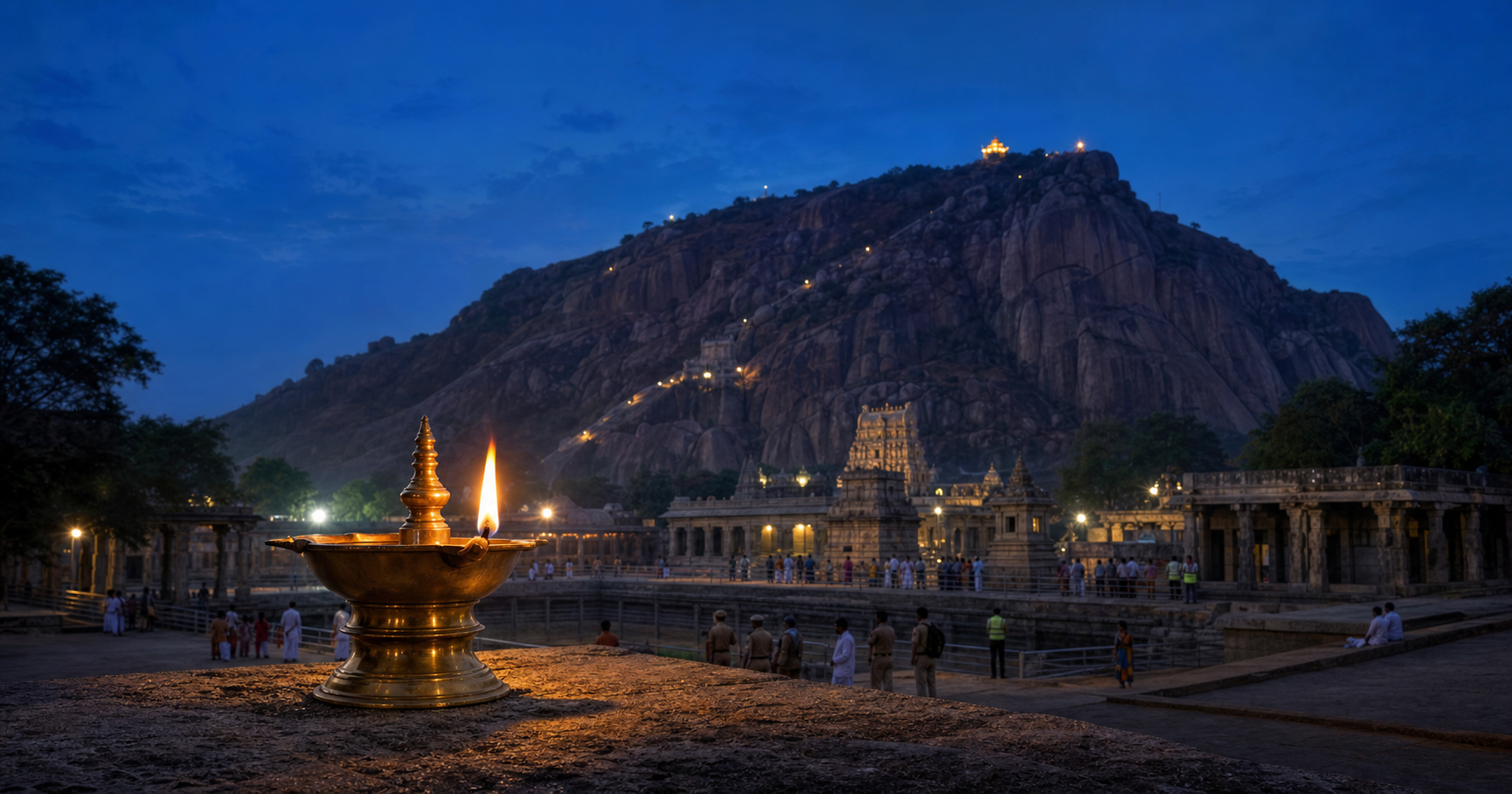
The Supreme Court of India’s recent order on Thirupparankundram Hill—widely read as affirming administrative restrictions at sensitive points while protecting established Karthigai Deepam rituals—places a clear onus on Tamil Nadu to balance worship, safety, and heritage. Effective compliance would pair a transparent SOP with infrastructure upgrades, capacity thresholds, and barrier-free access. Structured consultations with temple…